Sur, Ras al Jinz and the coastal wadis
The coast around Sur is a two- or three-day trip from Muscat along the coastal highway: Bimmah Sinkhole at 155 km, Wadi Shab at 175 km, the dhow town of Sur at 225 km and Ras al Jinz Turtle Reserve at 270 km. The best months are October to April; green turtles nest all year round.
The coast around Sur, in eastern Oman, packs the country's best-known wadis, a seafaring town famous for its dhows and Oman's only beach where you can legally watch green turtles nest into just over 100 km of road. From Muscat airport, the coastal highway reaches Bimmah Sinkhole in 2 hours, Wadi Shab in 2 h 30, Sur in just under 3 hours and Ras al Jinz in 3 h 40, driving times without stops. Allow two days, three if you want time in the wadis, and spend at least one night at the end of the road, close to the turtles.
October to April is the time to come. In Sur, average highs top 40 °C from May to July, although summer is also when most hatchlings emerge.
Sur at a glance
| From Muscat airport | What to see | |
|---|---|---|
| Bimmah Sinkhole | 155 km, 2 h | Turquoise sinkhole in a municipal park |
| Wadi Shab | 175 km, 2 h 30 | Boat crossing, walk, pools, cave waterfall |
| Sur | 225 km, 2 h 50 | Dhow heritage, Al Sunaysilah Fort |
| Ras al Jinz | 270 km, 3 h 40 | Turtle reserve, archaeological site |
The coastal road
Heading south-east from Muscat, the highway runs between the mountains and the sea.
Bimmah Sinkhole
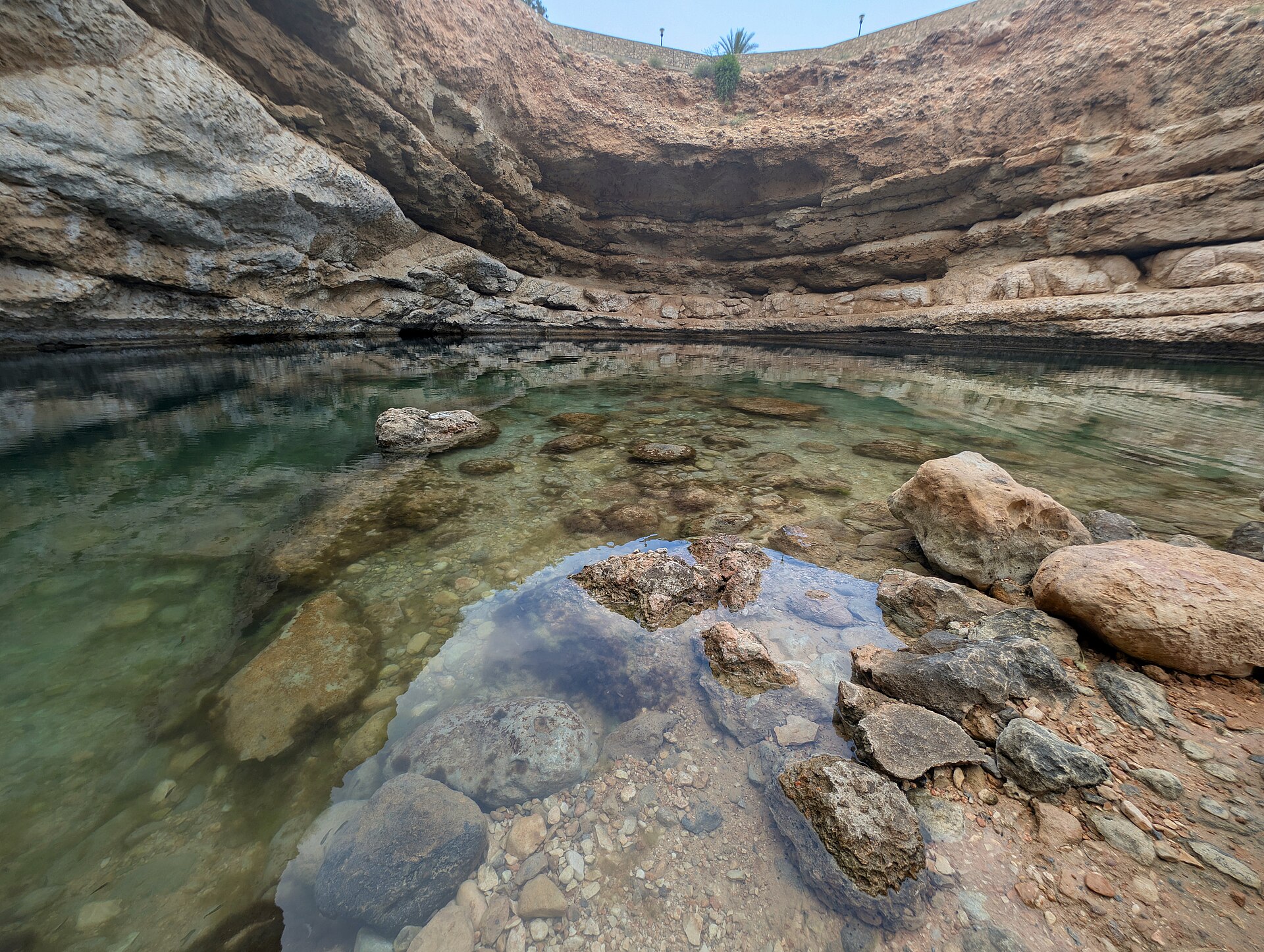
Right beside the highway, 155 km from the airport, Bimmah Sinkhole (Hawiyat Najm in Arabic) is a collapsed hollow in the limestone, filled with turquoise water. It measures 50 by 70 metres, is about 20 metres deep and sits only 600 metres from the sea. Locals once believed a meteorite had made it, hence the Arabic name, "the well of the falling star". The municipality has fenced it into a park with toilets and a staircase down to the water.
Wadi Shab
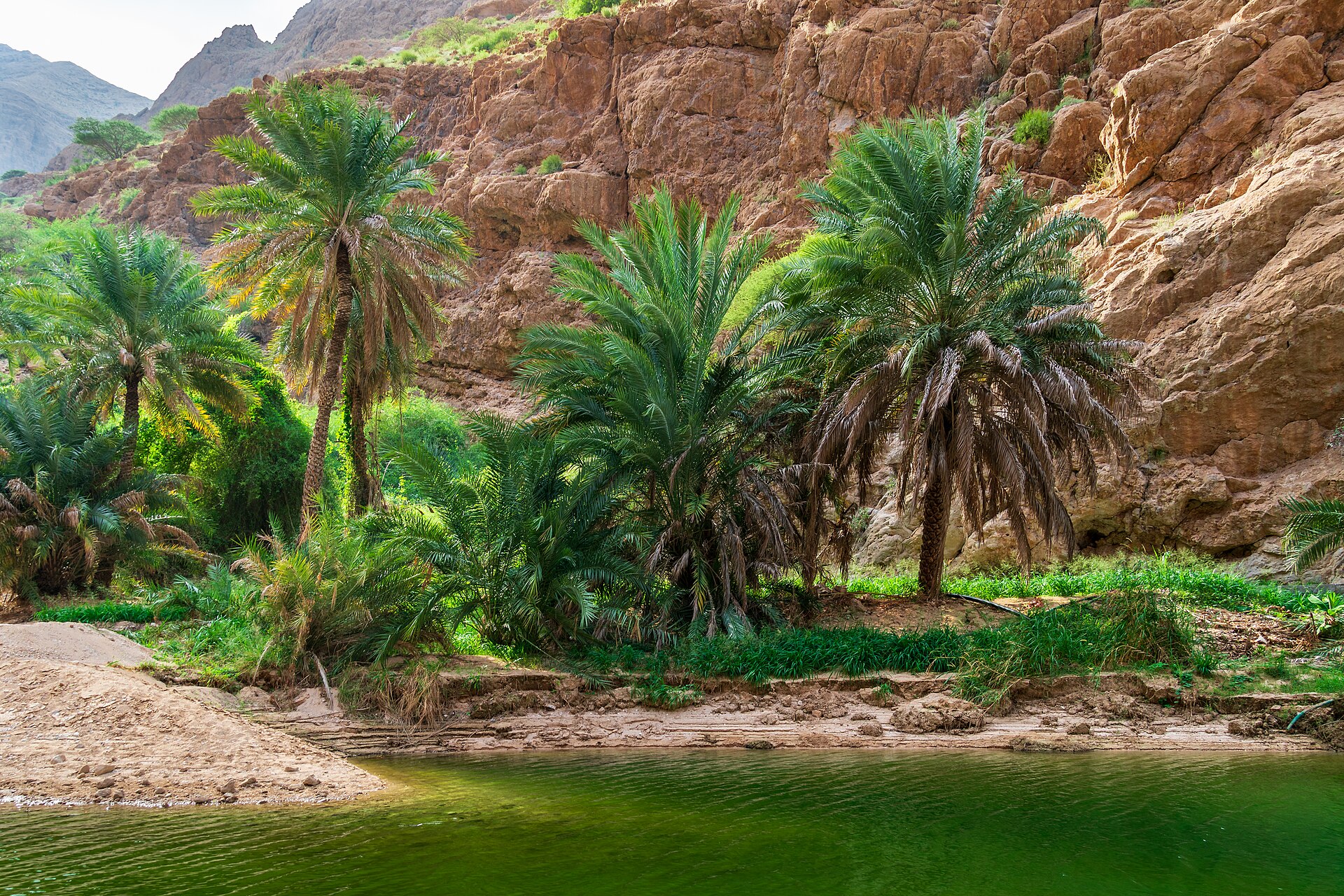
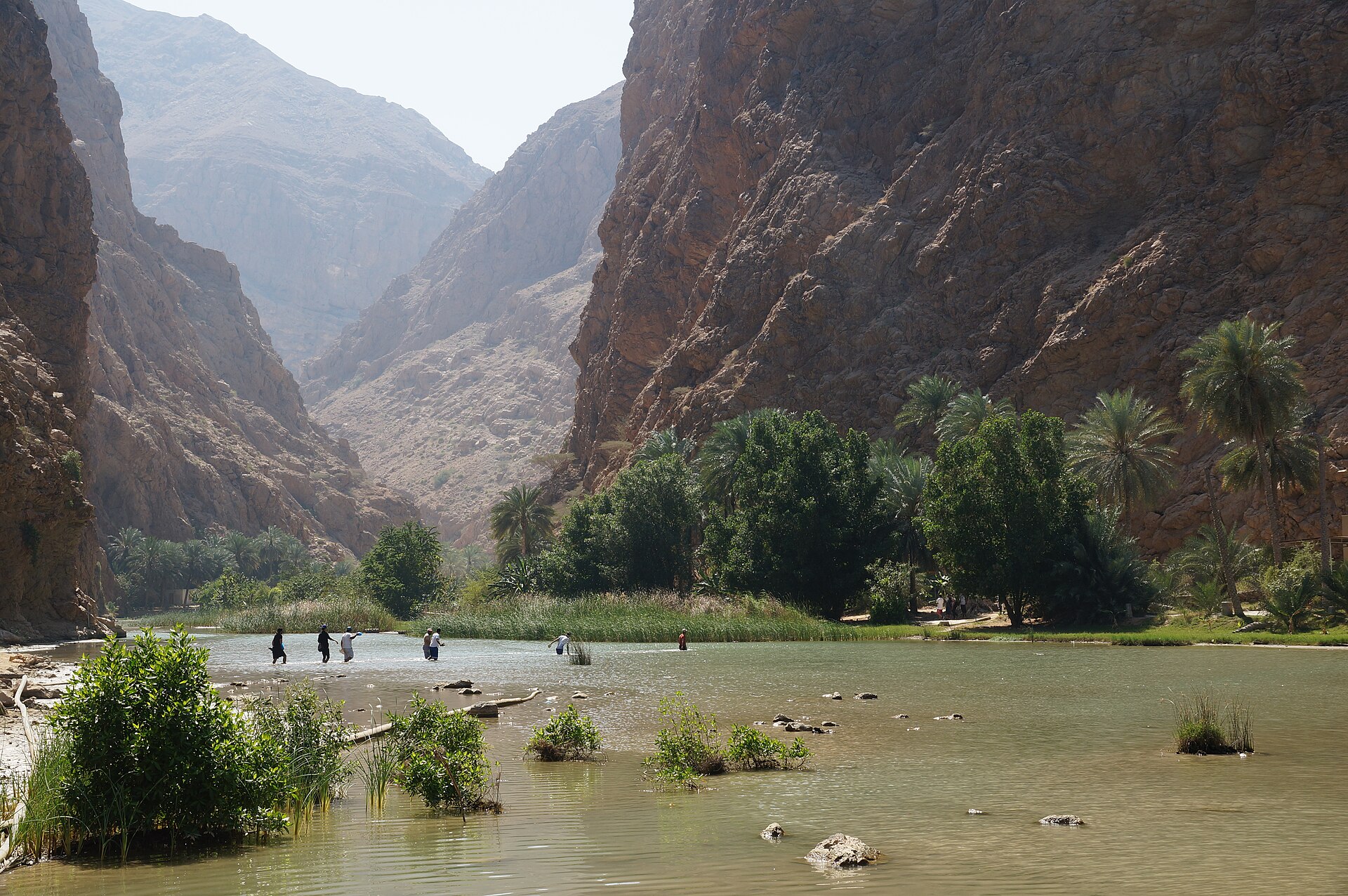
A wadi is a valley whose river runs only part of the year; Oman's finest hold water in rock pools long after the rains. Wadi Shab, 175 km from the airport, is the most famous of them. A short boat ride takes you across the river at the entrance, then a path climbs between limestone cliffs and palm trees to a chain of pools you can swim in. At the far end, you swim through a narrow opening into a cave with a waterfall inside.
Experience Oman, the tourism ministry's website, has sensible advice:
- you need to be able to swim to reach the waterfall, and a life jacket is recommended;
- wear hiking boots or water sandals, not flip-flops, on the rocky ground;
- bring water and snacks, as there are no shops in the wadi;
- pack sunscreen, a hat and a spare swimsuit.
The best period runs from September to May. Day tours from Muscat cost from about €85 per person for Wadi Shab alone (8 hours), or about €70 for a shared tour of Wadi Shab and Bimmah with lunch (9 hours).
Wadi Tiwi
Wadi Shab's neighbour, Wadi Tiwi, is the place for guided canyoning and abseiling.
Qalhat and the Bibi Maryam Mausoleum
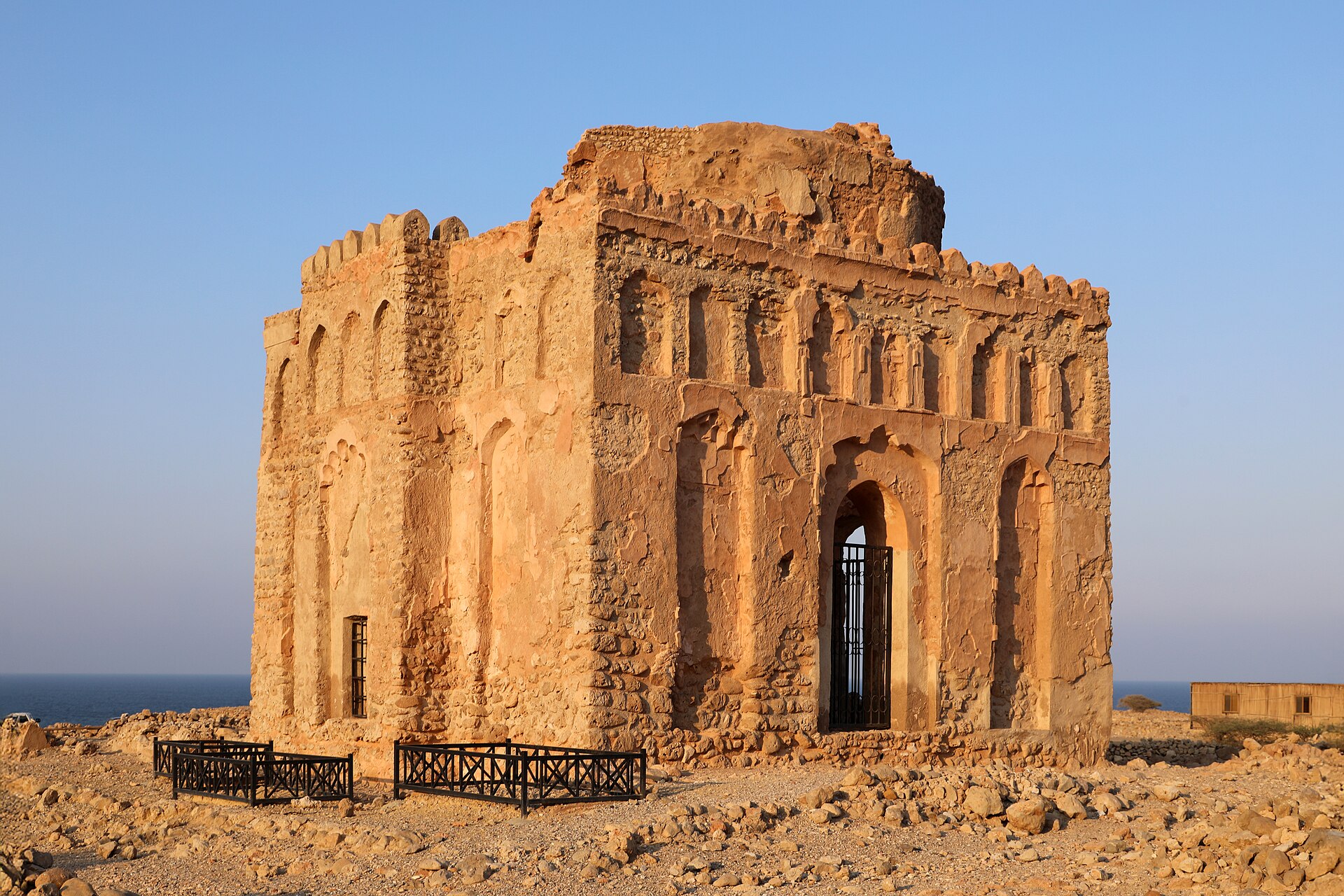
Between the wadis and Sur lies the ancient city of Qalhat, a UNESCO World Heritage Site since 2018. Only one building still stands: the mausoleum of Bibi Maryam, from the early 14th century, a domed cube of coral and limestone once covered in stucco and blue Persian tiles.
Sur, the dhow town
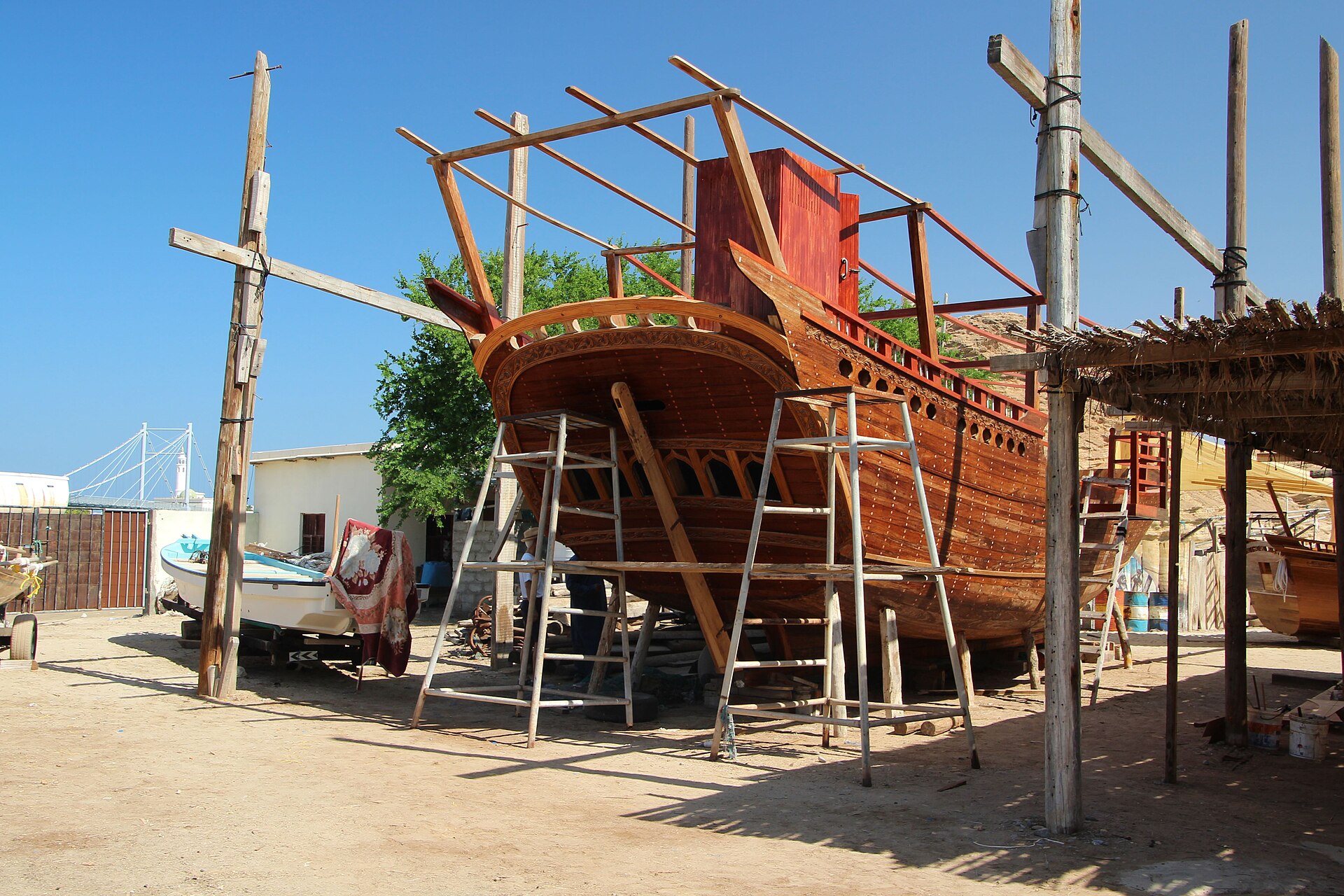
Sur is the capital of South Sharqiyah, one of Oman's eleven governorates (administrative regions). Oman's Foreign Ministry describes it as a centre of traditional boatbuilding: this is the home of the dhow, the wooden sailing ship that carried the trade of the Arabian coast.
By the 6th century, Sur was already trading with East Africa. Its sambuks and ghanjahs sailed as far as India, Zanzibar and China, and were used for pearling too. The Portuguese held the town in the 16th century; once Imam Nasir bin Murshid drove them out, trade with India and East Africa revived. Decline came in the 19th century, when Britain outlawed the slave trade and the Suez Canal diverted the India trade.
Two sights tell the story:
- The Fatah Al Khair dhow, now a maritime museum, which the tourism ministry lists among Sur's landmarks along with the old lighthouse.
- Al Sunaysilah Fort, on a rocky plateau above the town. Its origins are disputed: some sources credit Imam Nasir bin Murshid in the first half of the 17th century, others say the Portuguese built it before the Omanis took it in 1648. It has three round towers and one square one, a mosque with two mihrabs, a Quran school room and a prison. Its open-air theatre seats 1,200 for cultural events.
Ras al Hadd and Ras al Jinz
Ras al Hadd, 35 km from Sur, is the headland where the sun first rises on the Arabian Peninsula, where the Sea of Oman meets the Arabian Sea. Its castle, begun in the 16th century, overlooks the mouth of a lagoon. The walls are nearly 3 metres thick, the ceilings are made of Indian teak and timber from Mombasa and Zanzibar, and a tunnel of about 500 metres once led to a freshwater well. It was restored in 1989 and again in 2008.
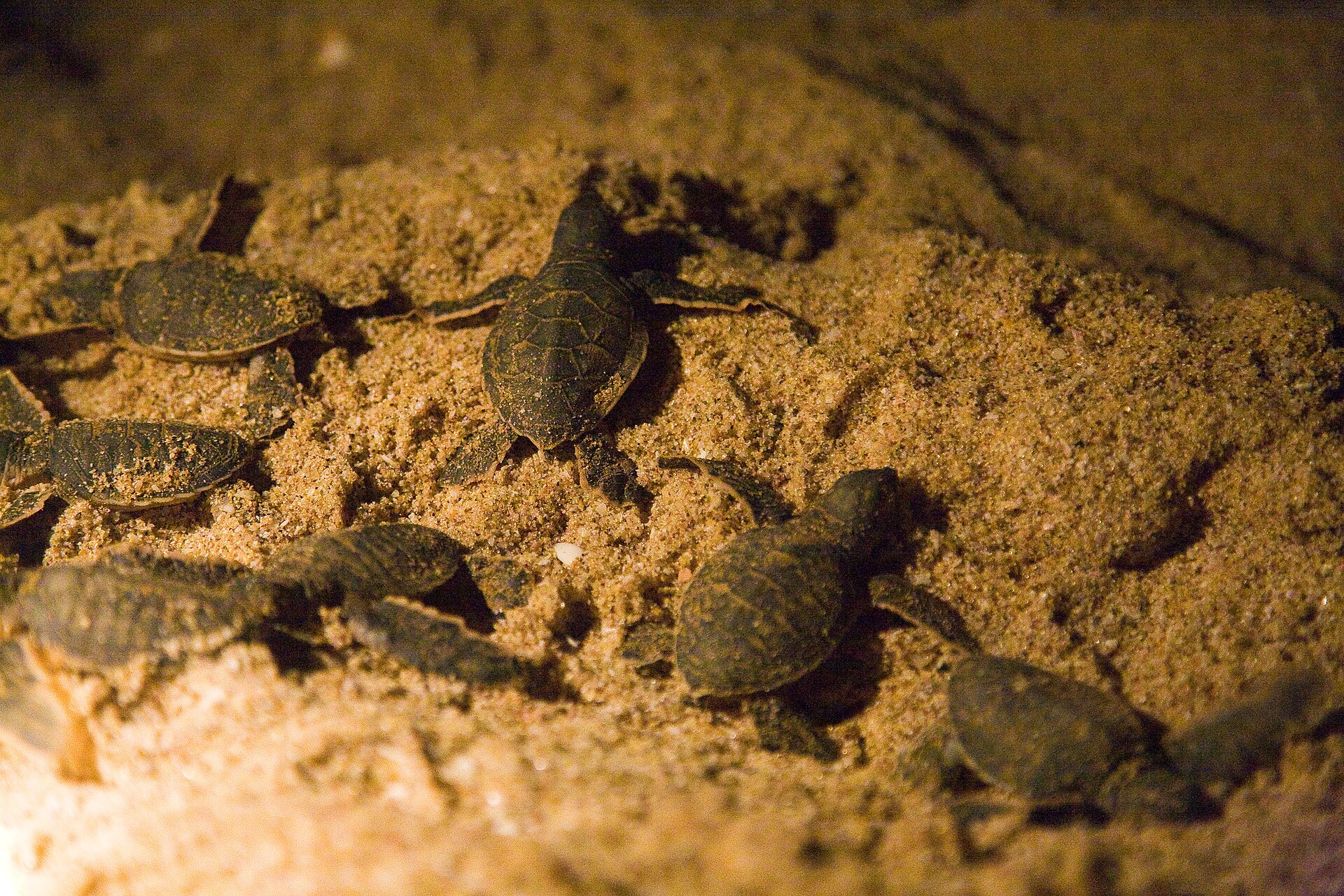
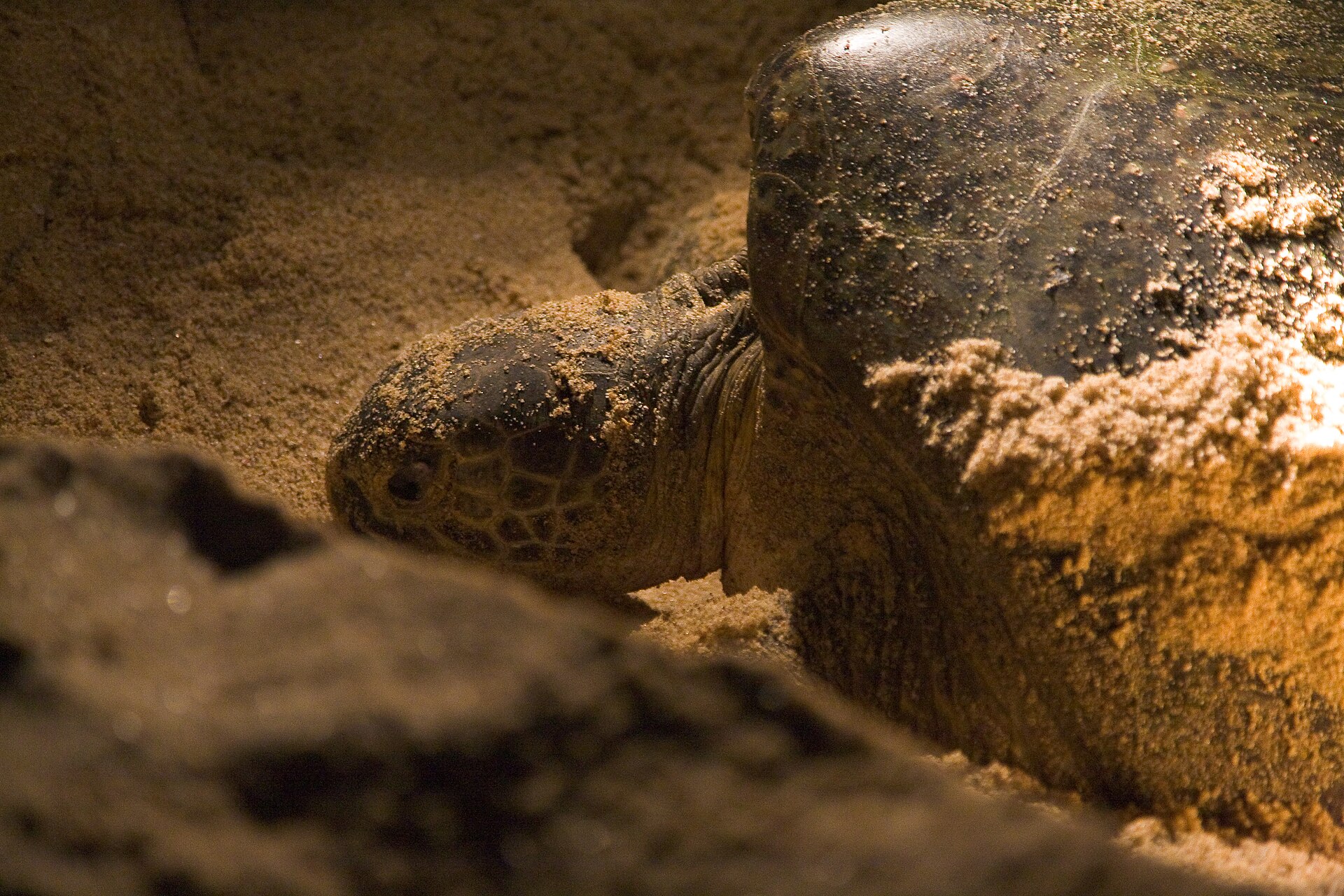
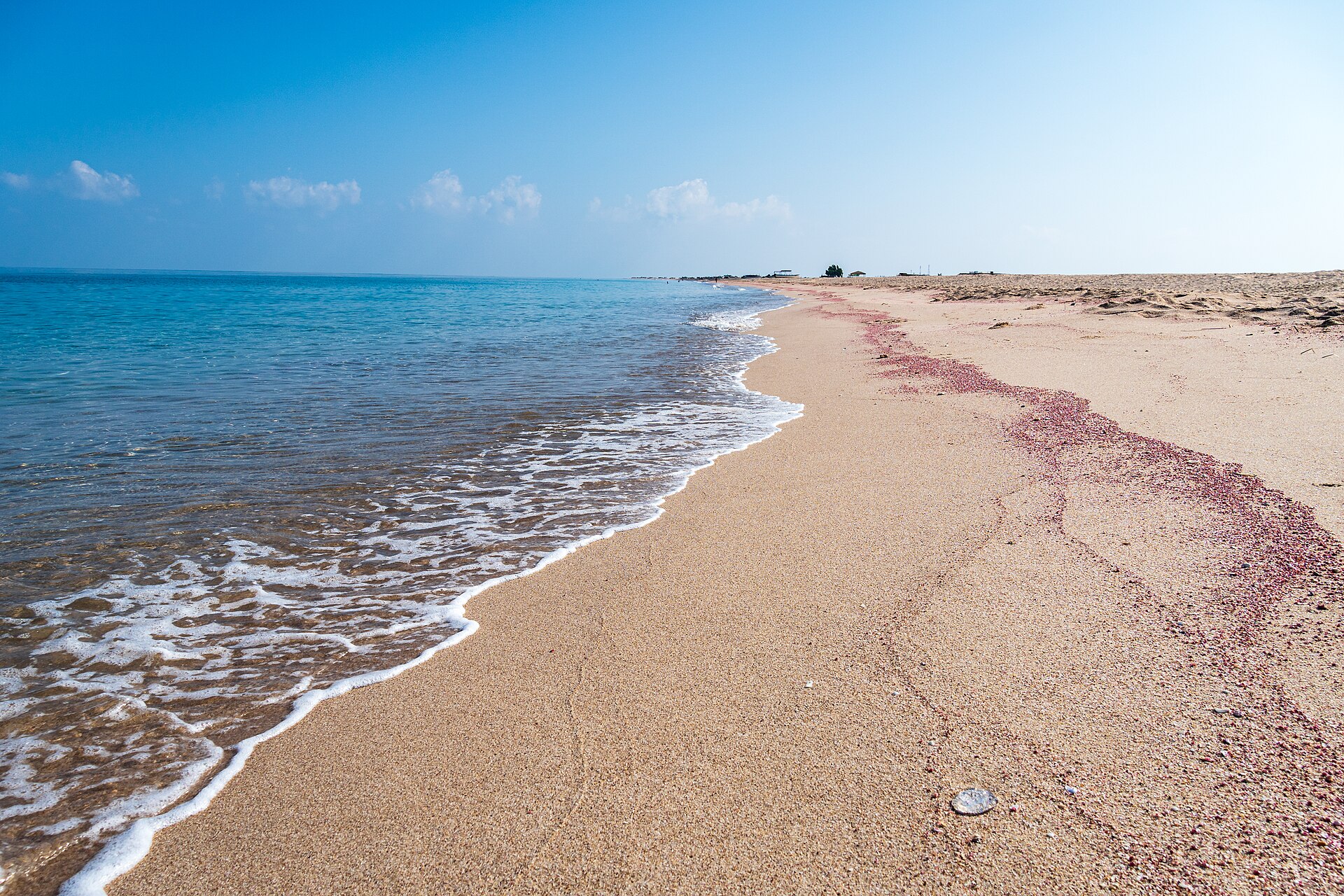
South of the headland, Ras al Jinz Turtle Reserve protects the nesting beach of the endangered green turtle. It was created by royal decree in 1996, its visitor centre opened in 2008, and it is run by Omran, the state tourism development company. Inside the reserve, an archaeological site over 4,300 years old has yielded pottery from the Indus Valley and bitumen from Mesopotamia bearing the imprint of a woven mat, probably used to waterproof a boat.
Watching the turtles
The reserve is the only place in Oman where the public may legally watch turtles. Viewings take place on the beach with the reserve's guides.
- Evening viewing: starts at 9 pm local time; arrive by 8:30 pm.
- Dawn viewing: starts at 5 am local time; arrive by 4:45 am.
- Fees for foreign visitors: 12 Omani rials (OMR, the local currency) per adult, OMR 6 for children aged 6 to 12, free under 6. Viewings are included for guests staying at the reserve.
Times can change with the season, and the reserve asks visitors to reconfirm before setting off.
Turtles nest all year. According to the reserve, most hatchings happen between May and September, and a Sultan Qaboos University study found nesting densest from June to October. In winter you are more likely to see females laying than hatchlings heading for the sea. Torches, camera flashes and car headlights disturb the turtles, and the reserve controls them on the beach. Our guide to watching the turtles at Ras al Jinz explains how a viewing works, and the Ras al Jinz turtles page covers the season.
Where to stay
Ras Al Jinz Turtle Reserve is Sabaro's choice on this coast, and the most practical base for the turtles since it sits inside the reserve. It is a simple eco-lodge rather than a luxury hotel, with around thirty rooms and tents. The air-conditioned Carapace rooms suit families; the fifteen eco-tents, also air-conditioned and with their own bathrooms, stand on a small rise nearby. Meals are served at the Sea Giants restaurant, and the turtle museum opens from 9 am to 8:30 pm local time. Expect to pay from about €230 a night for two, including breakfast and the turtle viewings, plus any local taxes.
Staying at the reserve also spares you a night drive: it is best not to drive after dark outside Muscat because of animals on the road.
Weather in Sur
The 1991-2020 normals for the Sur weather station give an average high of 26 °C in January, 32 °C in March, 36 °C in October and 31 °C in November, rising above 40 °C from May to July. The sea is around 24 °C in winter and reaches 30 °C in June.
Staying safe in the wadis and at sea
Foreign ministries do not all give the same advice for Oman: yours is in the "Travel advice" table on this page, and our Oman travel situation guide follows how it changes. The risks specific to this coast are natural ones:
- Flash floods. From October to March, wadis can fill suddenly after a storm. Avoid wadis when heavy rain is forecast and for at least a day afterwards, and, if caught in a flood, head for high ground without trying to cross.
- Falls. Wadi trails are unsecured, even at Wadi Shab, and that fatal falls happen.
- Boats. Tourist boats are not always up to standard; insist on a life jacket for every passenger.
See our guides to Oman's wadis and driving in Oman.
Combining the coast with the rest of Oman
Sur is 110 km, about 1 h 30 by road, from the camps of the Wahiba Sands. A classic loop leaves Muscat inland, spends a night in the dunes and a night at Ras al Jinz, then returns along the coast via Wadi Shab and Bimmah. Add the mountains around Nizwa and Jebel Akhdar and you have a ten-day tour of northern Oman. Our beach page covers the best places to swim.
What to see
- Ras al Jinz Turtle Reserve — reserve created by royal decree in 1996, centre opened 2008, the only legal turtle-watching site in Oman; mainly green turtles; viewings at 9 pm and 5 am (local time) Ras al Jinz Turtle Reserve, site officiel
- Ras al Jinz archaeological site — settlement remains over 4,300 years old, Indus pottery and Mesopotamian bitumen Experience Oman
- Ras al Hadd Castle — 16th-century fort 35 km from Sur, where the sun first rises on Arabia Experience Oman
- Sur: Fatah Al Khair dhow museum and old lighthouse — capital of South Sharqiyah and a centre of traditional boatbuilding; the Fatah Al Khair dhow is now a maritime museum Experience Oman ; ministère omanais des Affaires étrangères
- Al Sunaysilah Fort (Sur) — 17th-century four-tower fort above Sur, 1,200-seat open-air theatre Experience Oman
- Bibi Maryam Mausoleum, Qalhat (World Heritage 2018) — early 14th-century mausoleum (c. 1311), the only standing building of ancient Qalhat, inscribed by UNESCO in 2018 Experience Oman ; Unesco
- Wadi Shab — about 170 km from Muscat airport; boat crossing, walk, pools, cave with waterfall; no shops in the wadi; best September to May Experience Oman
- Wadi Tiwi — valley next to Wadi Shab; canyoning and abseiling offered Civitatis
- Bimmah Sinkhole (Hawiyat Najm) — water-filled sinkhole 50 m by 70 m and about 20 m deep, 600 m from the sea, in a fenced municipal park with steps down, just off the Sur road a few km before Tiwi Wikipédia
When to go
Climate in Sur
| Jan | Feb | Mar | Apr | May | Jun | Jul | Aug | Sep | Oct | Nov | Dec | |
|---|---|---|---|---|---|---|---|---|---|---|---|---|
| Max. (°C) | 26.2 | 28.4 | 31.8 | 36.8 | 40.9 | 41.9 | 40.1 | 39.4 | 38.7 | 35.9 | 30.9 | 27.4 |
| Sea (°C) | 24.1 | 23.7 | 24.7 | 27.0 | 29.2 | 30.0 | 29.1 | 28.3 | 28.5 | 28.8 | 27.5 | 25.5 |
Source: Meteostat, normales 1991-2020 de la station 41268 (calculées par Meteostat à partir des relevés) — 1991-2020, accessed 20 October 2026
Sea (°C): NOAA PSL, OISST V2 haute résolution (0,25°), moyenne mensuelle de long terme 1991-2020, maille marine la plus proche (22.625 N, 59.625 E) — 1991-2020, accessed 20 October 2026
Getting there
- Via the coastal highway: Bimmah 155 km (2 h), Wadi Shab 175 km (2 h 30), Sur 225 km (2 h 50), Ras al Jinz 270 km (3 h 40) from Muscat airport OSRM, calculateur d'itinéraire sur données OpenStreetMap, depuis l'aéroport de Mascate, durée de route sans arrêt
- Ras al Jinz: arrive by 8:30 pm for the evening viewing and by 4:45 am for the dawn viewing (local time) Ras al Jinz Turtle Reserve
By air
| Airport | By road | Direct flights |
|---|---|---|
| Muscat (MCT) | 226 km, 2h52 |
Hotels chosen in the region
| Hotel | Category | Suits | Guest rating | Indicative price |
|---|---|---|---|---|
| Ras Al Jinz Turtle Reserve | Nature-reserve eco-lodge (Carapace rooms and eco-tents) | — | 7,2/10 (Booking.com) | from 228 € per night |
Chosen activities
- Turtle viewing at Ras al Jinz (foreign visitor) — evening or dawn viewing · from 28 € per person
Public price collected on: Ras al Jinz Turtle Reserve (site officiel) — accessed 2 November 2026
- Wadi Shab day tour from Muscat — 8 hours · from 84 € per person
Public price collected on: Civitatis — accessed 20 October 2026
- Wadi Shab and Bimmah Sinkhole with lunch (shared tour) — 9 hours · from 72 € per person
Public price collected on: Musement (adulte 12-64 ans ; enfant 7-11 ans 50 €) — accessed 20 October 2026
Upcoming events
- 1 May 2027 – 30 September 2027 Turtle nesting and hatching at Ras al Jinz
Read next
Travel advice
| Country | Official advice | Source |
|---|---|---|
| United Kingdom | Wadis prone to flash floods from October to March: check the forecast, avoid wadis where heavy rain is expected and for at least a day afterwards; in a flood, get to high ground, do not cross. | GOV.UK (Site last updated 22 July 2026) |
| Germany | Wadi trails unsecured, fatal falls possible even at Wadi Shab and Wadi Bani Khalid; leave wadis as soon as a weather warning is issued. | Auswärtiges Amt (Site last updated 4 September 2026) |
| United Kingdom | Tourist boats not always up to standard: insist on life jackets for every passenger. | GOV.UK (Site last updated 22 July 2026) |
| France | The whole country is under heightened vigilance. Since the Iranian strikes on Omani territory, France calls for the utmost vigilance; during an alert, follow the authorities, take shelter, keep away from military sites and do not approach debris from intercepted projectiles. Travel advised against unless for compelling reasons to the Salalah, Duqm and Musandam areas and to the Yemen border zone. In Dhofar away from the coastal strip, heightened vigilance and leave your itinerary with relatives. Photographing public buildings, military or police vehicles is forbidden; avoid wadis when rain is possible because of flash floods. Registration on Fil d'Ariane recommended to receive alerts; French embassy in Muscat: +968 24 68 18 00, to be contacted before any travel to the Yemen border. | Ministère de l'Europe et des Affaires étrangères (France Diplomatie), Conseils aux voyageurs (Site last updated 15 September 2026) |
| Belgium | Oman is relatively stable and calm, in a particularly volatile region: increased vigilance is extremely important after the regional strikes since 28/02/2026 and the new attacks that followed the 17/06/2026 agreement, which Iran and the United States no longer consider binding; sudden airspace closures are possible, avoid military areas and strategic infrastructure. Immediate Yemen border zone: all travel strongly advised against. Musandam province: non-essential travel advised against (entrance to the Strait of Hormuz). Areas near military installations, energy sites and large port and industrial complexes, notably in Duqm, Sohar and Salalah: non-essential travel advised against. Registration on Travellers Online recommended; consular services are provided by the Belgian embassy in Riyadh, with an honorary consulate in Muscat. Comprehensive travel insurance, including legal assistance, medical care and repatriation, is considered absolutely essential. | SPF Affaires étrangères, Commerce extérieur et Coopération au Développement (Belgique), Conseils aux voyageurs (Site last updated 12 August 2026) |
| Switzerland | No advice against travel to Oman as a whole: the Middle East remains tense despite the 17/06/2026 memorandum; expect airspace closures and avoid the vicinity of potential targets (diplomatic, military and security sites). Tourist and non-urgent travel to Musandam province advised against. Yemen border: tense, with checkpoints and minefields; check with local authorities and stay on busy roads. Photographing people in uniform, military installations or people without consent is an offence; wadis can turn into torrents in heavy rain. | Département fédéral des affaires étrangères (DFAE, Suisse), Conseils pour les voyages (Site last updated 17 July 2026) |
| Luxembourg | No Oman-specific page. Regional Middle East notice: since 28/02/2026 the ministry strongly advises against travel to the Middle East, including the Gulf states, and refers to the Belgian, German and French advice for country detail. | Ministère des Affaires étrangères et européennes, de la Défense, de la Coopération et du Commerce extérieur (Luxembourg), Avis de voyage (Site last updated 28 February 2026) |
| Ireland | Level 2 of 4, High Degree of Caution. Travel alert on the Middle East and Gulf: EU Aviation Safety Agency advisory covering parts of the airspace over the Gulf of Oman until 16/11/2026; risk of attacks on military or strategic sites and debris from intercepts. Do not travel to the Yemen border area. Yacht and leisure-craft travel on the high seas advised against except when essential in the Gulf of Aden, Arabian Sea and part of the Indian Ocean (piracy). | Department of Foreign Affairs and Trade (DFA, Irlande), Travel advice (Site last updated 30 September 2026) |
| Sweden | Oman is not on the Swedish foreign ministry's list of countries it advises against travelling to. The responsible embassy asks Swedes, given limited but continuing attacks on Oman, to exercise particular caution, avoid affected areas and follow local authorities; Muscat airport remains open. | Utrikesdepartementet (UD, ministère des affaires étrangères, Suède) et ambassade de Suède à Riyad (Sweden Abroad) (Site last updated 1 October 2026) |
| Poland | Level 3, "Avoid travel" (risk much higher than in Poland), because of the large-scale military operation in the Middle East; airspace closed or restricted across the region and a preliminary US–Iran deal that does not rule out renewed fighting. | Ministerstwo Spraw Zagranicznych (ministère des affaires étrangères, Pologne), service Odyseusz (Site last updated 17 July 2026) |
| Czechia | Because of the escalating conflict with Iran, the Czech ministry recommends travelling to Oman only when strictly necessary; transit remains possible following airline and airport information; on site, increased caution. Increased caution recommended near the Yemen border (general country page). Photographing military and government sites is forbidden. | Ministerstvo zahraničních věcí (ministère des affaires étrangères, Tchéquie), Upozornění na cesty (Site last updated 24 June 2026) |
| Denmark | Not checked by Sabaro: see Udenrigsministeriet (um.dk) | |
| Norway | Not checked by Sabaro: see Regjeringen | |
| Austria | Not checked by Sabaro: see BMEIA | |
| Netherlands | Not checked by Sabaro: see Nederland Wereldwijd | |
| Italy | Not checked by Sabaro: see Viaggiare Sicuri | |
| Spain | Not checked by Sabaro: see exteriores.gob.es | |
| Portugal | Not checked by Sabaro: see Portal das Comunidades | |
| Finland | Not checked by Sabaro: see Ulkoministeriö (um.fi) | |
Rules change: always check the official website before you travel.
Frequently asked questions
Can you see the turtles at Ras al Jinz in winter?
Yes. Green turtles nest at Ras al Jinz all year. In winter you mostly see females laying their eggs; hatchings peak from May to September.
How much does turtle watching cost?
OMR 12 per foreign adult, OMR 6 for children aged 6 to 12, and free under 6. The evening viewing starts at 9 pm and the dawn viewing at 5 am, local time; both are included for guests at the reserve.
Is Wadi Shab a day trip from Muscat?
Yes: about 2 h 30 each way by road. Organised tours last 8 to 9 hours and often add Bimmah Sinkhole, 20 km away.
Do I need to swim at Wadi Shab?
To reach the waterfall in the cave, yes: you swim in through a narrow gap, and a life jacket is recommended.
Where should I stay to see the turtles?
At the eco-lodge inside Ras al Jinz Turtle Reserve. Evening and dawn viewings are included in the room rate, and you avoid driving at night.
A travel advisor replies by email. Free, no commitment.