Meknes and Volubilis
Meknes, Sultan Moulay Ismail's 17th-century capital, UNESCO-listed in 1996, and Volubilis, Morocco's largest Roman archaeological site, listed in 1997, are visited together. For travellers on the imperial cities circuit, as a day trip from Fez or with a night on site.
Two cities, two sets of walls
Meknes began in the 11th century, when the Almoravids set up a military settlement there; it takes its name from the Meknassa Berber tribe. It became a capital under Moulay Ismail, sultan from 1672 to 1727 and a founding figure of the Alaouite dynasty, which still reigns today. UNESCO (the United Nations Educational, Scientific and Cultural Organization, which keeps the World Heritage List) sees it as "the first great work of the Alaouite dynasty".
The historic city has two parts, each inside its own walls.
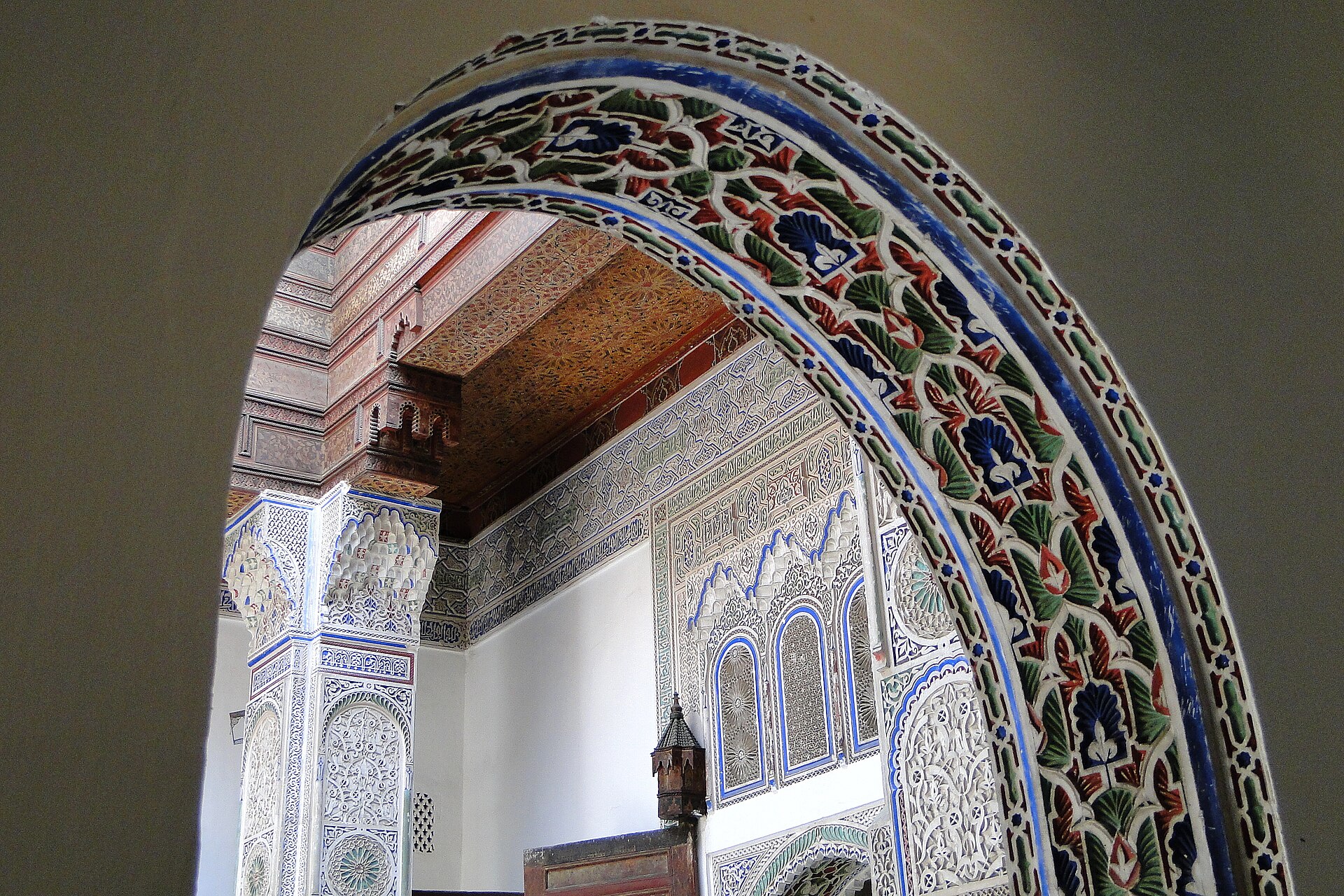
- The medina, compact and dense, is the old town: souks, houses, fondouks (old merchants' inns), hammams, and the Bou Inania Madrasa of Meknes, a religious college not to be confused with its namesake in Fez.
- The imperial city, or kasbah, is Moulay Ismail's. UNESCO describes its "long corridors between high blind walls", its palaces, gardens, towers and bastions, with large open spaces.
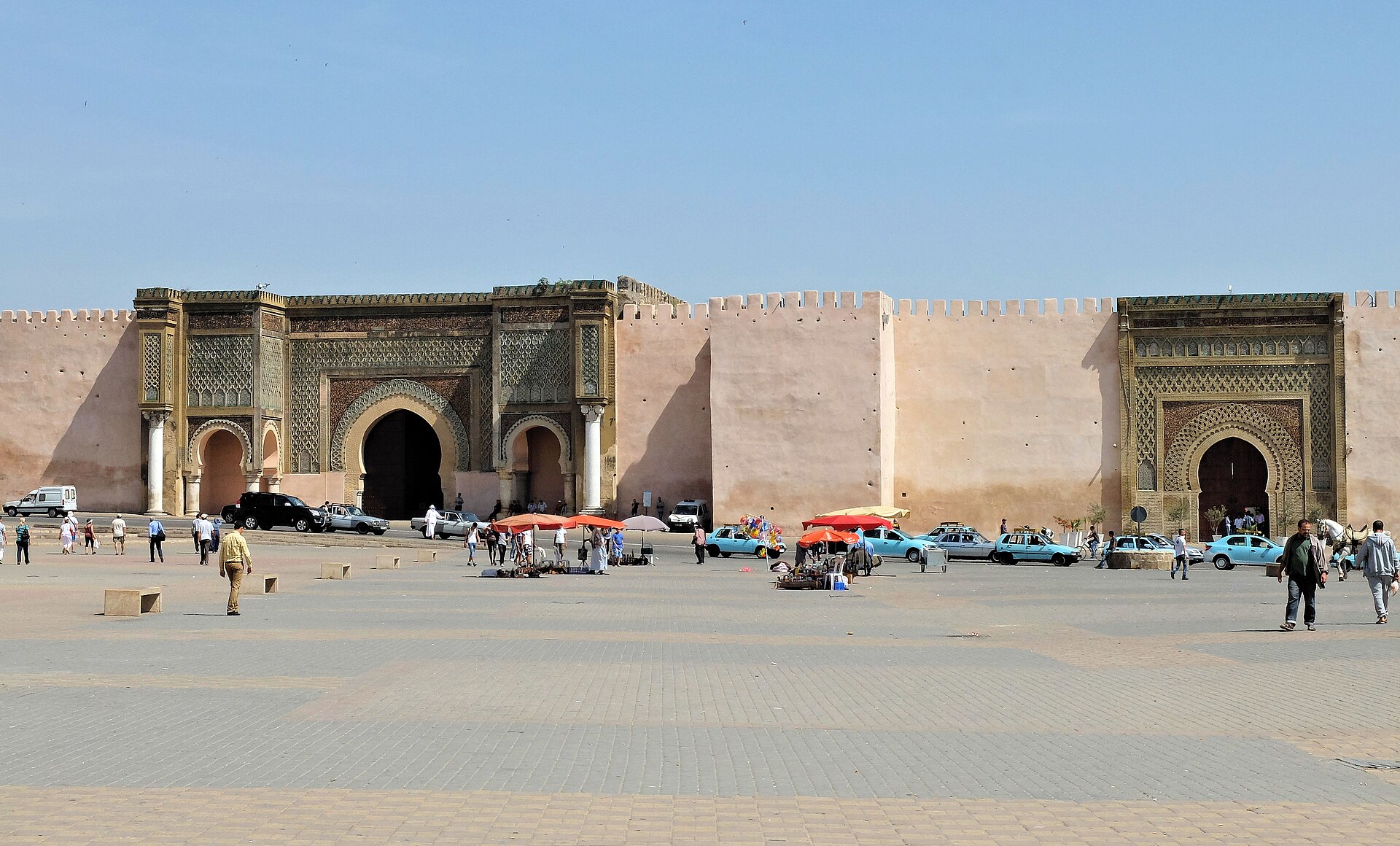
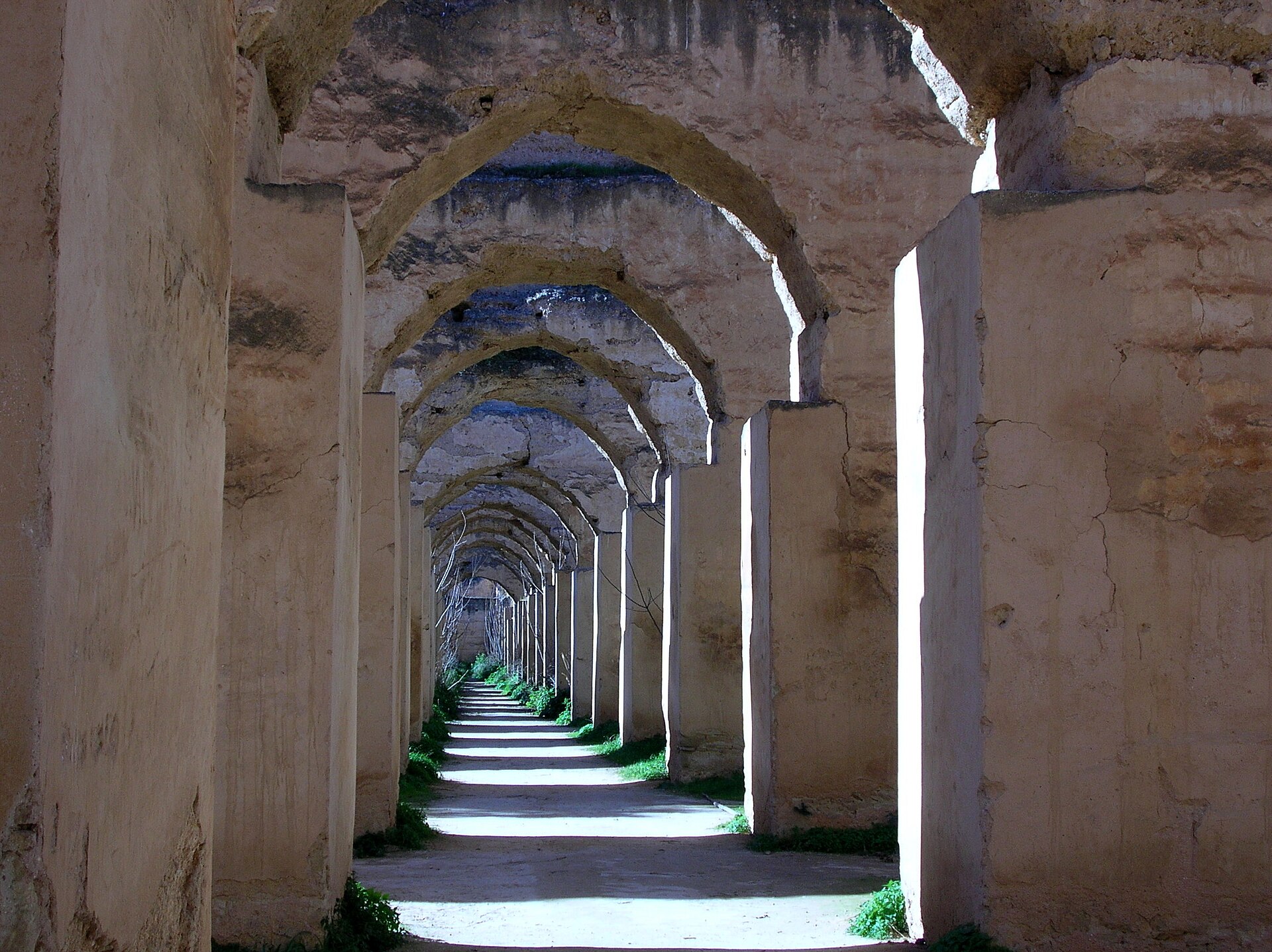
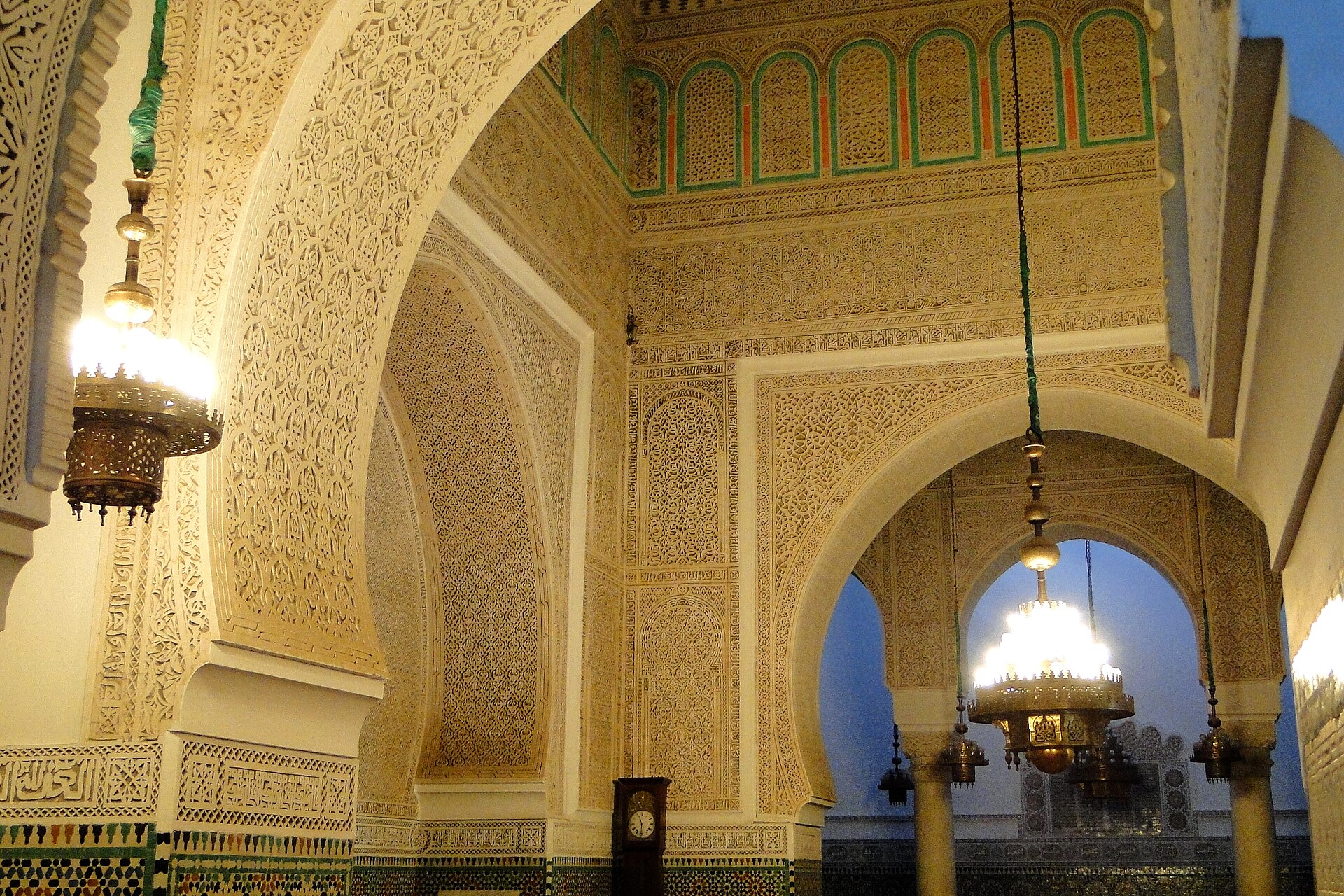
The ramparts rise to 15 m and are pierced by nine monumental gates; inside are twenty-five mosques, ten hammams, palaces and huge granaries. The Bab Mansour gate stands on Place El Hedim; the Moroccan National Tourist Office calls it "one of the masterpieces of Hispano-Moorish art". Beyond it, you visit the Mausoleum of Moulay Ismail, then the sultan's royal granaries and stables.
Sabaro recommends starting at Place El Hedim and Bab Mansour, crossing the imperial city to the granaries, then coming back into the medina for the Dar Jamai Museum and the souks. Half a day covers the essentials.
Volubilis: reading a Roman town
Volubilis was first a Mauretanian capital, founded in the 3rd century BC; it then became an important town of the Roman province of Mauretania Tingitana. It covers 42 hectares at the foot of Jebel Zerhoun, in farming country. Its boundary follows the Roman wall built in 168-169. Left unoccupied for nearly a thousand years, it has kept remains of rare authenticity: UNESCO ranks it among the richest sites of the period in North Africa, for its ruins as well as its inscriptions.
The site reads in two parts: to the north-east, on flat ground, a grid plan around the monumental quarter; to the south and west, on the slope, terraced districts.
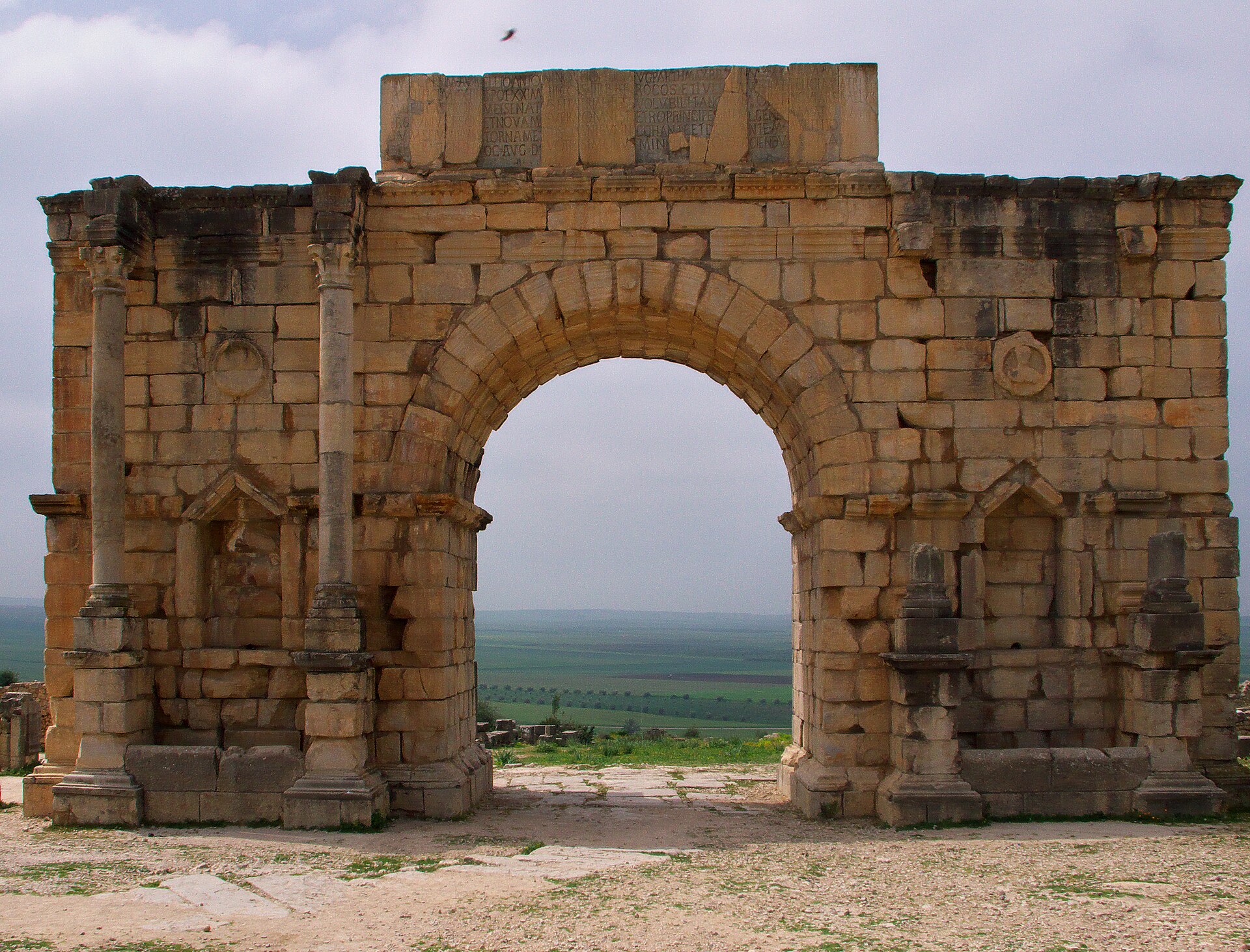
- The monumental centre: the forum, the capitol and the Arch of Caracalla, raised in 217 in honour of the emperor who had granted citizenship to the inhabitants.
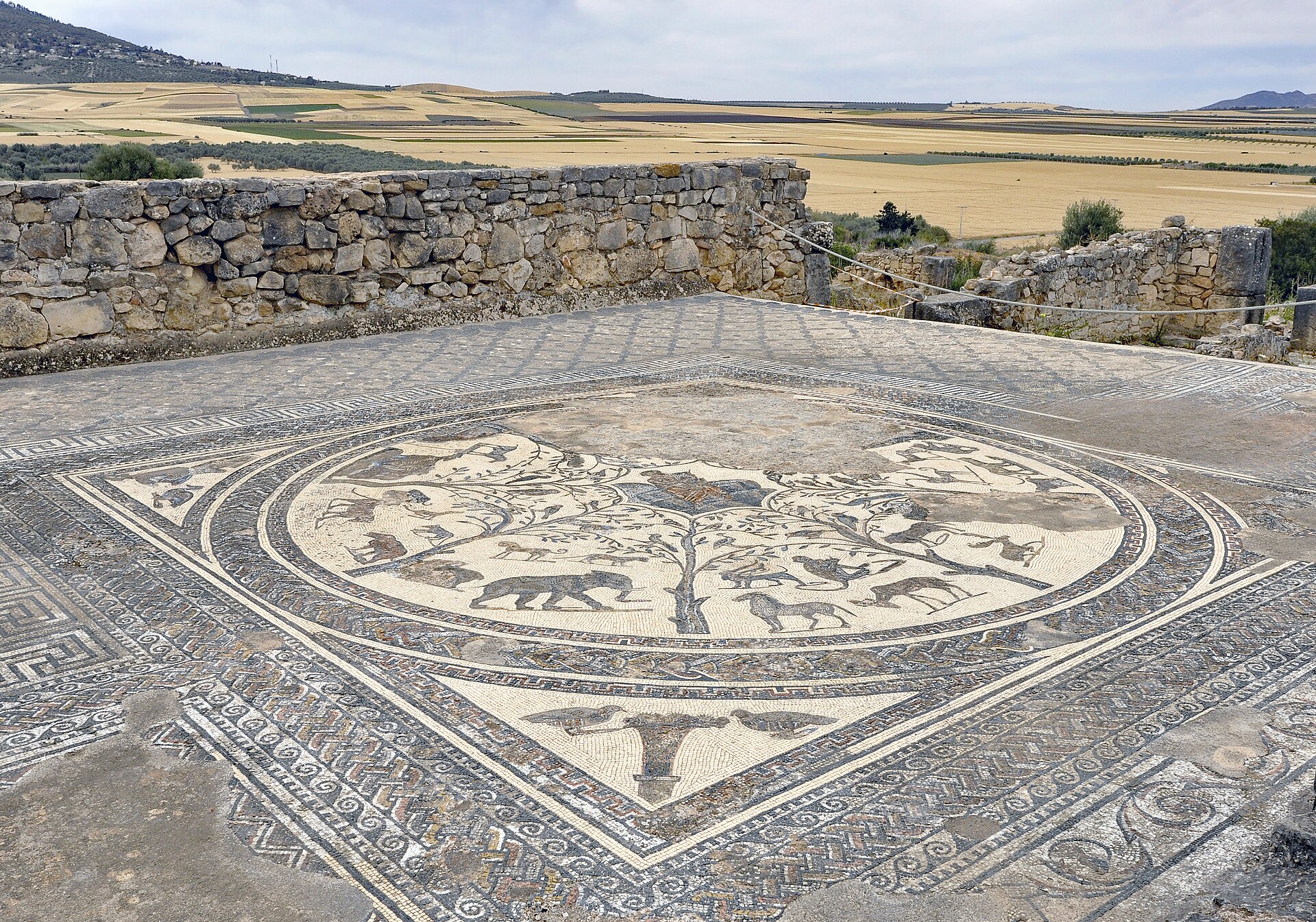
- The houses and their mosaics: the House of Orpheus, with Orpheus surrounded by animals and a mosaic of nine dolphins; the House of the Labours of Hercules, where ten of the twelve labours have been restored.
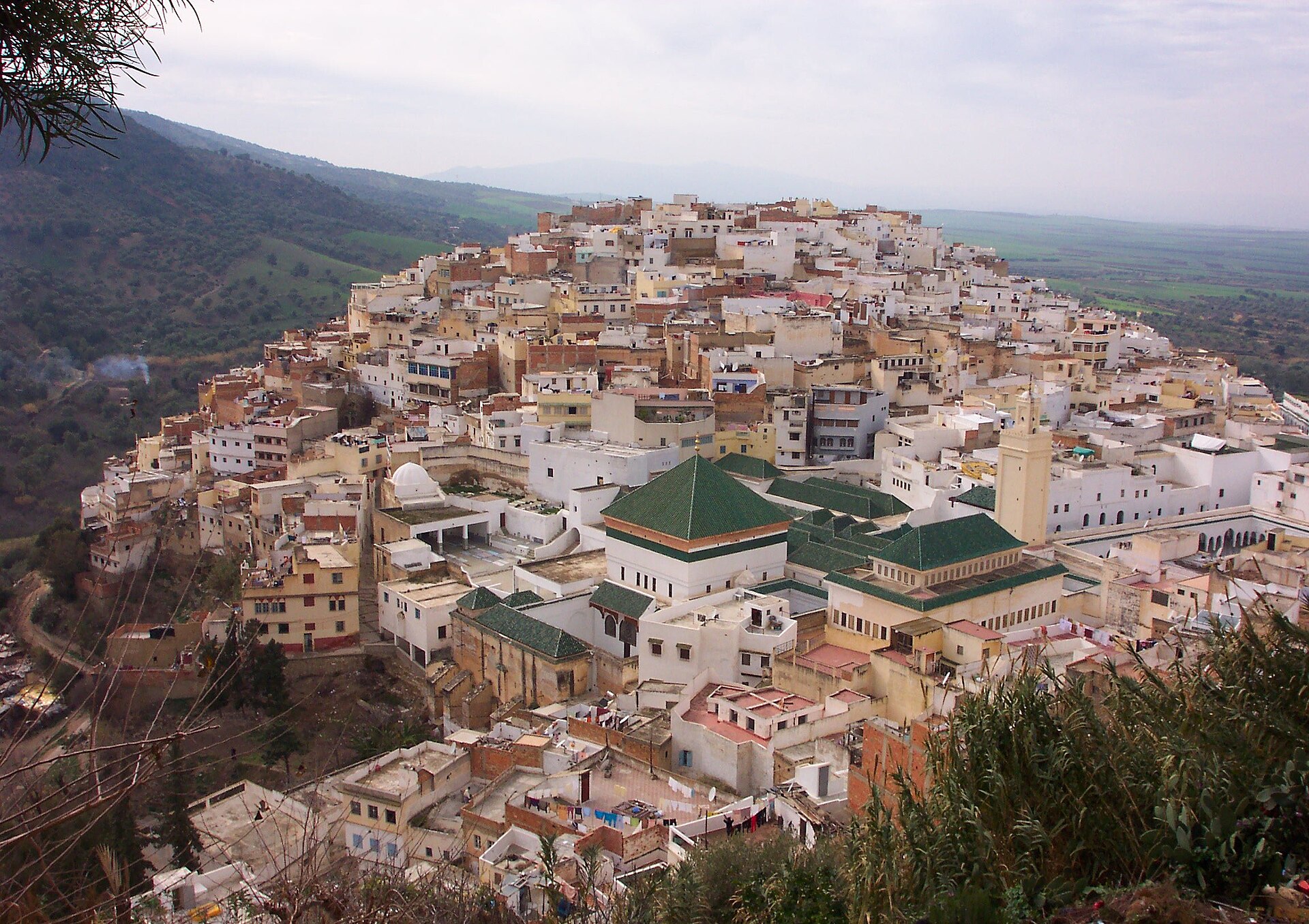
For a short time the town was also the capital of Idris I, founder of the Idrisid dynasty in the 8th century. He is buried a few kilometres away, at Moulay Idriss Zerhoun, a small holy town whose shrine draws an annual pilgrimage; day trips from Fez often stop there.
Light matters. Le Routard, the French guidebook, advises starting the visit on the right in the morning and on the left in the afternoon. Sabaro recommends early morning or late afternoon, when the light is softer and the heat less intense, and a guide to make sense of the remains.
A day or a night
From Fez, Meknes is about 1 h 10 by road, and Volubilis about thirty kilometres from Meknes. The classic day combines the two, often with a stop at Moulay Idriss: a trip of up to 6 hours from Fez can be booked from €89 per person on Musement, and a 10-hour private day including Moulay Idriss from €100 per person on Civitatis, both activity booking platforms (prices checked on 14 October 2026).
With a night in Meknes, the pace eases: Volubilis in the late afternoon, and the city the next morning. Riad El Ma, six rooms in the medina, with a small rooftop pool open in season, is about 30 km from the site.
By train, Meknes is on the Tangier-Fez line: about 2 h 40 from Tangier, changing at Kenitra between the Al Boraq high-speed train and a conventional train. Ifrane and the Middle Atlas are 54 minutes away by road.
The season. The World Meteorological Organization (WMO) 1991-2020 normals for the Meknes station show a hot summer: in July and August the average maximum is 34.1 °C, and the temperature exceeds 35 °C on about 12 days a month. Winter is cool and damp, with a 15.8 °C maximum and a 5 °C minimum in January, and 6 to 7 rainy days a month from November to March. For Volubilis, Sabaro recommends spring and autumn.
What to see
- El Hedime square and Bab Mansour visitmorocco.com
- Heri es-Souani and Moulay Ismail Mausoleum visitmorocco.com
- Dar Jamai Museum, Kara prison visitmorocco.com
- Volubilis: forum, capitol, Arch of Caracalla (217), House of Orpheus Routard
- Moulay Idriss Zerhoun Routard
When to go
Climate in Meknes
| Jan | Feb | Mar | Apr | May | Jun | Jul | Aug | Sep | Oct | Nov | Dec | |
|---|---|---|---|---|---|---|---|---|---|---|---|---|
| Max. (°C) | 15.8 | 17.0 | 19.6 | 21.7 | 26.1 | 30.4 | 34.1 | 34.1 | 29.7 | 25.7 | 19.9 | 16.9 |
Source: NOAA, normales climatiques 1991-2020 de l'OMM — WMO 1991-2020 normals, archived by NOAA, accessed 14 October 2026
Getting there
- Fes-Saiss airport (FEZ); Fez about 64 km visitmorocco.com
By air
| Airport | By road | Direct flights |
|---|---|---|
| Fez–Saïss (FEZ) | 66 km, 0h58 |
|
| Rabat–Salé (RBA) | 142 km, 1h49 |
|
Hotels chosen in the region
| Hotel | Category | Suits | Guest rating | Indicative price |
|---|---|---|---|---|
| Riad El Ma | 6-room riad in the medina | Riads, Boutique and historic hotels, Family, Museums and culture, Shopping | 4,8/5 (Tripadvisor) | from 59 € per night |
Chosen activities
- Day trip to Meknes and Volubilis from Fez — up to 6 hours · from 89 € per person
Public price collected on: Musement — accessed 14 October 2026
- Private day trip to Volubilis, Moulay Idriss and Meknes from Fez — 10 hours
Public price collected on: Civitatis — accessed 14 October 2026
- Private day trip to Meknes and Volubilis from Casablanca — 11 hours
Public price collected on: Civitatis — accessed 14 October 2026
Read next
Frequently asked questions
Can you visit Meknes and Volubilis in a day from Fez?
Yes: about 1 h 10 by road to Meknes, then some thirty kilometres to Volubilis. Sabaro recommends half a day for Meknes and two to three hours for Volubilis, with an optional stop at Moulay Idriss.
Should you spend the night in Meknes?
A day is enough, but a night lets you see Volubilis at the end of the day, in softer light, and visit Meknes the next morning without rushing.
What is there to see at Volubilis?
The forum, the capitol, the Arch of Caracalla from the year 217, and above all the mosaics in the houses, such as those of the House of Orpheus and the House of the Labours of Hercules. The site covers 42 hectares.
Who built Meknes?
The town had existed since the 11th century, but it owes its imperial city to Sultan Moulay Ismail, who reigned from 1672 to 1727: 15 m ramparts, monumental gates, palaces, granaries and stables. His mausoleum can be visited.
A travel advisor replies by email. Free, no commitment.