Marrakesh
Marrakesh, founded in the 11th century, keeps a 700-hectare medina listed as a UNESCO World Heritage Site in 1985, Jemaa el-Fna square, palaces and gardens. For a first trip to Morocco, a stay in a riad or a palace hotel, or a base for the Atlas and the Agafay desert, a few hours' flight away.
A capital that gave the country its name
Marrakesh was founded in 1070-1072 by the Almoravids, a Berber dynasty from the Sahara, and then became the capital of the Almohads, from 1147 to 1269. Over those two centuries it ruled North Africa and Andalusia. UNESCO (the United Nations Educational, Scientific and Cultural Organization, which keeps the World Heritage List) notes that the city "gave its name to the Moroccan empire".
When you visit, this history reads in two layers.
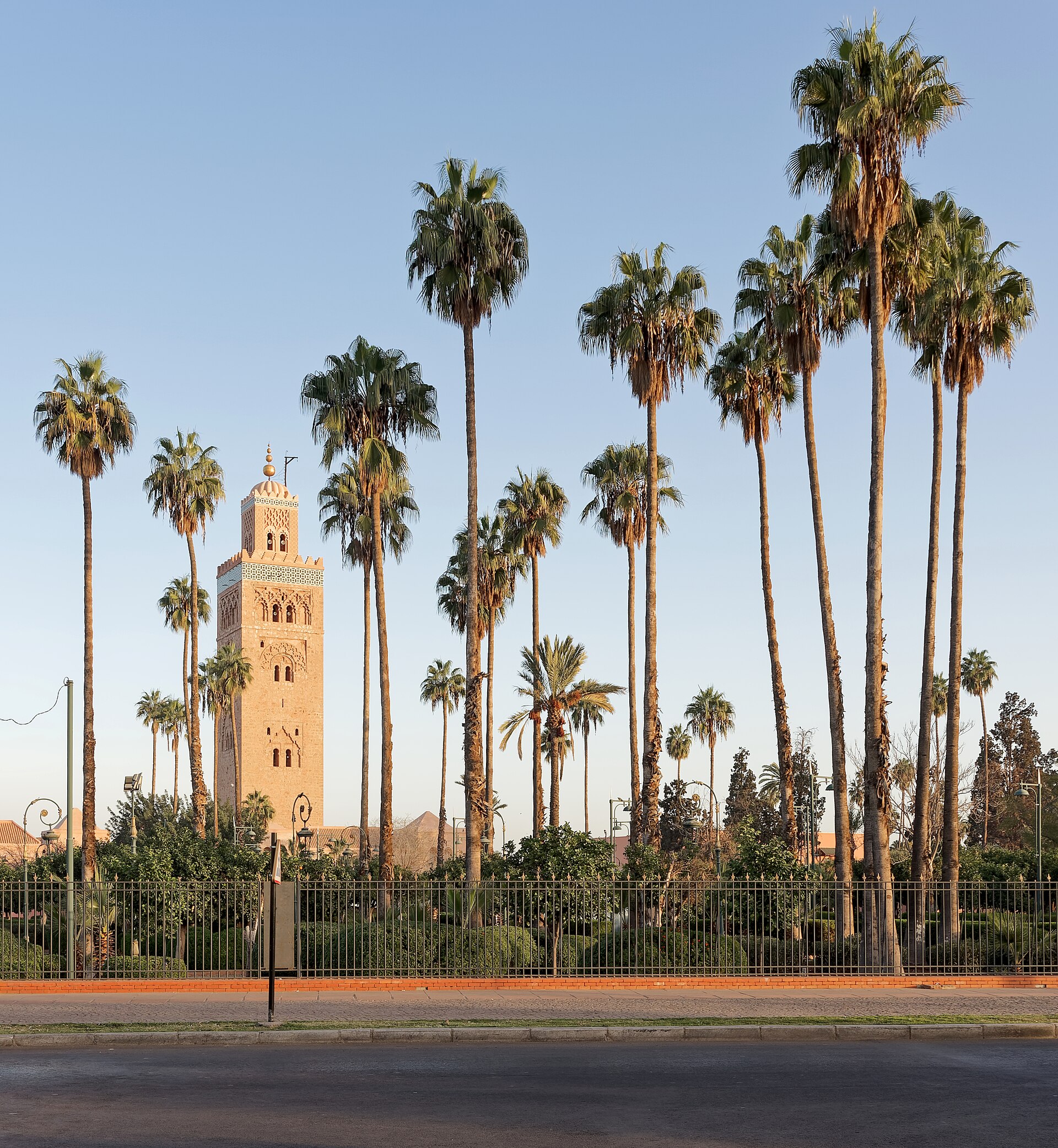
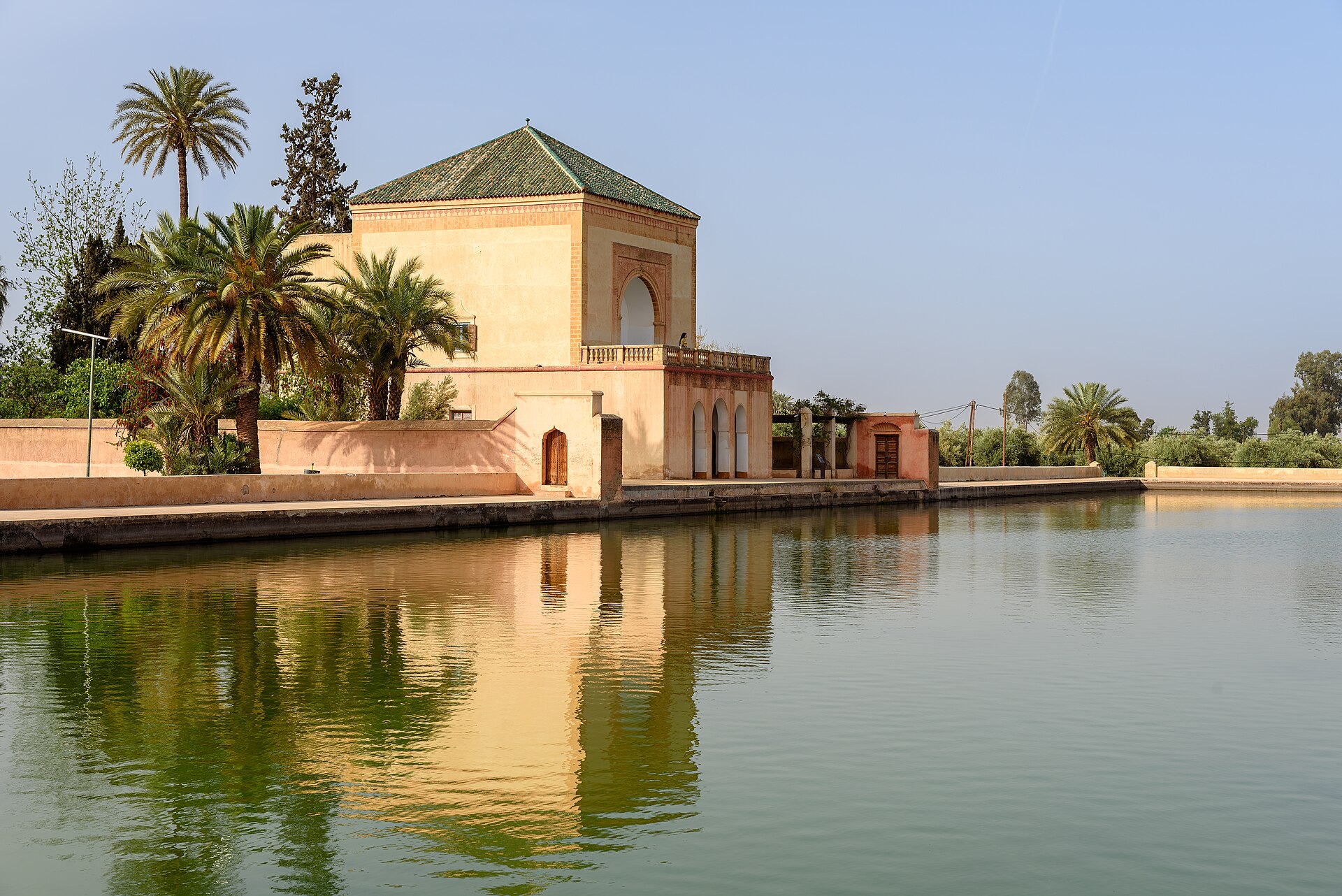
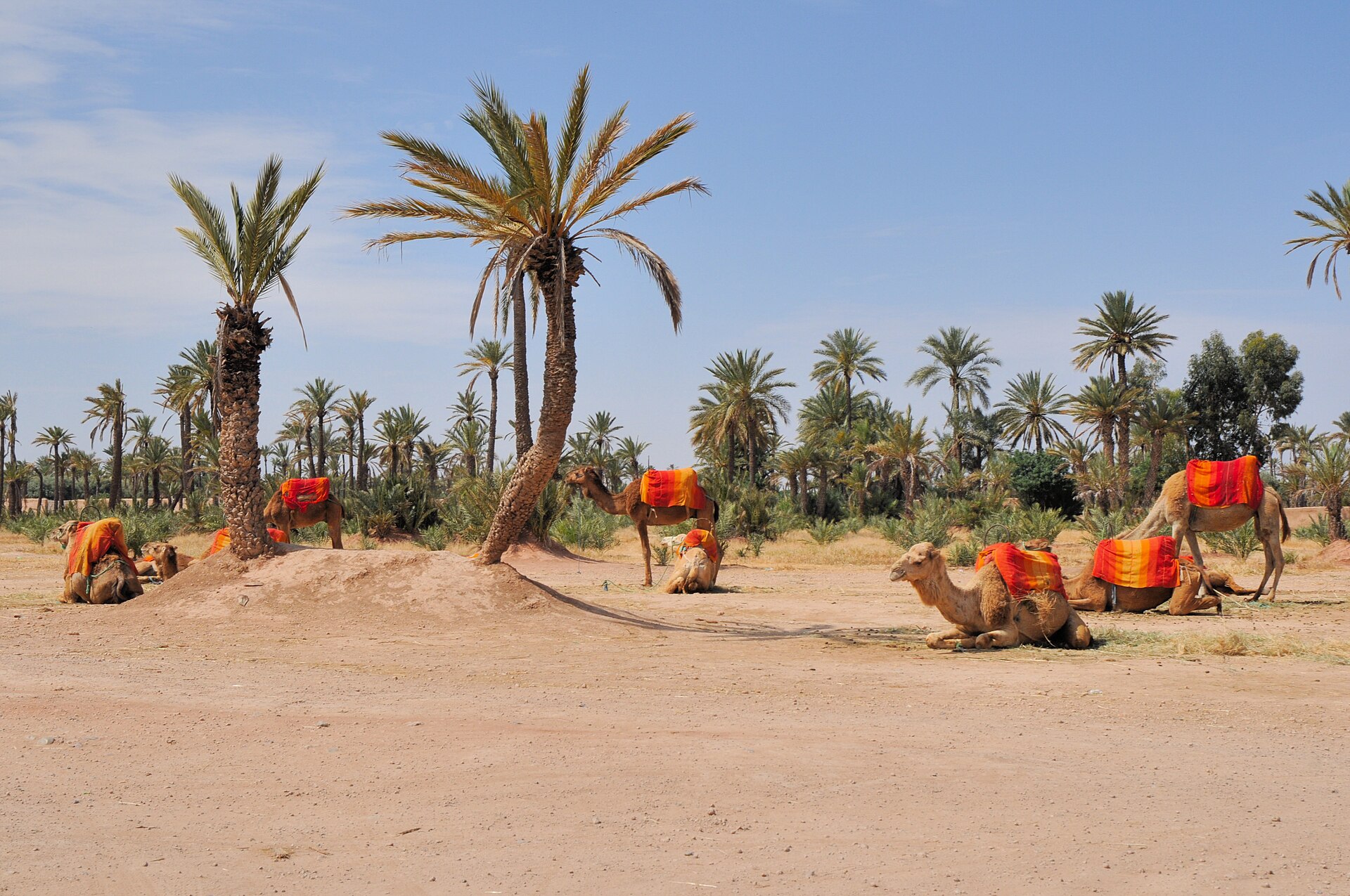
- The founders' era, in the 11th and 12th centuries: the Koutoubia Mosque and its 77-metre minaret, the landmark of the whole city, the kasbah, the ramparts and the monumental gates, the Agdal and Menara gardens, and the Palmeraie, whose planting is credited to the Almoravids.
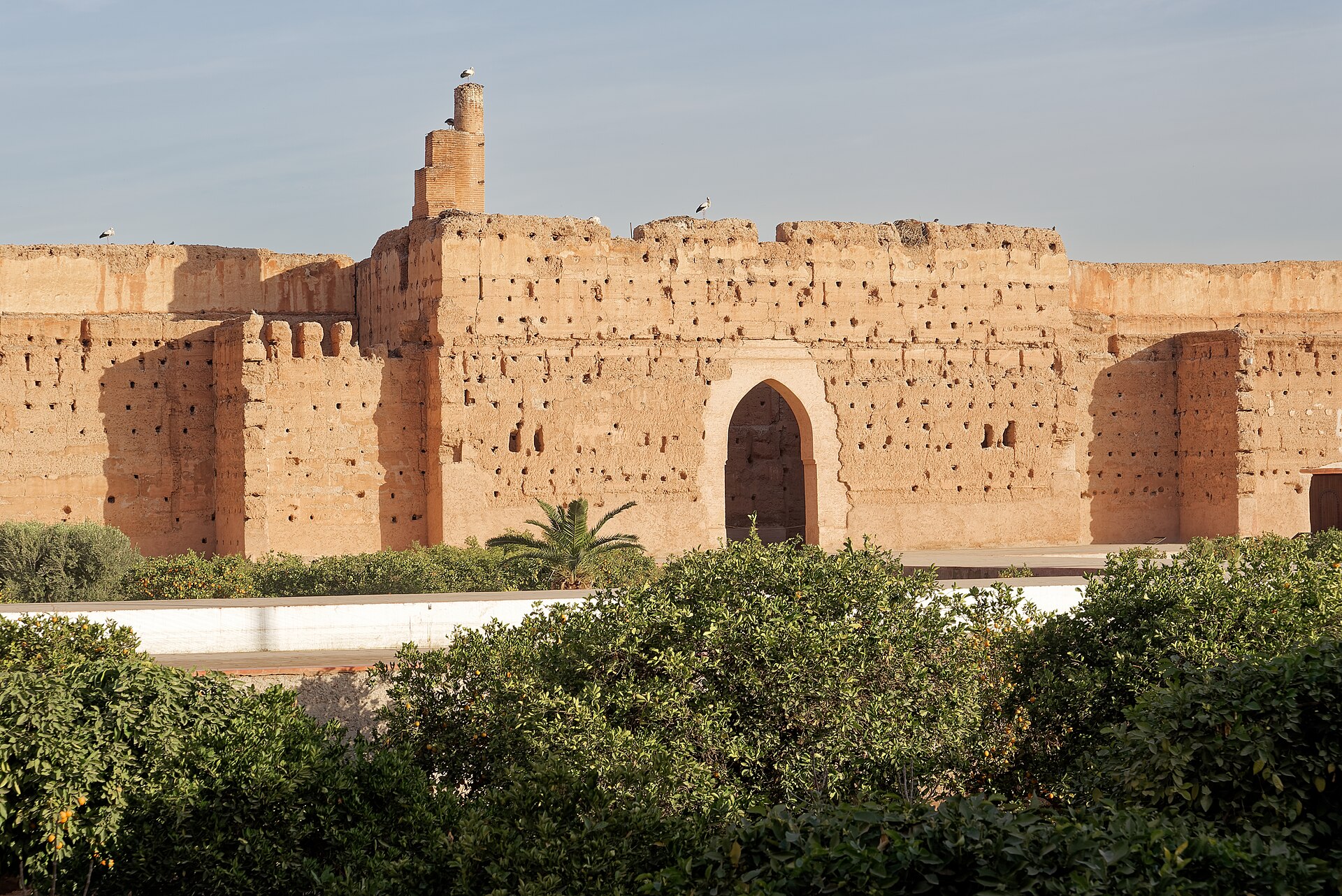
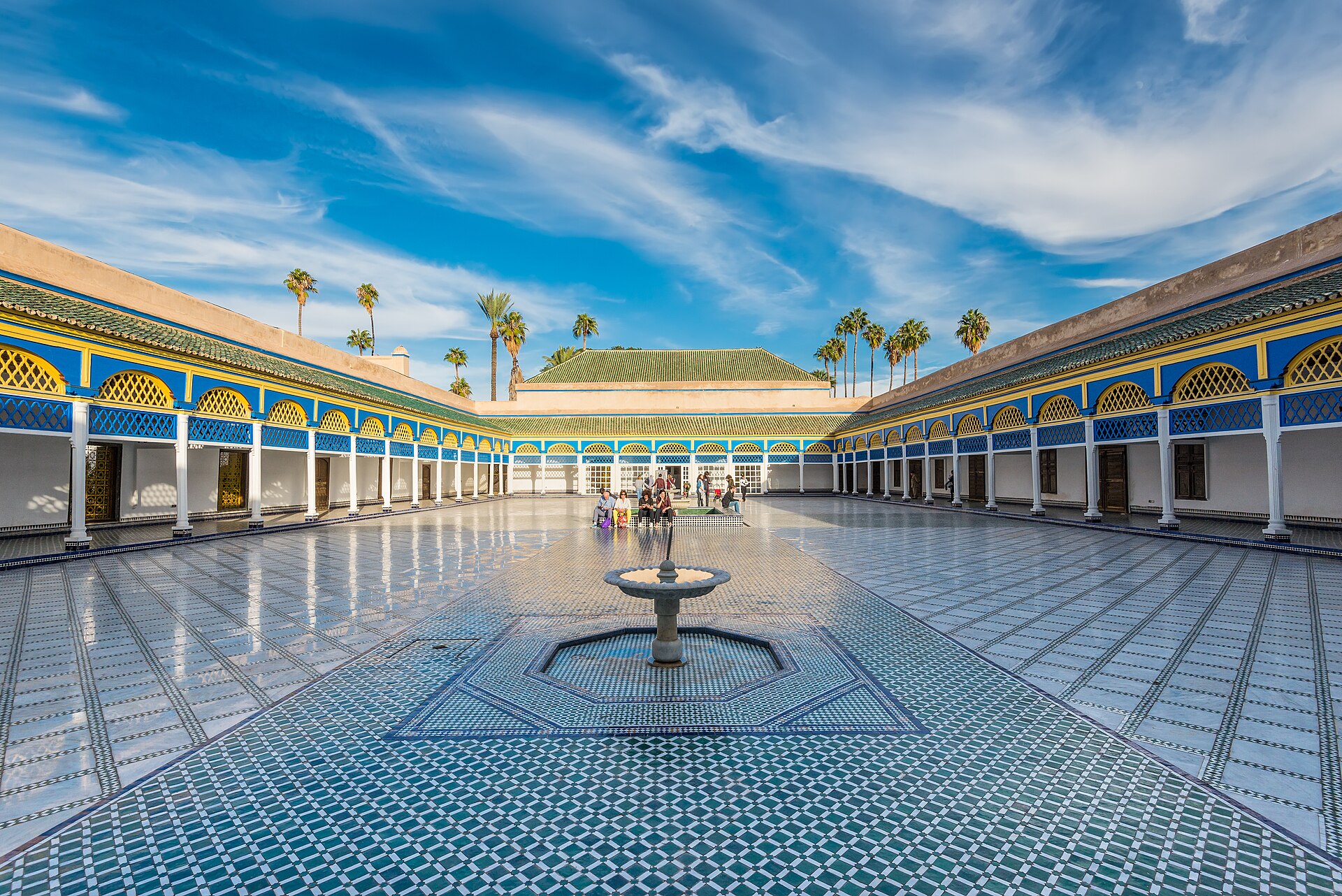
- The centuries that followed: the El Badi Palace, now in ruins, the Saadian Tombs, the Ben Youssef Madrasa (a religious college with student lodgings) and the Bahia Palace, along with the medina's great houses.
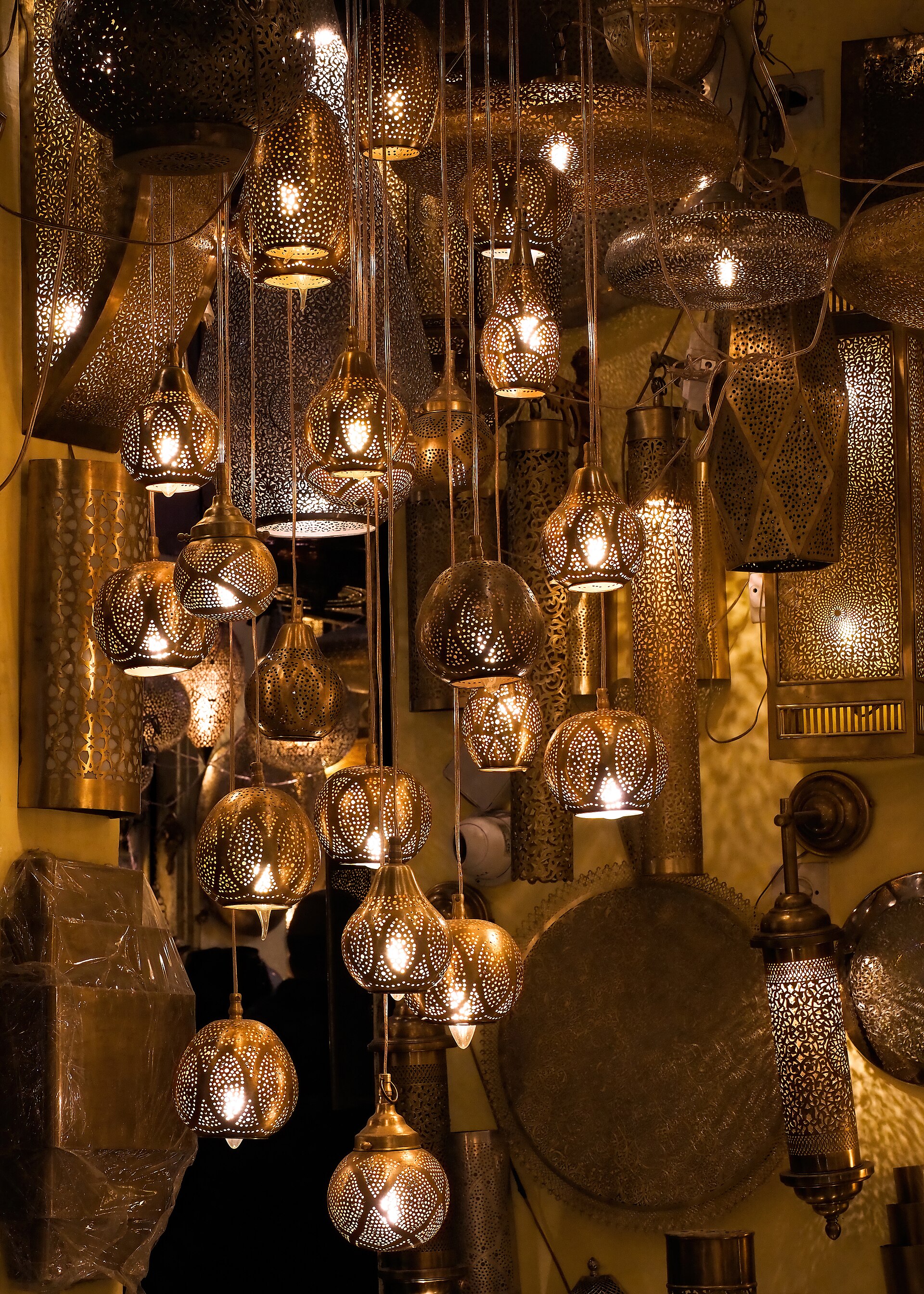
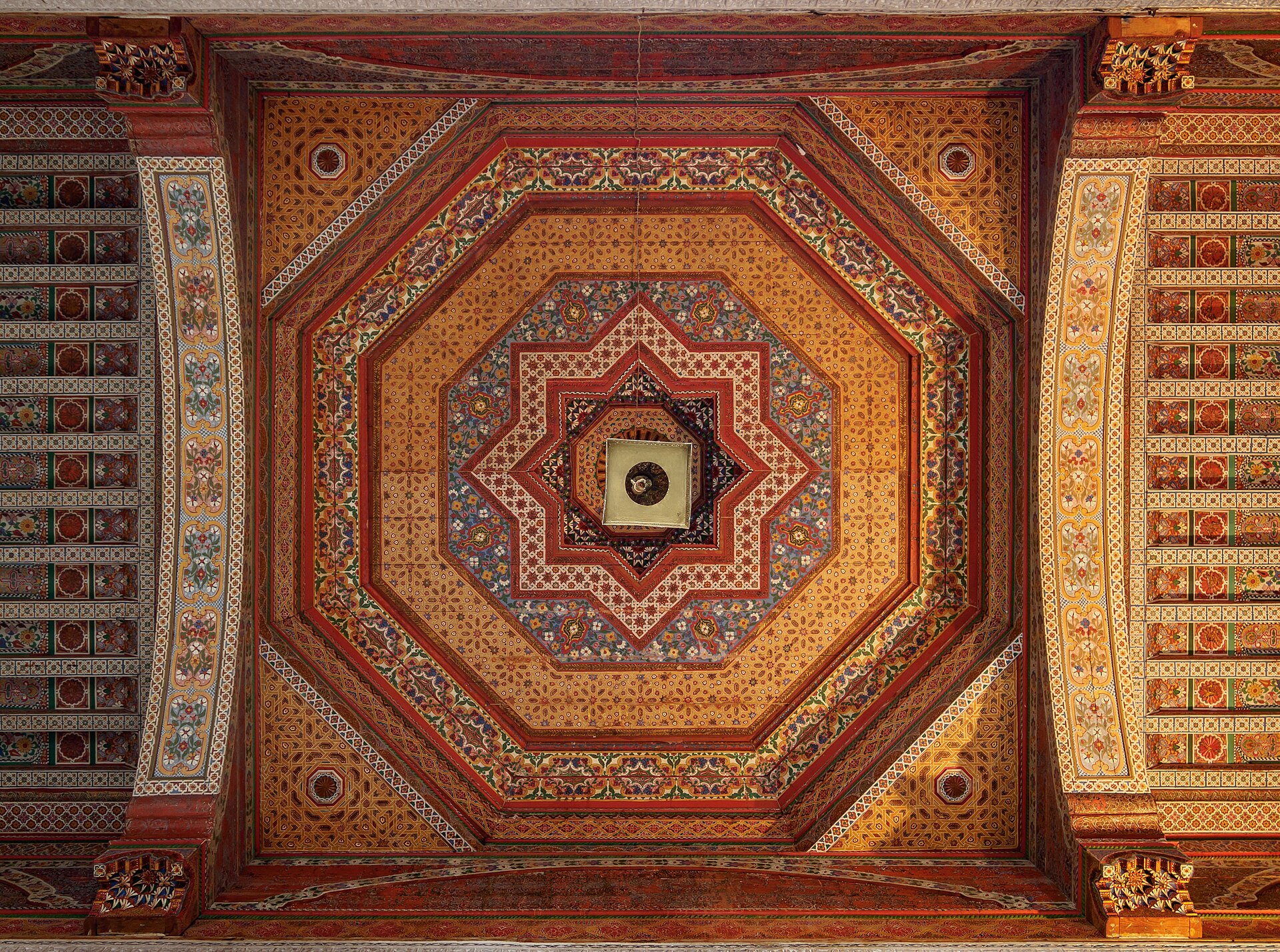
The medina covers 700 hectares inside its walls. UNESCO describes it as "an outstanding example of a living historic city", with its lanes, souks, fondouks (old merchants' inns) and workshops. The building crafts are still at work there: zellige (cut ceramic mosaic), tadelakt (smoothed and polished lime plaster), painted and carved wood, carved plaster, wrought iron.
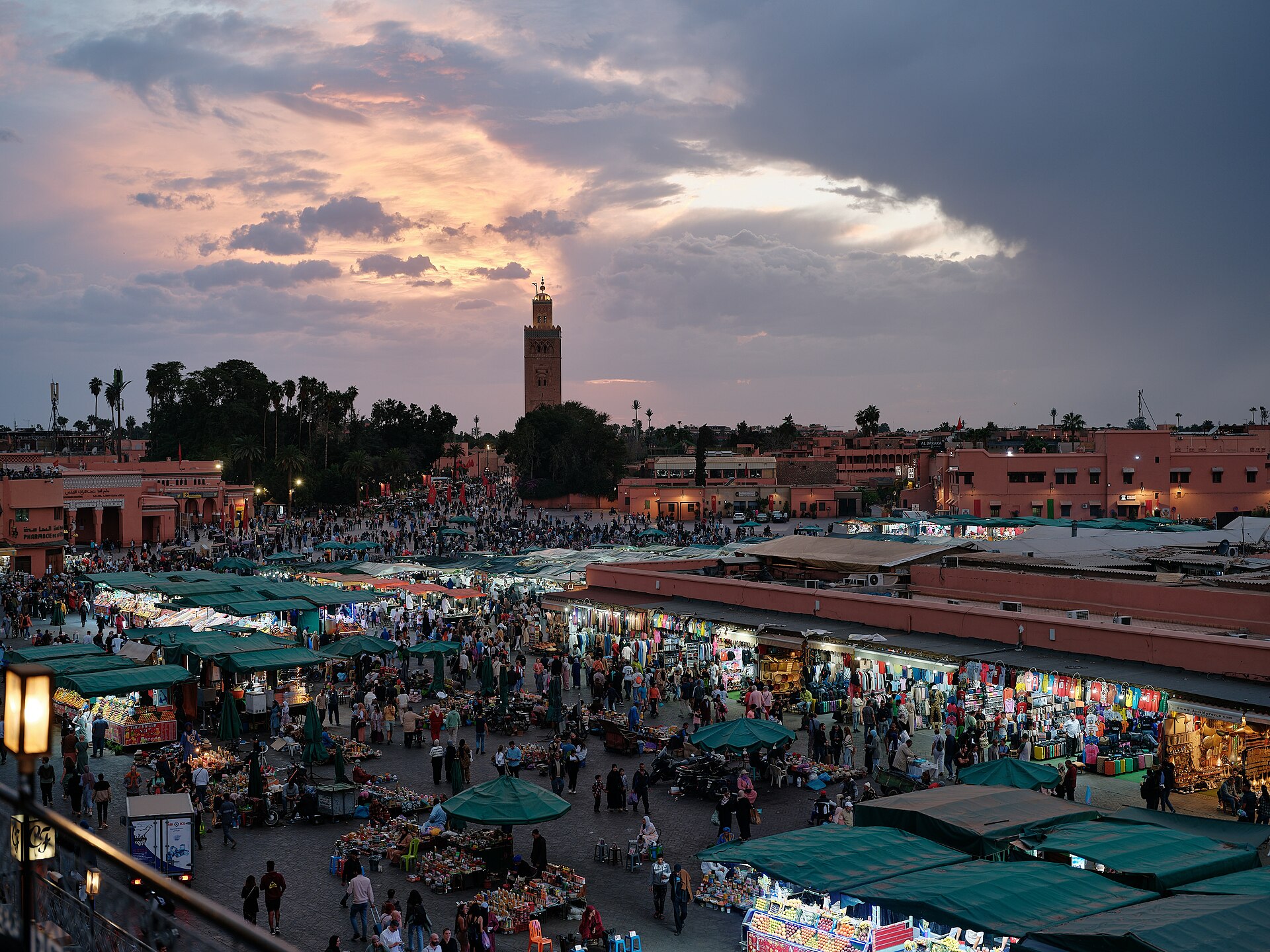
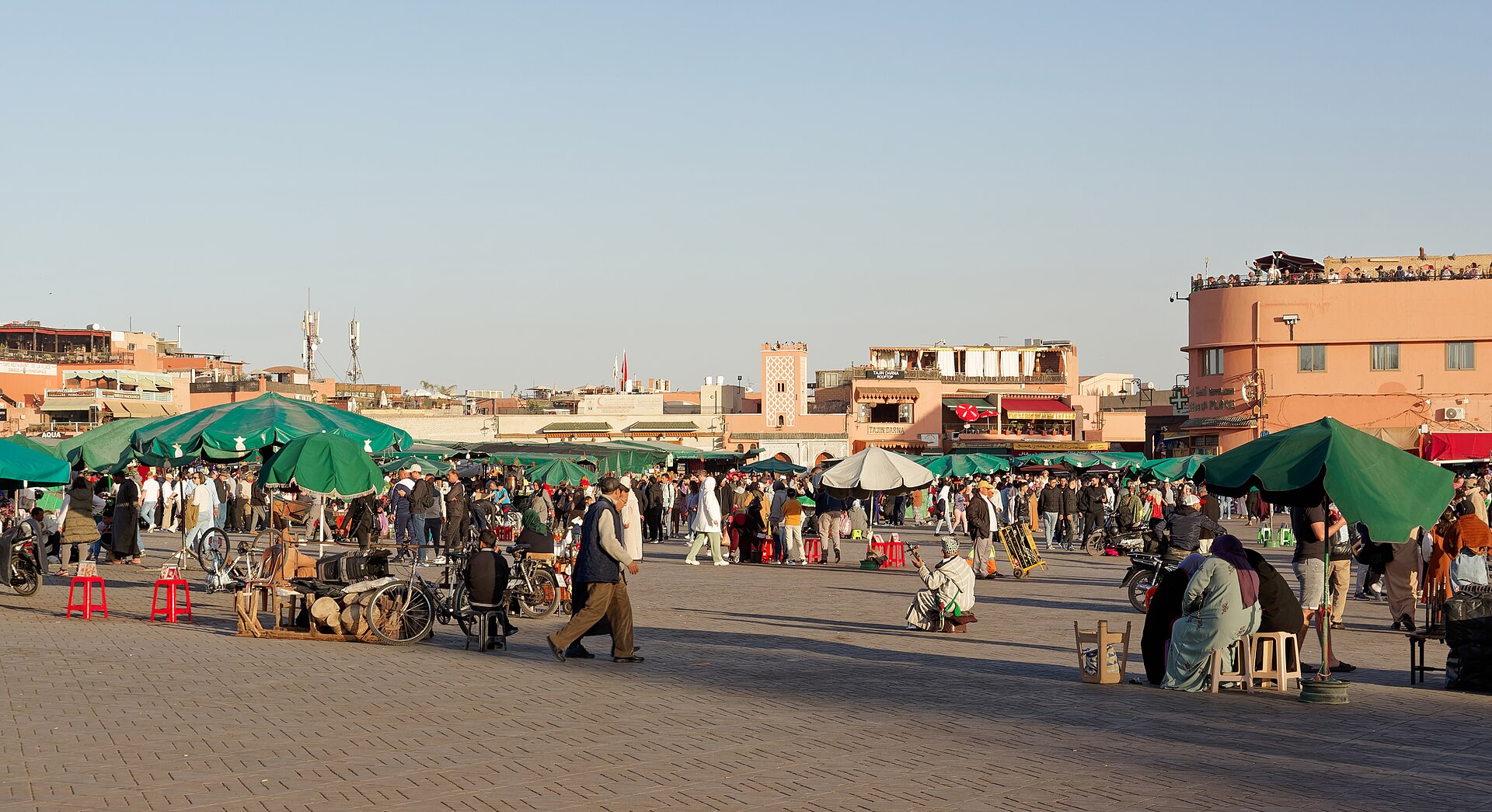
Jemaa el-Fna square is listed separately, on UNESCO's list of intangible cultural heritage: proclaimed in 2001, inscribed in 2008. What UNESCO protects is what happens there, "throughout the day and until late at night": storytellers, poets, Berber musicians, Gnawa dancers, snake charmers, henna tattooists, fruit sellers and stalls of traditional dishes.
Four Marrakeshes, and where to stay
The choice of neighbourhood sets the tone of the stay. The hotels in Sabaro's selection fall into four areas.
The medina. You stay here to walk out into the souks and come back to Jemaa el-Fna in the evening. Riads, houses built around a courtyard, range from a handful of rooms to large estates: El Fenn, near Bab el Ksour, a five-minute walk from the Koutoubia, has 41 rooms and a 1,300 m² rooftop facing the minaret; Les Jardins de la Koutoubia, a 108-room hotel, is close to the square; the Royal Mansour, a five-minute walk from Jemaa el-Fna, is a set of 53 private riads, each with its own rooftop pool. La Mamounia, at the gates of the medina, stands in its own gardens.
The kasbah. South of the medina, around the Saadian Tombs and the El Badi Palace, the area is more residential. La Sultana, with 28 rooms and suites, is close to the Saadian Tombs.
Gueliz and Hivernage. These are the modern districts, with wide avenues, shops, the Palais des Congrès and the Royal Theatre. The Jardin Majorelle is in Gueliz.
The Palmeraie and the outskirts. Around the city, resorts offer space, pools and golf: Club Med and the adults-only Riu Tikida Garden in the Palmeraie; Amanjena to the south, next to the Amelkis golf course; the Fairmont Royal Palm in the middle of its 18-hole course, facing the Atlas. From there, the medina is a car transfer away.
Sabaro recommends the medina for a first stay of three or four nights, and a resort for a longer stay, with family or for golf. One combination works well: two nights in the medina, then the rest of the stay on the outskirts or in the Agafay desert.
The rhythm of a day
Marrakesh is best seen early and late, with a break in the middle.
- Morning: gardens and monuments. The Jardin Majorelle opens every day from 8 am to 5.30 pm local time; the Pierre Bergé Museum of Berber Arts, inside the garden, from 8.30 am to 5 pm. Sabaro recommends the first time slots, which are the quietest.
- Early afternoon: shade. A palace with cool courtyards such as the Bahia, a museum, or a break at the riad, by the pool or in a hammam.
- Late afternoon: the souks, north of Jemaa el-Fna, once the heat eases.
- Evening: the square. Sabaro recommends looking at it first from a rooftop terrace at sunset, then going down to eat at one of the stalls.
For a first visit, Sabaro recommends half a day in the souks with a licensed guide: they give you the medina's landmarks, and you explore on your own afterwards. A 3-hour tour can be booked from €18 per person on GetYourGuide, an activity booking platform (price checked on 11 October 2026).
Seasons in detail
The World Meteorological Organization (WMO) 1991-2020 normals for the Marrakesh station set the rhythm of the year.
- Summer is very hot. In July the average maximum is 37.7 °C; the temperature exceeds 35 °C on about 23 days out of 31, and 40 °C on nearly 9 days. The city remains visitable if you shift everything: go out at dawn and in the evening, and spend the middle of the day by the pool. Sabaro then recommends a hotel with a pool rather than a small riad.
- Winter is mild by day and cool at night. In January the average maximum is 19.1 °C and the minimum 5.9 °C. A riad is built around an open courtyard: Sabaro recommends checking that the room is heated and bringing a warm layer for the evening.
- Rain is scarce: 221 mm a year, over about 29 days, mostly from November to April.
- Spring and autumn are the most pleasant seasons: average maximums of 24 to 29 °C from March to May, and 28 to 33 °C in September and October.
Several events also set the calendar: the international marathon at the end of January, the 1-54 Contemporary African Art Fair in March at La Mamounia, the Grand Prix Hassan II tennis tournament in spring, the National Festival of Popular Arts at the El Badi Palace in July, and the Marrakech International Film Festival in November. Hotels fill up during those weeks: Sabaro recommends booking early.
What to know before you go
- The Jardin Majorelle and the Yves Saint Laurent Museum are booked online only, on tickets.jardinmajorelle.com, the only official site. Tickets sold elsewhere give no access to the garden or the museums. The Yves Saint Laurent Museum is closed on Wednesdays, as is the private garden of the Villa Oasis.
- Taxis. Use official taxis where possible. In large cities such as Marrakesh, bag snatching from motorbikes is reported: keep your phone and bag on the wall side. Your country's foreign ministry advice is in the "Travel advice" table on this page.
- Unsolicited offers. In the medina, strangers often offer to show you the way, usually towards a shop. It is best to decline politely and ask your host or a shopkeeper for directions.
- Transfers. The Royal Mansour provides a free airport shuttle. For a riad, Sabaro recommends booking the transfer with the room and asking where the car will drop you off.
- Roads. Casablanca-Marrakesh is among the most dangerous national roads in the country, and the Marrakesh-Agadir mountain motorway is very dangerous. For day trips, Sabaro recommends a driver.
How many days, and what to combine
Sabaro recommends three to four days for Marrakesh on its own: a day for the medina and the souks, a day for the palaces and the kasbah, half a day for Majorelle and Gueliz, and free time for a hammam, a cooking class or a rooftop. Beyond that, the city works as a base.
- The Agafay desert, a stone desert about 40 km away, or 45 minutes by road: spend an evening or a night in a camp, such as Inara Camp or Scarabeo Camp.
- The High Atlas: Imlil, the starting point for treks towards Toubkal, is about 1 h 20 by road; the Ourika valley and Lake Lalla Takerkoust make easy day trips.
- Essaouira, on the Atlantic, about 184 km away: you leave the dry heat of Marrakesh for a town where the average maximum stays between 18 and 23 °C all year round.
- Ouarzazate and the road of the kasbahs, 194 km and 3 h 45 away over the Tizi n'Tichka pass, then the Merzouga desert further on: Sabaro recommends at least one night on the way.
- Golf: courses surround the city, from the Palmeraie to the Ourika road; the page on golf in Morocco covers them in detail.
- The train north: Casablanca is about 2 h 35 away by conventional ONCF train (Office National des Chemins de Fer, Morocco's national railway); Tangier about 5 h 14, changing in Casablanca for the Al Boraq high-speed train. A night train also links Tangier and Marrakesh. Fez, the other great imperial city, pairs with Marrakesh on an imperial cities tour.
What to see
- Jemaa el-Fna square — UNESCO intangible heritage visitmorocco.com
- Medina and souks — World Heritage since 1985 UNESCO
- Koutoubia Mosque visitmorocco.com
- El Badi Palace and Saadian Tombs visitmorocco.com
- Bahia Palace and Ben Youssef Madrasa visitmorocco.com
- Jardin Majorelle and Yves Saint Laurent Museum visitmorocco.com
- Menara basin visitmorocco.com
- Maison de la Photographie visitmorocco.com
- Lalla Takerkoust lake visitmorocco.com
When to go
Climate in Marrakesh
| Jan | Feb | Mar | Apr | May | Jun | Jul | Aug | Sep | Oct | Nov | Dec | |
|---|---|---|---|---|---|---|---|---|---|---|---|---|
| Max. (°C) | 19.1 | 20.7 | 23.6 | 25.7 | 29.4 | 33.6 | 37.7 | 37.4 | 32.5 | 28.5 | 23.1 | 20.1 |
Source: NOAA, station OMM 60230 — WMO 1991-2020 normals, archived by NOAA, accessed 11 October 2026
Getting there
- Marrakesh-Menara airport (RAK); 3 hours from Paris and 3h10 from Lyon by direct flight3h25 from Brussels by direct flighta few hours' flight from Europe's main cities, direct or with one stop Routard
- Essaouira about 174 km; Ouarzazate 194 km and 3 h 45 over the Tizi n'Tichka pass visitmorocco.com
By air
| Airport | By road | Direct flights |
|---|---|---|
| Marrakesh Menara (RAK) | 10 km, 0h16 |
|
| Essaouira–Mogador (ESU) | 189 km, 2h53 |
|
| Beni Mellal (BEM) | 207 km, 3h33 |
Hotels chosen in the region
| Hotel | Category | Suits | Guest rating | Indicative price |
|---|---|---|---|---|
| Amanjena | Pavilion resort | Golf, Honeymoon, Spa and wellness, Character hotels, Family | 9,7/10 (Booking.com) | from 1,234 € per night |
| Club Med Marrakech La Palmeraie | All-inclusive holiday club | Family, Golf, Spa and wellness | 4,5/5 (Tripadvisor) | from 486 € per night |
| El Fenn | Boutique riad | Riads, Boutique and historic hotels, Honeymoon, Family, Spa and wellness, Museums and culture, Golf | 9,7/10 (Booking.com) | from 710 € per night |
| Fairmont Royal Palm Marrakech | Golf resort | Golf, Family, Spa and wellness, Honeymoon | 9,2/10 (Booking.com) | from 709 € per night |
| Inara Camp | Luxury camp | Desert, Family | 9,0/10 (Booking.com) | from 238 € per night |
| Les Jardins de la Koutoubia | Medina hotel | Spa and wellness, Boutique and historic hotels, Riads, Museums and culture, Golf | 9,0/10 (Booking.com) | from 385 € per night |
| La Mamounia | Historic palace | Spa and wellness, Boutique and historic hotels, Honeymoon, Family, Museums and culture, Golf | 4,3/5 (Tripadvisor) | from 832 € per night |
| La Sultana Marrakech | Boutique hotel in the kasbah | Honeymoon, Boutique and historic hotels, Riads, Food and dining, Spa and wellness, Museums and culture, Golf | 9,3/10 (Booking.com) | from 915 € per night |
| Mandarin Oriental Marrakech | Villa resort | Spa and wellness, Family, Honeymoon, Food and dining, Golf | 9,1/10 (Booking.com) | from 1,377 € per night |
| Riu Tikida Garden | Adults only, all-inclusive | Adults only, Spa and wellness, Golf | 8,3/10 (Booking.com) | from 193 € per night |
| Royal Mansour Marrakech | Palace of private riads | Riads, Spa and wellness, Honeymoon, Family, Character hotels, Food and dining, Museums and culture, Golf | 9,4/10 (Booking.com) | from 2,754 € per night |
| Scarabeo Camp | Camps | Desert, Family | 4,3/5 (Tripadvisor) | Price on request |
| Selman Marrakech | Palace and stud farm | Spa and wellness, Character hotels, Family, Golf | 9,1/10 (Booking.com) | from 792 € per night |
Chosen activities
- Guided tour of the medina souks — 3 hours · from 18 € per person
Public price collected on: GetYourGuide — accessed 11 October 2026
- Moroccan cooking workshop at La Maison Arabe — 1 to 3 hours · from 30 € per person
Public price collected on: GetYourGuide — accessed 11 October 2026
Upcoming events
- 20 November 2026 – 28 November 2026 Marrakech International Film Festival
- 9 January 2027 – 23 January 2027 Dakar 2027 in Morocco
- 31 January 2027 Marrakech International Marathon
- 18 March 2027 – 21 March 2027 1-54 Contemporary African Art Fair, Marrakech
- 29 March 2027 – 4 April 2027 Grand Prix Hassan II, ATP tournament in Marrakech (estimated date)
- 1 July 2027 – 15 July 2027 National Festival of Popular Arts, Marrakech (estimated date)
Read next
Travel advice
| Country | Official advice | Source |
|---|---|---|
| France | Extra vigilance in large cities such as Marrakesh, where bag snatching from motorbikes is reported; use official taxis where possible. Casablanca-Marrakesh is among the most dangerous national roads in the country, and the Marrakesh-Agadir mountain motorway is considered very dangerous | France Diplomatie (Site last updated 15 September 2026) |
| United Kingdom | No area-specific advice: the FCDO 'Regional risks' section only covers Western Sahara and the Algeria border | GOV.UK (FCDO) (Site last updated 19 August 2026) |
| Belgium | Not checked by Sabaro: see diplomatie.belgium.be | |
| Switzerland | Not checked by Sabaro: see DFAE (eda.admin.ch) | |
| Luxembourg | Not checked by Sabaro: see mae.gouvernement.lu | |
| Ireland | Not checked by Sabaro: see ireland.ie (DFA) | |
| Germany | Not checked by Sabaro: see Auswärtiges Amt | |
| Sweden | Not checked by Sabaro: see Regeringen (UD) | |
| Denmark | Not checked by Sabaro: see Udenrigsministeriet (um.dk) | |
| Norway | Not checked by Sabaro: see Regjeringen | |
| Poland | Not checked by Sabaro: see Odyseusz (MSZ) | |
| Czechia | Not checked by Sabaro: see MZV ČR | |
| Austria | Not checked by Sabaro: see BMEIA | |
| Netherlands | Not checked by Sabaro: see Nederland Wereldwijd | |
| Italy | Not checked by Sabaro: see Viaggiare Sicuri | |
| Spain | Not checked by Sabaro: see exteriores.gob.es | |
| Portugal | Not checked by Sabaro: see Portal das Comunidades | |
| Finland | Not checked by Sabaro: see Ulkoministeriö (um.fi) | |
Rules change: always check the official website before you travel.
Frequently asked questions
How many days do you need in Marrakesh?
Three to four days, in Sabaro's view: the medina and the souks, the palaces and the kasbah, Majorelle and Gueliz, and some free time. Add a night in the Agafay desert or a day in the Atlas.
Do you need to book the Jardin Majorelle in advance?
Yes: tickets are sold online only, on tickets.jardinmajorelle.com, the only official site. The garden opens every day from 8 am to 5.30 pm local time; the Yves Saint Laurent Museum is closed on Wednesdays.
Is it better to stay in the medina or in the Palmeraie?
The medina for a short first stay, to do everything on foot and spend the evening at Jemaa el-Fna. The Palmeraie or the outskirts for a longer stay, with family or for golf, with space and pools; the medina is then a car transfer away.
Can you visit Marrakesh in summer?
Yes, if you adapt the day: in July the temperature exceeds 35 °C on about 23 days out of 31. Sightsee early in the morning and in the evening, with the pool in the middle of the day. Spring and autumn remain the most pleasant seasons.
When should you go to Jemaa el-Fna square?
It is busy all day and until late at night. Sabaro recommends the end of the day: watch it from a rooftop at sunset, then go down to eat at one of the stalls, among the storytellers and musicians.
A travel advisor replies by email. Free, no commitment.