Chefchaouen
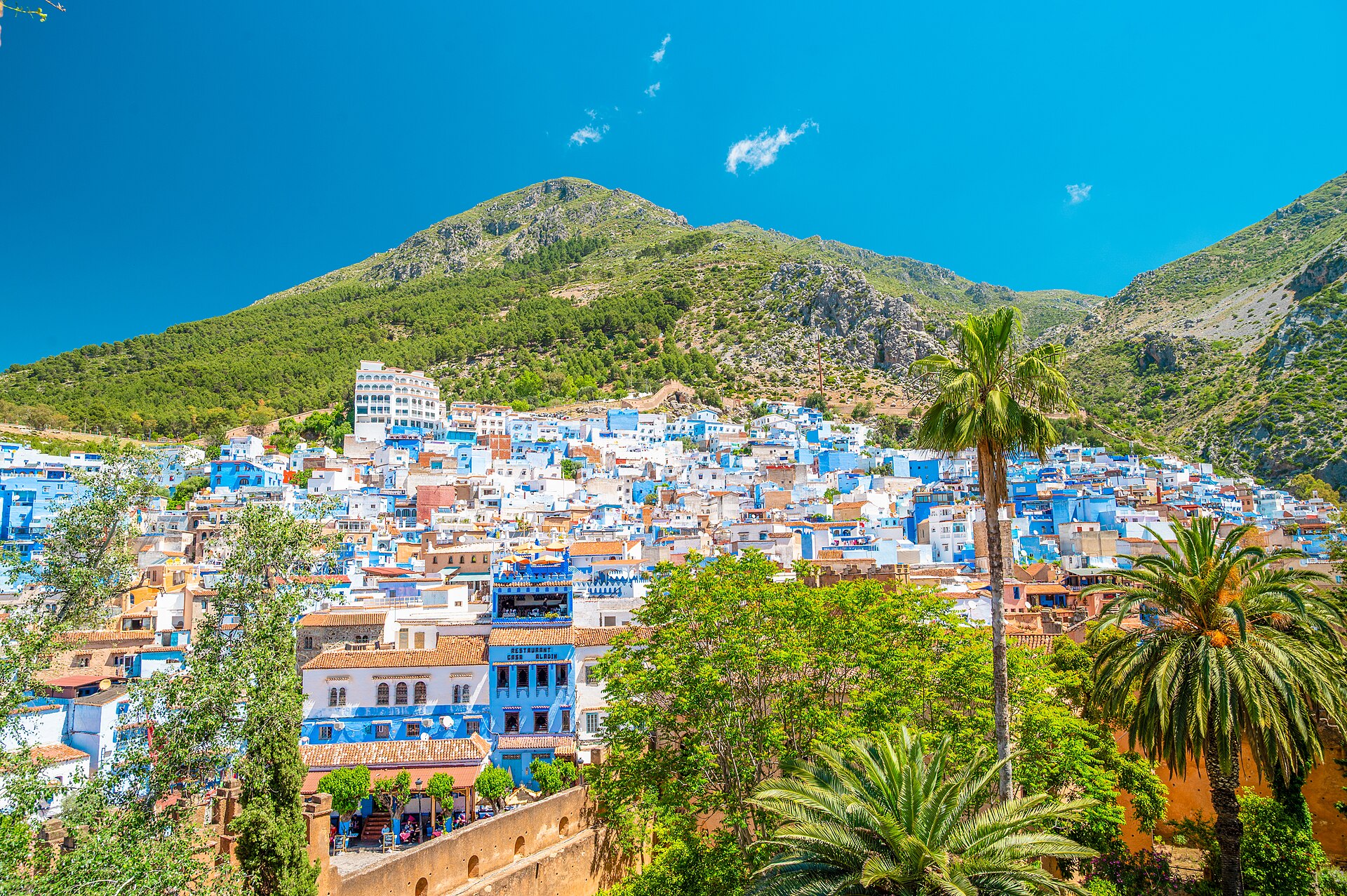
Chefchaouen is a small blue-and-white medina founded in 1471 in the Rif mountains, gateway to Talassemtane National Park and the Akchour gorges. For travellers who like to wander, take photographs and walk; allow two nights on a tour of northern Morocco.
A mountain town built for defence
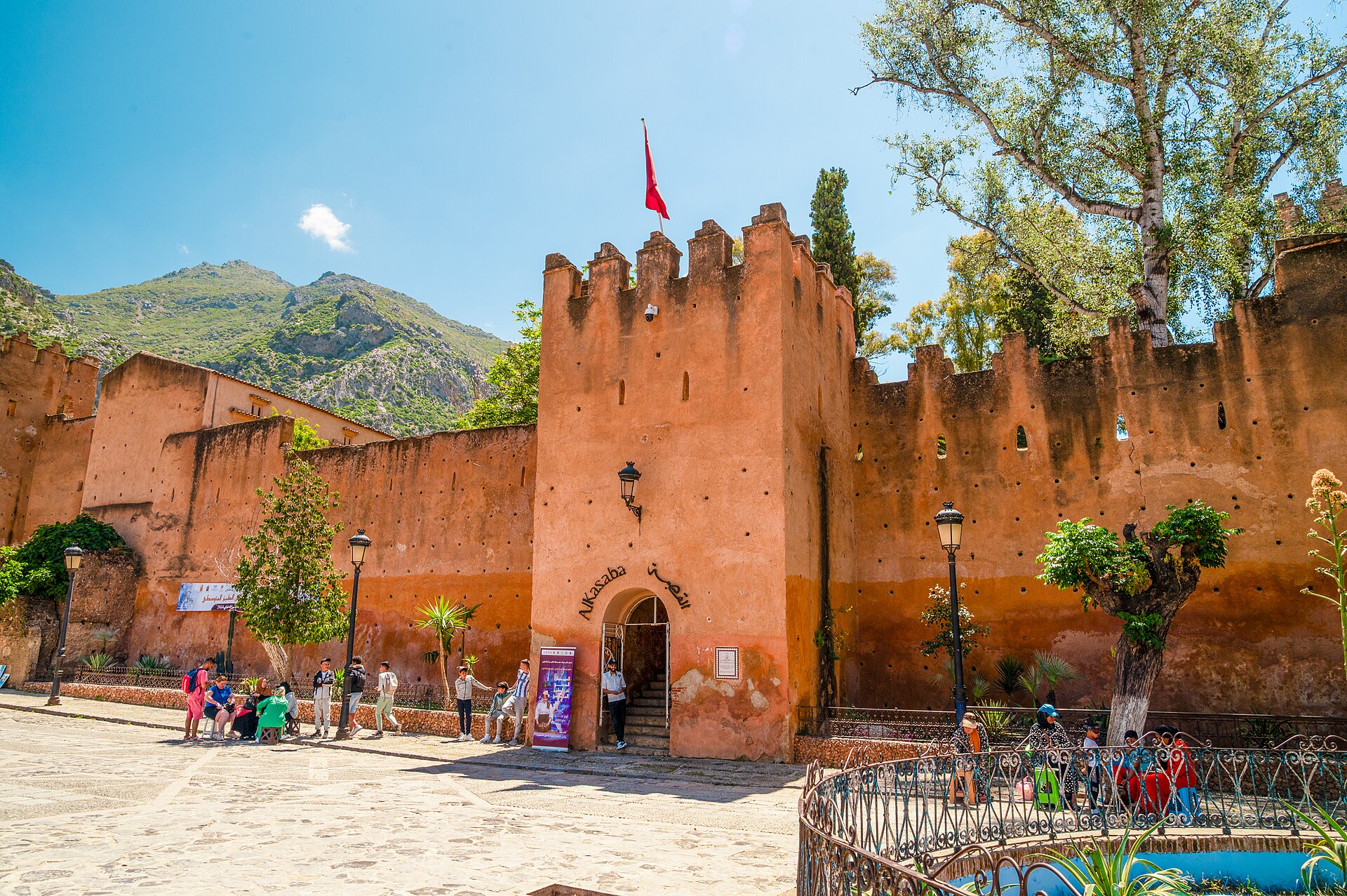
Chefchaouen was founded in 1471 by Moulay Ali Ben Rachid, a descendant of Idris I and of the saint Moulay Abdessalam Ben Mchich. It began as a small kasbah (fortress) built to hold out against the Portuguese, who then held ports in northern Morocco. The kasbah is still there, at the heart of the old town: it is the oldest part of the medina and is now a museum with a garden.
In the decades that followed, the town took in Muslims and Jews driven out of the Iberian Peninsula by the Reconquista, then Moriscos (Muslims forcibly converted and expelled from Spain up to 1609). They gave it its Andalusian look: whitewashed houses, small balconies, tiled roofs and patios. Jews of Iberian origin, who spoke Haketia, a Judeo-Spanish language, once made up a third of the population; the last Jewish family left in 1968.
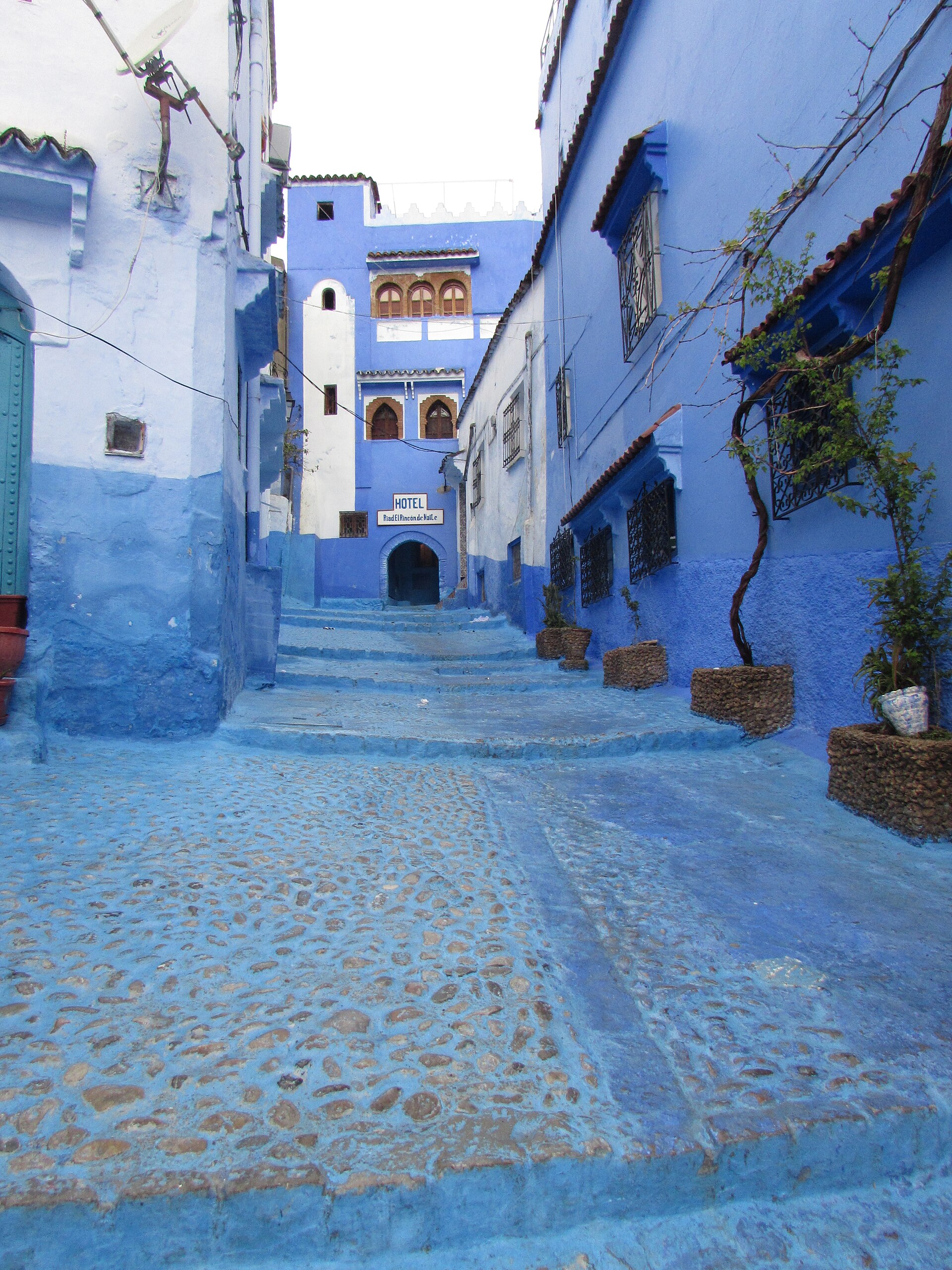
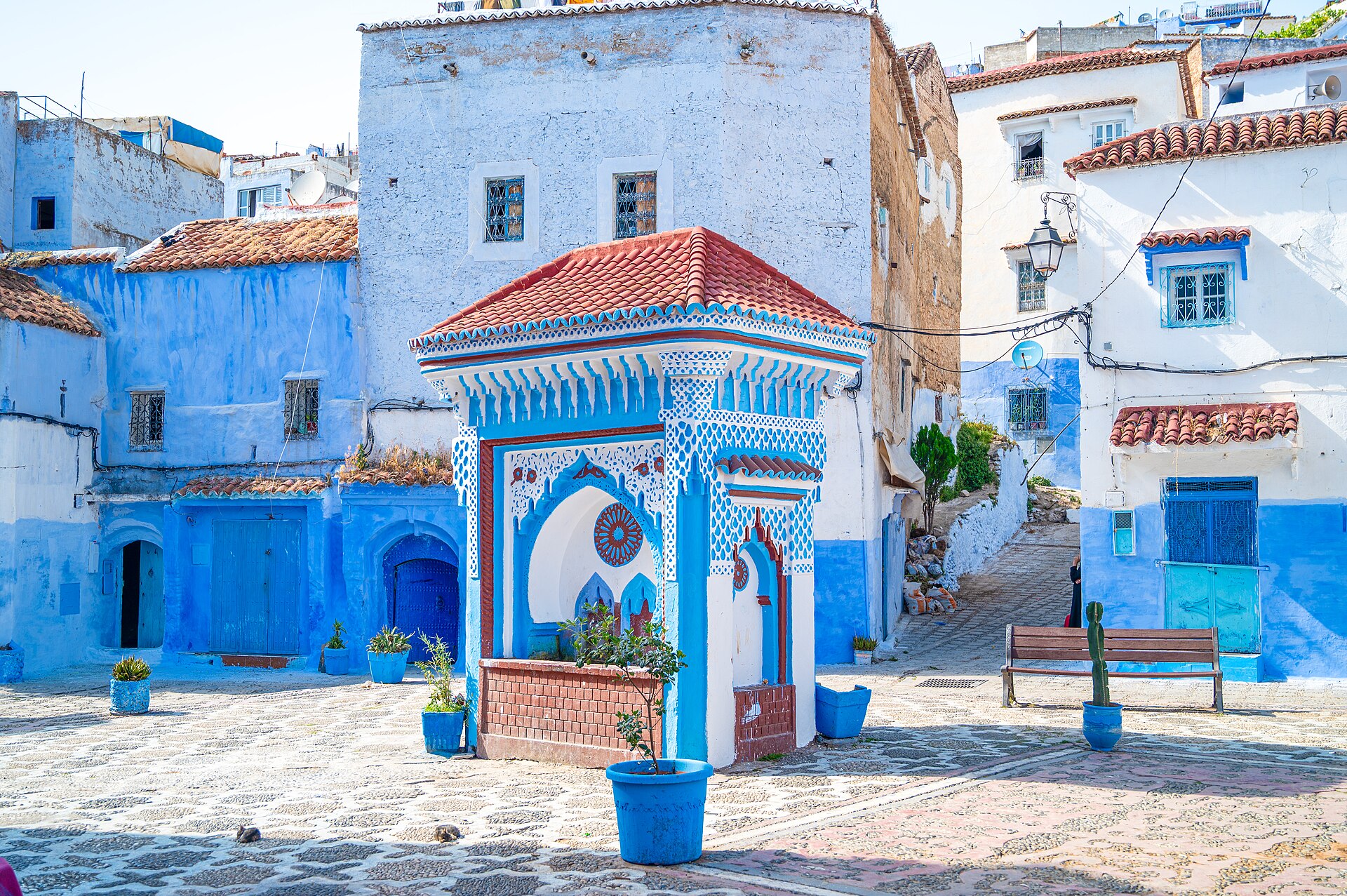
There are several explanations for the blue. The most widely told links it to the Jewish families who settled in the medina in the 18th century and tinted their whitewash with indigo. The colour then spread across the whole old town.
The town stayed closed to outsiders for a long time. Spanish troops entered it in October 1920; Chefchaouen was part of Abd el-Krim's Republic of the Rif from 1924 to 1926, then returned to the Spanish protectorate until independence in 1956. Today it has about 46,000 inhabitants and climbs the slope at around 600 m, at the foot of Mount Kelaa.
For Morocco, Chefchaouen is also the emblematic community of the Mediterranean diet, which UNESCO (the United Nations Educational, Scientific and Cultural Organization) has inscribed on its list of the Intangible Cultural Heritage of Humanity, together with six other Mediterranean countries. What the listing recognises are living practices handed down from one generation to the next: the way people farm, cook, share meals and celebrate.
Where to stay: inside the medina or above it
The medina is small, steep and explored on foot. The choice of where to stay depends mostly on how you arrive.
- Without a car, for charm. Medina riads put you closest to the alleys and the terraces. Riad Cherifa, twelve rooms near Bab Souk, has an outdoor pool and a hammam; the paid public car park is a few minutes' walk away. Lina Ryad & Spa, in the Andalusian quarter, has an indoor pool and a large roof terrace, but cars cannot reach its door and there are many steps to climb. Sabaro advises asking the hotel to meet you with your luggage.
- By car, with a family. Hotels built above the old town spare you the steps with suitcases. Dar Echchaouen, on the Ras El Ma road, has free guarded parking, a garden and a seasonal pool with a children's section; the Ras El Ma spring is 300 m away, Bab el Ain and the kasbah five to ten minutes on foot.
Either way, bring shoes with a good grip: the alleys are paved and the town is always going uphill.
A day in the blue town
The medina is best explored at random, with no plan. A few landmarks are enough:
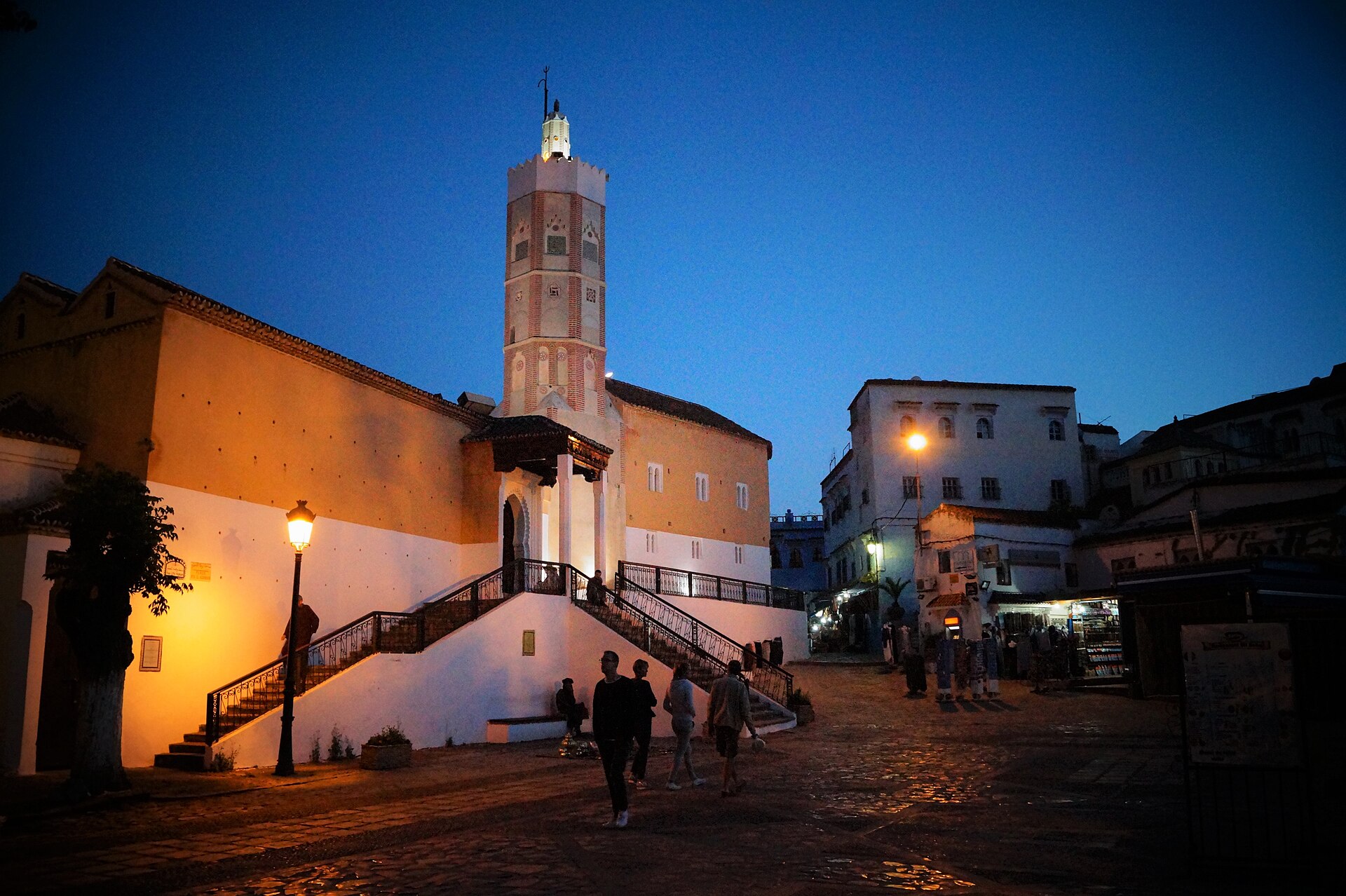
- Bab el Ain, the small arched gate, is the main entrance. A lane leads from there to Place Outa el Hammam, the heart of the town, with the Great Mosque and the kasbah; the smaller Place el Makhzen is next to it.
- In the morning, before the day trips from Tangier and Tetouan arrive, Sabaro suggests walking the alleys for photographs: they are almost empty.
- Ras El Ma, just east of the medina, outside the former walls, is the spring that has always supplied the town; an old mill and a bridge still stand there.
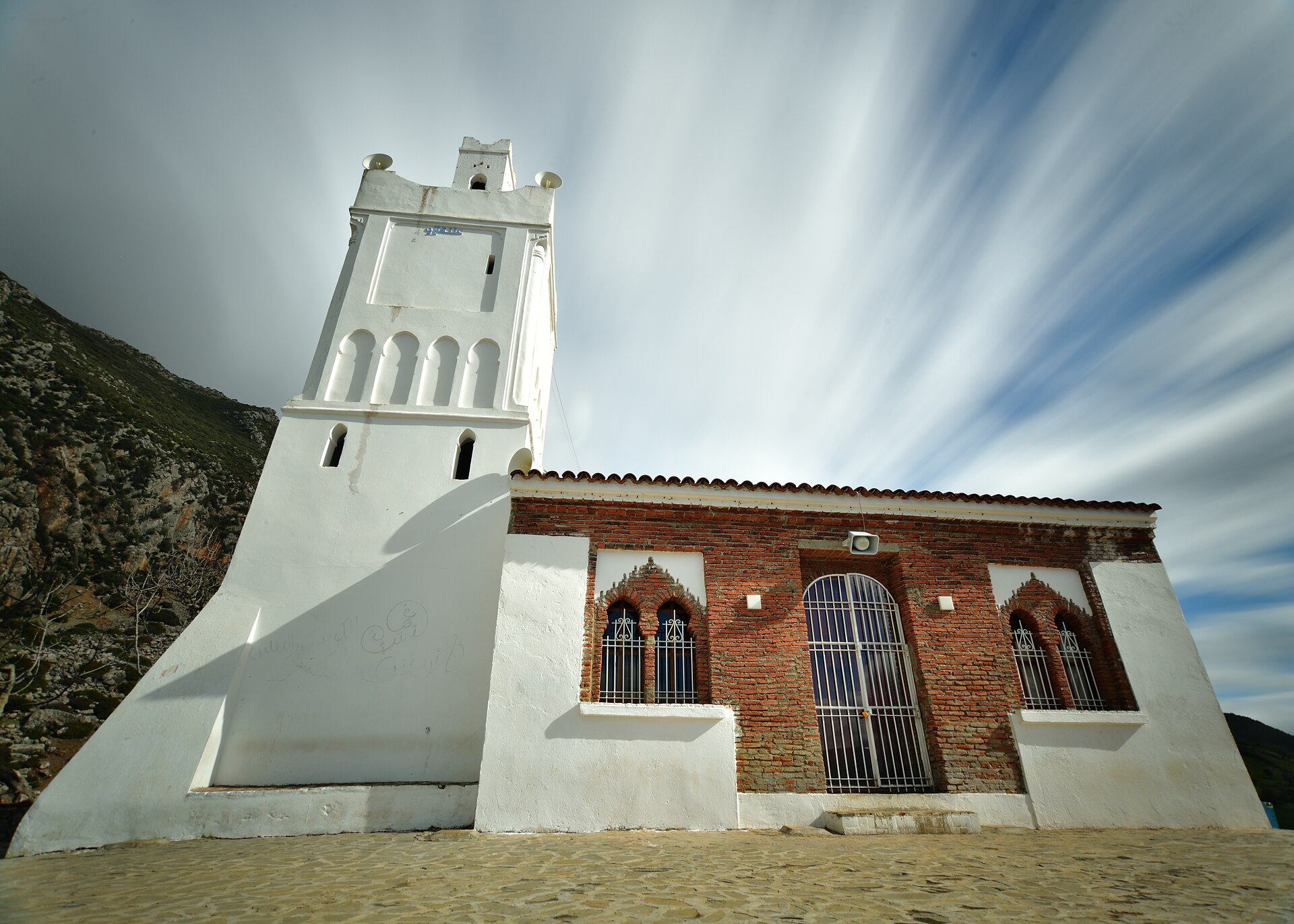
- At the end of the day, climb to the Spanish mosque, built in the 1920s on the hill east of town and no longer in use: it is a popular viewpoint over the medina.
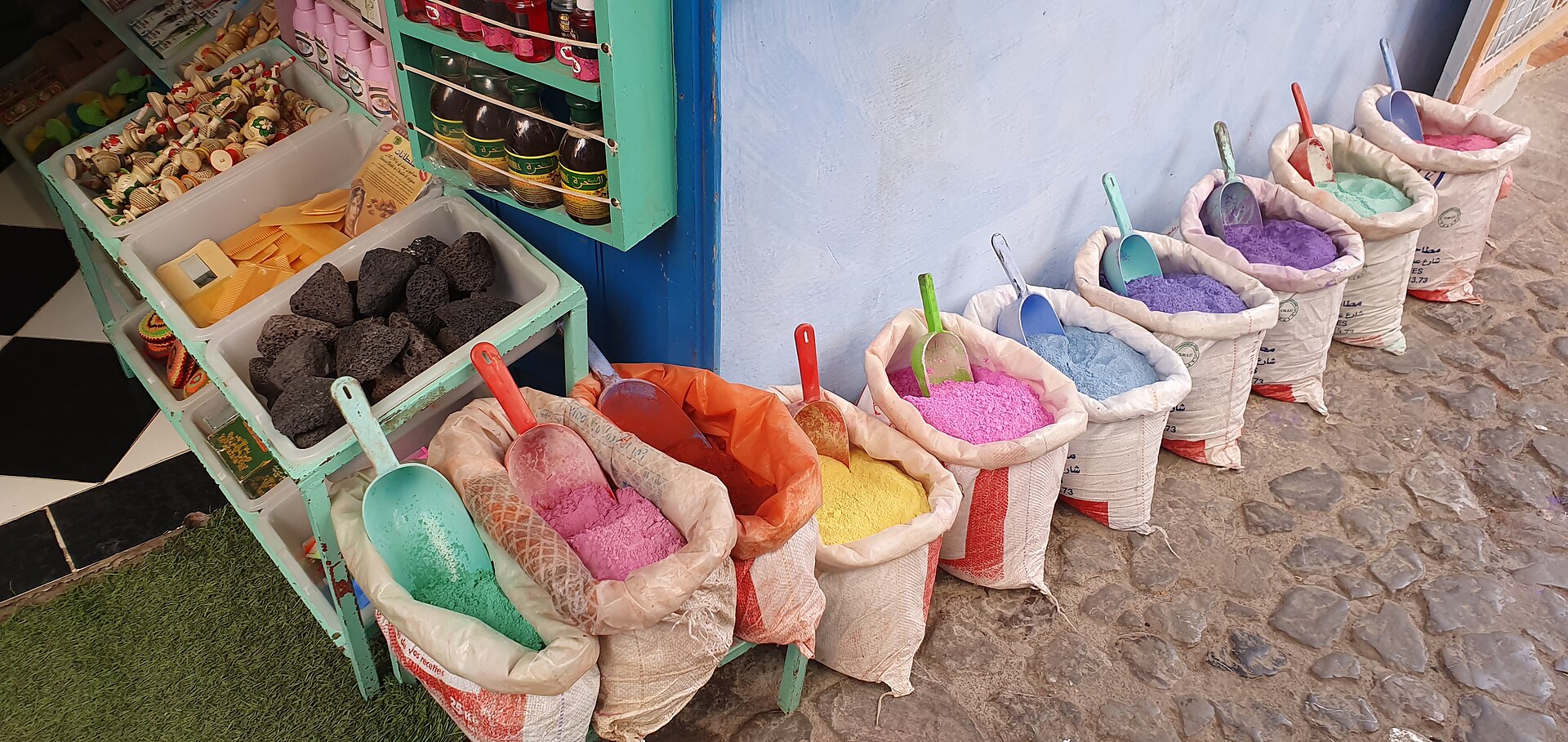
Crafts are everywhere: woven rugs and blankets, leather goods, wool. A two-hour guided tour can be booked from €20 per person on Civitatis, an activity booking platform (price noted on 14 October 2026).
Akchour and Talassemtane park
Chefchaouen is the gateway to Talassemtane National Park, created in October 2004 over about 58,950 hectares to protect Morocco's last fir forests, a fir that grows only in these mountains. The park is part of the Intercontinental Biosphere Reserve of the Mediterranean, recognised by UNESCO in 2006, which joins natural areas of northern Morocco and Andalusia on either side of the Strait of Gibraltar. Atlas cedar also grows here, and Barbary macaques live in the park.
For most travellers the park begins at Akchour, about 50 minutes' drive from Chefchaouen. From there you walk along the Farda river to God's Bridge, a natural rock arch about 30 m high over a canyon, in roughly two hours. The Akchour waterfalls are the other walk from the village. A private four-hour hike to God's Bridge, with transport and guide, can be booked from €100 on Civitatis (price noted on 14 October 2026).
The path is rocky and follows the water: walking shoes are essential. Sabaro advises setting off early, to walk in the cool and ahead of most visitors.
One rule of caution applies to the whole region. The Rif is a hashish-producing and trafficking region, where the roads call for caution; the Al Hoceima-Chefchaouen-Tetouan road causes fewer problems. Your country's foreign ministry advice is in the "Travel advice" table on this page. For hikes beyond Akchour, Sabaro recommends a local guide.
How many nights, and in which season
Many travellers come from Tangier for the day: 112 km and just over two hours' drive each way. Sabaro recommends two nights: an evening and a morning in the medina once the day trips have left, and a day for Akchour. Chefchaouen fits naturally between Tangier or Tetouan, 65 km away, and Fez, 194 km and about three and a half hours' drive.
The WMO (World Meteorological Organization) 1991-2020 normals are published for Tetouan, the nearest station, on the coast. They give the rhythm of the year: 7 to 9 days of rain a month from November to January, almost none in July and August, and highs around 30 °C in midsummer. The Rif is greenest in spring, the best season for walking along with autumn. Summer is the busiest season. In winter, riads are cool and damp: Sabaro advises checking that the room is heated.
On 2 August 2027, Chefchaouen is inside the path of totality of the solar eclipse. Totality lasts just over 4 minutes there, around 8:47 local time. The town has few places to stay: Sabaro advises booking early.
What to see
- Blue medina visitmorocco.com
- Kasbah and ethnographic museum visitmorocco.com
- Uta el-Hammam square, Great Mosque visitmorocco.com
- Ras El Ma, Bouzaafar Mosque visitmorocco.com
- Akchour waterfalls and Talassemtane park visitmorocco.com
When to go
Climate in Tetouan
| Jan | Feb | Mar | Apr | May | Jun | Jul | Aug | Sep | Oct | Nov | Dec | |
|---|---|---|---|---|---|---|---|---|---|---|---|---|
| Max. (°C) | 17.4 | 17.7 | 19.0 | 20.7 | 23.4 | 27.1 | 30.0 | 30.3 | 27.6 | 24.2 | 20.5 | 18.2 |
Source: NOAA, normales climatiques 1991-2020 de l'OMM — WMO 1991-2020 normals, archived by NOAA, accessed 14 October 2026
Getting there
- Tetouan 64.9 km; Tangier 112.4 km and 2 h 11; Fez 194 km and 3 h 24 visitmorocco.com
By air
| Airport | By road | Direct flights |
|---|---|---|
| Tetouan–Sania Ramel (TTU) | 67 km, 1h19 |
|
| Tangier Ibn Battouta (TNG) | 124 km, 2h09 |
|
Hotels chosen in the region
| Hotel | Category | Suits | Guest rating | Indicative price |
|---|---|---|---|---|
| Dar Echchaouen | Character house with garden, medina views (4 stars per Giata) | Family, Mountains, Boutique and historic hotels, Museums and culture, Shopping | 4,5/5 (Tripadvisor) | Price on request |
| Lina Ryad & Spa | Riad with spa (4 stars per Giata) | Riads, Spa and wellness, Boutique and historic hotels, Mountains, Museums and culture, Shopping | 4,6/5 (Tripadvisor) | from 250 € per night |
| Hotel Riad Cherifa | Historic riad (4 stars per Giata) | Riads, Boutique and historic hotels, Spa and wellness, Museums and culture, Shopping | 4,8/5 (Tripadvisor) | Price on request |
Chosen activities
- Chefchaouen guided tour — 2 hours · from 20 € per person
Public price collected on: Civitatis — accessed 14 October 2026
- Private tour of Chefchaouen with a guide — 2 hours 30 minutes
Public price collected on: Civitatis — accessed 14 October 2026
- Private hike to God's Bridge, Akchour — 4 hours
Public price collected on: Civitatis — accessed 14 October 2026
- Leather workshop — 1 hour 30 minutes · from 30 € per person
Public price collected on: Civitatis — accessed 14 October 2026
- Moroccan cooking class — 4 hours · from 50 € per person
Public price collected on: Civitatis — accessed 14 October 2026
Upcoming events
- 2 August 2027 Total solar eclipse of 2 August 2027
Read next
Travel advice
| Country | Official advice | Source |
|---|---|---|
| France | Outside the areas marked on the map. Particular caution in the Rif, a hashish production and trafficking region: at night, avoid secondary roads; by day, do not stop. The Al Hoceima-Chefchaouen-Tetouan road is fluid and causes fewer problems | France Diplomatie (Site last updated 15 September 2026) |
| United Kingdom | No area-specific advice: the FCDO 'Regional risks' section only covers Western Sahara and the Algeria border | GOV.UK (FCDO) (Site last updated 19 August 2026) |
| Belgium | Not checked by Sabaro: see diplomatie.belgium.be | |
| Switzerland | Not checked by Sabaro: see DFAE (eda.admin.ch) | |
| Luxembourg | Not checked by Sabaro: see mae.gouvernement.lu | |
| Ireland | Not checked by Sabaro: see ireland.ie (DFA) | |
| Germany | Not checked by Sabaro: see Auswärtiges Amt | |
| Sweden | Not checked by Sabaro: see Regeringen (UD) | |
| Denmark | Not checked by Sabaro: see Udenrigsministeriet (um.dk) | |
| Norway | Not checked by Sabaro: see Regjeringen | |
| Poland | Not checked by Sabaro: see Odyseusz (MSZ) | |
| Czechia | Not checked by Sabaro: see MZV ČR | |
| Austria | Not checked by Sabaro: see BMEIA | |
| Netherlands | Not checked by Sabaro: see Nederland Wereldwijd | |
| Italy | Not checked by Sabaro: see Viaggiare Sicuri | |
| Spain | Not checked by Sabaro: see exteriores.gob.es | |
| Portugal | Not checked by Sabaro: see Portal das Comunidades | |
| Finland | Not checked by Sabaro: see Ulkoministeriö (um.fi) | |
Rules change: always check the official website before you travel.
Frequently asked questions
Is Chefchaouen worth a night, or is it a day trip?
You can see it in a day from Tangier or Tetouan, but Sabaro recommends at least one night, and two to visit Akchour: the medina is much calmer in the evening and early morning, once the day trips have gone.
Can you drive into the medina?
The medina is explored on foot. Hotels in the old town point to a public car park a few minutes away; those built above it, on the Ras El Ma road, have their own parking.
Is God's Bridge hard to reach?
It is a walk of about two hours from Akchour, on a rocky path along the river. It calls for good shoes and some stamina, with no technical difficulty.
What should I say if someone offers me hashish?
A polite no is enough. The Rif is a cannabis-growing region, and the offer comes in the streets as well as on the roads. For the roads, your country's foreign ministry advice is in the "Travel advice" table on this page.
Can the total eclipse of 2 August 2027 be seen from Chefchaouen?
Yes: Chefchaouen is inside the path of totality. Totality lasts just over 4 minutes, around 8:47 local time.
A travel advisor replies by email. Free, no commitment.