Nile Delta
The Nile Delta spreads between Cairo and the Mediterranean. Visitors come on day trips for Rosetta, the Ottoman town where the Rosetta Stone was found, about an hour's drive from Alexandria; for Tanis, capital of the 21st and 22nd Dynasties, and Bubastis, city of the cat goddess, about two hours from Cairo; and for the waterbirds of Lake Burullus. Rural, little-visited Egypt, best seen in a day.
North of Cairo the Nile splits into two branches, the Rosetta branch to the west and the Damietta branch to the east, opening a broad triangle of irrigated land that runs all the way to the Mediterranean. This is the Delta, the Lower Egypt of the ancients. Egypt's tourist board sells it on its people and its fields: here you see everyday Egypt, mud-brick villages, water buffalo wading along the canals, and plenty of birds. Few travellers come, which is precisely the appeal.
The Delta is mostly visited on day trips from Alexandria or Cairo, and three outings stand out: Rosetta and its Ottoman houses in the west; Tanis and Bubastis, the great cities of the northern pharaohs, in the east; and the fishermen of Lake Burullus on the coast. They suit travellers who already know Cairo and Luxor, and anyone who enjoys history.
Rosetta, the town of the Stone
Rosetta, Rashid in Arabic, is a port on the western branch of the Nile, about 65 km east of Alexandria. After the Ottoman conquest of 1517 it prospered at Alexandria's expense and remained a major trading centre until the Mahmoudiya Canal opened in 1820 and gave Alexandria its role back. That wealth left merchants' houses from the 18th and 19th centuries, mosques and the old souk.
- Amasyali House is the largest Ottoman house still standing in Rosetta: three floors of rooms, sharing a complex with the Hasiba Ghazal House and a granary. The American Research Center in Egypt (ARCE, an American archaeology and conservation body) has run a project here to save the roof and second floor.
- Zaghloul Mosque, built in 1587, is the oldest and largest in town: 90 m by 48 m, with 99 marble columns. In 1807 the call from its minaret gave the signal for the attack that drove back General Fraser's British expedition.
- Rashid National Museum occupies the house of Arab Killi, the town's governor in Ottoman times. Opened as a military museum in 1959 and redesigned in 1986, it tells the story of Rosetta's resistance to the French and then the British, and shows a copy of the Rosetta Stone. It has been closed for works in recent years, so Sabaro checks that it is open before every visit.
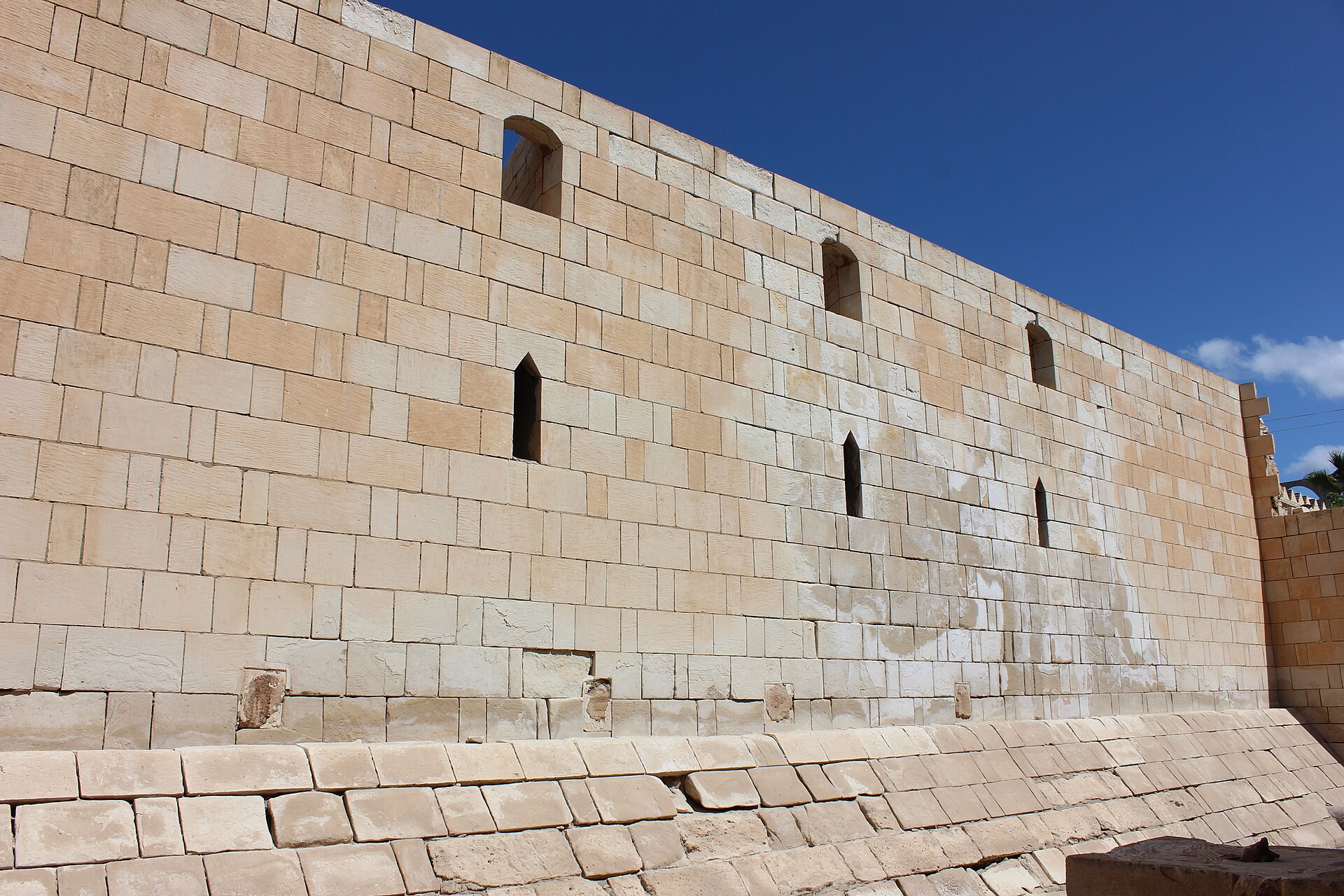
- Qaitbay Fort, north of the town, was renewed by the Mamluk sultan Qaitbay in 1479. Bonaparte's soldiers, who called it Fort Julien, found the Stone there in 1799 while strengthening its defences.
The Rosetta Stone itself passed to the British with the French surrender of 1801 and is in the British Museum in London. It was the key that let Jean-François Champollion decipher hieroglyphs in 1822.
Tanis, city of the northern pharaohs
Tanis, today San el-Hagar, lies in Sharqia governorate in the north-east of the Delta, about two hours' drive from Cairo. Around 1069 BC, at the end of the New Kingdom, Egypt split in two: the kings of the 21st and 22nd Dynasties ruled Lower Egypt from this new capital, while the high priests of Amun held Thebes, today's Luxor. They built a "Thebes of the North" here, with a great temple of Amun and temples of Mut and Khonsu, as at Karnak.
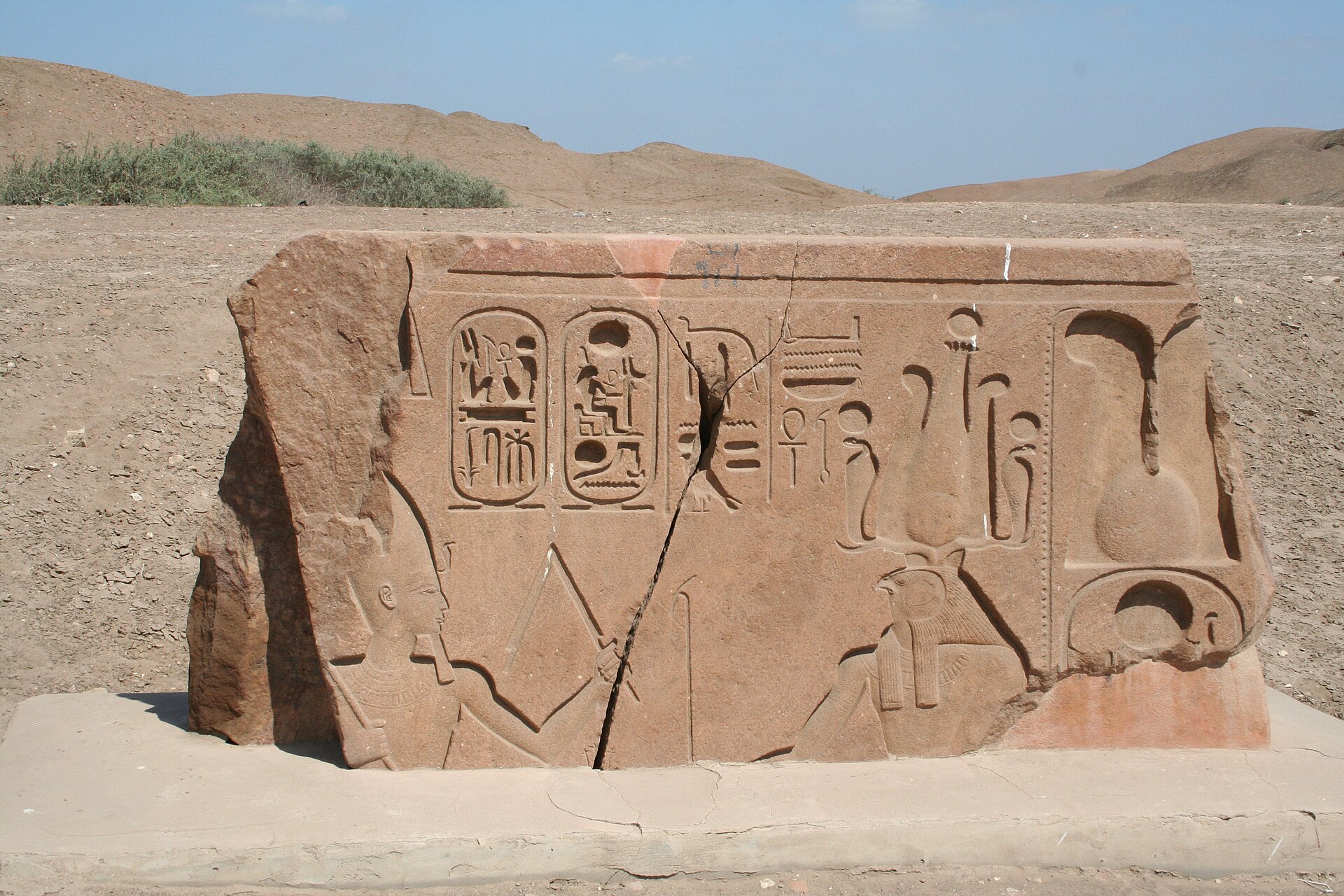
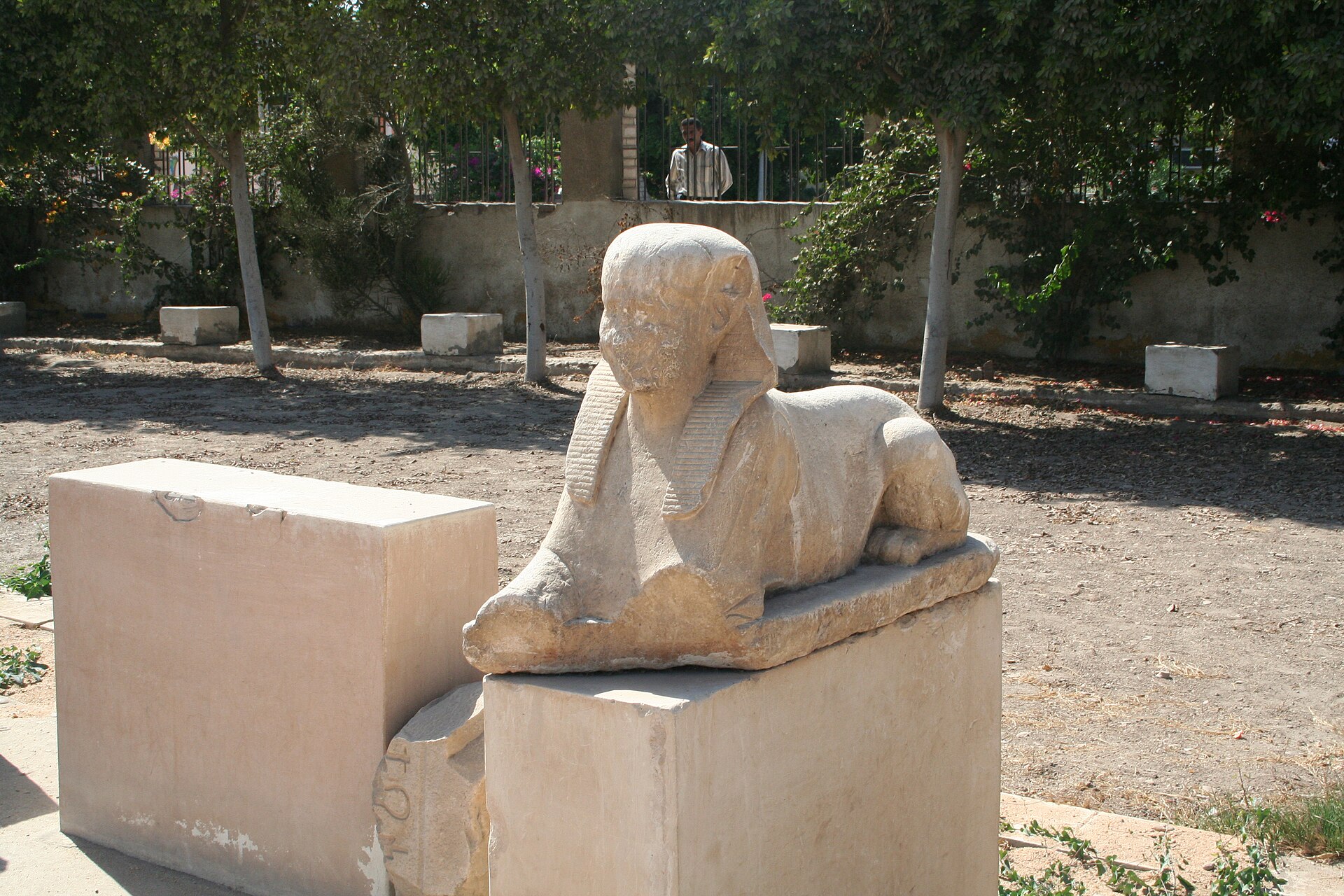
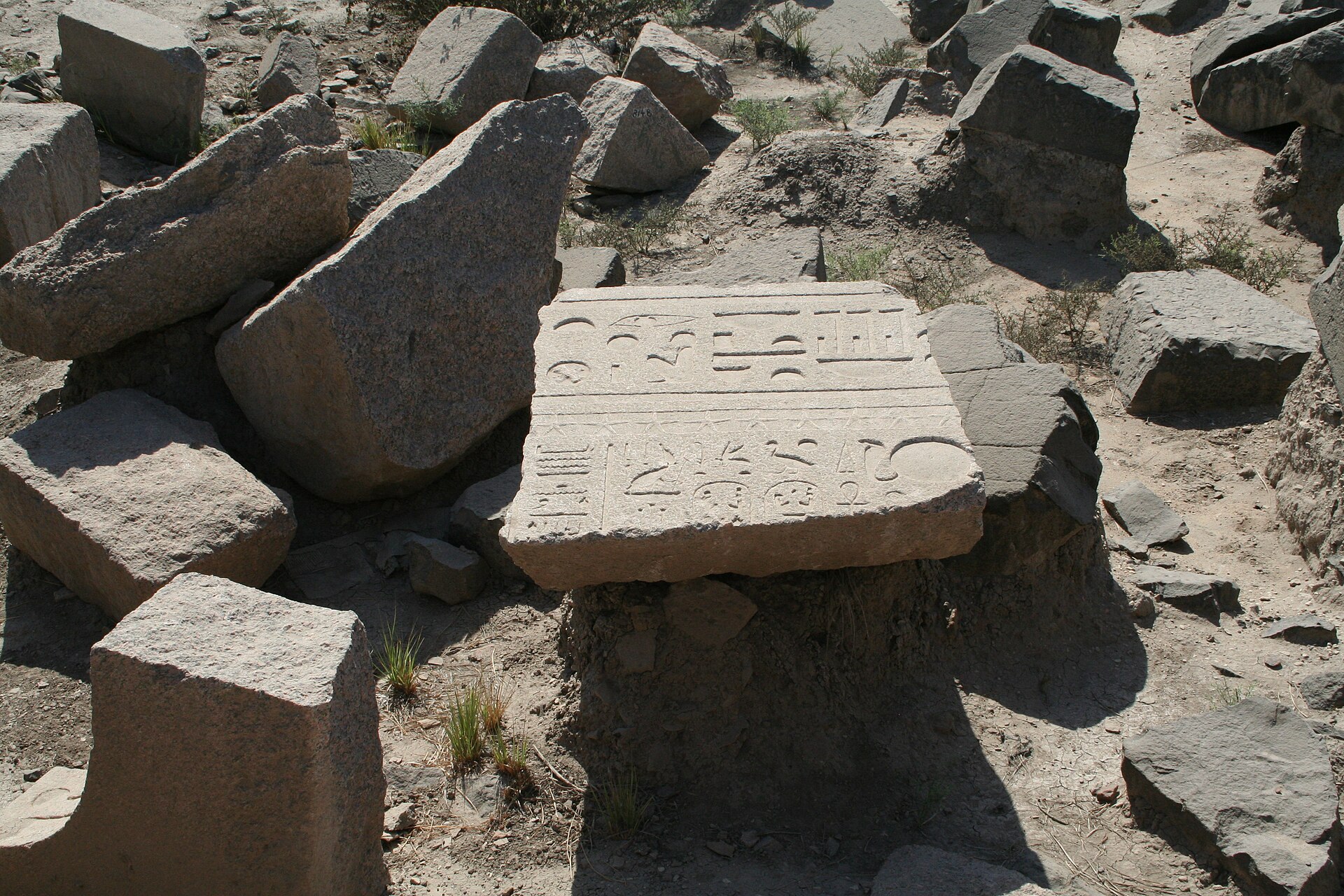
The temples, mostly limestone, were pulled apart in late antiquity and the stone burnt for lime. What survives is the granite and quartzite, and it is striking: fallen obelisks, colossi of Ramesses II, palm-shaped columns and carved blocks scattered across a city of more than 200 hectares. Many bear inscriptions older than Tanis itself, because its kings quarried their stone from Pi-Ramesses, the old residence of the Ramesside kings some twenty kilometres away. The Arabic name, San el-Hagar, means "Tanis of the Stones".
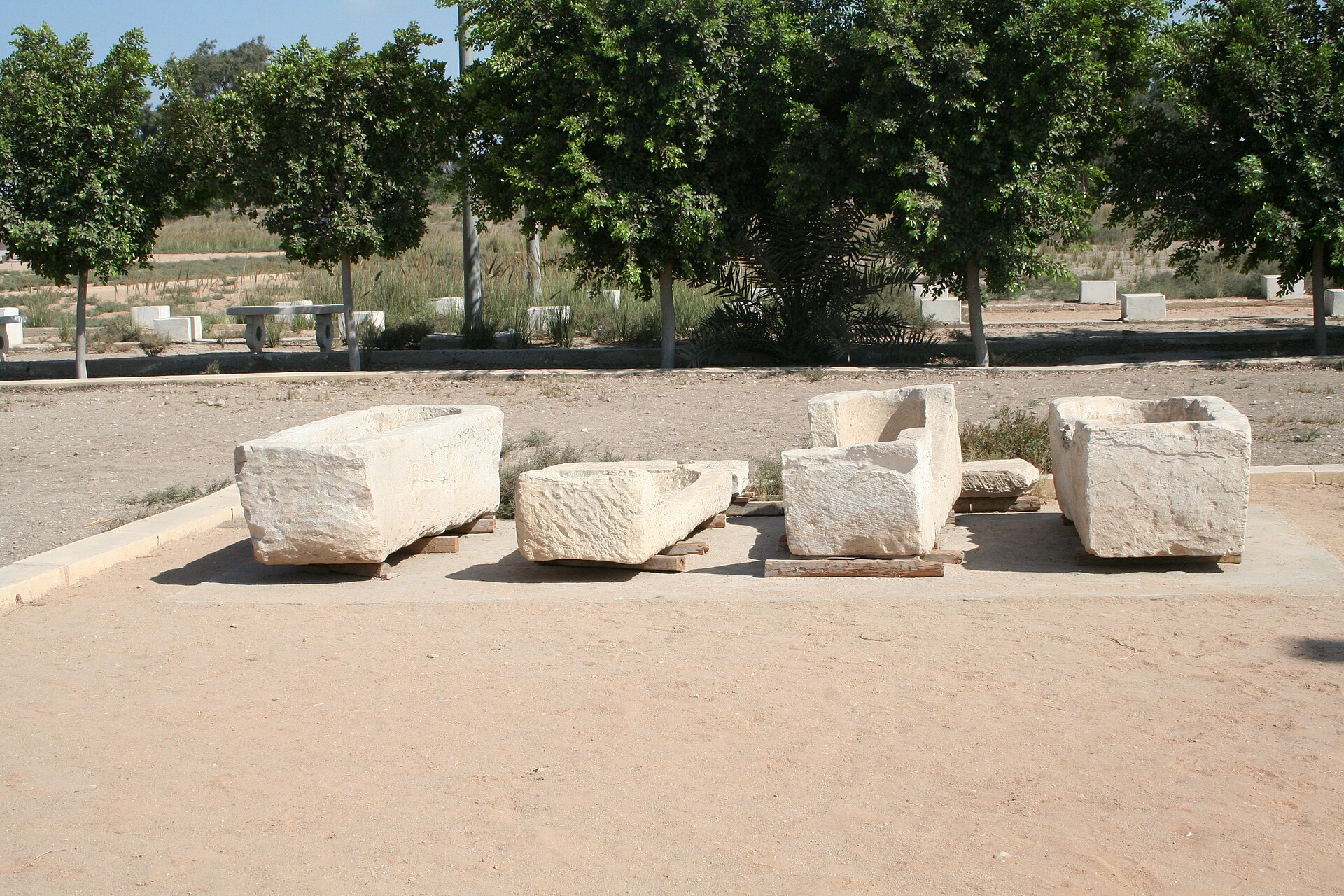
The royal necropolis is the highlight. The French archaeologist Pierre Montet uncovered it between 1939 and 1946 inside the enclosure of the temple of Amun. The tomb of Psusennes I yielded the intact burials of the king and of his successor Amenemope: the only Egyptian royal tombs found intact after Tutankhamun's. The main tombs are those of Psusennes I; of Osorkon II, whose huge sarcophagus is still in its granite chamber; and of Shoshenq III, whose burial chamber is decorated with passages from the Book of the Netherworld. Other stone sarcophagi are displayed near the site entrance. The treasures, gold masks, jewellery and silver vessels, are in the Egyptian Museum on Tahrir Square in Cairo: seeing them before Tanis gives the visit its full meaning. The French Mission for the Excavations of Tanis has worked on the site since 1965.
Bubastis, city of the cat goddess
Bubastis, Tell Basta, sits on the edge of Zagazig, in the same Sharqia governorate as Tanis. It was the city of Bastet, the cat-headed goddess, and a royal residence of the 22nd Dynasty. The Greek historian Herodotus, in the 5th century BC, called its festival the most joyful in the Egyptian calendar and described its temple ringed by canals and tree-lined avenues. Today you see the ruins of the temple of Bastet; the cemeteries of Bubastis were Egypt's main burial place for mummified cats. A German-Egyptian team has excavated here since 2008.
Tanis and Bubastis go together in a day of about eight hours from Cairo, with a driver and a guide.
Tanta and the mawlid of Sayyid al-Badawi
Tanta, capital of Gharbia governorate, is 94 km north of Cairo on the Cairo–Alexandria railway. Its station, opened in 1856, is the largest in the Delta. The town is known for the mosque of Sayyid Ahmad al-Badawi, named after a 13th-century Sufi master (Sufism is the mystical path of Islam). The present building dates from the 18th century, and its latest renovation was completed in 2024.
Every October the mawlid of Sayyid al-Badawi, the saint's festival, lasts a week and draws an estimated one to three million pilgrims. The streets fill with stalls selling sugar cane, rice pudding and koshari, the popular dish of lentils, rice and pasta. The rest of the year Tanta is known for its roasted chickpeas and its peanut, coconut, sesame and chickpea sweets, made in front of passers-by. The mawlid is a very crowded popular festival, best seen by day with a guide.
Lake Burullus
East of Rosetta, Lake Burullus is a lagoon bordered to the north by the Mediterranean, in Kafr el-Sheikh governorate. Egypt's tourist board describes it as the country's second-largest natural lake. Since 1988 it has been listed as a wetland of international importance under the Ramsar Convention (the international treaty protecting wetlands), over 46,200 hectares, and Egypt's Environmental Affairs Agency counts 112 bird species here. The tourist board suggests a boat trip out to its islands, more than twenty of them, and a stop at the old fishing village of al-Maqsaba on the shore.
When to go
October to April. In winter, average highs stay around 18 to 21 °C in Alexandria, the nearest reference station, and the open-air sites of Tanis and Bubastis are comfortable. In summer it passes 30 °C on the coast and more inland, so set off early. October adds the Tanta mawlid.
Getting there and where to stay
Egypt is 4h40 from Paris by direct flight4h15 from Brussels by direct flighta few hours' flight from Europe's main cities, direct or with one stop. The Delta has no hotel in the Sabaro selection: stay in Alexandria for Rosetta and Lake Burullus, and in Cairo for Tanis, Bubastis and Tanta.
- Rosetta: about an hour by road from Alexandria; the visit takes half a day, about five hours there and back.
- Tanis and Bubastis: about two hours by road from Cairo to Tanis; a full day.
- Tanta: by the Cairo–Alexandria train or by road; it fits into a journey between the two cities, like Wadi Natrun and its Coptic monasteries.
The guide to getting around Egypt covers trains and roads.
Safety
The Delta lies outside the areas that foreign ministries advise against. The country's general rules apply: care at crowded sites and festivals, and no road travel at night outside towns. Ministries do not all give the same advice. Here is yours:
| Country | Official advice | Source |
|---|---|---|
| France | Increased vigilance (yellow) in Cairo, Alexandria, the Nile Valley, the Red Sea coast and the South Sinai coast (secured hotels advised); North Sinai and the Israeli border in red, North Sinai closed to foreigners; Libyan and Sudanese borders in red, western desert in orange; no driving at night outside towns, buses included; registration with Ariane advised; French embassy in Cairo: +20 2 35 67 32 00. | diplomatie.gouv.fr (Site last updated 21 September 2026) |
| Belgium | Except North Sinai, the Western Desert and the border zone with Libya and Sudan (advised against, no consular assistance possible), it is generally safe to travel in Egypt, taking into account the points of attention and the regional situation. After the events in Israel and the Palestinian Territory, demonstrations may flare up again, including without warning; the army and police may intervene violently. In case of unrest, limit travel outside hotel complexes; avoid demonstrations and gatherings and take no photos or videos; participants may be held in custody for long periods. Egyptian airspace remains open. Register on Travellers Online. | SPF Affaires étrangères (Belgique), Égypte, dernière mise à jour (Site last updated 2 October 2026) |
| United Kingdom | All travel advised against in North Sinai, along the Israeli border and within 20 km of the Libyan border; all but essential travel advised against in the Western Desert, except Luxor, Aswan, Abu Simbel, Fayoum, the Bahariya, Farafra, Dakhla, Kharga and Siwa oases and the roads linking them (the Bahariya–Siwa road remains advised against), and in the north of South Sinai beyond the St Catherine–Nuweiba road, coasts excepted. | GOV.UK (accessed 14 October 2026) |
| Netherlands | Red (do not travel): North Sinai north of the Suez–Taba line, the border areas with Libya and Sudan, the Halaib Triangle and Bir Tawil. Orange (essential travel only, no holidays): western Egypt except the town of Siwa, reachable by the secured Highway 19; central Sinai north of the St Catherine–Nuweiba road, with permission from the local authorities; north-west Sinai; the area around the Halaib Triangle. Yellow for the rest of the country, including the Suez Canal. Risk of terrorist attacks throughout the country; Hurghada–Luxor road open in daytime only, with prior permission from the tourist police for tour operators; demonstrations banned. Dutch embassy reachable 24/7 through the contact centre: +31 247 247 247. | Nederland Wereldwijd (Site last updated 19 June 2026) |
| Switzerland | Not checked by Sabaro: see DFAE (eda.admin.ch) | |
| Luxembourg | Not checked by Sabaro: see mae.gouvernement.lu | |
| Ireland | Not checked by Sabaro: see ireland.ie (DFA) | |
| Germany | Not checked by Sabaro: see Auswärtiges Amt | |
| Sweden | Not checked by Sabaro: see Regeringen (UD) | |
| Denmark | Not checked by Sabaro: see Udenrigsministeriet (um.dk) | |
| Norway | Not checked by Sabaro: see Regjeringen | |
| Poland | Not checked by Sabaro: see Odyseusz (MSZ) | |
| Czechia | Not checked by Sabaro: see MZV ČR | |
| Austria | Not checked by Sabaro: see BMEIA | |
| Italy | Not checked by Sabaro: see Viaggiare Sicuri | |
| Spain | Not checked by Sabaro: see exteriores.gob.es | |
| Portugal | Not checked by Sabaro: see Portal das Comunidades | |
| Finland | Not checked by Sabaro: see Ulkoministeriö (um.fi) | |
The guide to safety in Egypt covers precautions on the ground. For more ideas, see the museums and culture theme.
What to see
- Rosetta (Rashid), the Ottoman town — port on the western branch of the Nile, about 65 km east of Alexandria; brick houses of the 18th and 19th centuries Wikipedia, Rosetta
- Amasyali House, Rosetta — the largest Ottoman house still standing in Rosetta, on three floors ARCE (American Research Center in Egypt), projet de Rosette
- Zaghloul Mosque, Rosetta — built in 1587, the oldest and largest in town; 99 marble columns Wikipedia, Zaghloul Mosque
- Rashid National Museum (Arab Killi House) — Ottoman governor's house; museum since 1959, redesigned in 1986; copy of the Rosetta Stone Wikipedia, Rashid National Museum
- Qaitbay Fort, Rosetta (Fort Julien) — fort renewed by Sultan Qaitbay in 1479; the Rosetta Stone was found there in 1799 Wikipedia, Rosetta
- Tanis (San el-Hagar) — capital of the 21st and 22nd Dynasties: temple of Amun, fallen obelisks, royal necropolis found in 1939 Mission française des fouilles de Tanis (EPHE, Ifao), fiche du site
- Bubastis (Tell Basta), Zagazig — ruins of the temple of Bastet, the cat goddess, and of its cat cemeteries Wikipedia, Bubastis
- Sayyid Ahmad al-Badawi Mosque, Tanta — Sufi shrine rebuilt in the 18th century; week-long mawlid in October Wikipedia, Tanta
- Lake Burullus — coastal lagoon listed under the Ramsar Convention in 1988; waterbirds, fishing village of al-Maqsaba Experience Egypt (office de tourisme), le Delta
When to go
Climate in Alexandria
| Jan | Feb | Mar | Apr | May | Jun | Jul | Aug | Sep | Oct | Nov | Dec | |
|---|---|---|---|---|---|---|---|---|---|---|---|---|
| Max. (°C) | 18.4 | 19.0 | 21.1 | 24.1 | 26.9 | 29.1 | 30.5 | 31.0 | 30.2 | 27.8 | 24.0 | 20.1 |
Source: NOAA, normales climatiques 1991-2020 de l'OMM — WMO 1991-2020 normals, archived by NOAA, accessed 14 October 2026
Getting there
- Rosetta: about 1 hour by road from Alexandria Sun Pyramids Tours, excursion à Rosette
- Tanis: about 2 hours by road from Cairo; Tanis and Bubastis in a day of about 8 hours Sun Pyramids Tours, excursion à Tanis et Bubastis
- Tanta: 94 km north of Cairo, on the Cairo–Alexandria railway Wikipedia, Tanta
Chosen activities
- Day trip to Rosetta from Alexandria: Ottoman houses, Zaghloul Mosque, Qaitbay Fort — about 5 hours
- Day trip to Tanis and Bubastis from Cairo, with a guide — about 8 hours
- Boat trip on Lake Burullus — half a day
Read next
Travel advice
| Country | Official advice | Source |
|---|---|---|
| France | The Delta lies in the 'Egyptian territory outside the Western Desert', where travel is possible following the general recommendations; vigilance at crowded sites, avoid gatherings, no road travel at night outside towns and tourist sites | diplomatie.gouv.fr (Site last updated 21 September 2026) |
| United Kingdom | Outside the advised-against areas: the Western Desert warning covers the area west of the Nile Valley and Delta; only the part of Ismailia governorate east of the Suez Canal is advised against except for essential travel | GOV.UK (Site last updated 27 October 2026) |
| Belgium | Not checked by Sabaro: see diplomatie.belgium.be | |
| Switzerland | Not checked by Sabaro: see DFAE (eda.admin.ch) | |
| Luxembourg | Not checked by Sabaro: see mae.gouvernement.lu | |
| Ireland | Not checked by Sabaro: see ireland.ie (DFA) | |
| Germany | Not checked by Sabaro: see Auswärtiges Amt | |
| Sweden | Not checked by Sabaro: see Regeringen (UD) | |
| Denmark | Not checked by Sabaro: see Udenrigsministeriet (um.dk) | |
| Norway | Not checked by Sabaro: see Regjeringen | |
| Poland | Not checked by Sabaro: see Odyseusz (MSZ) | |
| Czechia | Not checked by Sabaro: see MZV ČR | |
| Austria | Not checked by Sabaro: see BMEIA | |
| Netherlands | Not checked by Sabaro: see Nederland Wereldwijd | |
| Italy | Not checked by Sabaro: see Viaggiare Sicuri | |
| Spain | Not checked by Sabaro: see exteriores.gob.es | |
| Portugal | Not checked by Sabaro: see Portal das Comunidades | |
| Finland | Not checked by Sabaro: see Ulkoministeriö (um.fi) | |
Rules change: always check the official website before you travel.
Frequently asked questions
Can you see the real Rosetta Stone in Rosetta?
The original is in the British Museum in London. Rashid National Museum displays a copy, and Qaitbay Fort, where the Stone was found in 1799, can be visited.
How do you get to Rosetta from Alexandria?
By road, in about an hour, with a driver. The Ottoman houses, Zaghloul Mosque and the fort fit into half a day, about five hours there and back.
What is there to see at Tanis?
The fallen obelisks and colossi of the great temple of Amun, and the royal necropolis of the 21st and 22nd Dynasties, with the tombs of Psusennes I, Osorkon II and Shoshenq III. The treasures are in the Egyptian Museum on Tahrir Square in Cairo.
How long should I allow for the Delta?
A day for Rosetta from Alexandria, and a day for Tanis and Bubastis from Cairo. The Delta slots easily into a trip between Cairo and Alexandria.
When is the Tanta mawlid?
In October, for a week. The 2027 dates have not yet been published; Sabaro confirms them when you book.
A travel advisor replies by email. Free, no commitment.