Abydos and Dendera
North of Luxor, Abydos, the holy city of Osiris, holds the Temple of Seti I and the Osireion; Dendera, the Temple of Hathor, from the Ptolemaic and Roman periods, with restored ceilings. For travellers who have seen Luxor and want quieter temples, in a day from Luxor.
Two temples, a thousand years apart
Abydos and Dendera are visited together, but they tell of two very different moments in ancient Egypt.
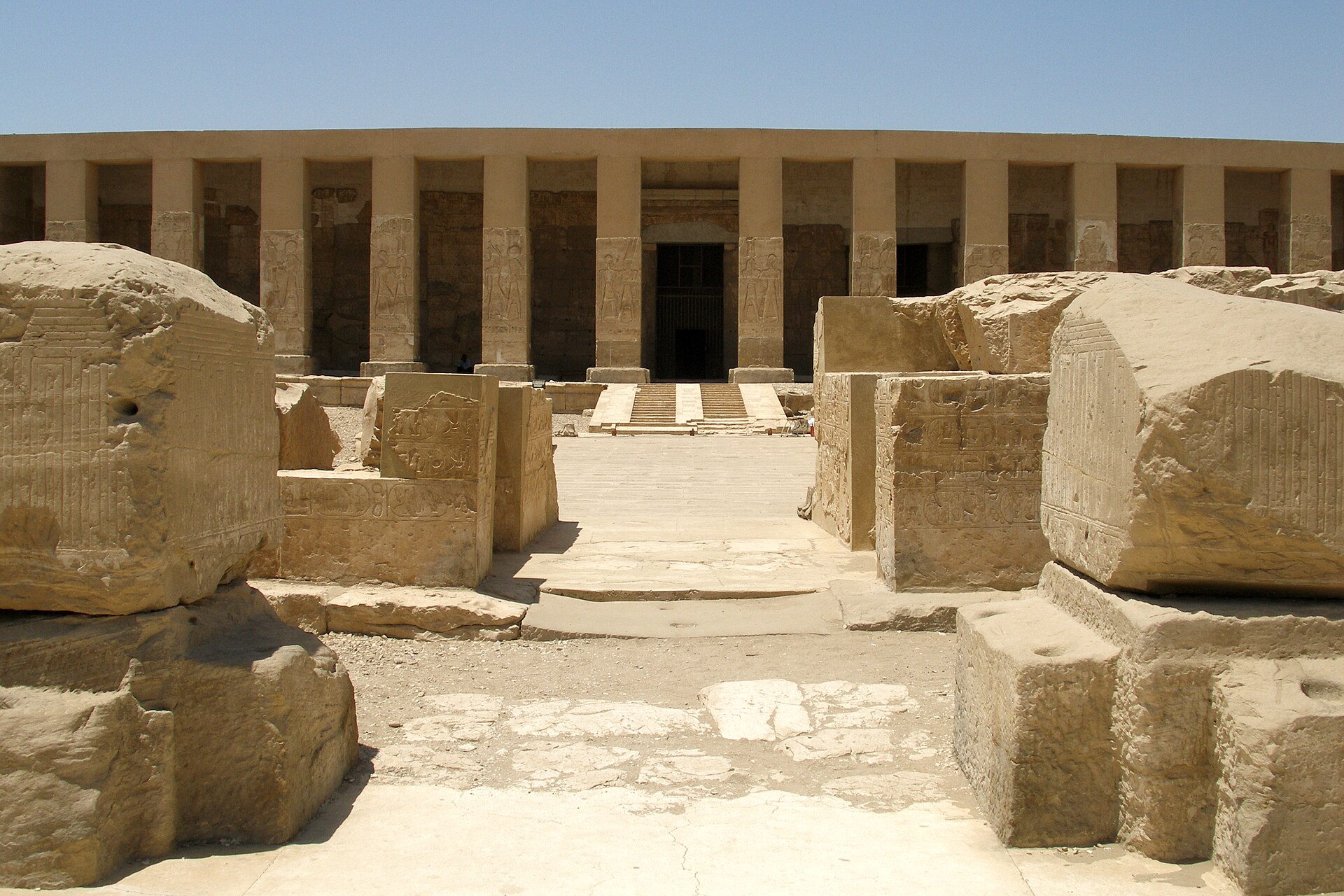
Abydos is one of the oldest sacred places in the country. In the desert of Umm el-Qaab lie the tombs of the kings of the first two dynasties, and the town later became the great pilgrimage centre of Osiris, god of the dead and of resurrection. The Temple of Seti I, of the 19th Dynasty, was built during his reign (1290-1279 BC) and completed by his son Ramesses II.
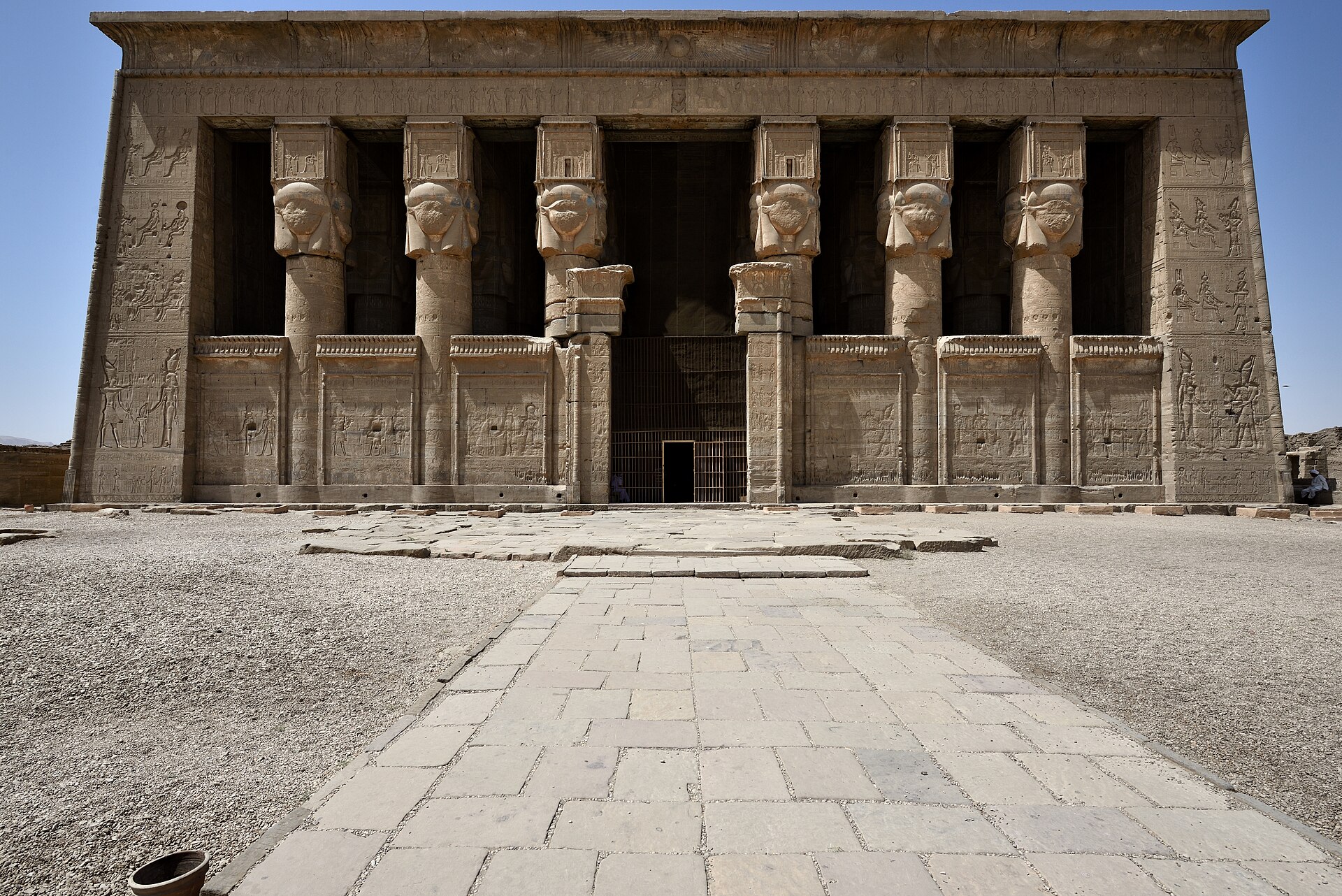
Dendera, about a hundred kilometres further south, is the temple of Hathor, goddess of music, joy and motherhood, called the "lady of the sky". The present building dates from the Ptolemaic and Roman periods, more than a thousand years after Abydos, on a site whose first monuments go back to King Pepi I of the Old Kingdom.
Both sites lie off the busiest circuit: you meet few groups there, even in high season.
Abydos: the Temple of Seti I
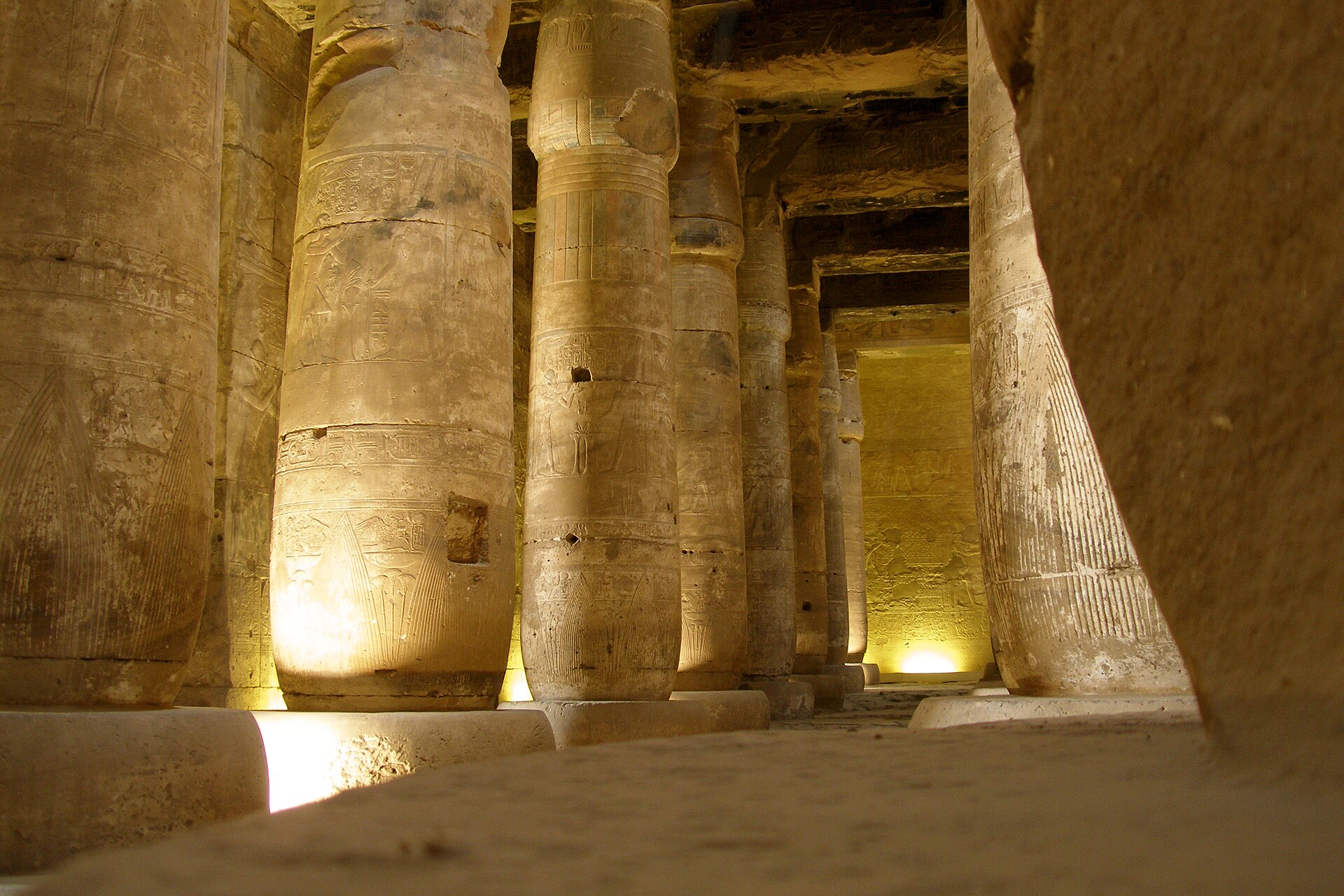
The temple has an unusual L-shaped plan. Two styles can be read on the walls: Seti I's reliefs, in raised relief, are exceptionally fine; those of Ramesses II, who finished the temple, are carved in sunk relief.
- The two hypostyle halls lead to seven chapels, dedicated to the deified Seti I, Ptah, Re-Horakhty, Amun-Re, Osiris, Isis and Horus. Their painted decoration was among the first to be completed, during Seti I's lifetime.
- The Gallery of the Ancestors bears the Abydos King List: the names of the kings who reigned from the first dynasties up to Seti I. Three kings are deliberately left out, among them Akhenaten.
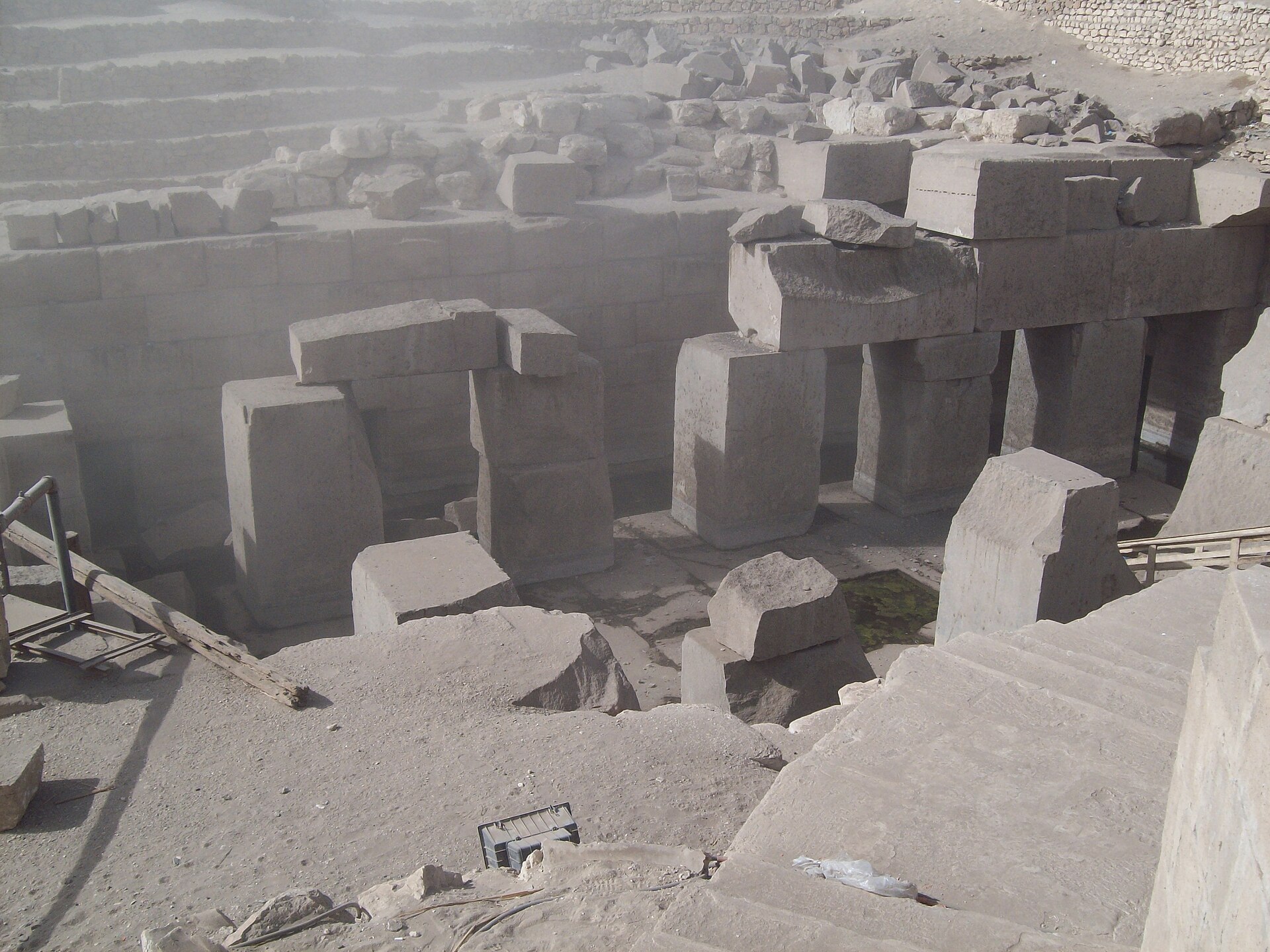
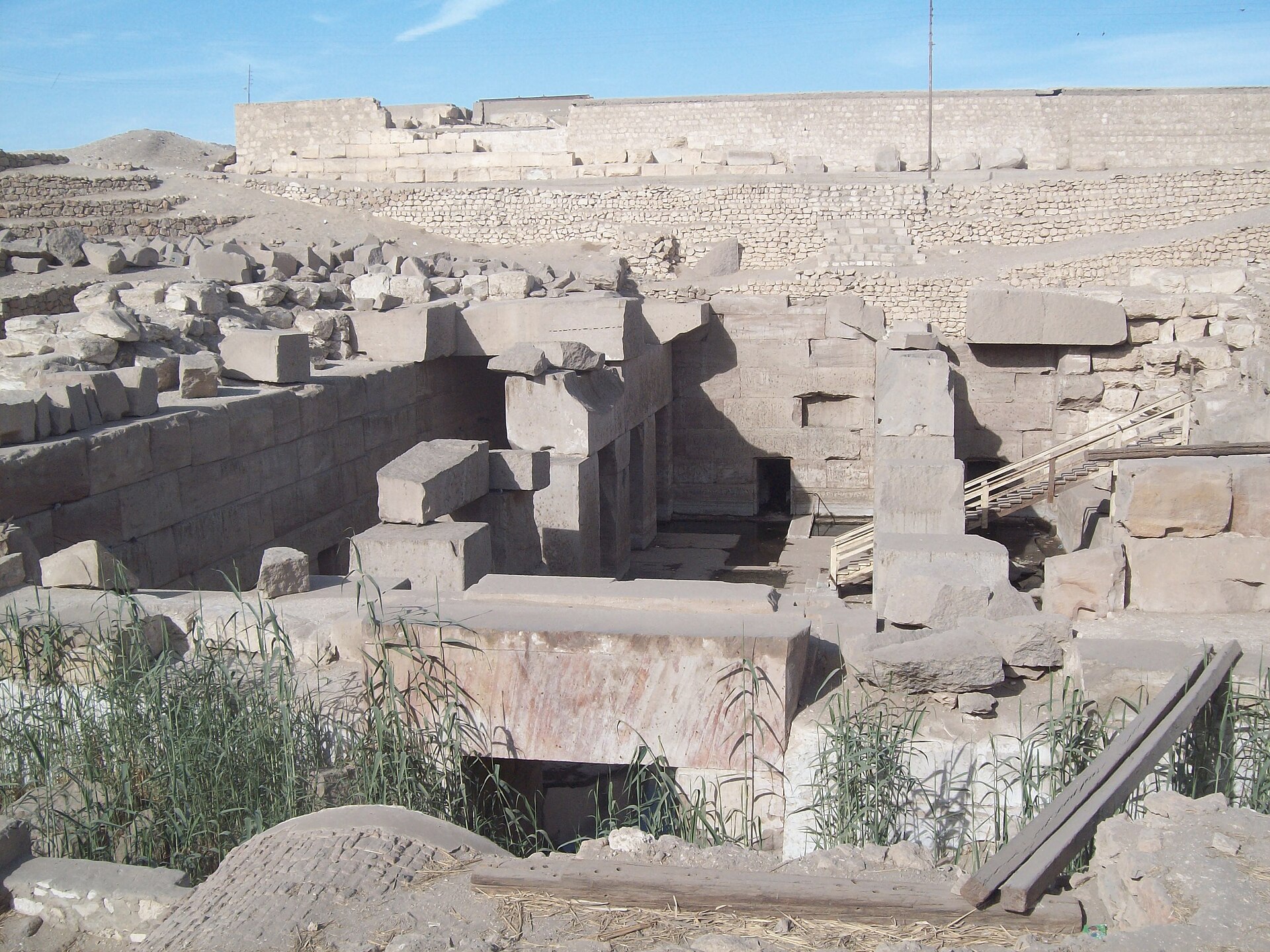
- The Osireion, behind the temple, is a granite platform surrounded by a channel and carried by ten giant pillars; its purpose is still debated.
- The Temple of Ramesses II, nearby and smaller, has kept its lower parts and the poem of the Battle of Kadesh.
Allow about two hours on site.
Dendera: colours regained
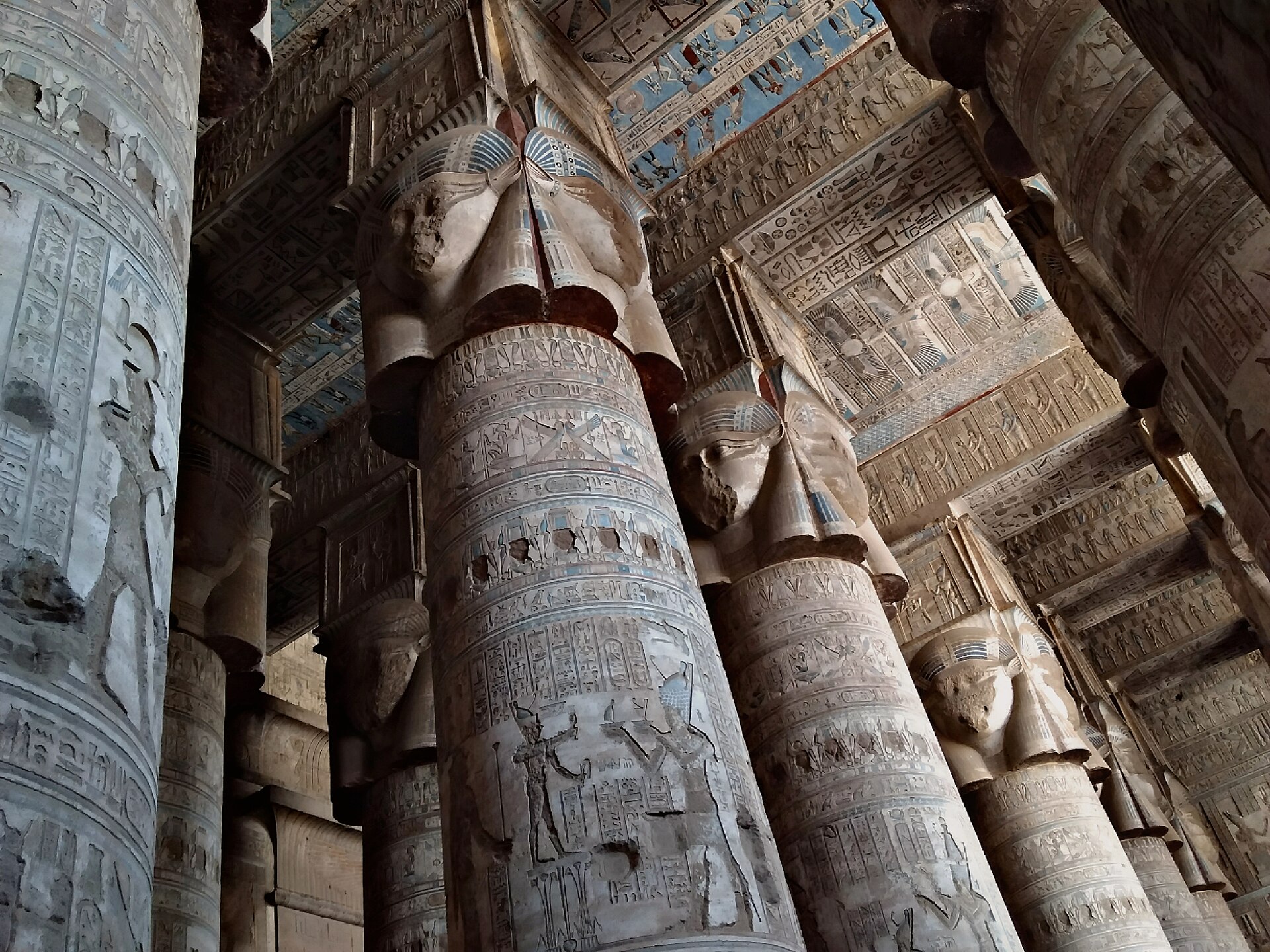
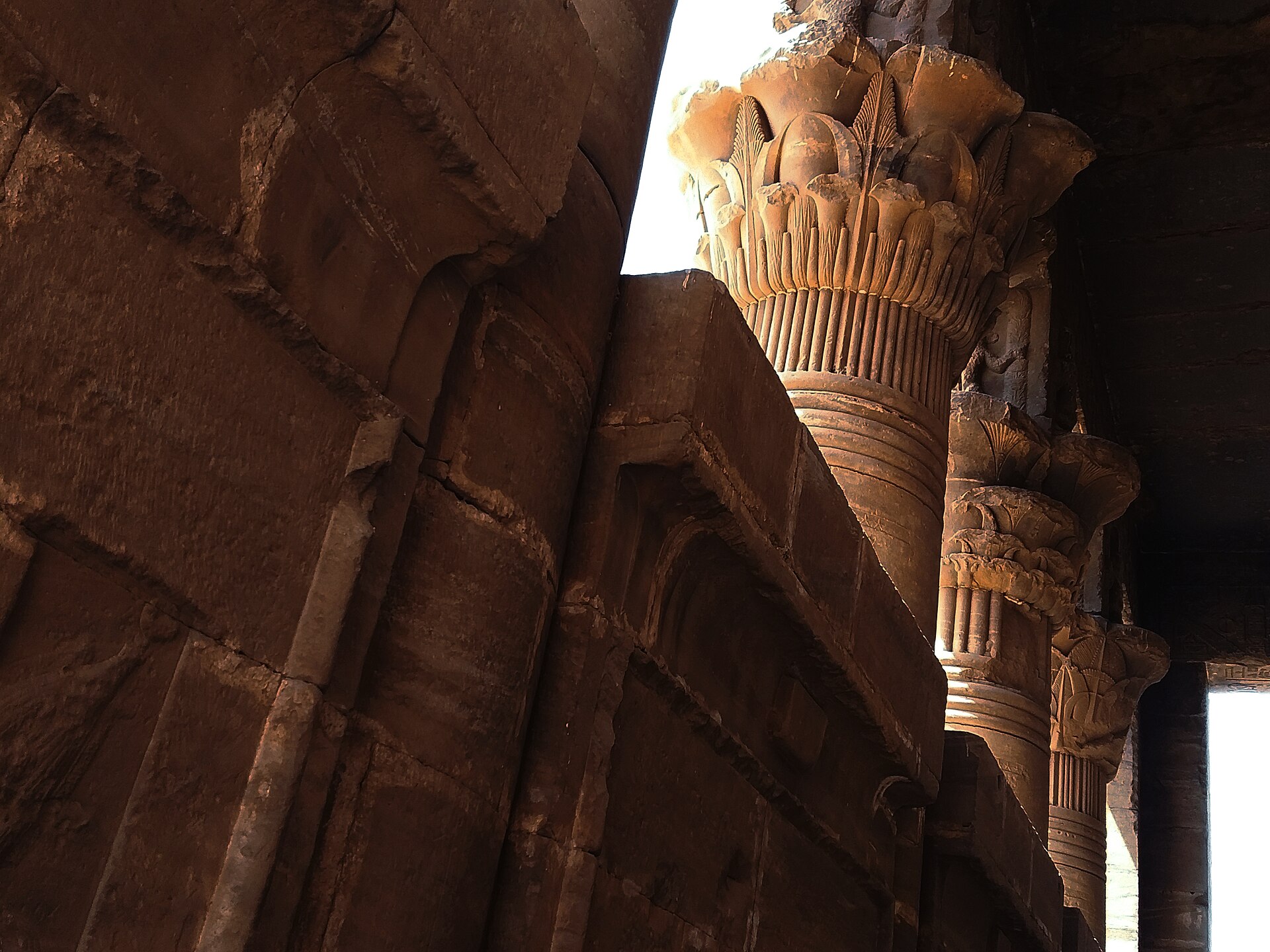
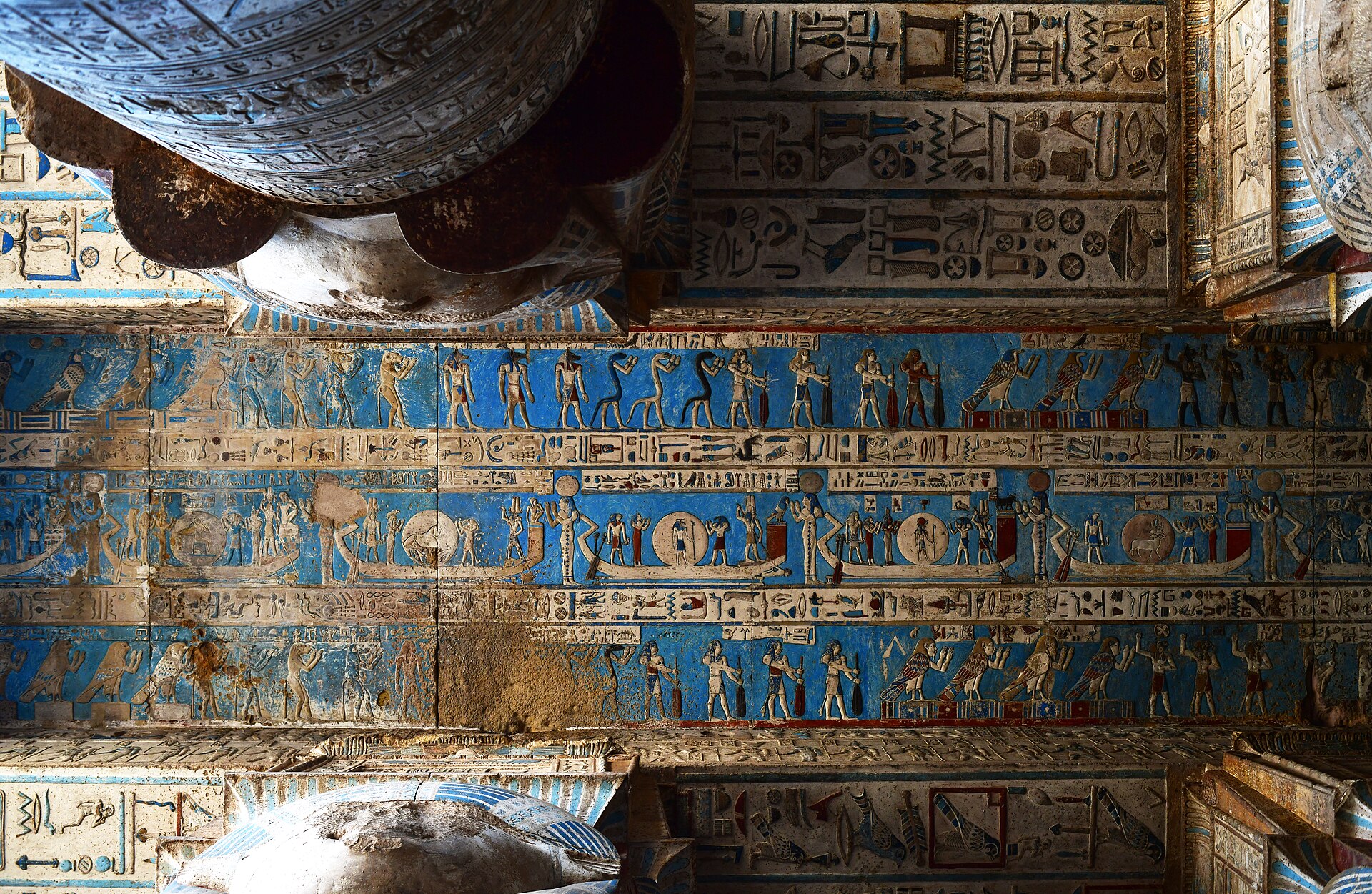
The Temple of Hathor opens with six columns topped by Hathor's head framed by sistrums, the goddess's musical instrument. The hypostyle hall, with its twenty-four columns, carries a blue ceiling covered with astronomical scenes. Egypt's Ministry of Tourism and Antiquities restored the hall and its ceilings, and in February 2020 opened the roof and three crypts to visitors.
Highlights:
- The roof, where a chapel holds a copy of the Dendera Zodiac; the original has been in the Louvre since 1821. The view takes in the enclosure and the countryside.
- The three crypts, opened to visitors at the same time as the roof.
- The back wall of the temple, on the outside, where Cleopatra VII and her son Caesarion are shown before Hathor and other deities: one of the few portraits of the queen made in her lifetime.
The site is open from 7 am to 5 pm local time. Entry costs 300 Egyptian pounds (EGP) for a foreign adult, with two supplements of EGP 100 each, one for the roof and one for the crypts.
Planning the day
From Luxor, the loop covers about 360 km and six hours of driving, for a day of around ten hours:
- Luxor - Abydos: 170 km, about 3 hours. Start with the more distant site.
- Abydos - Dendera: 105 km, about 1 h 30.
- Dendera - Luxor: 77 km, about 1 h 40.
Sabaro advises an early start, a car with driver and an Egyptologist guide: the road runs through villages, with many speed bumps, carts and motorbikes. Police checkpoints are frequent, and tourist vehicles sometimes travel in convoy with an escort. Driving at night outside towns should be ruled out: the return to Luxor is made before dark.
For a shorter day, Dendera alone takes about five hours, three of them on the road. The Oberoi boats' 6- or 7-night cruises from Luxor also stop at Dendera, and the Oberoi Philae at Abydos.
The seasons are those of Luxor: October to April for bearable temperatures, with an average maximum of 23 to 29 °C from November to February according to the 1991-2020 normals of the World Meteorological Organization (WMO) for Luxor. In summer the average maximum exceeds 39 °C, and a day with six hours on the road becomes gruelling.
What to see
- Temple of Seti I, Abydos — list of the kings of Egypt up to Seti I, painted reliefs; completed by Ramesses II UNESCO (liste indicative, réf. 1823)
- Osireion, Abydos — granite platform surrounded by a canal, ten giant pillars; purpose debated UNESCO (liste indicative, réf. 1823)
- Temple of Ramesses II, Abydos — lower parts preserved, poem of the Battle of Kadesh UNESCO (liste indicative, réf. 1823)
- Temple of Hathor, Dendera — Ptolemaic period; six Hathor-headed columns on the façade, astronomical ceilings egymonuments.gov.eg
- Roof and crypts of the Dendera temple — three crypts and the roof opened to visitors in February 2020, after restoration egymonuments.gov.eg
Getting there
- Luxor airport (LXR); from Luxor: Abydos 170 km (about 3 h), Abydos–Dendera 105 km (1 h 30), Dendera–Luxor 77 km (1 h 40) Earth Trekkers
- Many police checkpoints; escort or convoy possible Earth Trekkers
By air
| Airport | By road | Direct flights |
|---|---|---|
| Luxor (LXR) | 167 km, 2h10 |
|
| Sohag (HMB) | 33 km, 0h56 | |
| Asyut (ATZ) | 192 km, 2h30 |
Read next
Travel advice
| Country | Official advice | Source |
|---|---|---|
| France | Area not named: outside the Western Desert, travel possible following the general advice; driving at night outside towns and tourist sites strongly advised against | diplomatie.gouv.fr (Site last updated 21 September 2026) |
| United Kingdom | Qena (Dendera) is among the named exceptions to the advised-against areas of the Western Desert; Abydos (Sohag Governorate, Nile Valley) is not named | GOV.UK (Site last updated 4 August 2026) |
| Belgium | Not checked by Sabaro: see diplomatie.belgium.be | |
| Switzerland | Not checked by Sabaro: see DFAE (eda.admin.ch) | |
| Luxembourg | Not checked by Sabaro: see mae.gouvernement.lu | |
| Ireland | Not checked by Sabaro: see ireland.ie (DFA) | |
| Germany | Not checked by Sabaro: see Auswärtiges Amt | |
| Sweden | Not checked by Sabaro: see Regeringen (UD) | |
| Denmark | Not checked by Sabaro: see Udenrigsministeriet (um.dk) | |
| Norway | Not checked by Sabaro: see Regjeringen | |
| Poland | Not checked by Sabaro: see Odyseusz (MSZ) | |
| Czechia | Not checked by Sabaro: see MZV ČR | |
| Austria | Not checked by Sabaro: see BMEIA | |
| Netherlands | Not checked by Sabaro: see Nederland Wereldwijd | |
| Italy | Not checked by Sabaro: see Viaggiare Sicuri | |
| Spain | Not checked by Sabaro: see exteriores.gob.es | |
| Portugal | Not checked by Sabaro: see Portal das Comunidades | |
| Finland | Not checked by Sabaro: see Ulkoministeriö (um.fi) | |
Rules change: always check the official website before you travel.
Frequently asked questions
Can you see both sites in one day?
Yes: about 360 km and six hours of driving in total from Luxor. Start with Abydos, the more distant, and stop at Dendera on the way back.
What is the Abydos King List?
A list carved in the Temple of Seti I of the kings who ruled Egypt from the first dynasties up to him. Three kings are deliberately left out, among them Akhenaten.
What is there to see on the roof at Dendera?
A chapel decorated with a copy of the Dendera Zodiac, whose original has been in the Louvre since 1821. The roof and three crypts have been open to visitors since February 2020; each requires a supplement of EGP 100.
Can I see Dendera alone?
Yes: it is a half-day from Luxor, about five hours including three on the road.
Can you see Abydos and Dendera on a cruise?
Yes, on the Oberoi boats' 6- or 7-night itineraries from Luxor: Dendera on the Oberoi Zahra, Dendera and Abydos on the Oberoi Philae.
A travel advisor replies by email. Free, no commitment.