Middle Egypt (Amarna, Beni Hasan)
Middle Egypt, around Minya, holds Akhenaten's capital at Tell el-Amarna, the 39 rock-cut tombs of Beni Hasan and the necropolis of Tuna el-Gebel with the Tomb of Petosiris. On the Nile between Cairo and Luxor, it makes a trip of two days on site and two nights in Minya, about 4 hours by road from Cairo, or a stop on a long Nile cruise.
Middle Egypt is the stretch of the Nile Valley between Cairo and Luxor, around the cities of Minya and Asyut. It holds a chapter of Egyptian history that stands apart: Tell el-Amarna, the capital Akhenaten raised from the desert for his single god, the Aten, and abandoned some fifteen years later. Around it lie the painted tombs of the governors at Beni Hasan, Thoth's holy city of Hermopolis and its necropolis, Tuna el-Gebel.
The region suits travellers who already know Cairo and Luxor, or whose interest in Egyptology goes beyond the great classics. Two days on site cover the essentials, with two nights in Minya: Beni Hasan on the afternoon you arrive, then a full day for Amarna, Hermopolis and Tuna el-Gebel.
Getting to Middle Egypt
Cairo is 4h40 from Paris by direct flight4h15 from Brussels by direct flighta few hours' flight from Europe's main cities, direct or with one stop. From there, Minya is about 4 hours by car with a driver. Tell el-Amarna lies 310 km from Cairo, 60 km south of Minya and 75 km north of Asyut; from Cairo, take the Eastern Desert highway and the Mallawi exit. Luxor is 400 km further south.
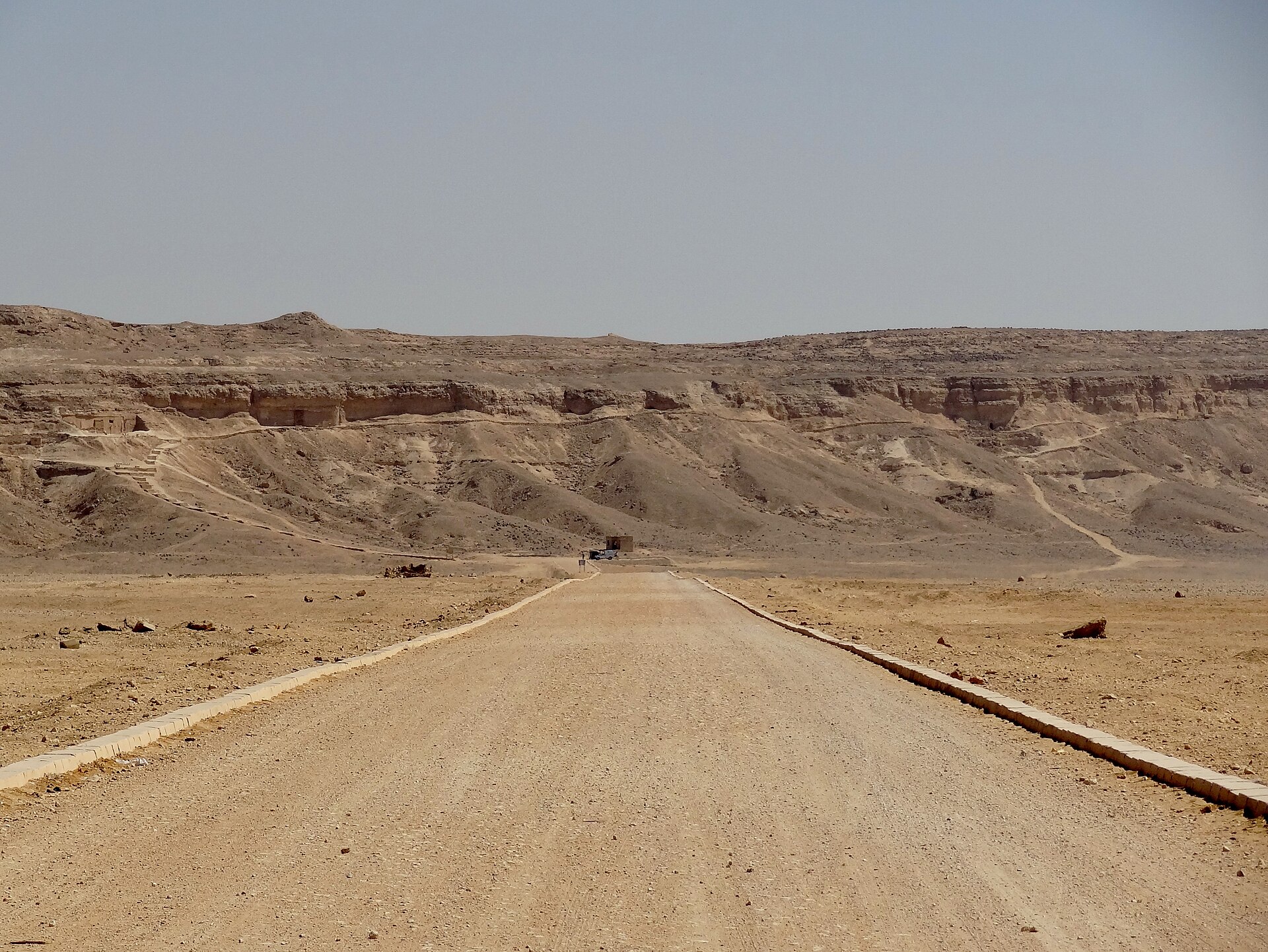
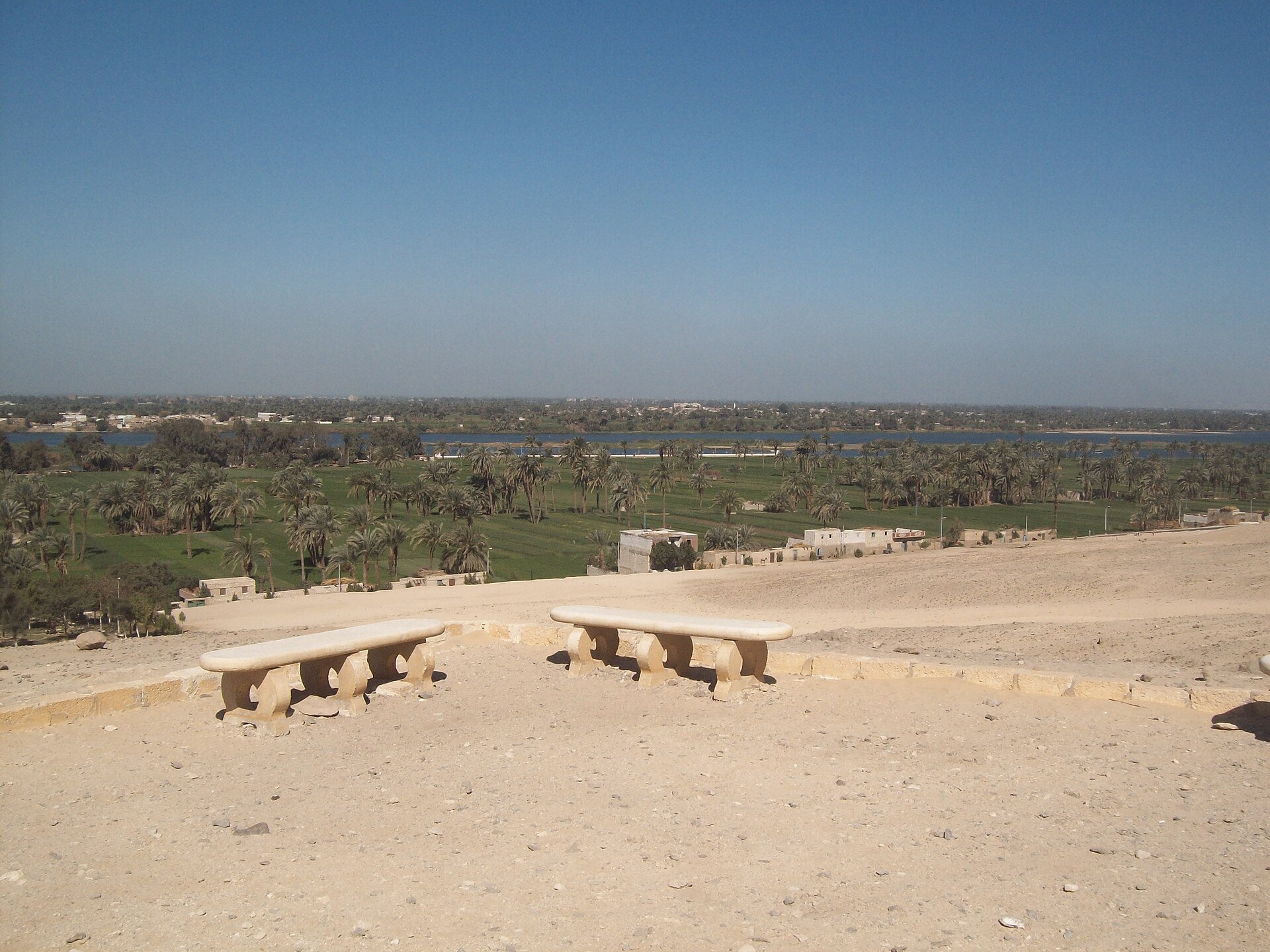
The Amarna site spreads along the east bank of the Nile. You reach it over the bridge between Mallawi and Deir Mawas, or by the ferry from the west bank to the village of El-Till. Keep your car for the whole day: the North Tombs, the Royal Tomb and the remains of the city are several kilometres apart.
A few long cruises of about two weeks between Cairo and Luxor or Aswan call at Minya, Beni Hasan, Tuna el-Gebel and Amarna, on small ships. The guide Choosing a Nile cruise compares the more common options between Luxor and Aswan.
Amarna, Akhenaten's city
Around 1347 BC, Pharaoh Akhenaten founded a new city, Akhetaten, the "Horizon of the Aten", in a wide desert bay on the east bank of the Nile. There he made the Aten, the sun disc, the god of the state, to the exclusion of all other deities. The city was built and abandoned within about fifteen years, around 1332 BC, at the end of the 18th Dynasty. Today it is under growing pressure from the spread of the surrounding fields and villages.
Sixteen stelae cut into the cliffs on both banks marked the bounds of the city's sacred land. In the first proclamation, dated to year 5 of his reign, Akhenaten says that the Aten chose the place for him, and vows never to extend its limits. Excavation began in 1892. On 6 December 1912, the German expedition led by Ludwig Borchardt found the bust of Queen Nefertiti in the workshop of the sculptor Thutmose; it is now in the Neues Museum in Berlin. The Egypt Exploration Society, a British learned society, has carried out excavation and conservation at the site since 1977.
The Amarna Project, which leads this work, suggests the following for a one-day visit, arriving early:
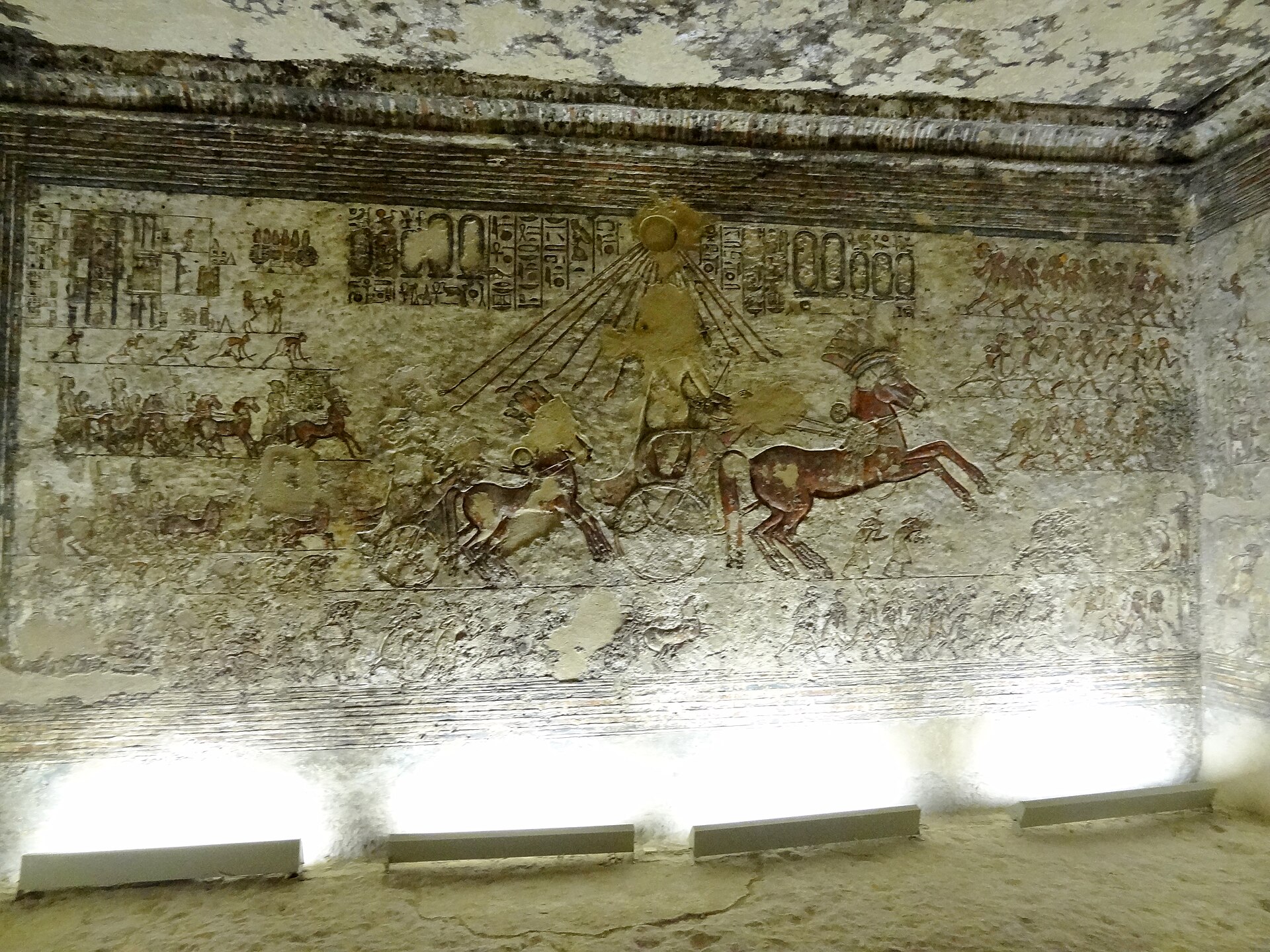
- The North Tombs, six numbered rock-cut tombs of Akhenaten's high officials, closed by iron doors, in a cliff about 85 m high. Most visitors see tombs 3 to 6, including that of Meryra, high priest of the Aten, where the royal princesses parade in chariots. A stepped path with benches leads up to them.
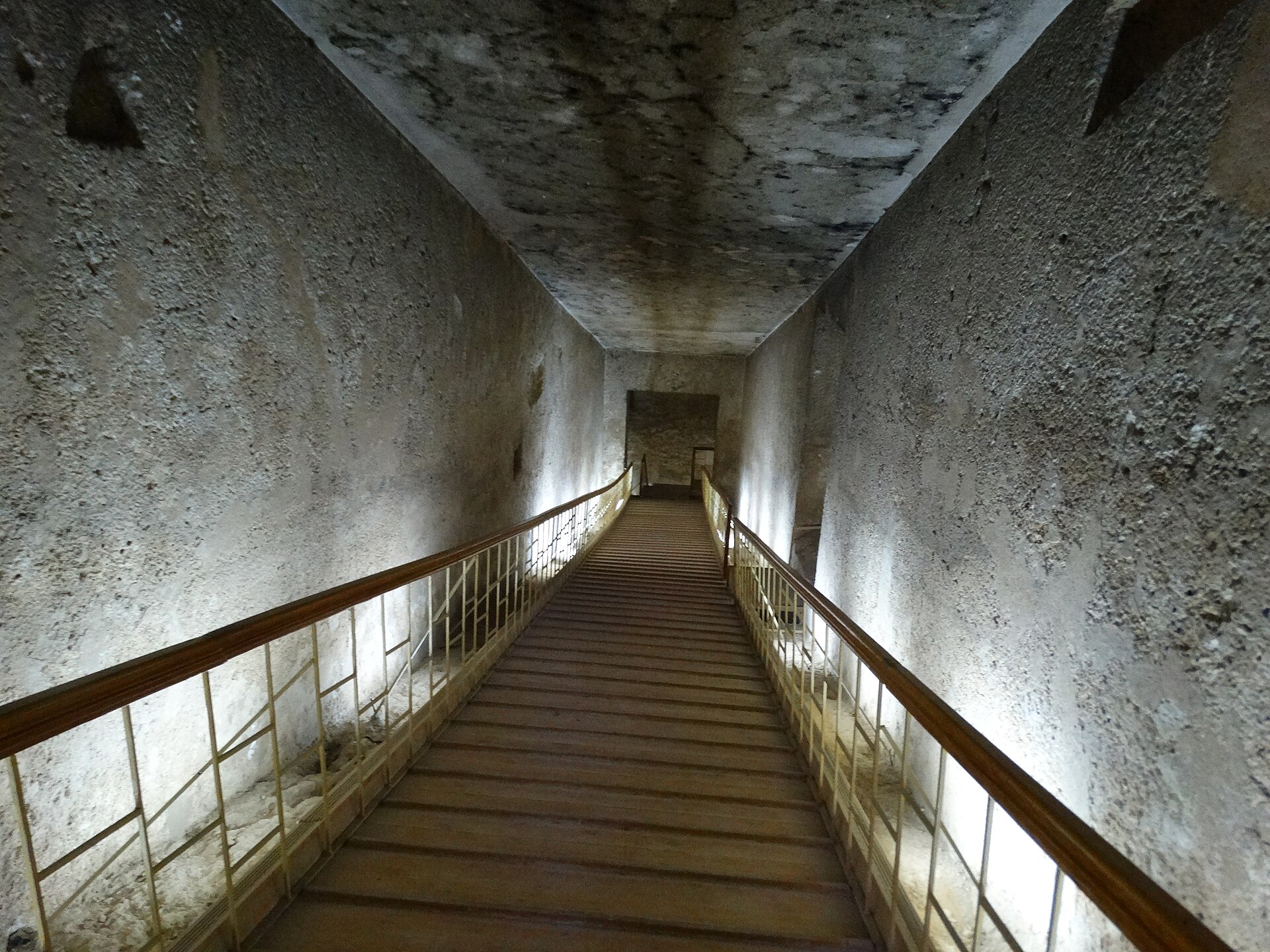
- The Royal Tomb, no. 26, cut into a side valley of the Royal Wadi about 6 km from its mouth. It was prepared for Akhenaten and his daughter, Princess Meketaten. The decoration, largely cut into a thin layer of gypsum plaster, has almost entirely gone; Meketaten's chambers still show Akhenaten and Nefertiti worshipping the Aten. You go down by a staircase and a ramp, both with handrails.
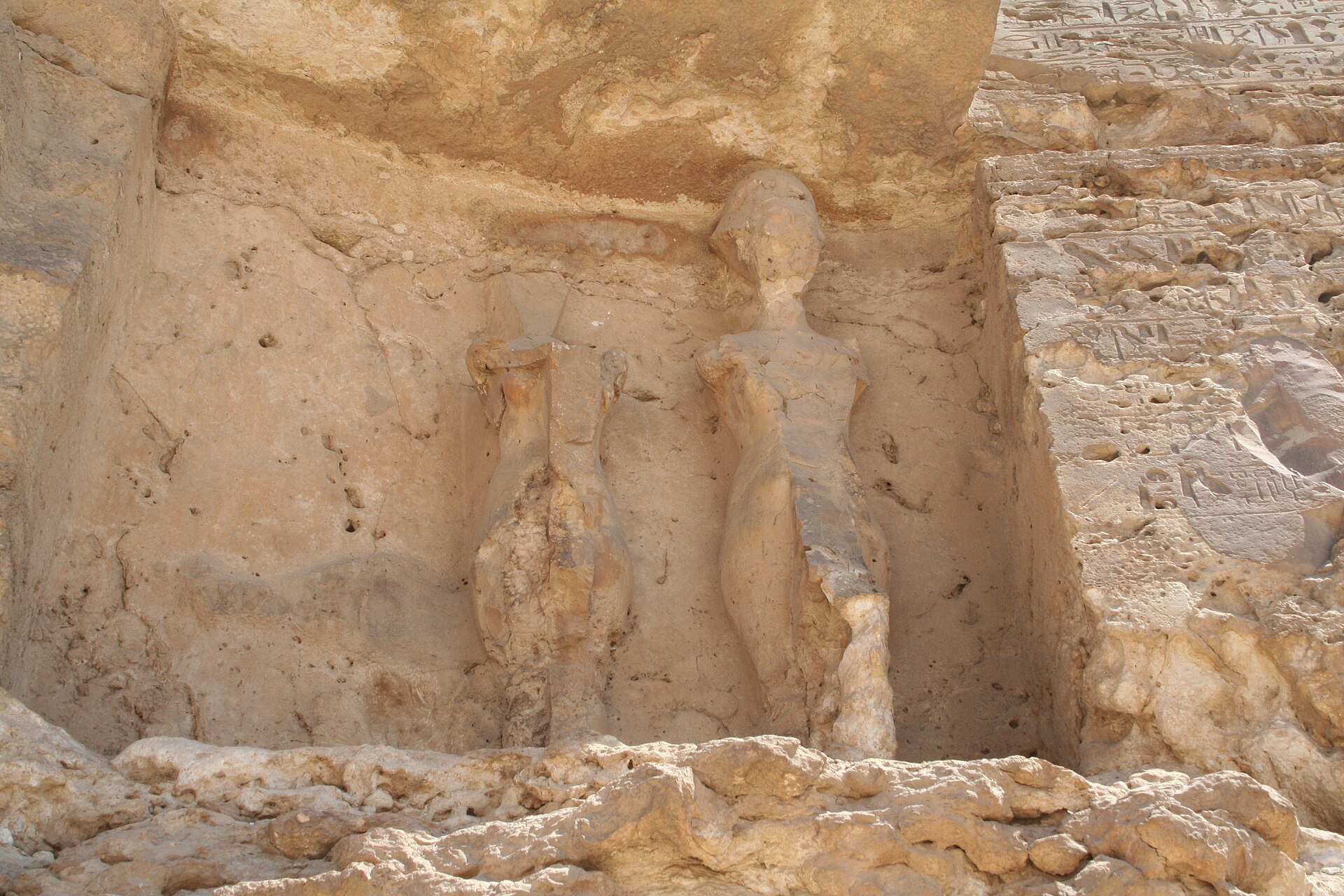
- Boundary Stela U, 7.6 m high, with statues of the royal family at its base, north of the entrance to the Royal Wadi, at the top of a flight of steps.
- The North Palace and the Small Aten Temple, on the way back to El-Till.
A second day adds the South Tombs, nineteen numbered tombs from 7 to 25, among them those of Ay, who became king after Tutankhamun, and of Mahu, Akhetaten's chief of police, and then the site of Kom el-Nana.
On the riverbank at El-Till, the visitor centre of the Ministry of Tourism and Antiquities introduces the city with models, panels in Arabic and English and a full-size replica of an official's house that you can walk through. The site and the centre open from 8 am to 4 pm local time. Entry costs 200 Egyptian pounds (EGP) for a foreign adult, plus EGP 120 for the Royal Tomb. Tickets are sold at the office on the road to the North Tombs; the rest house opposite sells drinks and has toilets.
The site is unpaved desert, with little shade and few places to sit, and the North Tombs and Stela U can only be reached up high staircases. Bring water, a hat and sturdy shoes, and ask your hotel for a packed lunch.
Beni Hasan, a province's life in paint
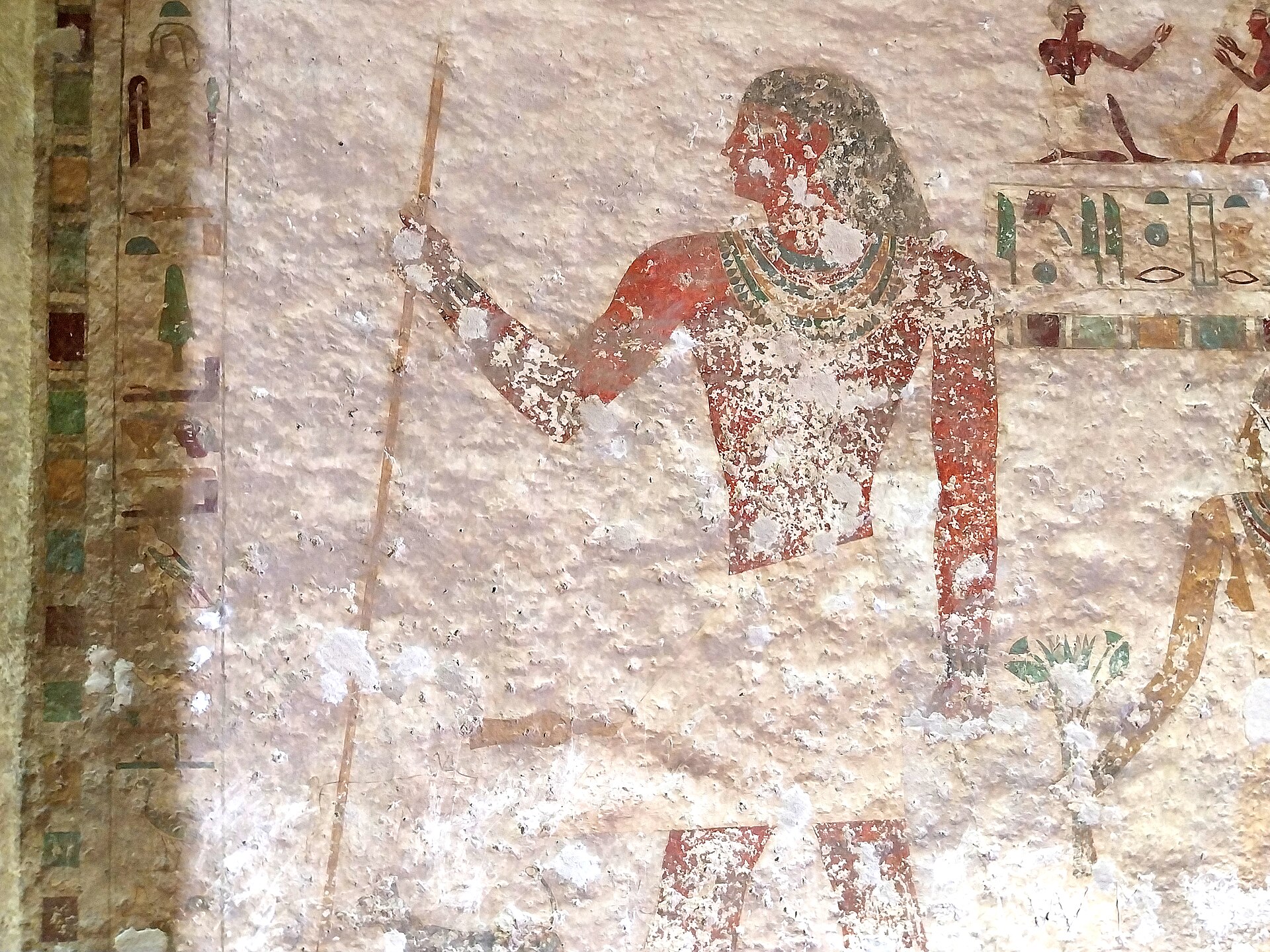
About twenty kilometres south of Minya, on the east bank, Beni Hasan is the cemetery of the governors of the Oryx province, the sixteenth of Upper Egypt, under the 11th and 12th Dynasties, roughly 2055 to 1795 BC. In the cliff face, 39 tombs were cut horizontally into the rock with bronze-bladed chisels and wooden mallets. Twelve still have their paintings: ploughing and harvest, craftsmen's workshops, hunting, games, war and foreigners arriving in Egypt. Below, the lower cemetery holds around 800 officials' tombs.
Four of the upper tombs are open:
- Amenemhat (tomb 2);
- Khnumhotep II (tomb 3), where a procession of fifteen foreigners from Asia, the Aamu, led by a chief named Abisharie, brings gifts to the governor; the inscription counts thirty-seven;
- Baqet III (tomb 15), where a whole wall shows 220 pairs of wrestlers, painted in red and dark brown so that every hold can be read;
- Khety (tomb 17), with another 122 pairs of wrestlers.
A little further south, in a side valley, Queen Hatshepsut had the Speos Artemidos cut into the rock, a temple to Pakhet, a local lioness goddess. Beni Hasan is open daily from 8 am to 5 pm local time; entry costs EGP 200 for a foreign adult and EGP 100 for a student.
Hermopolis and Tuna el-Gebel, the realm of Thoth
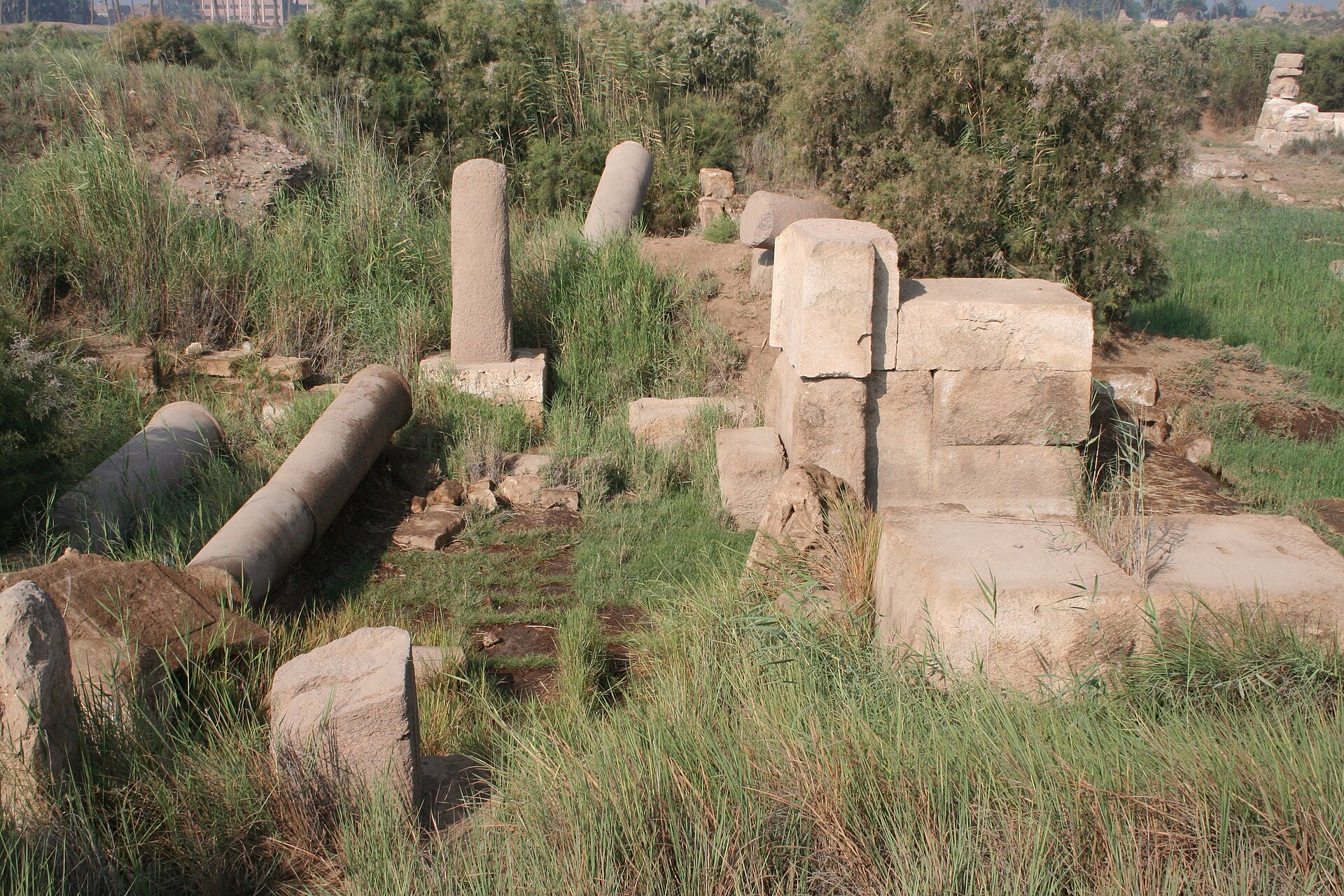
On the west bank, near the village of el-Ashmunein, Hermopolis was the holy city of Thoth, god of wisdom and patron of scribes. Its Egyptian name, Khemenu, means "Eight-Town", after the eight primordial deities worshipped there. The city is now in ruins, its stones long carted off as building material. What remains is a small open-air museum with two colossal statues of Thoth as a baboon worshipping the sun, and the columns of a 55 m long 5th-century Coptic basilica.
A few kilometres west, on the edge of the desert, Tuna el-Gebel was the necropolis of Hermopolis, in use from the New Kingdom to the Roman period. Here you can see:
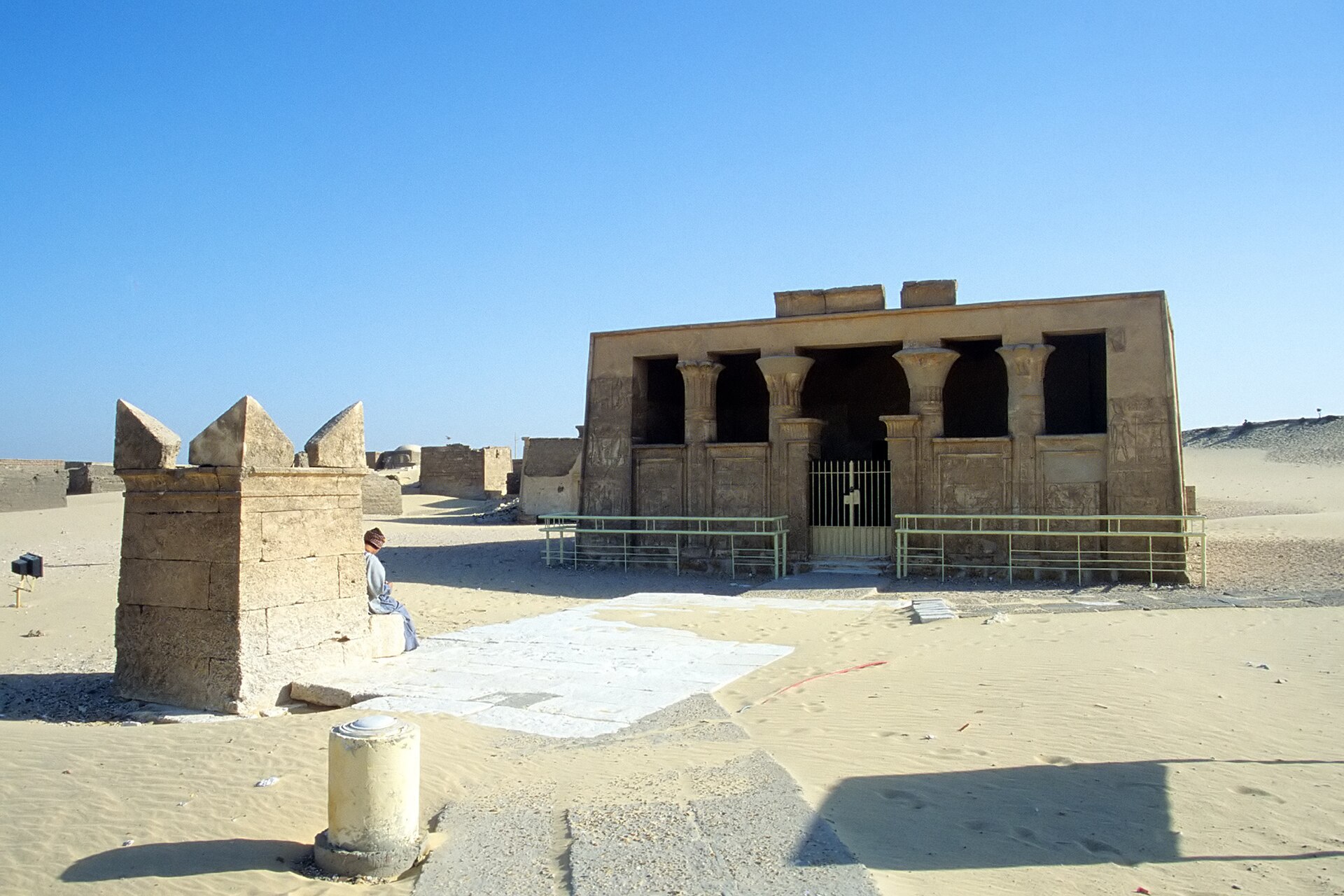
- The Tomb of Petosiris, a priest of Thoth, from around 300 BC, modelled on a temple, with a pronaos, the vestibule of Egyptian temples, its reliefs painted in red, yellow, blue, green and black;
- The animal galleries, underground passages where mummified ibises and baboons, the animals of Thoth, were laid to rest;
- The Tomb of Isadora, a young woman of Hermopolis who drowned in the Nile under the emperor Antoninus Pius in the 2nd century AD, whose mummy is still on display;
- Akhenaten's Boundary Stela A, well preserved, with its statues, on the way to the site.
Tuna el-Gebel is open from 8 am to 5 pm local time; entry costs EGP 200 for a foreign adult.
In Mallawi, between Hermopolis and Amarna, the town museum, opened in 1963, displays finds from the region's excavations, mostly Graeco-Roman: statues of Osiris, Isis, Hathor and Thoth, jewellery, papyri and wooden coffins. Looted in August 2013, it reopened in September 2016 with most of its 1,000 or so objects recovered. It opens from 9 am to 3 pm local time; entry costs EGP 120.
On the Holy Family route
Coptic tradition places two stops of the Holy Family's flight into Egypt in Middle Egypt. At Gebel el-Teir, north of Minya, a monastery looks down on the Nile from the top of the east-bank cliff; the Ministry of Tourism and Antiquities has begun developing the pilgrimage path there. Further south, in Asyut Governorate, the monastery of al-Muharraq marks the next stop. Both fit into a trip to Middle Egypt for travellers following the route.
Safety and getting around
The "Travel advice" table on this page gives your own foreign ministry's advice for the Nile Valley in Minya and Asyut and for the desert that stretches west of it, and the guide Safety in Egypt, region by region sets it in the context of the whole country.
In 2017 and 2018, two attacks targeted buses of Coptic pilgrims on the road to the Monastery of Saint Samuel, near Minya. The tourist police keep a close watch on foreign visitors in the province: an officer may follow your car from site to site, or wait outside your hotel. Visits are made by day, with a driver and an Egyptologist guide; driving at night outside towns is to be avoided, so plan to be back in Minya before dark.
When to go
The Minya weather station records average highs of 20 to 26 °C from November to March, according to the 1991-2020 normals of the WMO (World Meteorological Organization). Winter mornings are cool, with an average low of 5.5 °C in January, so bring a jacket for the early start. From May to September, highs climb above 34 °C, up to 37 °C in July, and the shadeless sites become hard going. It almost never rains, 3 mm a year on average.
November to March are the most pleasant months; in April and October, start your visits as soon as the sites open.
Planning your stay
There is no hotel at Amarna itself. Most visitors stay in Minya, the provincial capital, about 1 hour 30 minutes north of Amarna, in one of the hotels along the Nile; Mallawi, 20 minutes away, also has small hotels, and Asyut is also about 1 hour 30 minutes to the south. A plan for two days on site, with two nights in Minya:
- Day 1: drive from Cairo, Beni Hasan in the afternoon, night in Minya.
- Day 2: Amarna at opening time, Hermopolis and Tuna el-Gebel in the afternoon, second night in Minya.
- Day 3: back to Cairo, or south towards Abydos and Dendera and Luxor.
Amarna and Beni Hasan can also be done as a day trip from Cairo, with about 8 hours on the road there and back. One local agency offers it at 259 USD (about 232 €) per person for two, by private car with an English-speaking guide, entry fees and lunch included, for about 16 hours. Sabaro recommends staying in Minya instead: the days are shorter, and you reach Amarna at opening time, before the heat.
Site prices and passes are set out in the guide Egypt site tickets.
What to see
- North Tombs of Tell el-Amarna — six numbered rock-cut tombs of Akhenaten's high officials, including those of Huya, of Meryra, high priest of the Aten, and of Panehsy; tombs 3 to 5 are reached by a stepped path Amarna Project, tombes nord
- Royal Tomb of Akhenaten, Amarna — tomb no. 26, in a side valley of the Royal Wadi, about 6 km from its mouth; prepared for Akhenaten and Princess Meketaten; decoration, largely cut into a thin layer of gypsum plaster, almost entirely lost; a scene of Akhenaten and Nefertiti worshipping the Aten in Meketaten's chambers Amarna Project, tombe royale
- Boundary Stela U, Amarna — one of the sixteen stelae that marked the bounds of the holy city of Akhetaten; 7.6 m high, with statues of the royal family at its base; reached by a staircase Amarna Project, stèles frontières
- South Tombs of Amarna — nineteen numbered tombs (7 to 25) on the edge of a low plateau, including those of Ay, later king after Tutankhamun, and of Mahu, chief of police of Akhetaten Amarna Project, tombes sud
- Beni Hasan tombs — 39 rock-cut tombs of the governors of the Oryx province (11th and 12th Dynasties), 12 with painted walls: farming, crafts, hunting, games, war, wrestlers; open 8 am to 5 pm egymonuments.gov.eg (ministère du Tourisme et des Antiquités), Beni Hasan
- Tuna el-Gebel: Tomb of Petosiris and animal galleries — necropolis of Hermopolis; temple-shaped tomb of Petosiris, priest of Thoth, around 300 BC; underground galleries of mummified ibises and baboons, the animals of Thoth; Akhenaten's Boundary Stela A nearby LMU Munich, projet de fouilles de Tuna el-Gebel
- Hermopolis (el-Ashmunein) — holy city of Thoth; two colossal statues of Thoth as a baboon in a small open-air museum; 5th-century Coptic basilica Wikipedia, Hermopolis
- Mallawi Museum — museum of the region's excavations, opened in 1963, looted in August 2013 and reopened in September 2016 with most of its 1,000 or so objects recovered The Art Newspaper, réouverture du musée de Mallawi (23/09/2016)
- Gebel el-Teir Monastery — a stop on the Holy Family route in Minya Governorate, on the cliff of the Nile's east bank egymonuments.gov.eg, chemin de la Sainte Famille à Gebel el-Teir
- Al-Muharraq Monastery, Asyut — a stop on the Holy Family route in Asyut Governorate, after Gebel el-Teir egymonuments.gov.eg, le voyage de la Sainte Famille
When to go
Climate in Minya
| Jan | Feb | Mar | Apr | May | Jun | Jul | Aug | Sep | Oct | Nov | Dec | |
|---|---|---|---|---|---|---|---|---|---|---|---|---|
| Max. (°C) | 20.3 | 22.1 | 25.6 | 30.5 | 34.7 | 36.8 | 37.0 | 36.9 | 35.4 | 31.4 | 26.0 | 21.4 |
Source: NOAA, normales climatiques 1991-2020 de l'OMM, Minya (62387) — WMO 1991-2020 normals, archived by NOAA, accessed 2 November 2026
Getting there
- By road from Cairo: Minya about 4 h Egypt Tours Plus, journée à Tell el-Amarna au départ du Caire
- Amarna 310 km from Cairo, 60 km from Minya and 75 km from Asyut, by the Eastern Desert highway and the Mallawi exit Amarna Project, visiter Amarna
- At Amarna: keep the car all day, the site is too large to walk; site and El-Till visitor centre open 8 am to 4 pm Amarna Project, visiter Amarna
- Tourist police officers often accompany foreign visitors, at Amarna and when leaving hotels in Minya Wikivoyage, Amarna
- Long Cairo–Luxor cruises of about two weeks, calling at Minya, Beni Hasan, Tuna el-Gebel and Amarna Ancient World Tours, croisière longue sur le Nil 2026
Chosen activities
- Private day trip to Tell el-Amarna and Beni Hasan from Cairo, with English-speaking guide, entrance fees and lunch — about 16 hours · from 232 € per person
Public price collected on: Egypt Tours Plus, Tell El Amarna Tour from Cairo — accessed 2 November 2026
Read next
Travel advice
| Country | Official advice | Source |
|---|---|---|
| France | Increased vigilance (yellow): Minya, Beni Hasan, Hermopolis, Tell el-Amarna and Asyut are yellow on the map; the desert west of Medinet el-Fayoum and Abu Simbel is orange; no driving at night outside towns | diplomatie.gouv.fr (Site last updated 21 September 2026) |
| United Kingdom | Nile Valley of Minya and Asyut outside the advised-against areas; all but essential travel advised against in the desert west of the Nile Valley, except named exceptions | GOV.UK (Site last updated 27 October 2026) |
| Belgium | Region not advised against; only North Sinai, the Western Desert and the border zone with Libya and Sudan are | SPF Affaires étrangères (Belgique), Égypte, dernière mise à jour (Site last updated 2 October 2026) |
| Netherlands | Yellow, like the rest of Egypt outside the red and orange areas; western Egypt (desert) orange | Nederland Wereldwijd (Site last updated 19 June 2026) |
| Switzerland | Not checked by Sabaro: see DFAE (eda.admin.ch) | |
| Luxembourg | Not checked by Sabaro: see mae.gouvernement.lu | |
| Ireland | Not checked by Sabaro: see ireland.ie (DFA) | |
| Germany | Not checked by Sabaro: see Auswärtiges Amt | |
| Sweden | Not checked by Sabaro: see Regeringen (UD) | |
| Denmark | Not checked by Sabaro: see Udenrigsministeriet (um.dk) | |
| Norway | Not checked by Sabaro: see Regjeringen | |
| Poland | Not checked by Sabaro: see Odyseusz (MSZ) | |
| Czechia | Not checked by Sabaro: see MZV ČR | |
| Austria | Not checked by Sabaro: see BMEIA | |
| Italy | Not checked by Sabaro: see Viaggiare Sicuri | |
| Spain | Not checked by Sabaro: see exteriores.gob.es | |
| Portugal | Not checked by Sabaro: see Portal das Comunidades | |
| Finland | Not checked by Sabaro: see Ulkoministeriö (um.fi) | |
Rules change: always check the official website before you travel.
Frequently asked questions
How many days do you need for Middle Egypt?
Two days on site, with two nights in Minya: Beni Hasan on the afternoon you arrive, then a full day for Amarna, Hermopolis and Tuna el-Gebel. A single day from Cairo can cover Amarna and Beni Hasan, but it lasts about 16 hours.
What can you see at Tell el-Amarna in one day?
The North Tombs, the Royal Tomb of Akhenaten, Boundary Stela U, the North Palace and the Small Aten Temple, if you arrive at opening time, 8 am local time. The site is very spread out and is visited by car, from one point to the next.
How much do the sites cost?
For a foreign adult, EGP 200 at Amarna plus EGP 120 for the Royal Tomb, EGP 200 at Beni Hasan and EGP 200 at Tuna el-Gebel; EGP 120 at the Mallawi Museum.
Is Middle Egypt safe?
The tourist police often accompany foreign visitors, and journeys are made by day, with a driver. Your foreign ministry's advice is in the "Travel advice" table on this page.
Where can you see the bust of Nefertiti?
In the Neues Museum in Berlin. It was found at Amarna on 6 December 1912, in the workshop of the sculptor Thutmose, by the German expedition led by Ludwig Borchardt.
Can you see Amarna on a cruise?
Yes, on a few long cruises of about two weeks between Cairo and Luxor or Aswan, which also call at Minya, Beni Hasan and Tuna el-Gebel.
A travel advisor replies by email. Free, no commitment.