Luxor
Luxor, ancient Thebes, brings together on the two banks of the Nile the temples of Karnak and Luxor, the Valley of the Kings and the Temple of Hatshepsut, listed together as World Heritage in 1979. For travellers who want the heart of pharaonic Egypt; allow three days, ideally between October and April.
One town, two banks
Luxor stands on the site of ancient Thebes. Most of the surviving monuments date from the New Kingdom, around 1550 to 1069 BC; "Ancient Thebes with its Necropolis" has been on UNESCO's World Heritage List (UNESCO: the United Nations Educational, Scientific and Cultural Organization) since 1979.
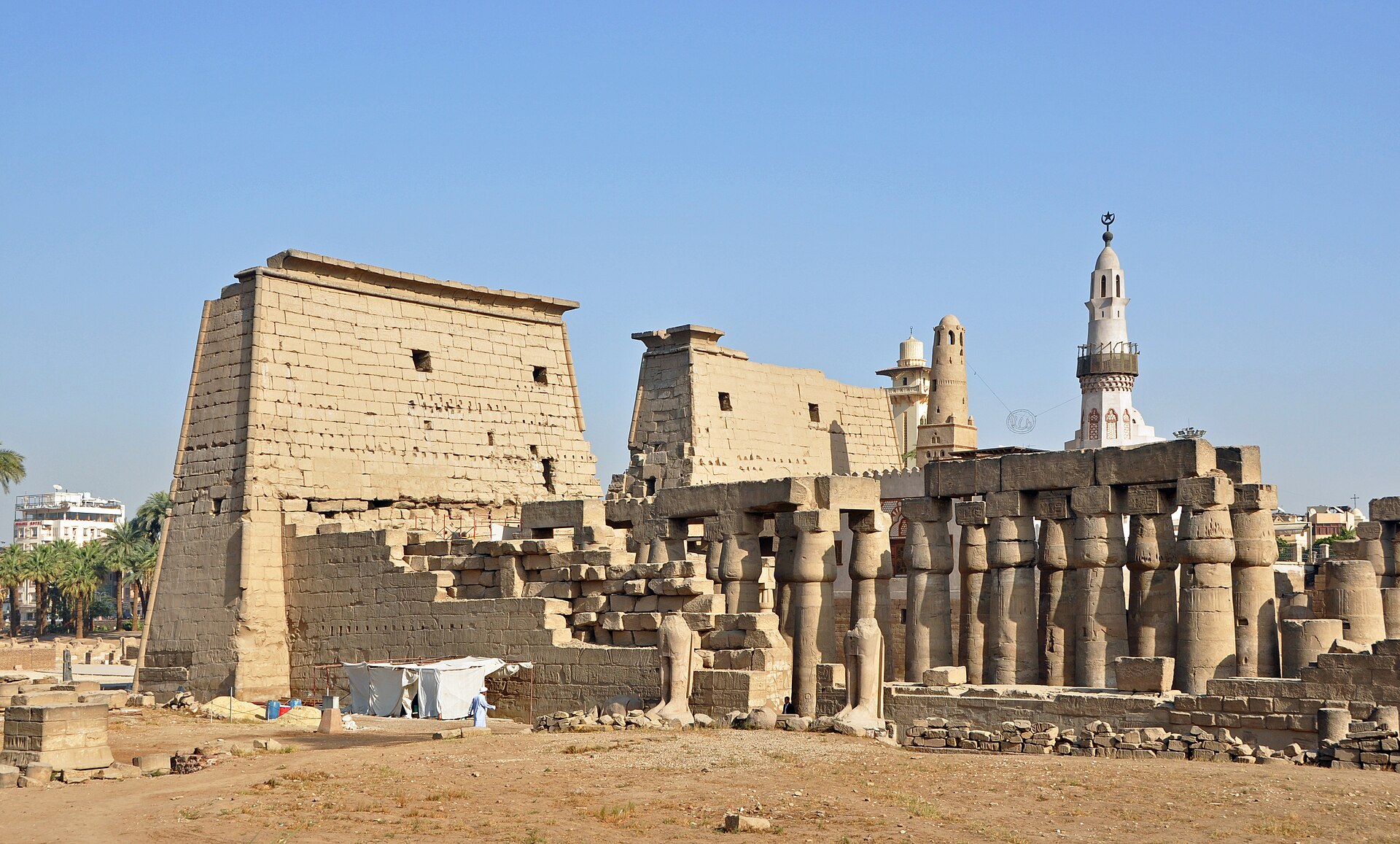
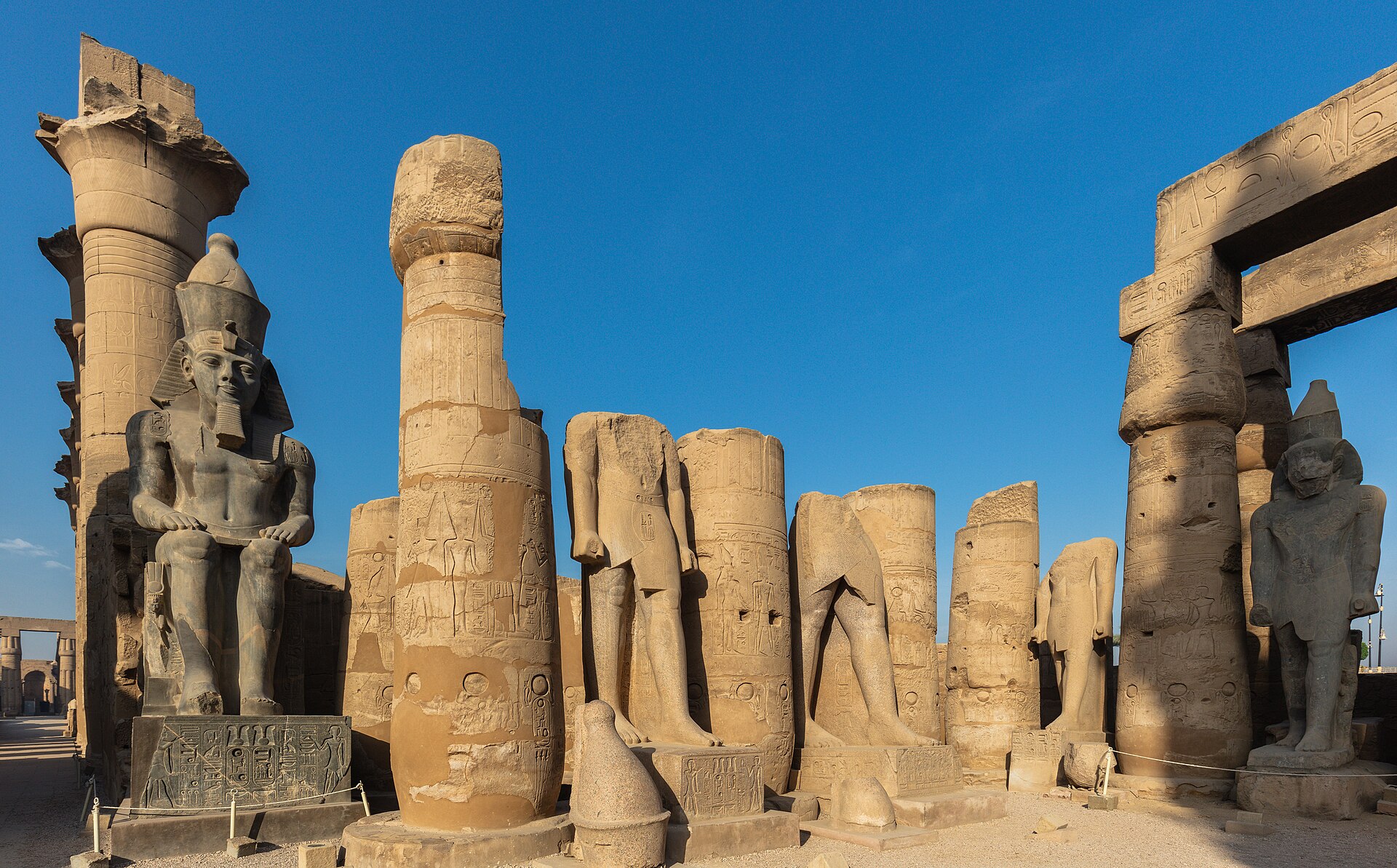
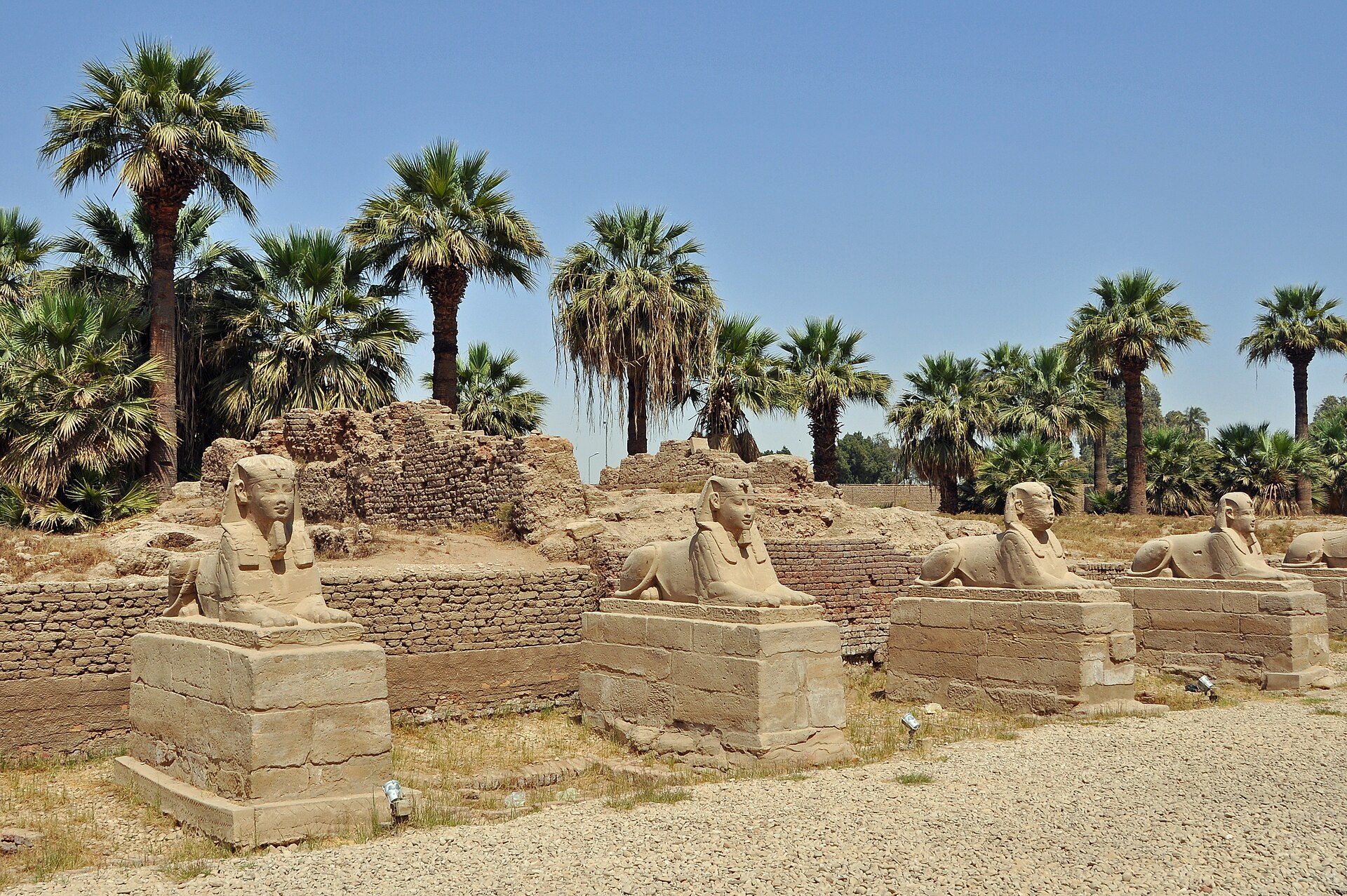
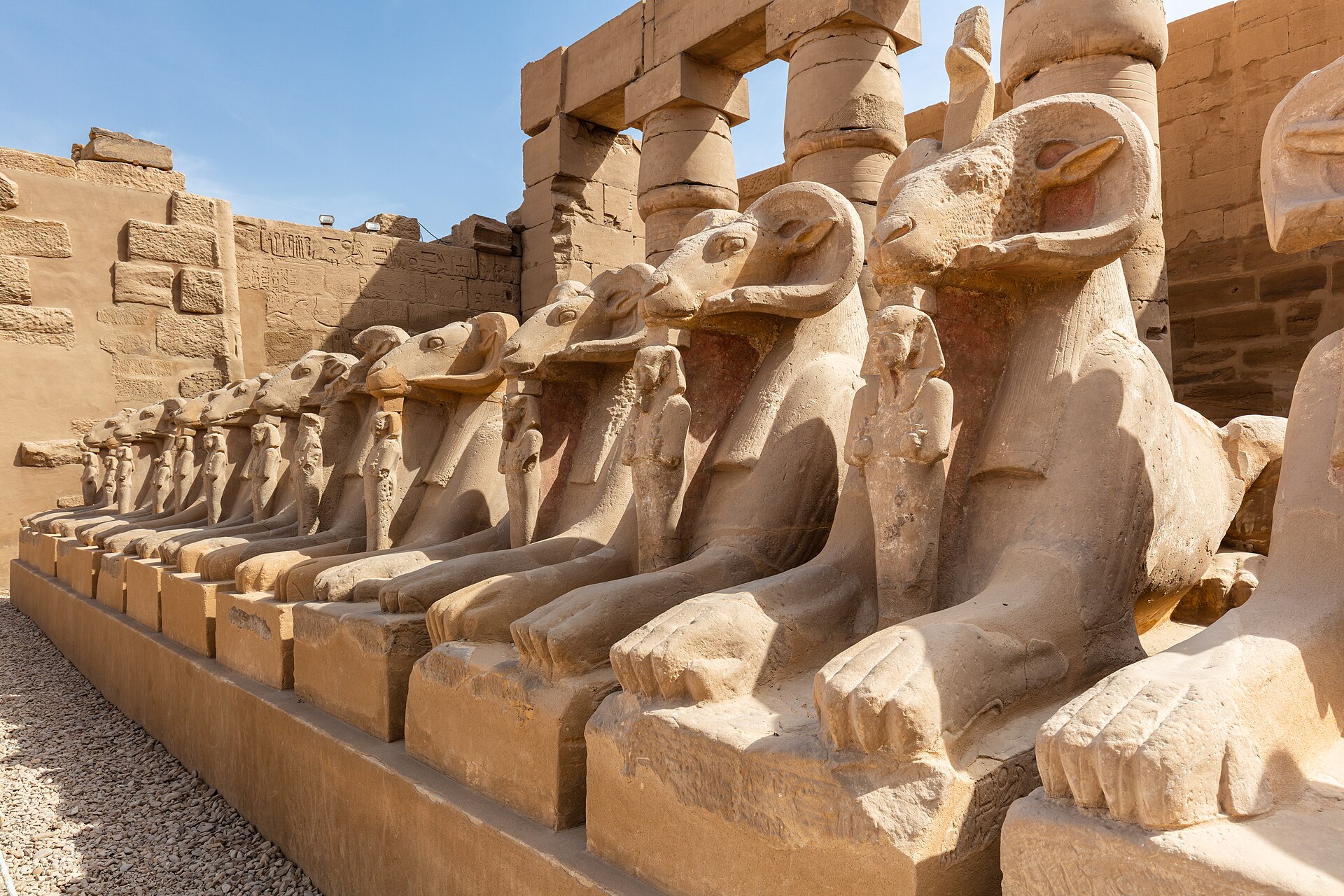
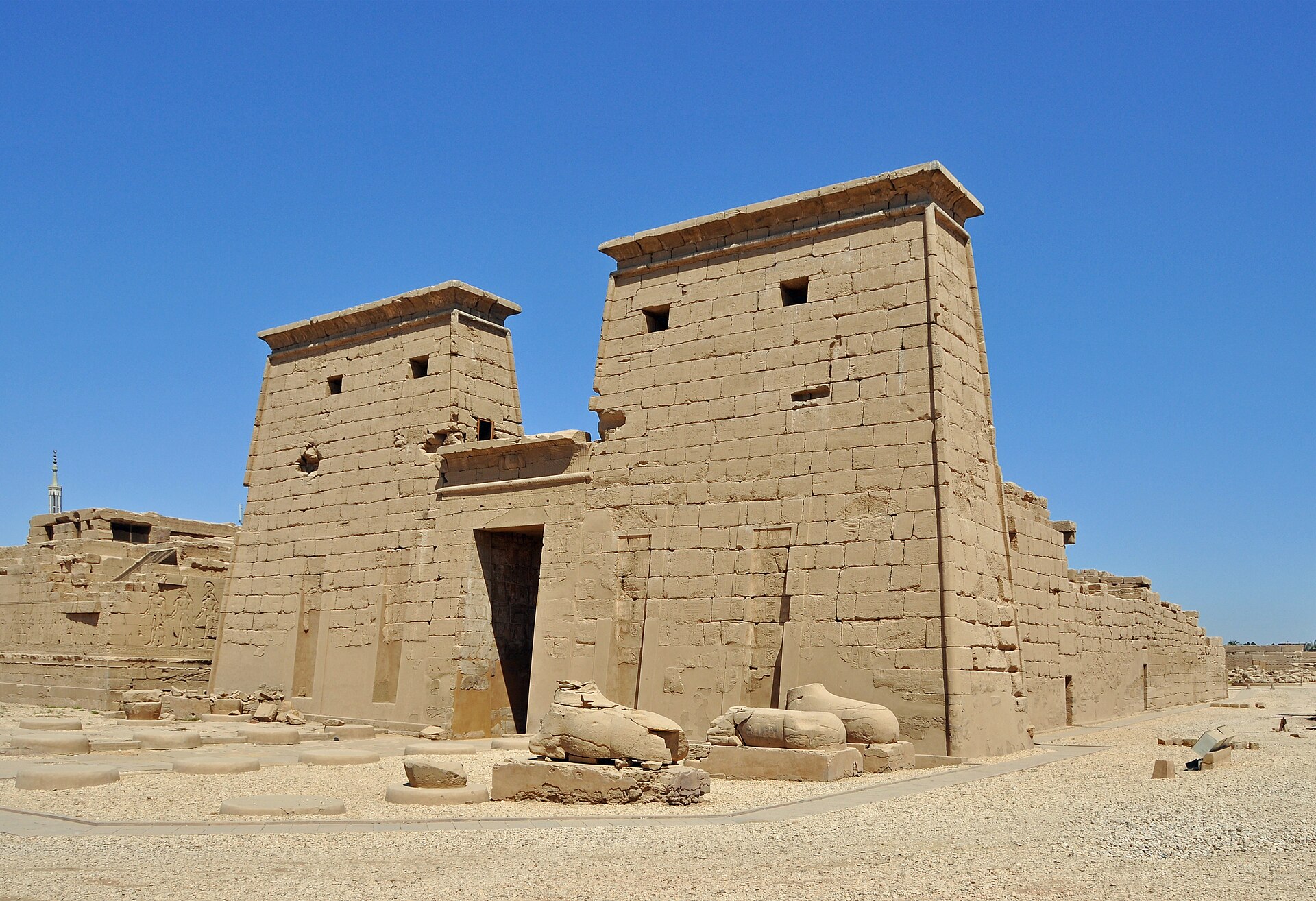
The Nile splits the town in two. The East Bank, on the side of the rising sun, holds the modern town, the hotels and the two great temples. Karnak, dedicated to Amun, and Luxor Temple, about 3 km further south, were once linked by a processional way lined with sphinxes. This Avenue of Sphinxes, about 2,700 metres long, was excavated from 1949, restored from 2017 and opened to the public on 25 November 2021. You can walk it from one temple to the other.
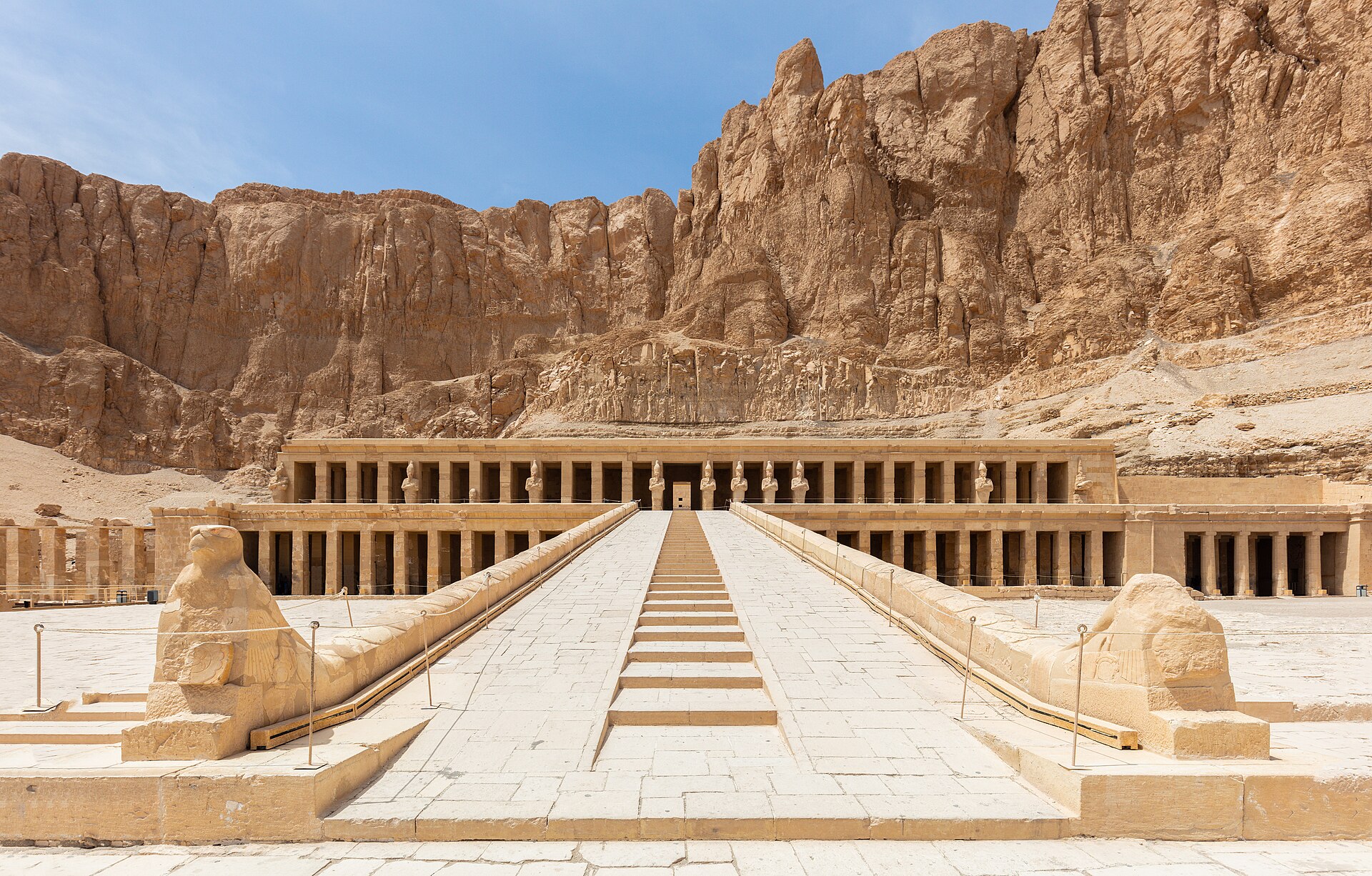
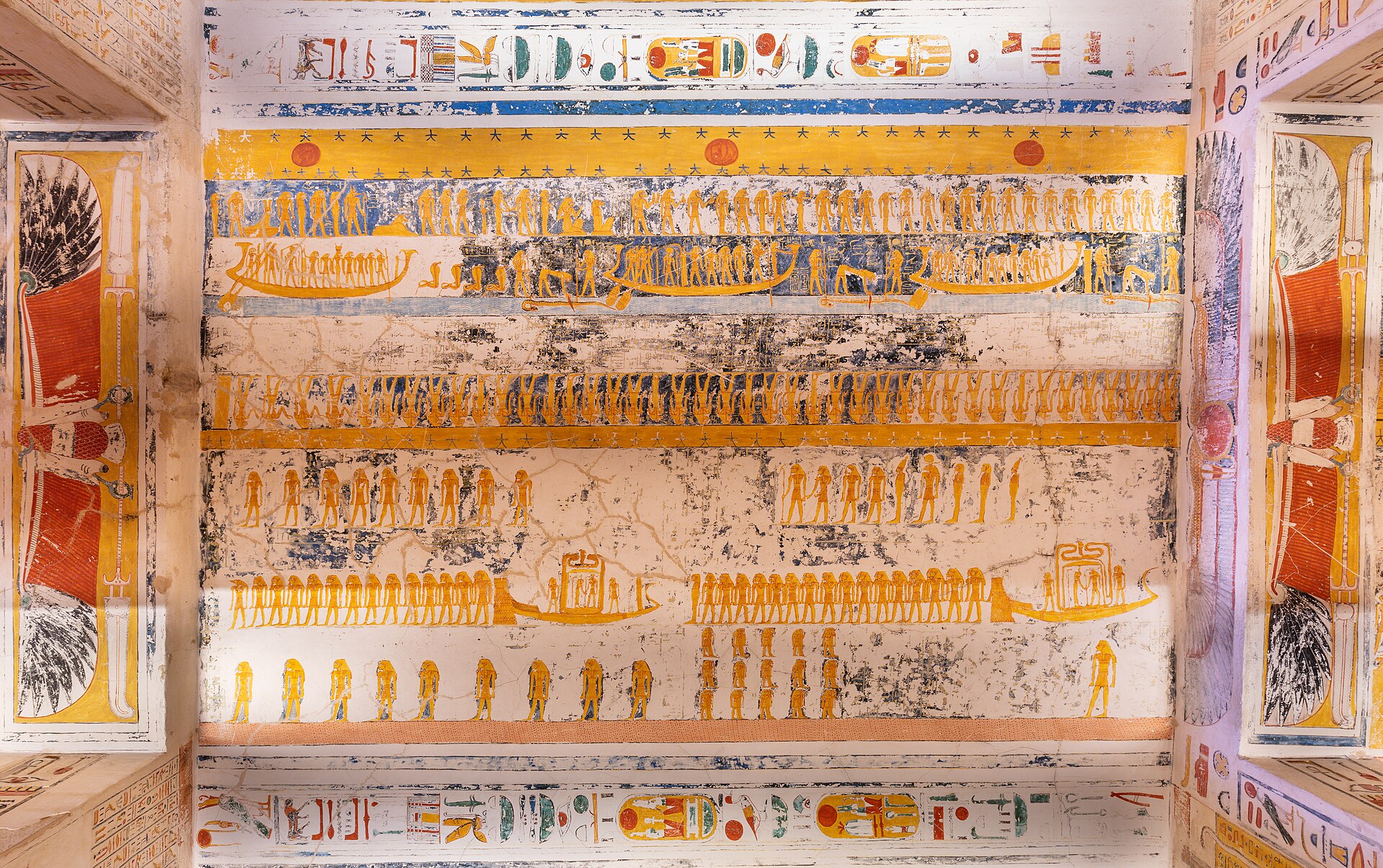
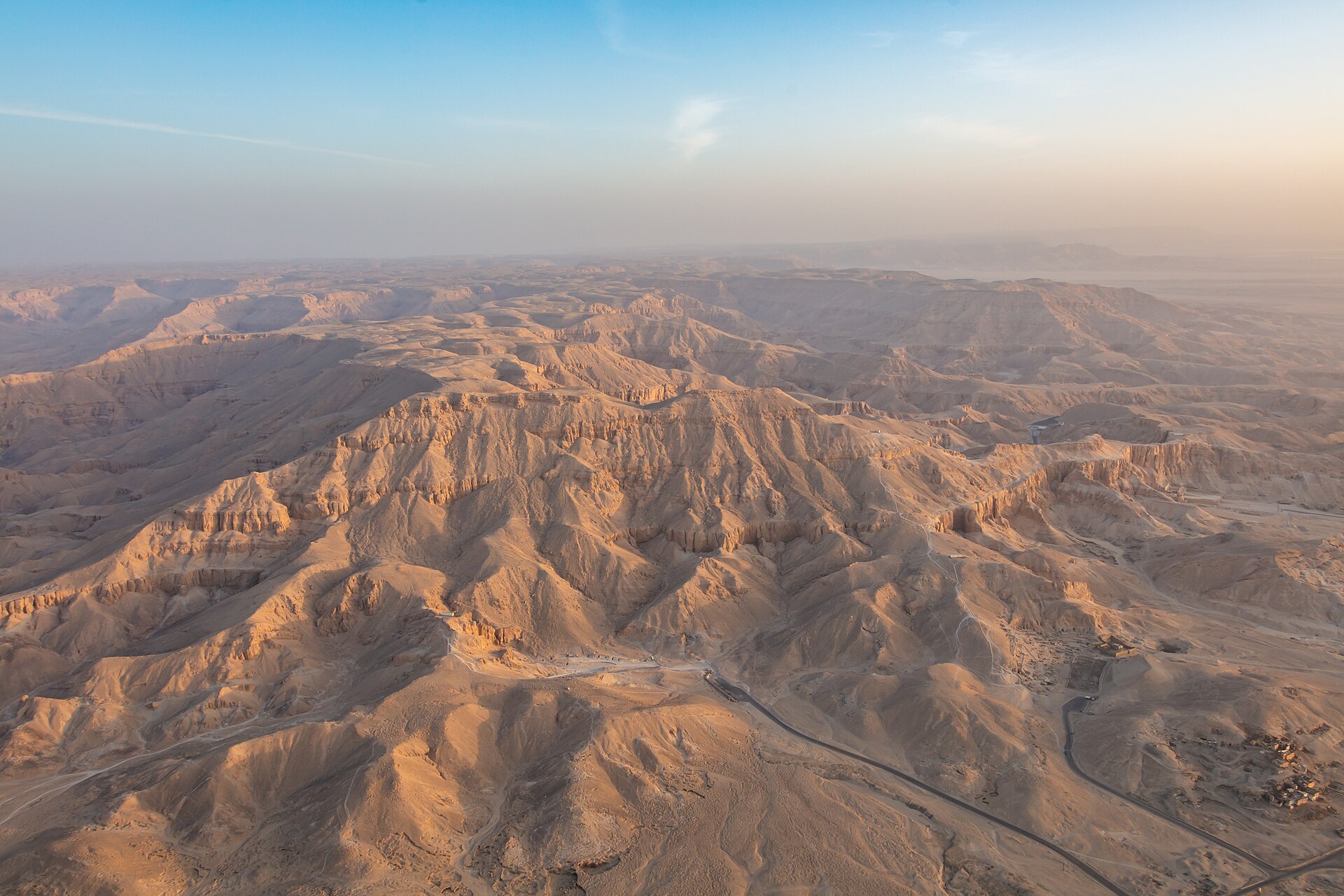
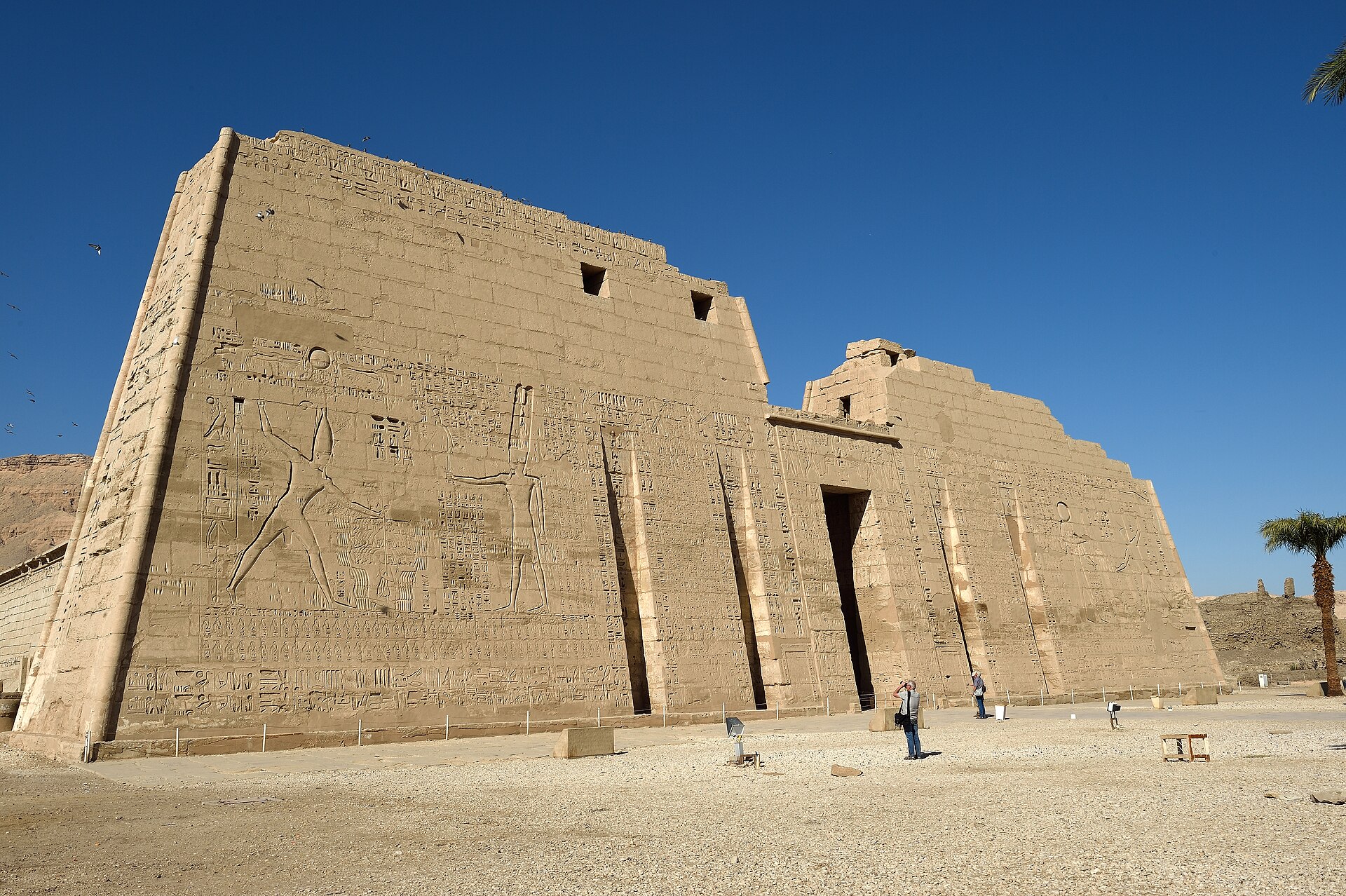
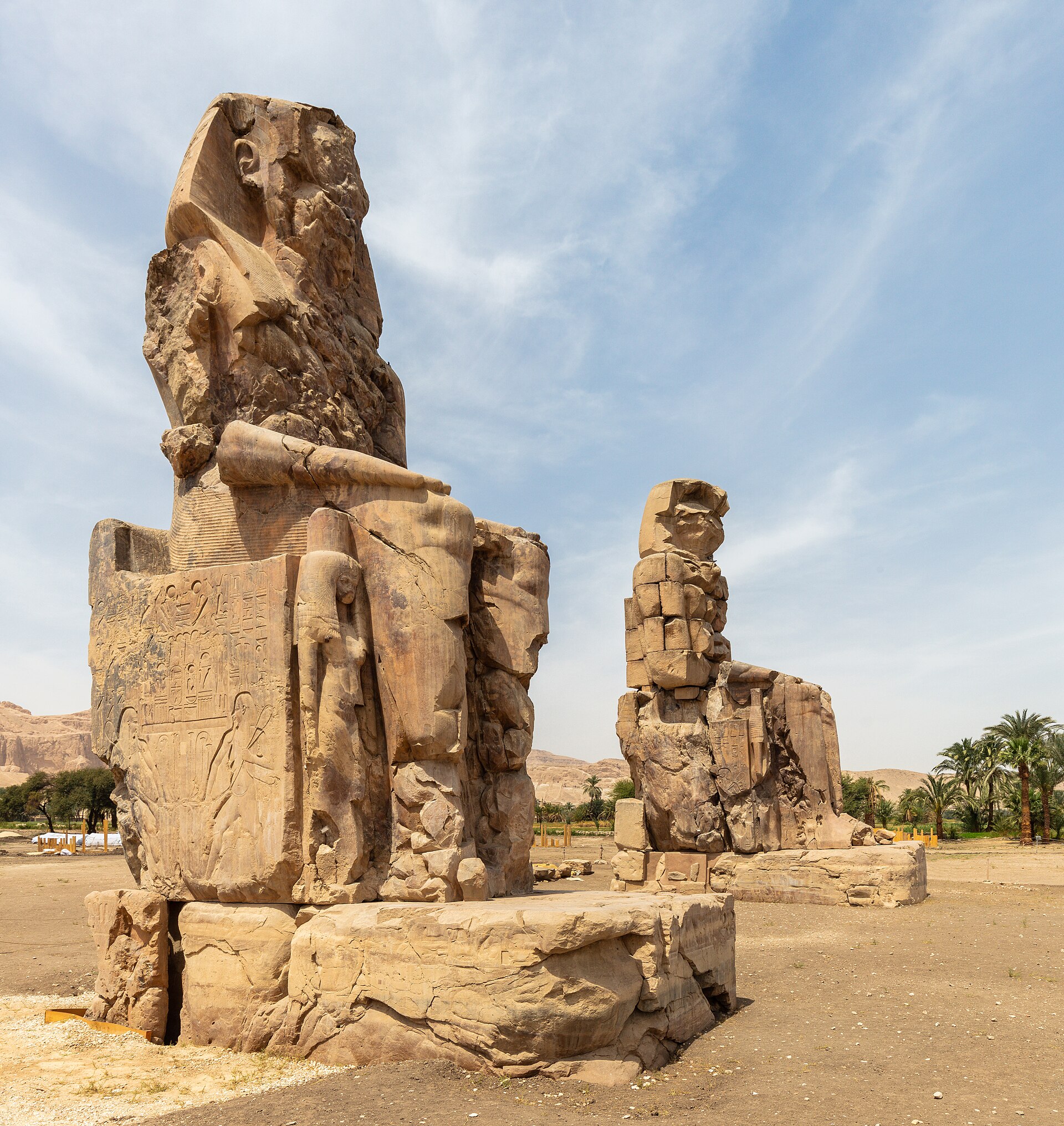
The West Bank, on the side of the setting sun, is the bank of the necropolis: the Valley of the Kings, the Valley of the Queens, Hatshepsut's temple at Deir el-Bahari, the temple of Ramesses III at Medinet Habu, the Ramesseum of Ramesses II, the Colossi of Memnon of Amenhotep III, and Deir el-Medina, the workmen's village and tombs. The Valley of the Kings alone holds more than sixty tombs.
Crossing the river
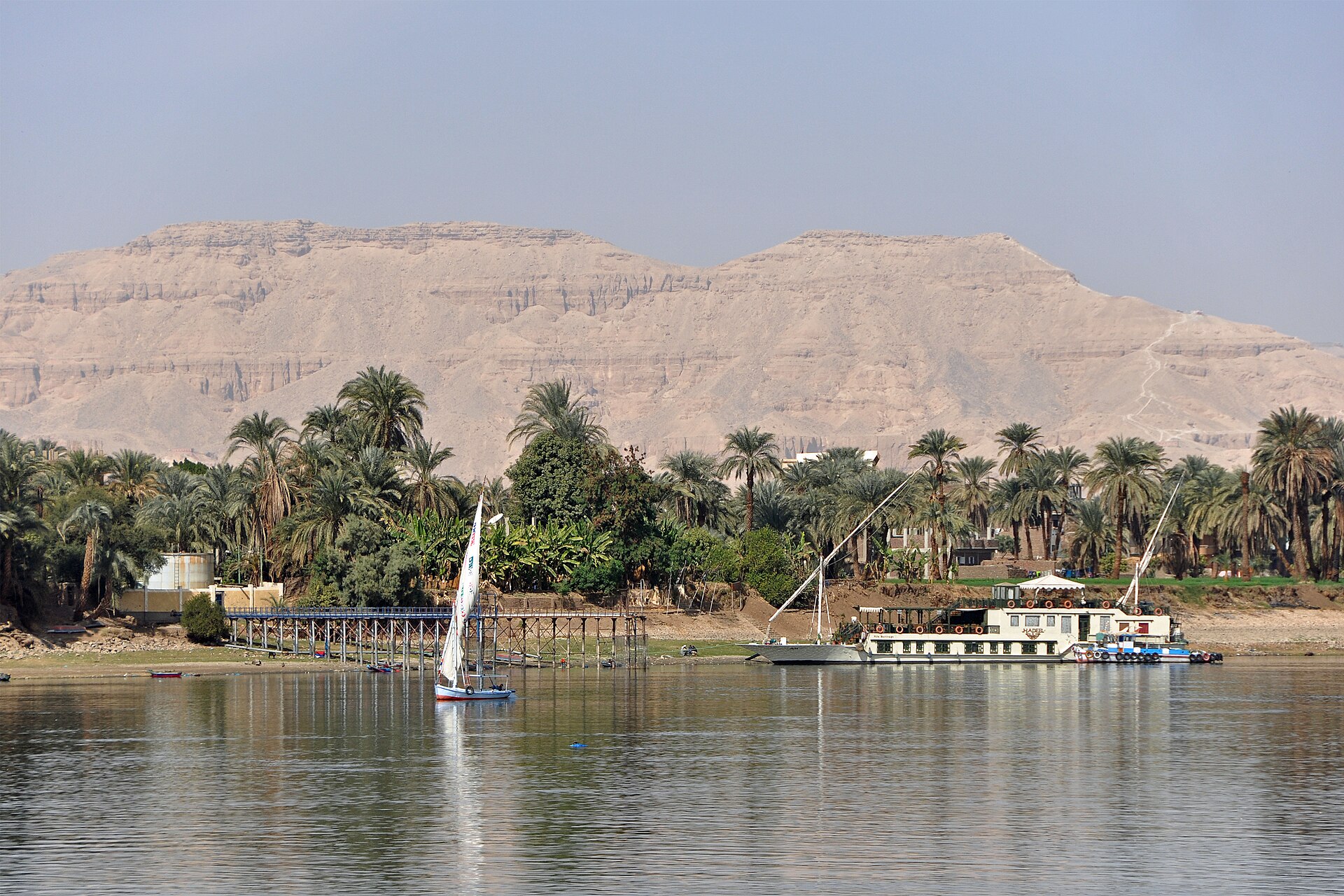
The most local way across is the blue public ferry, at 20 Egyptian pounds (EGP) for foreigners; it leaves when it is full (fare as of October 2025). Motorboats cross for EGP 80 to 100 for one or two people, to be negotiated, and feluccas, the Nile's traditional sailing boats, also offer the crossing. For a day of sightseeing on the West Bank, Sabaro recommends a car with driver or a guide: the sites are spread out at the foot of the mountain and the heat builds quickly.
Where to stay: choosing your bank
The East Bank is the most convenient: you are closest to Karnak, Luxor Temple, the museum and the town. Hilton Luxor is north of the town, 2.4 km from Karnak; Jolie Ville sits on an island in the Nile, set apart, with a shuttle to the centre. The West Bank is quieter and closest to the necropolis: you stay in characterful houses such as Al Moudira, and reach the Valley of the Kings quickly at opening time. The Winter Palace, the historic East Bank hotel, is closed for works; it is due to reopen as a Mandarin Oriental in 2027.
The rhythm of a day
In Luxor, the day follows the sun. Sites open early, and Sabaro advises making the most of it. Times are local: 1 hour ahead of Paris1 hour ahead of Brussels1 hour ahead of Geneva1 hour ahead of Luxembourg2 hours ahead of London2 hours ahead of Dublin1 hour ahead of Frankfurt1 hour ahead of Vienna1 hour ahead of Amsterdam1 hour ahead of Rome1 hour ahead of Madrid2 hours ahead of Lisbon1 hour ahead of Warsaw1 hour ahead of Prague1 hour ahead of Stockholm1 hour ahead of Copenhagen1 hour ahead of Oslothe same time as Helsinki for most of the year.
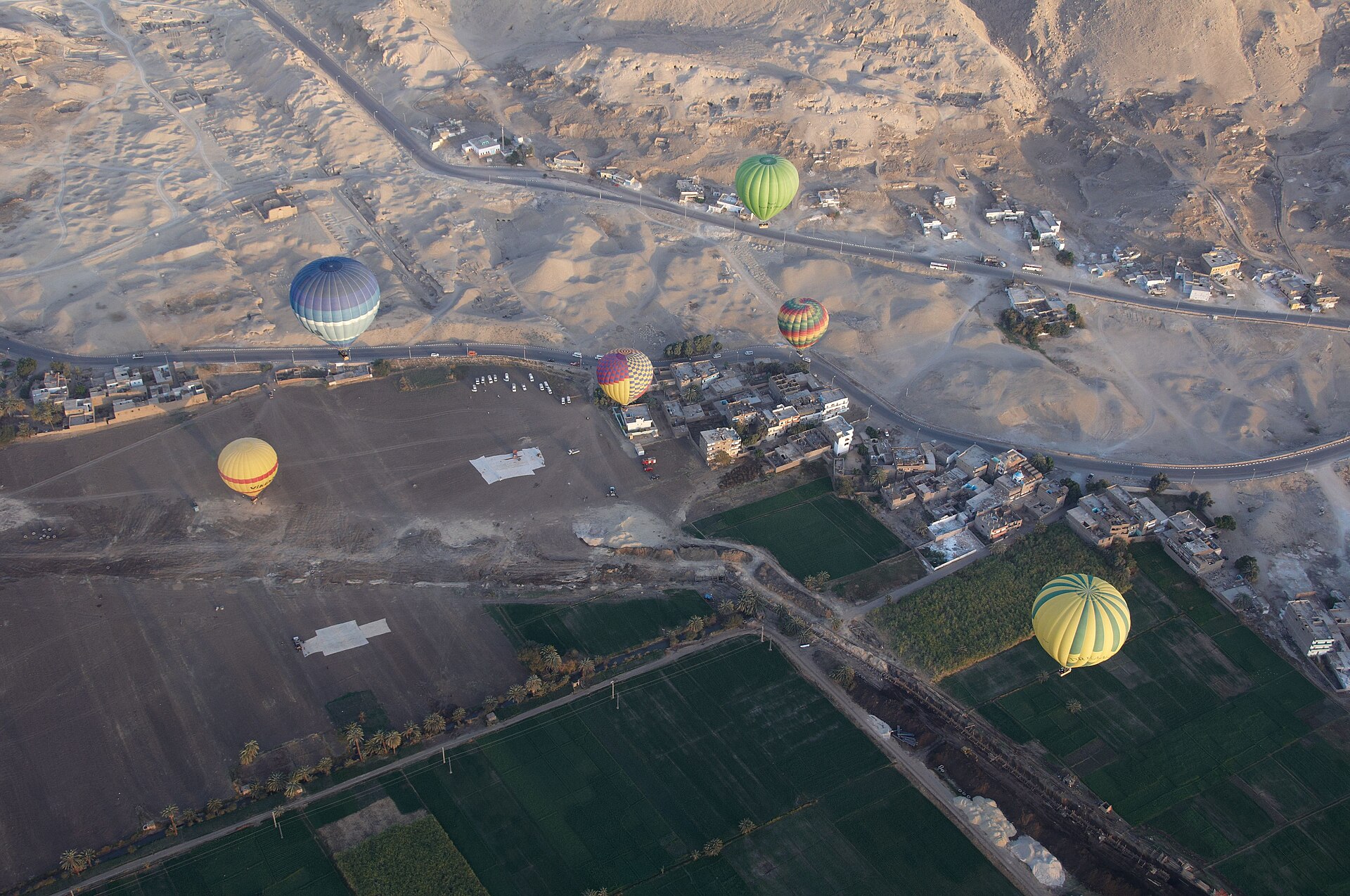
- At dawn, the hot-air balloons take off: a flight lasts at least 45 minutes, wind permitting.
- From 6 am, the Valley of the Kings (until 5 pm) and Karnak (until 5 pm) open. Sabaro suggests starting with the Valley of the Kings, ahead of the heat; Hatshepsut and Medinet Habu follow later in the morning.
- Around midday, retreat to the hotel, the pool or the Luxor Museum.
- Late afternoon, a felucca on the Nile.
- In the evening, Luxor Temple, open until 8 pm, is best seen at dusk, when the lights come on.
Allow half a day for Karnak, in Sabaro's view. Its hypostyle hall has 134 columns, the twelve central ones about 21 metres high. The Karnak ticket, EGP 600 for a foreign adult, does not include the Temple of Mut, sold separately for EGP 200.
Three days, and the Luxor Pass
Sabaro recommends three full days:
- West Bank: Valley of the Kings, Temple of Hatshepsut, Medinet Habu or the Ramesseum, and the Colossi of Memnon on the way. The tomb of Amenhotep III (KV22) reopened in October 2025 after more than twenty years of restoration.
- East Bank: Karnak in the morning, the Luxor Museum in early afternoon, the Avenue of Sphinxes and then Luxor Temple at dusk.
- Third day: the balloon at dawn, then the quieter sites, the Valley of the Queens and Deir el-Medina.
The general Valley of the Kings ticket covers several tombs; those of Tutankhamun, Seti I and Ramesses V and VI require a supplement. The Luxor Pass, valid five days, groups the sites of both banks; it is sold at the Karnak or Valley of the Kings ticket offices, with a copy of your passport and a passport photo. Prices, supplements and conditions are set out in Sabaro's guide to Egyptian site tickets. At the Valley entrance, the ticket office lists the tombs open that day.
Seasons in detail
The World Meteorological Organization (WMO) 1991-2020 normals for the Luxor station show three periods:
- November to February: mild days, with highs of around 23 to 29 °C, and cool mornings: in January the average low is 7.1 °C. A jacket for the balloon and the 6 am starts is worth packing. This is the heart of the season, which lasts until early March.
- March, April and October remain manageable (average highs of 29.7 °C, 35.0 °C and 35.5 °C), provided you visit early.
- May to September: the average high exceeds 39 °C and reaches 41.4 °C in July. Sightseeing is limited to the early morning.
Rain is almost absent: 8 mm a year on average.
The 2027 calendar has several dates to note:
- 8 January: the Egyptian Marathon, on the West Bank, starting in front of the Temple of Hatshepsut.
- Around 15 to 23 January: the moulid (a festival in honour of a saint) of Abu el-Haggag, patron saint of Luxor, around his mosque built inside Luxor Temple; the dates follow the lunar calendar.
- Around 8 February: start of Ramadan, according to astronomical calculations.
- 28 March to 3 April: 16th Luxor African Film Festival.
- 2 August: total solar eclipse. Luxor is almost on the centre line; totality lasts about 6 minutes 20 seconds there, around 1:05 pm local time. It is also the height of summer: average highs of about 41 °C.
Pitfalls to avoid
- Touts. Luxor has a reputation as the Egyptian town where sales pressure is strongest, with pushy sellers. A calm "la shukran" ("no thank you" in Arabic) usually does the job; a guide or driver booked in advance avoids most of the haggling.
- Calèches. Horse-drawn carriages are common on the East Bank; some horses are in poor condition. Look at the animal before you climb in.
- Balloon flights. Baskets often carry around twenty passengers; check operators' safety records. Sabaro recommends an established operator and a flight booked early in your stay, so it can be moved if the wind cancels it.
- Driving at night. Driving at night outside towns should be ruled out: trips to the Red Sea, Abydos or Aswan are made in daylight.
What combines with Luxor
- A Nile cruise. From Aswan to Luxor, boats sail about 240 km downriver, stopping at the temples of Kom Ombo and Edfu; Sabaro's "Nile cruise and Red Sea" trip idea gives it three nights.
- Abydos and Dendera. To the north, the temple of Seti I at Abydos and the temple of Hathor at Dendera fit into one day: about 360 km and six hours on the road, round trip.
- The Red Sea. Hurghada is 282 km away, about 4 hours by road in daylight: a few beach days after the temples, without another flight.
- Cairo. About 1 hour by domestic flight: Giza and the Grand Egyptian Museum first, Luxor afterwards.
What to see
- Karnak temples — East Bank egymonuments.gov.eg
- Luxor Temple — East Bank egymonuments.gov.eg
- Valley of the Kings — more than 60 tombs; open 6 am to 5 pm (local time) egymonuments.gov.eg
- Deir el-Bahari, Temple of Hatshepsut egymonuments.gov.eg
- Medinet Habu and Valley of the Queens — UNESCO site 'Ancient Thebes with its Necropolis' egymonuments.gov.eg
- Tomb of Amenhotep III (KV22) — reopened in October 2025 after more than 20 years of restoration Africanews
- Luxor Museum, Avenue of Sphinxes, hot-air balloon flight experienceegypt.eg
When to go
Climate in Luxor
| Jan | Feb | Mar | Apr | May | Jun | Jul | Aug | Sep | Oct | Nov | Dec | |
|---|---|---|---|---|---|---|---|---|---|---|---|---|
| Max. (°C) | 22.8 | 25.3 | 29.7 | 35.0 | 39.1 | 41.2 | 41.4 | 41.2 | 39.3 | 35.5 | 29.1 | 24.2 |
Source: Wikipedia (Luxor), d'après la NOAA — WMO 1991-2020 normals, archived by NOAA, accessed 11 October 2026
Getting there
- Domestic flights from Cairo, about 1 hour; Luxor is 5h10 from Paris by direct flighta few hours' flight from Europe's main cities, direct or with one stop partir.com
By air
| Airport | By road | Direct flights |
|---|---|---|
| Luxor (LXR) | 10 km, 0h11 |
|
| Sohag (HMB) | 200 km, 2h46 | |
| Aswan (ASW) | 217 km, 2h51 |
Hotels chosen in the region
| Hotel | Category | Suits | Guest rating | Indicative price |
|---|---|---|---|---|
| Al Moudira | Boutique hotel, West Bank | Spa and wellness, Honeymoon, Character hotels, Desert, Family | 9,5/10 (Booking.com) | from 738 € per night |
| Hilton Luxor Resort & Spa | Nile-side resort | Spa and wellness, Family, Honeymoon | 9,0/10 (Booking.com) | from 395 € per night |
| Jolie Ville Hotel & Spa Kings Island Luxor | Five-star family resort on a Nile island | Spa and wellness | 4,6/5 (Tripadvisor) | from 144 € per night |
| Steigenberger Nile Palace | 303-room five-star hotel on the Nile corniche, East Bank, with its own boat dock and heated pool | Museums and culture, Family | 4,6/5 (Google) | Price on request |
Chosen activities
- Valley of the Kings and Temple of Hatshepsut — 5 hours · from 21 € per person
Public price collected on: GetYourGuide — accessed 11 October 2026
- Sunrise hot-air balloon flight, with transfer — 3 hours · from 79 € per person
Public price collected on: GetYourGuide — accessed 11 October 2026
Upcoming events
- 8 January 2027 Egyptian Marathon, Luxor
- 15 January 2027 – 23 January 2027 Moulid of Abu al-Haggag in Luxor (estimated date)
- 28 March 2027 – 3 April 2027 Luxor African Film Festival
- 2 August 2027 Total solar eclipse of 2 August 2027
Read next
Travel advice
| Country | Official advice | Source |
|---|---|---|
| France | Increased vigilance (yellow) | diplomatie.gouv.fr (Site last updated 21 September 2026) |
| United Kingdom | Excluded from the advised-against areas of the Western Desert (exception named by the FCDO) | GOV.UK (Site last updated 4 August 2026) |
| Netherlands | Hurghada–Luxor road open in daytime only; tour operators must obtain permission from the tourist police in advance | Nederland Wereldwijd (Site last updated 19 June 2026) |
| Belgium | Not checked by Sabaro: see diplomatie.belgium.be | |
| Switzerland | Not checked by Sabaro: see DFAE (eda.admin.ch) | |
| Luxembourg | Not checked by Sabaro: see mae.gouvernement.lu | |
| Ireland | Not checked by Sabaro: see ireland.ie (DFA) | |
| Germany | Not checked by Sabaro: see Auswärtiges Amt | |
| Sweden | Not checked by Sabaro: see Regeringen (UD) | |
| Denmark | Not checked by Sabaro: see Udenrigsministeriet (um.dk) | |
| Norway | Not checked by Sabaro: see Regjeringen | |
| Poland | Not checked by Sabaro: see Odyseusz (MSZ) | |
| Czechia | Not checked by Sabaro: see MZV ČR | |
| Austria | Not checked by Sabaro: see BMEIA | |
| Italy | Not checked by Sabaro: see Viaggiare Sicuri | |
| Spain | Not checked by Sabaro: see exteriores.gob.es | |
| Portugal | Not checked by Sabaro: see Portal das Comunidades | |
| Finland | Not checked by Sabaro: see Ulkoministeriö (um.fi) | |
Rules change: always check the official website before you travel.
Frequently asked questions
East Bank or West Bank to stay?
The East Bank is the most convenient for Karnak, Luxor Temple and the town. The West Bank is quieter and closest to the necropolis.
When should I visit the Valley of the Kings?
At opening time, 6 am local time, ahead of the heat. The site closes at 5 pm; visitors must arrive at least one hour before closing.
How many days in Luxor?
Three days, in Sabaro's view: one for each bank, and a third for the balloon flight and the quieter sites, such as the Valley of the Queens and Deir el-Medina.
Can I see the eclipse of 2 August 2027 in Luxor?
Yes. Luxor is almost on the centre line: totality lasts about 6 minutes 20 seconds, around 1:05 pm local time. Plan for August heat and book early.
A travel advisor replies by email. Free, no commitment.