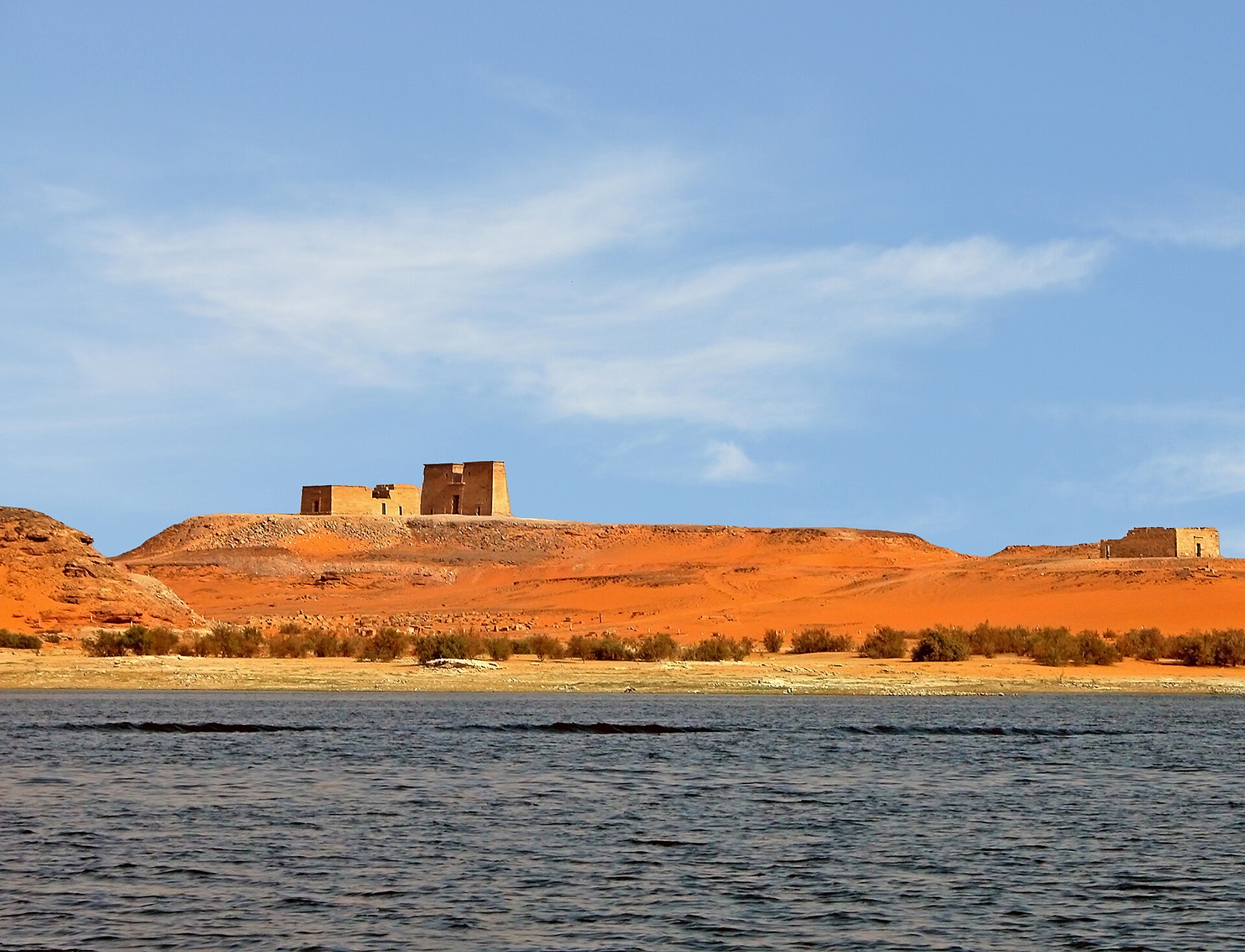
Lake Nasser and the temples of Nubia
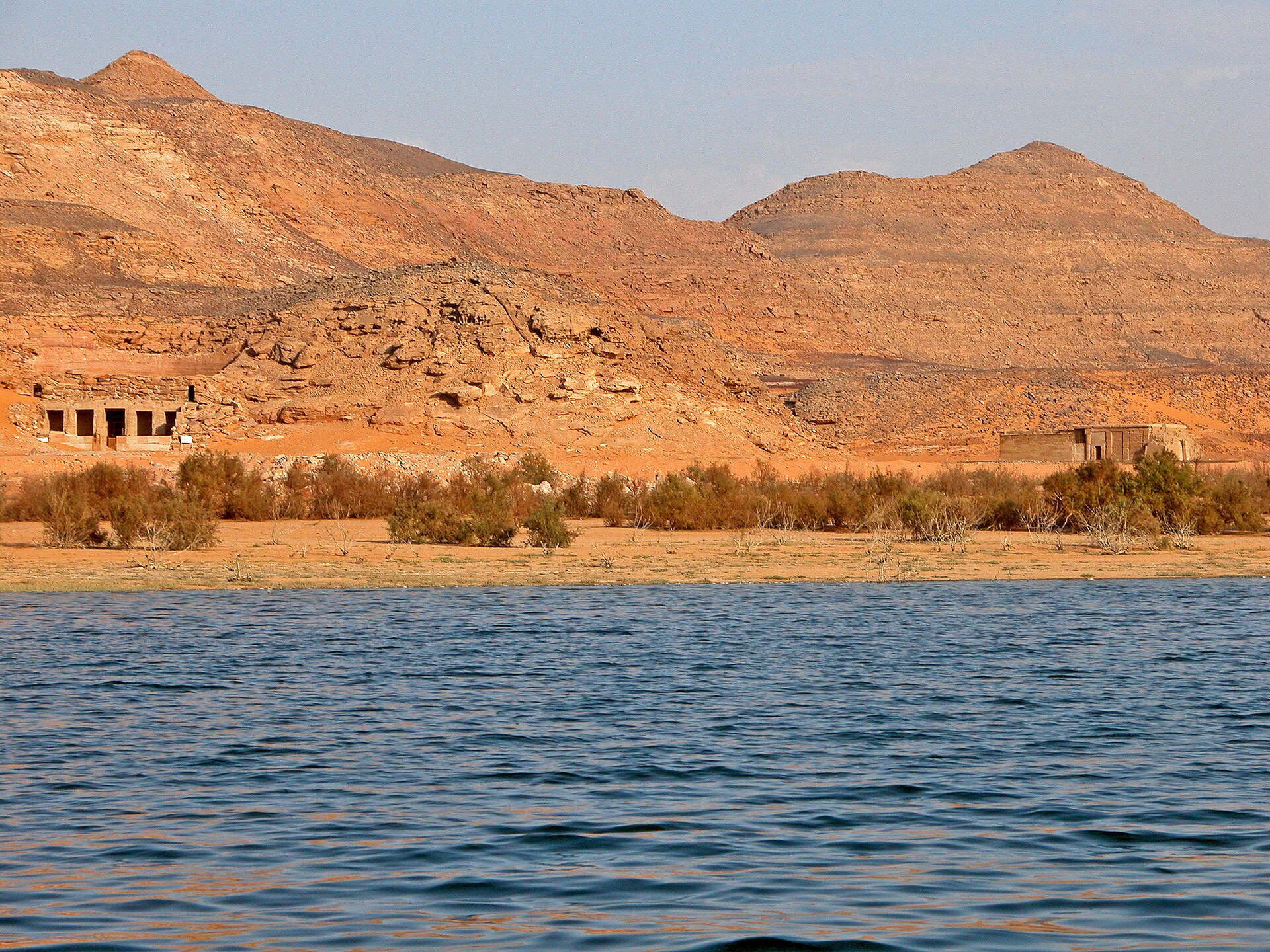
Between Aswan and Abu Simbel, Lake Nasser is lined with the Nubian temples saved from the waters when the Aswan High Dam was built, and inscribed together on UNESCO's World Heritage List in 1979. For travellers who want to see the Nubian temples at the pace of a boat, on a three- or four-night cruise.
A lake born of a dam
Lake Nasser is a reservoir. The Aswan High Dam, completed in 1970 and inaugurated in January 1971, flooded the Nile valley for nearly 480 km upstream, into Sudan. Egyptian Nubia, a land of riverside villages between Aswan and the border, disappeared under the water; its inhabitants were resettled, many of them in the villages of New Nubia, near Kom Ombo, north of Aswan.
Saving the temples
The rising water threatened dozens of monuments. At the request of Egypt and Sudan, UNESCO (the United Nations Educational, Scientific and Cultural Organization) launched an international safeguarding campaign in 1960, completed on 10 March 1980. The temples were taken apart block by block and rebuilt higher up:
- Abu Simbel and Philae were moved a few hundred metres, to sites close to their original locations. The Abu Simbel temples were rebuilt in 1968.
- The other temples were grouped on a few sites above the new lake: Kalabsha, near Aswan, moved in 1962-1963; Wadi al-Sebua, where the temple of Ramesses II now stands beside those of Dakka and al-Maharraqa, 4 km from its original site; Amada, moved about 2.5 km, with the rock-cut temple of al-Derr, rebuilt next to it in 1964.
In thanks for their help, Egypt gave temples to several countries. The Temple of Dendur, offered to the United States in 1965, was rebuilt at the Metropolitan Museum in New York, where it has been on display since 1978.
The rescued monuments, from Abu Simbel to Philae, have been on the World Heritage List together since 1979.
The cruise, temple to temple
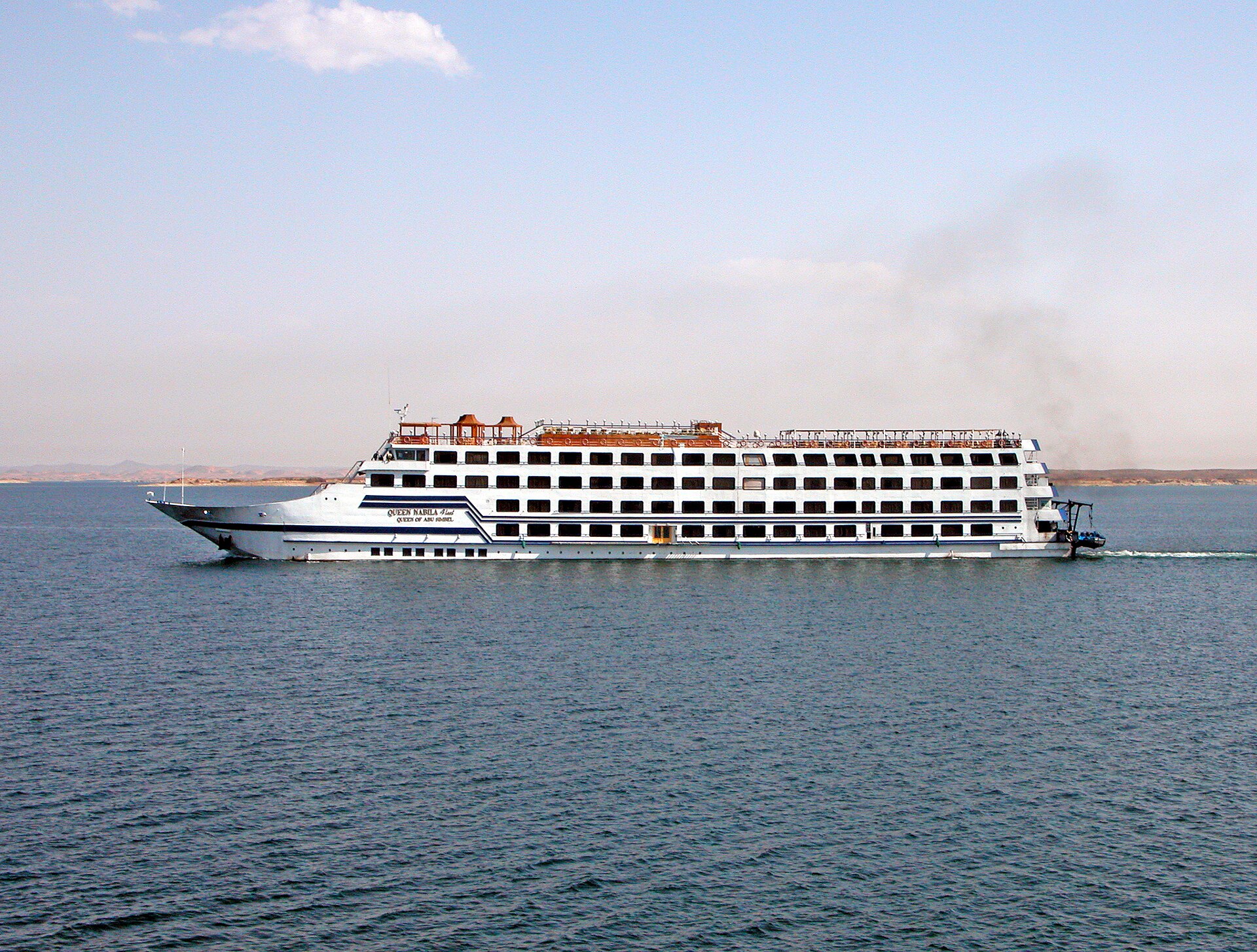
Several of these temples are mainly visited by cruise. The boat sails between Aswan and Abu Simbel in 4 nights, or in 3 nights from Abu Simbel to Aswan. In that direction, a typical programme runs as follows:
- Day one: arrival at Abu Simbel airport, embarkation and a visit to the temples in the afternoon. In the evening, a sound and light show is offered as an option.
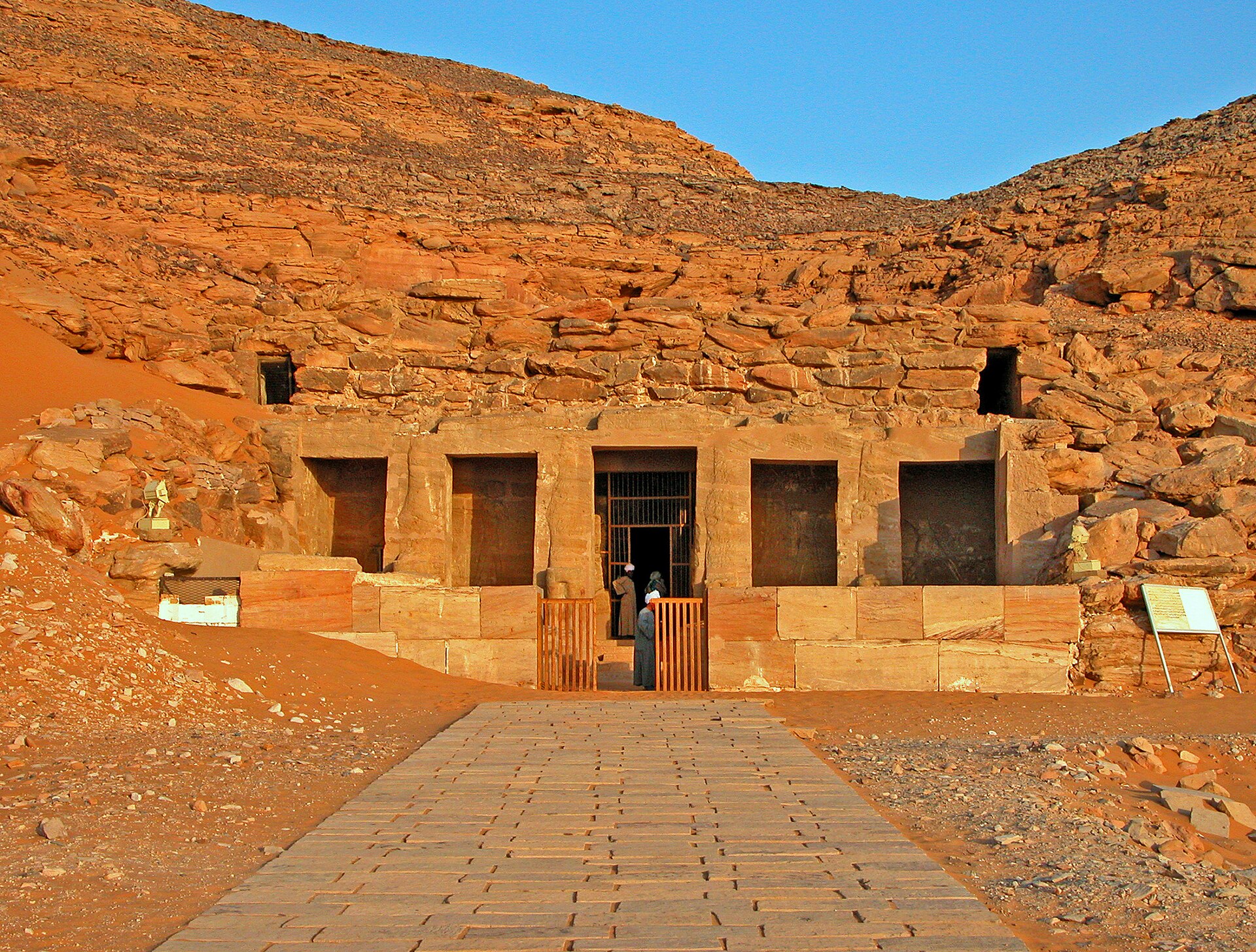
- Day two: sailing past Qasr Ibrim, a former hilltop citadel that has become an island, seen from the deck without landing; a stop at Amada for the Temple of Amada, the Temple of al-Derr and the rock-cut Tomb of Pennut.
- Day three: Wadi al-Sebua early in the morning, with its avenue of sphinxes and rock-cut sanctuary, then Dakka and al-Maharraqa.
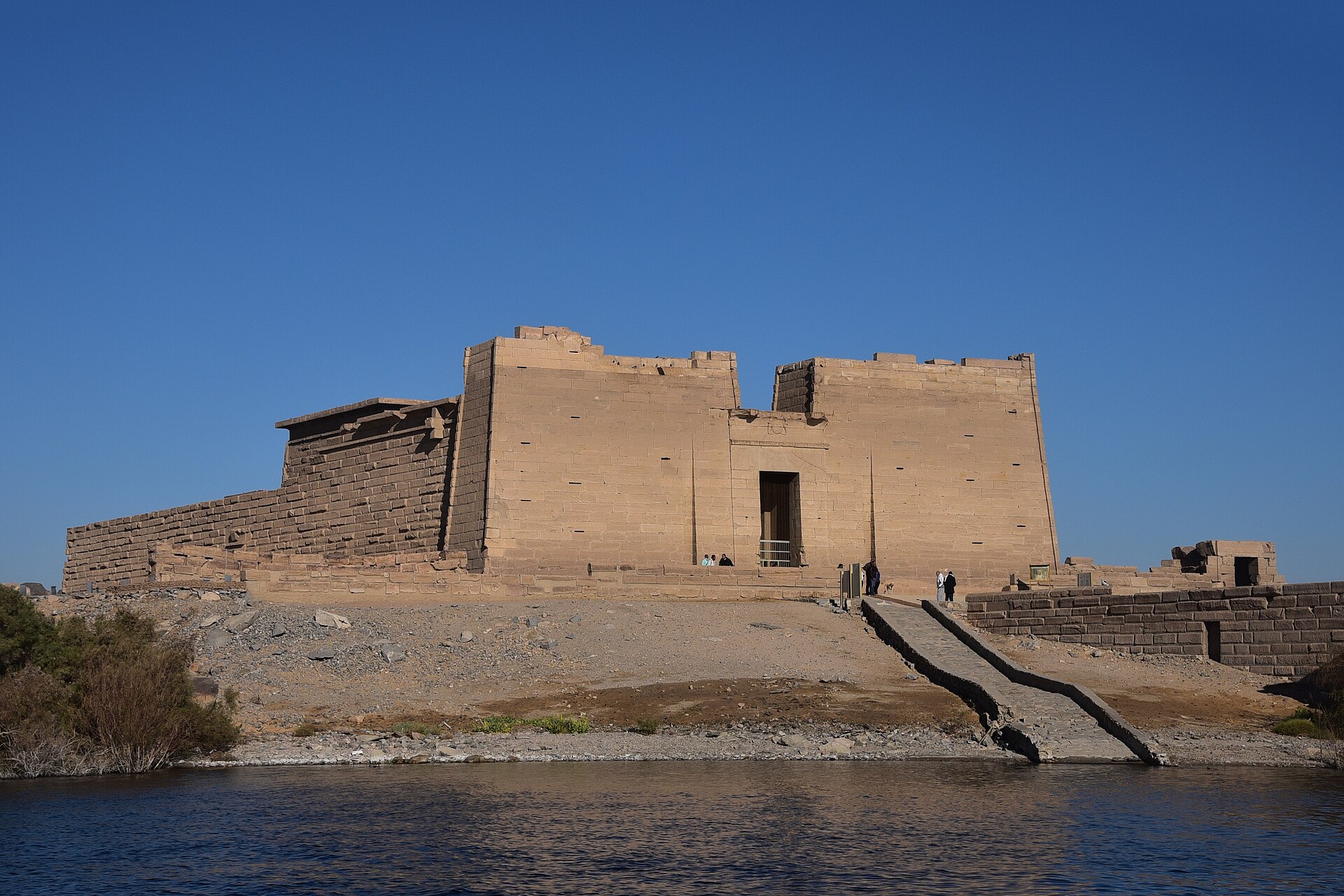
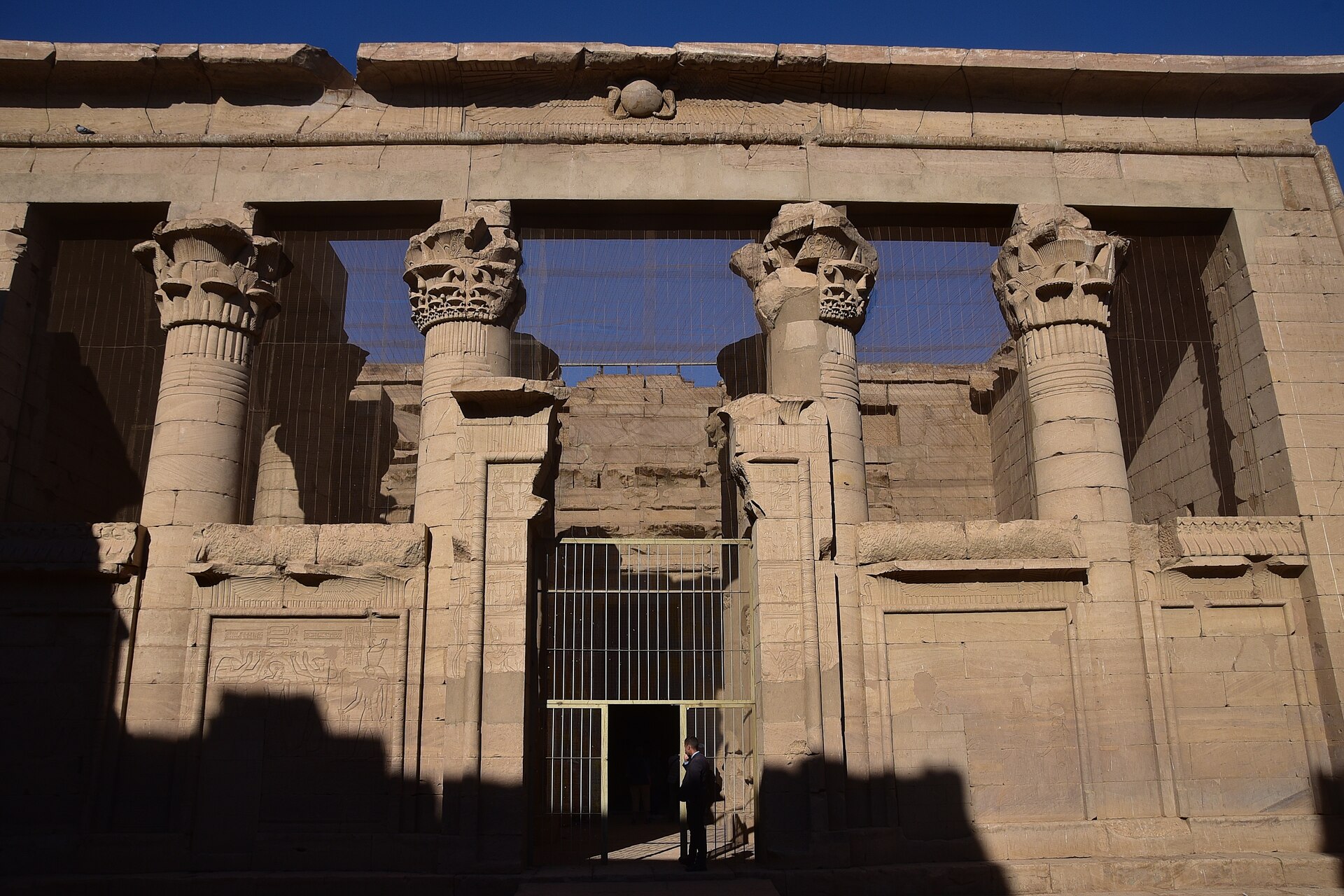
- Day four: Kalabsha, the rock-cut temple of Beit el-Wali and the Kiosk of Kertassi, then disembarkation in Aswan.
The Temple of Amada, from the 18th Dynasty, is worth the stop: its reliefs were protected by the plaster applied when it was turned into a church. The Temple of Kalabsha, built under the emperor Augustus, is dedicated to the Nubian god Mandulis.
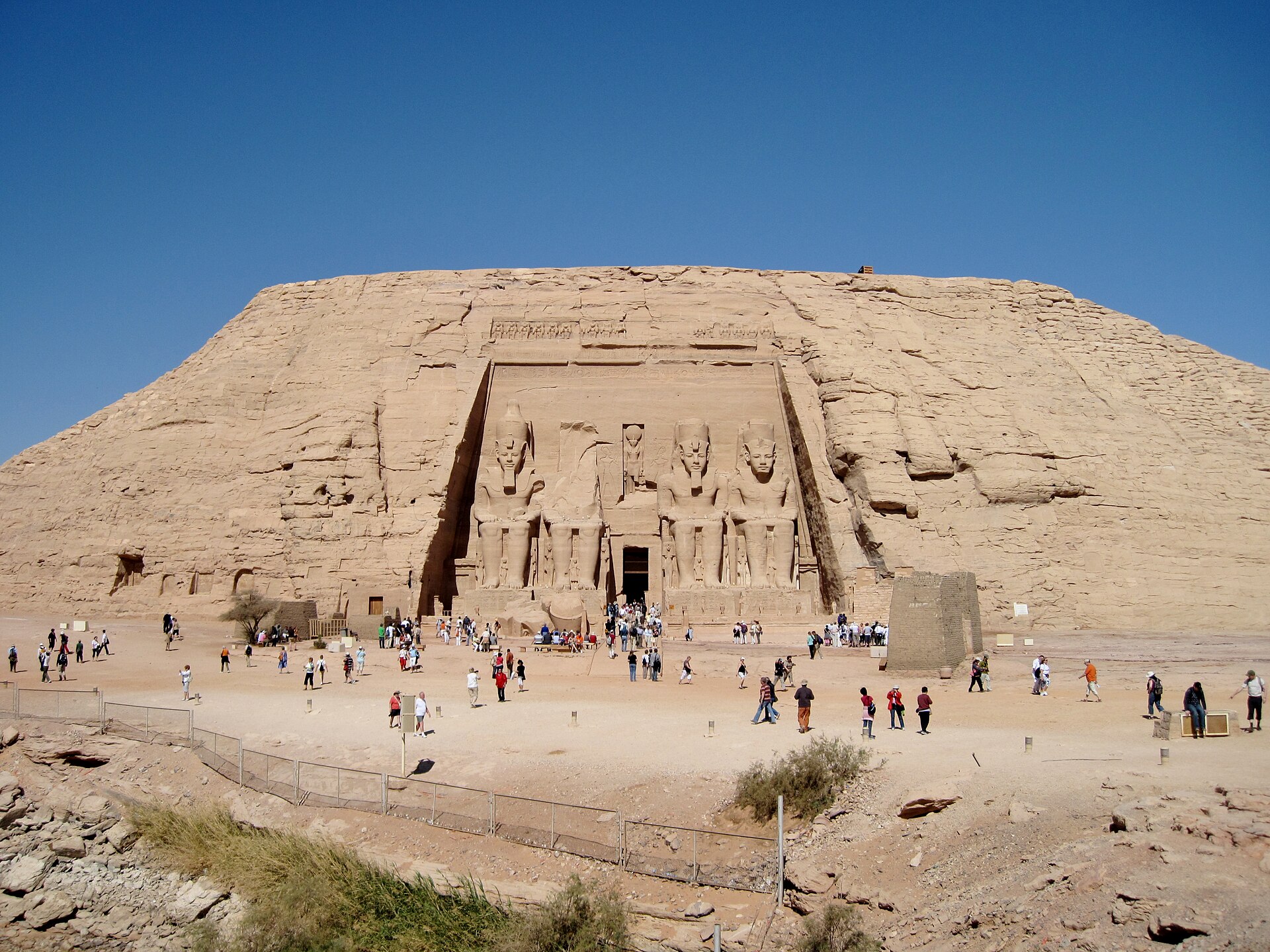
The cruise's great advantage is Abu Simbel. Day trips from Aswan all arrive around 8 am and leave during the morning; the cruise visits the temples in the afternoon, after they have gone. The site is open from 6 am to 5 pm local time.
When to go
The 1991-2020 normals of the World Meteorological Organization (WMO) for Abu Simbel station show the driest climate in tourist Egypt:
- From November to February, an average maximum of 23 to 29 °C and nights around 10 to 12 °C in December and January: the best season for the cruise.
- March and October, around 30 and 36 °C.
- From May to September, an average maximum of 38 to 41 °C.
It practically never rains: less than 1 mm a year.
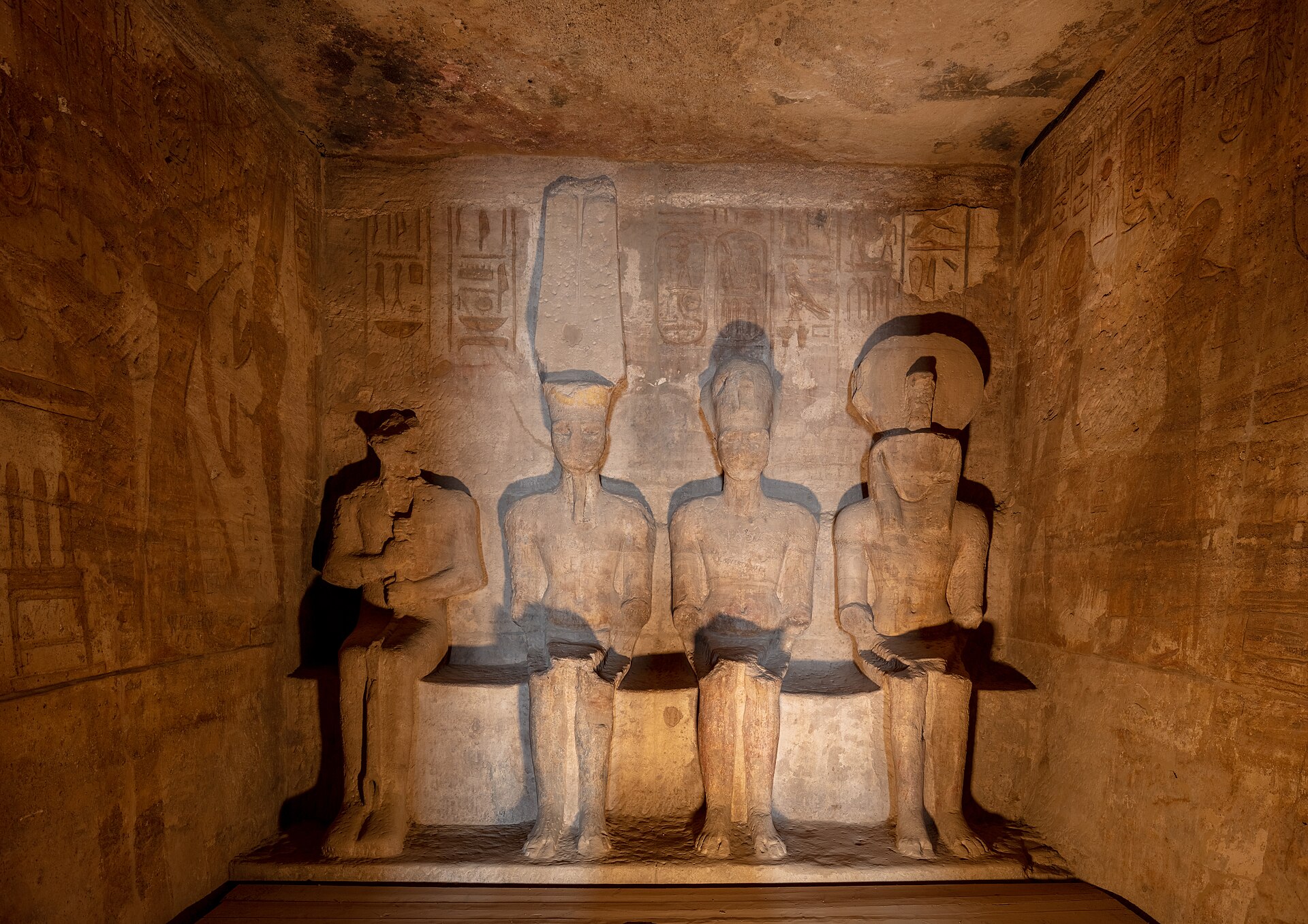
Two dates draw the crowds: on 22 February and 22 October, the rising sun lights up the sanctuary of the great temple at Abu Simbel. Sabaro advises checking whether a cruise departure matches these dates, or arriving at Abu Simbel the day before.
The border area with Sudan, including the road south of Abu Simbel, is among the areas advised against ("Travel advice" table on this page); the cruise stays north of the border, between Aswan and Abu Simbel.
What to combine
- Aswan: two days before or after the cruise, for Philae, the west bank and the river.
- The Nile cruise: from Aswan to Luxor, in 3 or 4 nights, to move on from Nubia to Upper Egypt in the same way of travelling.
What to see
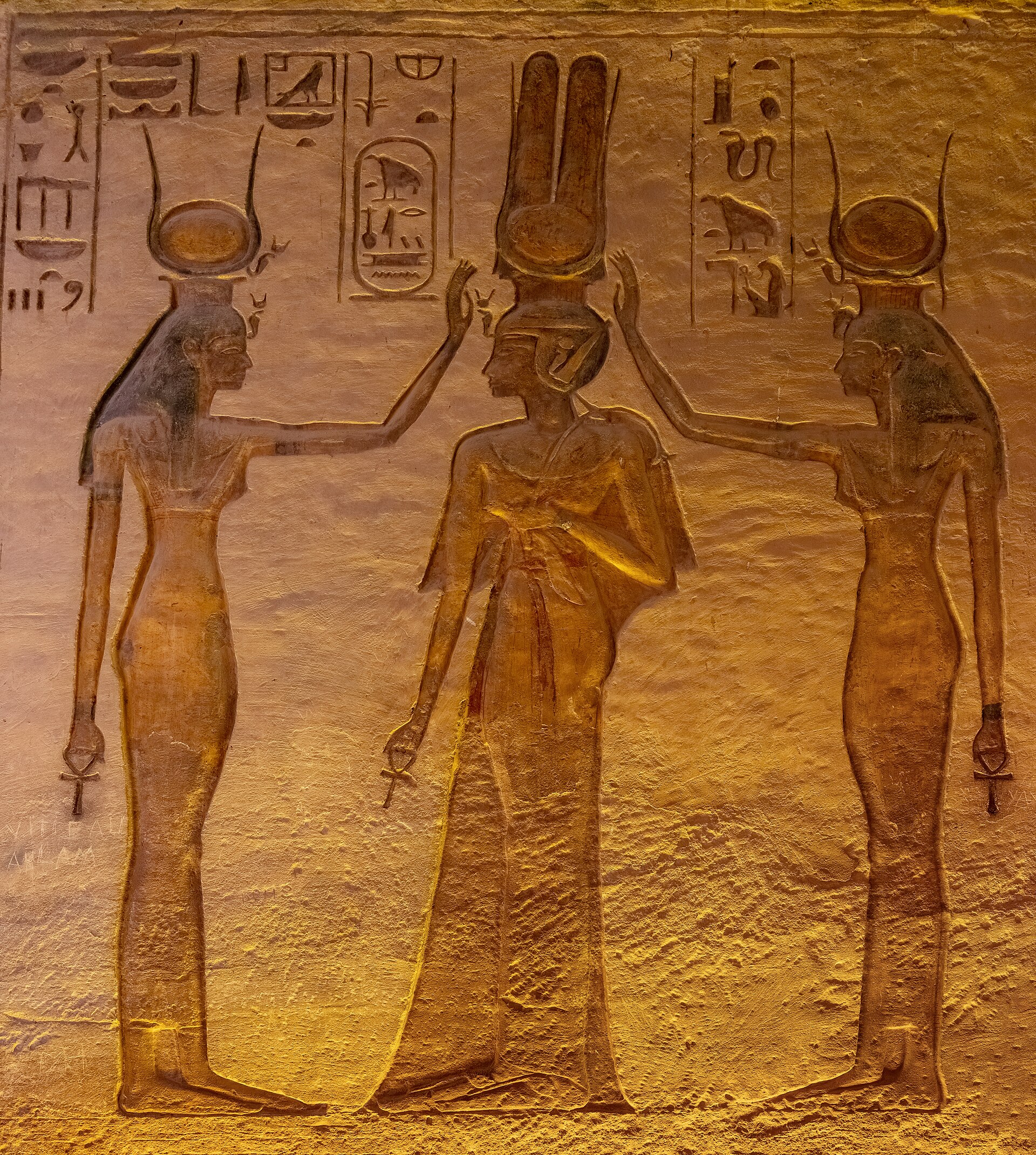
- Abu Simbel temples — Great Temple of Ramesses II and Small Temple of Hathor and Nefertari; the sun reaches the sanctuary on 22 February and 22 October egymonuments.gov.eg
- Amada temple — 18th Dynasty, reliefs preserved under plaster applied when it became a church; moved about 2.5 km egymonuments.gov.eg
- Temple of al-Derr — rock-cut temple of Ramesses II, rebuilt in 1964 near Amada egymonuments.gov.eg
- Temples of Wadi al-Sebua — Ramesside temple, temples of Dakka and al-Maharraqa, grouped 4 km from the original site egymonuments.gov.eg
- Kalabsha temple — built under Augustus, dedicated to the Nubian god Mandulis; moved in 1962-1963 to New Kalabsha Island, near Aswan egymonuments.gov.eg
Getting there
- Aswan (ASW) and Abu Simbel (ABS) airports; Aswan–Abu Simbel flight 25 to 30 minutes Pure Nile Tours
- Abu Simbel about 280 km south of Aswan, 3 to 3.5 hours by road Pure Nile Tours
- 3-night cruise from Abu Simbel to Aswan, or 4 nights in the other direction Exo Travel
By air
| Airport | By road | Direct flights |
|---|---|---|
| Abu Simbel (ABS) | 6 km, 0h08 | |
| Aswan (ASW) | 268 km, 3h17 |
Read next
Travel advice
| Country | Official advice | Source |
|---|---|---|
| France | Sudan border area, including the road south of Abu Simbel: advised against; desert west of Abu Simbel: advised against unless essential. The lake and temples are not named | diplomatie.gouv.fr (Site last updated 21 September 2026) |
| United Kingdom | Aswan and Abu Simbel are excluded from the advised-against areas of the Western Desert (exception named by the FCDO); Lake Nasser is not named | GOV.UK (Site last updated 4 August 2026) |
| Netherlands | Border area with Sudan red (insecurity linked to the conflict in Sudan, exchanges of fire at border crossings); on the map, Lake Nasser and Abu Simbel yellow, the desert west of Abu Simbel orange | Nederland Wereldwijd (Site last updated 19 June 2026) |
| Belgium | Not checked by Sabaro: see diplomatie.belgium.be | |
| Switzerland | Not checked by Sabaro: see DFAE (eda.admin.ch) | |
| Luxembourg | Not checked by Sabaro: see mae.gouvernement.lu | |
| Ireland | Not checked by Sabaro: see ireland.ie (DFA) | |
| Germany | Not checked by Sabaro: see Auswärtiges Amt | |
| Sweden | Not checked by Sabaro: see Regeringen (UD) | |
| Denmark | Not checked by Sabaro: see Udenrigsministeriet (um.dk) | |
| Norway | Not checked by Sabaro: see Regjeringen | |
| Poland | Not checked by Sabaro: see Odyseusz (MSZ) | |
| Czechia | Not checked by Sabaro: see MZV ČR | |
| Austria | Not checked by Sabaro: see BMEIA | |
| Italy | Not checked by Sabaro: see Viaggiare Sicuri | |
| Spain | Not checked by Sabaro: see exteriores.gob.es | |
| Portugal | Not checked by Sabaro: see Portal das Comunidades | |
| Finland | Not checked by Sabaro: see Ulkoministeriö (um.fi) | |
Rules change: always check the official website before you travel.
Frequently asked questions
How long is a Lake Nasser cruise?
Four nights from Aswan to Abu Simbel, or three nights in the other direction.
Why were these temples moved?
The Aswan High Dam, completed in 1970, created Lake Nasser and threatened to submerge them. An international campaign led by UNESCO from 1960 to 1980 dismantled them and rebuilt them higher up.
When does the sun light up the sanctuary at Abu Simbel?
Two days a year, on 22 February and 22 October, at sunrise: the rays cross the great hall and light up the statues in the sanctuary.
Can you visit Amada or Wadi al-Sebua without a cruise?
These sites are isolated on the lakeshore, and a cruise is the simplest way to see them. Kalabsha, close to Aswan, can also be visited from the town.
A travel advisor replies by email. Free, no commitment.