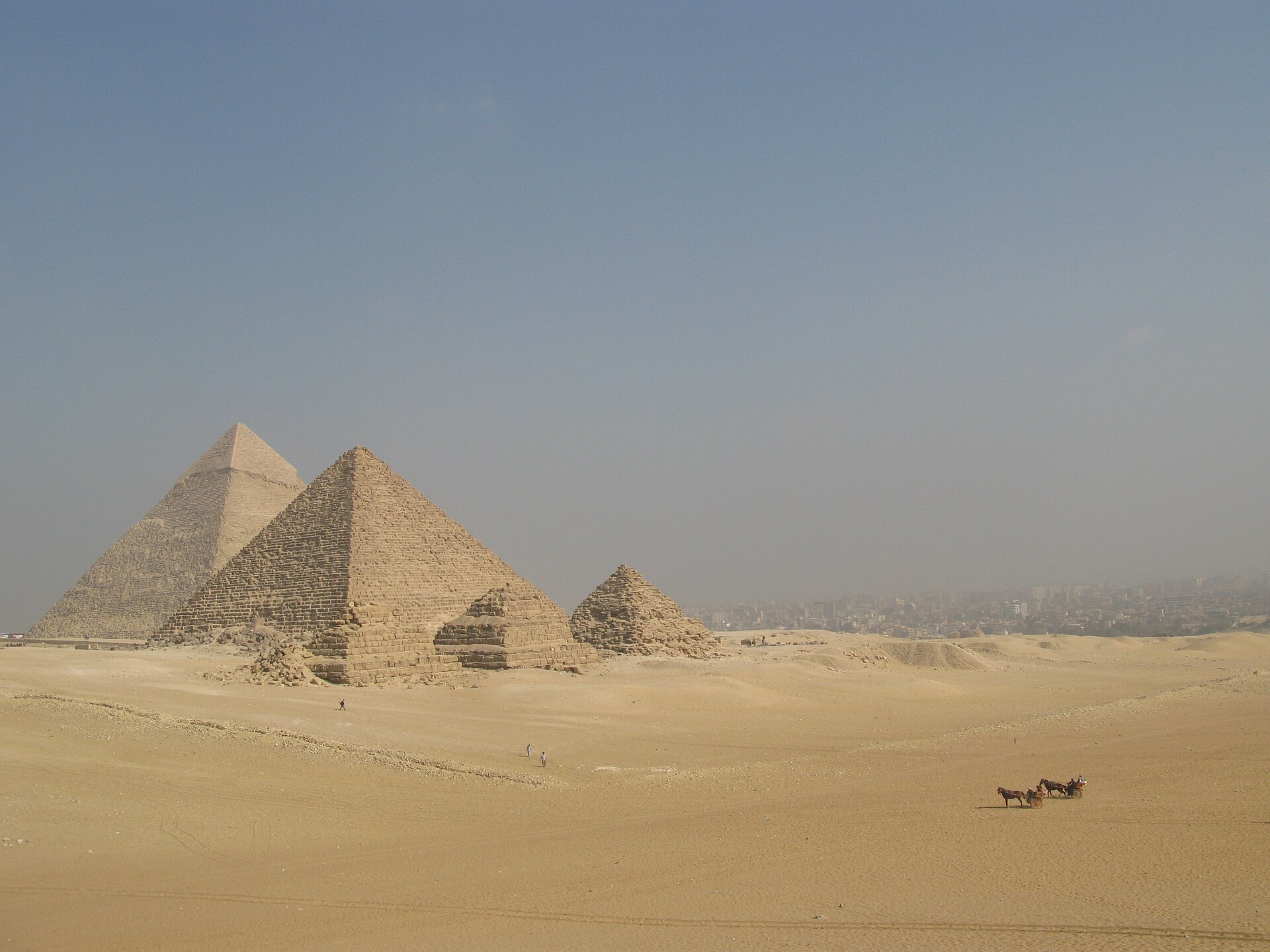
Drones, photography and prohibited items in Egypt
In Egypt, a drone requires prior approval from the Ministry of Defence; without it, the drone is confiscated at customs and its use can lead to prison. Phone photography is free at archaeological sites, but banned near military and official buildings; binoculars, tramadol and CBD products are also prohibited, and nothing antique may leave the country.
Checked on 14 October 2026
Leave the drone at home
This is the rule that most surprises European travellers: in Egypt, importing, using or manufacturing a drone requires prior approval from the Ministry of Defence. The Ministry of Tourism and Antiquities repeats it on its own ticketing site: drones are heavily restricted without a Ministry of Defence permit, archaeological sites included.
A drone found by customs is seized. Equipment imported without approval is systematically confiscated and never returned, and its owner faces prosecution. The penalty is up to 7 years in prison, or a fine of 5,000 to 50,000 Egyptian pounds (EGP).
For aerial views, there is the hot-air balloon over Luxor's West Bank, or the terrace of the 139 Pavilion at the Marriott Mena House, facing the Giza plateau.
Taking photos in Egypt
At the sites. Phone photography is free and needs no permission at the sites run by the Ministry of Tourism and Antiquities, temples and tombs included. Each place may have its own rule. At the Grand Egyptian Museum, personal photos and video are allowed, but flash, tripods, monopods, selfie sticks, external lighting and live streaming are banned. At St Catherine's Monastery, video is banned.
Forbidden places. Do not photograph military buildings and land, soldiers and police officers, police stations, ministries, embassies, airports, the Suez Canal, power stations and water reservoirs, or certain religious or family events. The risk is real: the Egyptian justice system can detain people even for minor offences. When in doubt, put the phone away, especially at police checkpoints.
People. Regulations require written consent from an Egyptian citizen before photographing them, and photographing children is prohibited. In a market or a village, always ask before raising the camera.
Professional equipment. Bringing in professional photo or video equipment, such as lighting umbrellas or external lighting, requires a permit; at the Grand Egyptian Museum, commercial filming requires written approval. Valuable devices are declared on arrival.
At customs: what goes in and what comes out
| Item or product | Rule |
|---|---|
| Drone | Prior Ministry of Defence approval; otherwise confiscated |
| Binoculars, even small ones | Banned without prior approval from National Security; may be confiscated |
| Satellite phone, walkie-talkie, radio equipment, some GPS devices | Likely confiscated without prior approval from the Ministry of Telecommunications; personal mobile phones are exempt |
| Valuable electronic devices, recording equipment | To be declared on arrival |
| Tramadol (opioid painkiller) | Strictly prohibited; possession on arrival can lead to a very heavy sentence |
| CBD (cannabidiol) products | Banned, even though they are sold freely in several European countries |
| Prescription medicines | Bring the prescription, preferably in English; translated into Arabic for corticosteroids |
| Alcohol | Banned on public transport |
For treatment for severe pain or attention disorders, the Egyptian embassy in your country can confirm before departure whether the medicine may be brought in and on what conditions.
Cash. You may bring in and take out up to EGP 5,000; above that, the pounds are seized. Foreign currency is not capped, but amounts from USD 10,000 must be declared on arrival, and you cannot take out more than you declared.
Souvenirs. Trading in and exporting archaeological objects is prohibited, even with a certificate of purchase. Copies presented as antiques cause the same problem at customs and can lead to arrest, police custody and deportation: it is best to avoid them. Coral, shells, petrified wood and protected plants and animals may not leave the country either, even if bought legally.
Read next
Frequently asked questions
Can I bring a drone to Egypt?
Only with prior approval from the Egyptian Ministry of Defence. Without it, the drone is confiscated at customs and never returned; unauthorised use can lead to a fine of EGP 5,000 to 50,000 and up to 7 years in prison.
Can I take photos in temples and tombs?
Yes. Phone photography is free and needs no permission at sites run by the Ministry of Tourism and Antiquities. Military and official buildings, airports, the Suez Canal, police officers and soldiers must not be photographed.
Can I bring binoculars to Egypt?
Better to leave them at home: owning binoculars, even small ones, is banned without prior approval from National Security, and customs can confiscate them.
Can I photograph local people?
You need the person's written consent before photographing an Egyptian citizen, and photographing children is prohibited.
Can I take home a shell or a piece of coral?
No. Coral, shells and petrified wood are among the products whose export is banned, like antiquities.
Official sources
- France Diplomatie : Égypte, sécurité (accessed 14 October 2026)
- France Diplomatie : Égypte, informations utiles (accessed 14 October 2026)
- France Diplomatie : Égypte, entrée et séjour (accessed 14 October 2026)
- GOV.UK (FCDO) : Egypt, safety and security (accessed 14 October 2026)
- GOV.UK (FCDO) : Egypt, entry requirements (accessed 14 October 2026)
- Egymonuments (ministère du Tourisme et des Antiquités) : FAQ (accessed 14 October 2026)
- Grand Egyptian Museum : Terms & Conditions (visit-gem.com) (accessed 14 October 2026)
A travel advisor replies by email. Free, no commitment.