Fez
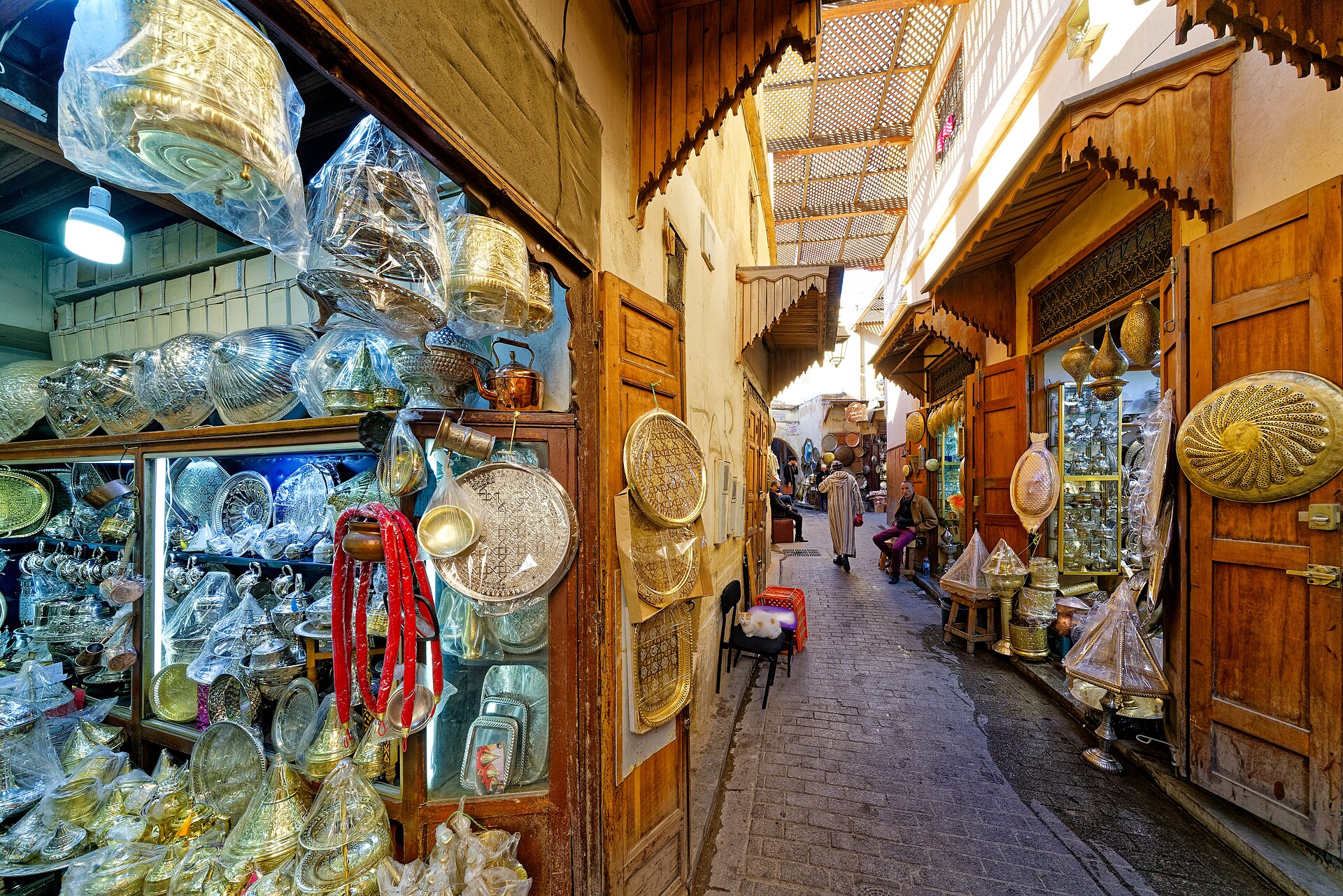
Fez keeps Fes el-Bali, a medina founded between 789 and 808 and UNESCO-listed in 1981, where no cars run. For travellers who want a medieval city that is still lived in, with its madrasas, tanneries and craftsmen; allow at least three days.
Three cities in one
Fez reads in three layers, laid side by side from east to west.
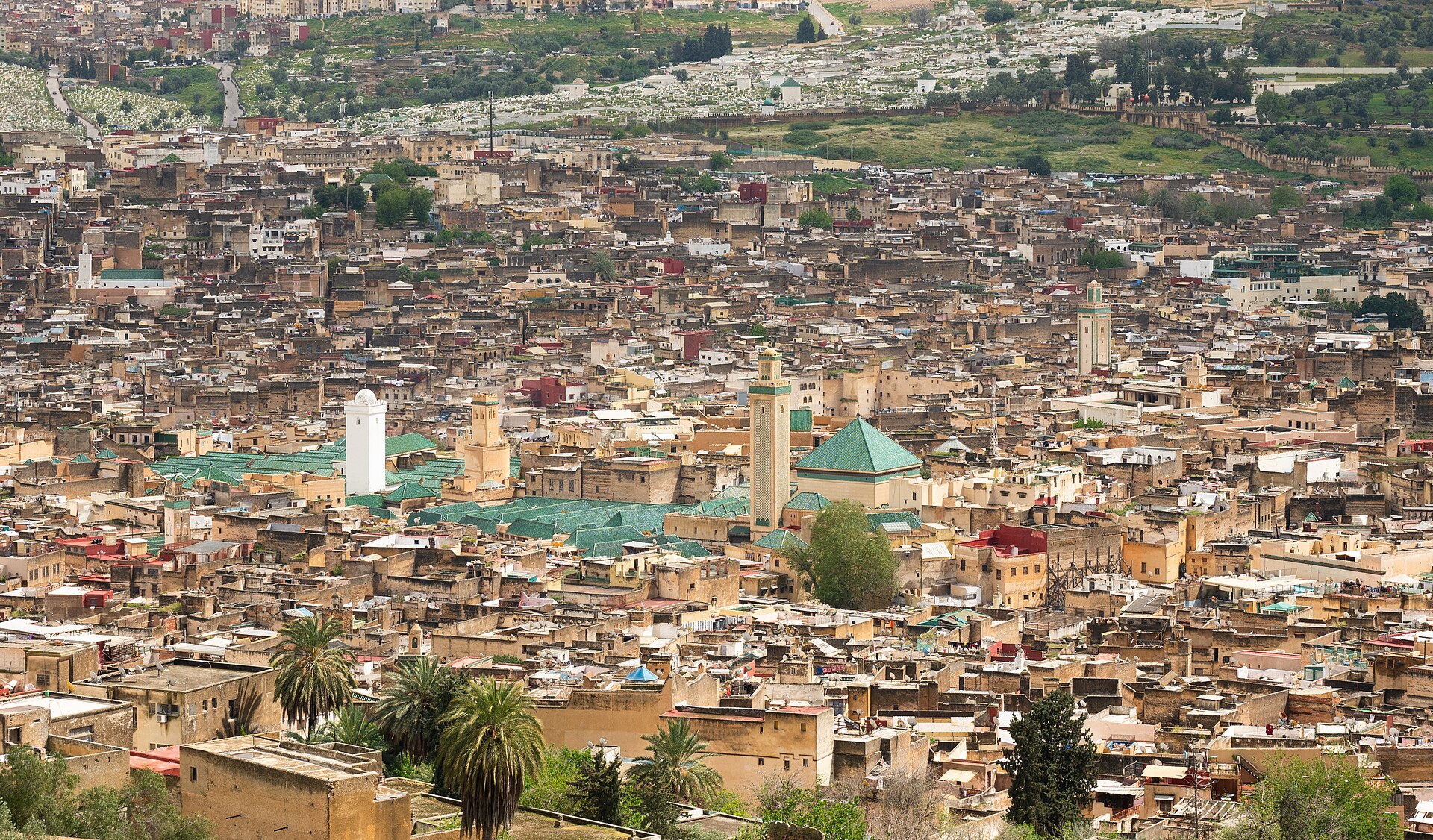
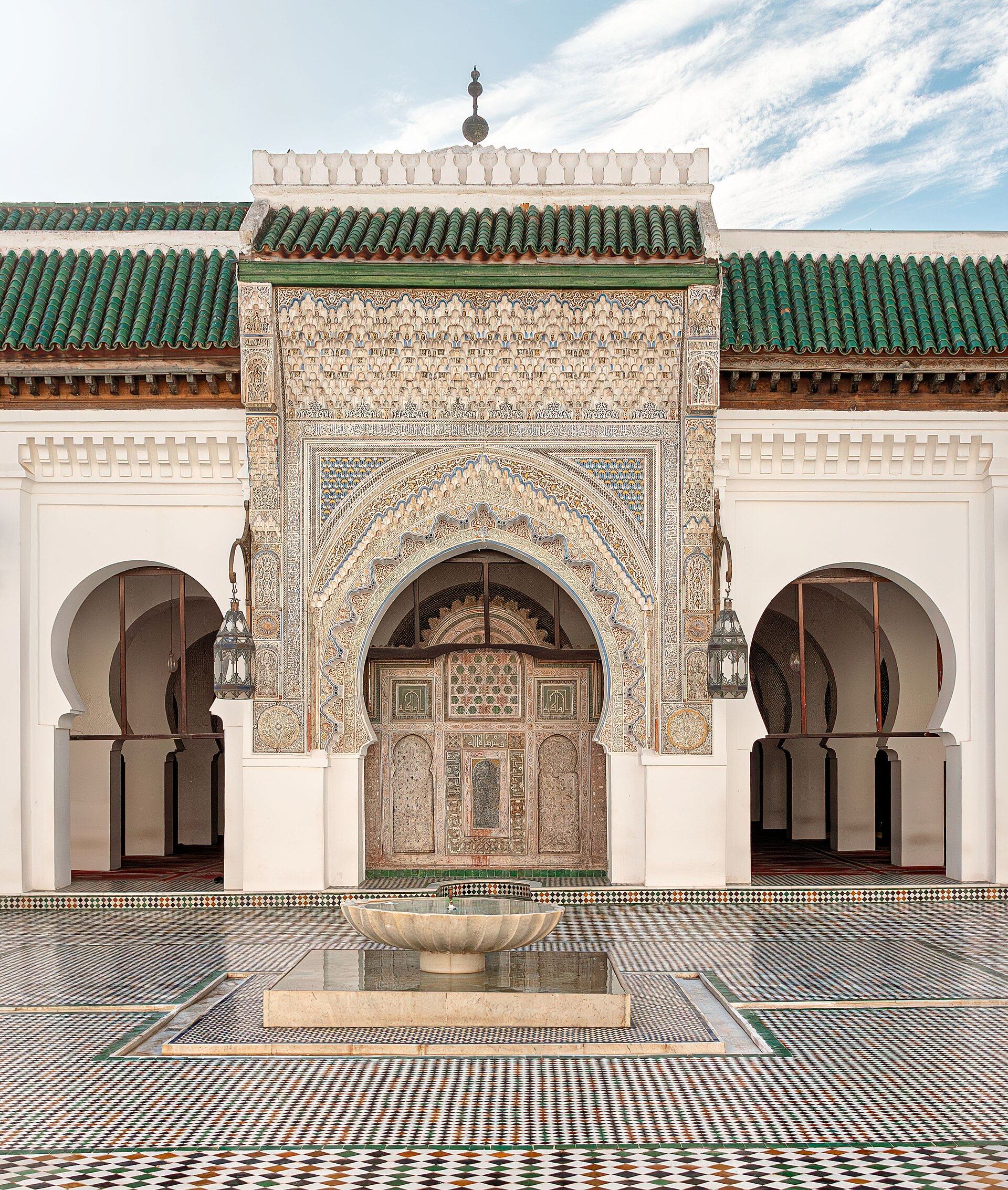
Fes el-Bali, "old Fez", is the capital founded by the Idrisid dynasty between 789 and 808. The first town had two walled quarters on either side of the Fez river, the Andalusian bank and the Kairouan bank; the Almoravids brought them inside a single wall in the 11th century, and by the Almohad period, in the 12th and 13th centuries, the town had already reached its present size. This is where you find the Quaraouiyine Mosque, the madrasas (religious colleges with student lodgings), the fondouks (old merchants' inns) and the tanneries. It had 156,000 inhabitants in 2002.
Fes el-Jdid, "new Fez", was founded in 1276 by the Marinids, west of the old town. It holds the royal palace, fortifications and residential quarters. It also holds the Mellah, the former Jewish quarter, Morocco's first mellah, probably created in the mid-15th century; both the name and the model were later copied in other cities. Between the two, the Jnan Sbil garden makes the link, close to Place Bou Jeloud.
The new town, further south-west, is the city of avenues, the railway station and the large modern hotels. For most visitors it is simply where they arrive.
UNESCO (the United Nations Educational, Scientific and Cultural Organization, which keeps the World Heritage List) sums up what is at stake: it considers the Fez medina one of the most extensive and best preserved historic towns of the Arab-Muslim world, and its car-free urban space keeps most of its original functions. It also carries, UNESCO adds, a way of life, skills and a culture that keep renewing themselves: people come to see a medieval city that still works.
The great age of Fez
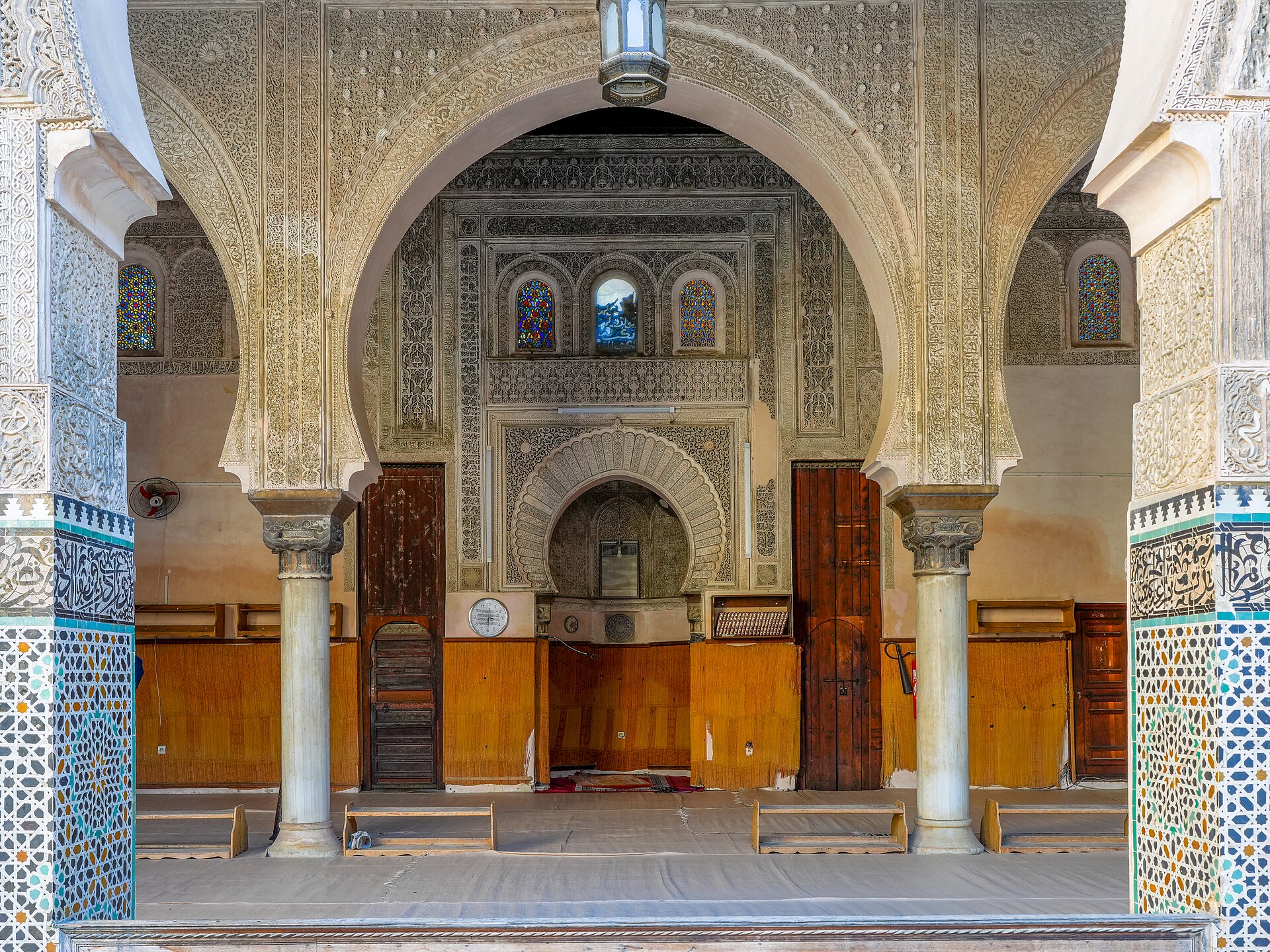
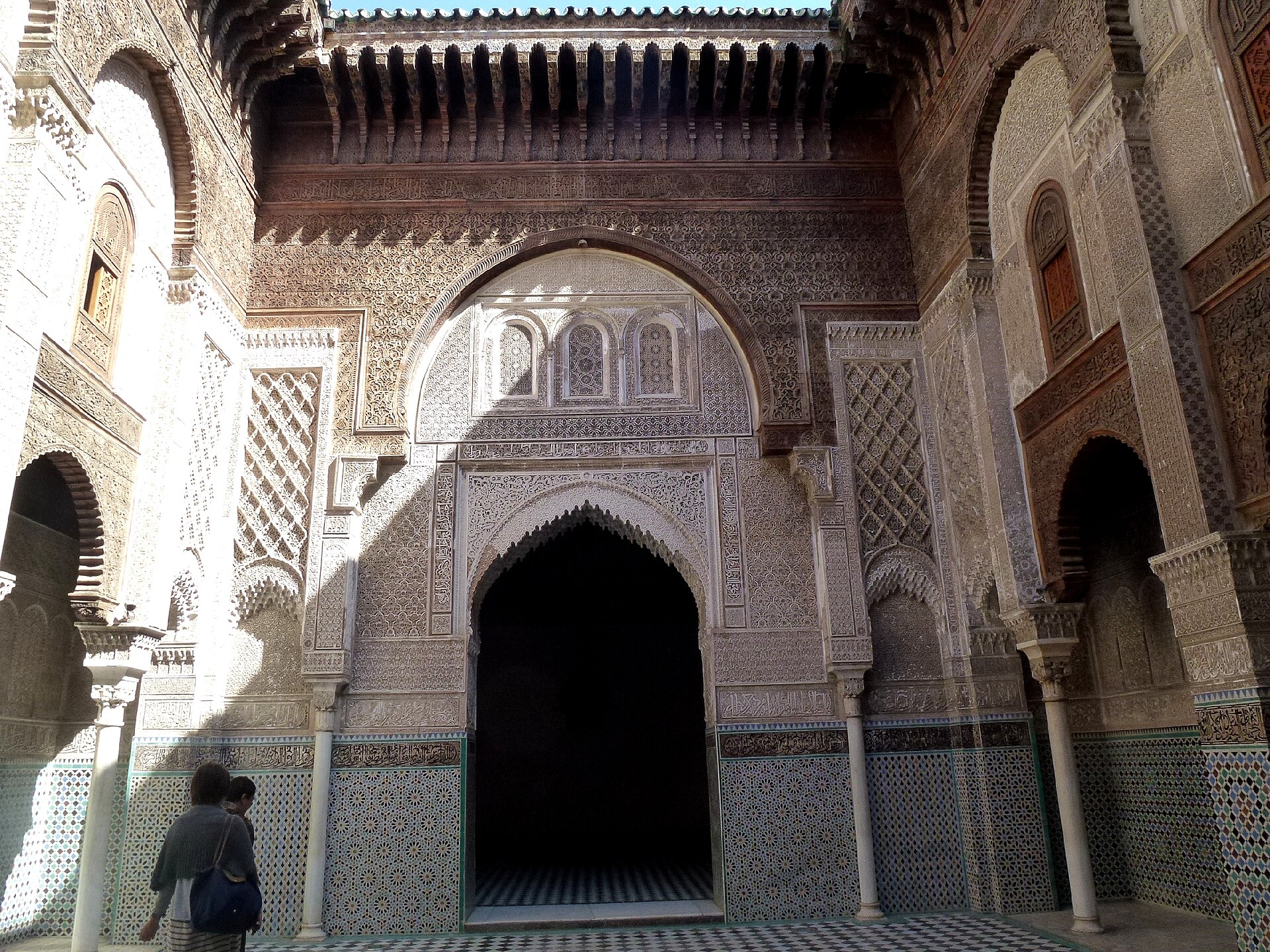
Fez flourished in the 13th and 14th centuries under the Marinids, when it replaced Marrakech as capital of the kingdom; the urban fabric and the main monuments of the medina date from that time. The Bou Inania madrasa is the most visited example: it was built from 1350 to 1355 by the Marinid sultan Abu Inan Faris, who gave it his name; the Attarine madrasa, slightly earlier and smaller, stands near the Quaraouiyine. The Quaraouiyine itself goes back to the 9th century; tradition credits its foundation to Fatima al-Fihri in 859. The city once had around thirty madrasas.
The political capital moved from Fez to Rabat in 1912; Fez has kept its status as the country's cultural and spiritual capital ever since.
Finding your way in the medina
The medina has around 9,000 alleys. Nobody knows them all, and you will get lost: that is part of the visit.
- Gates as landmarks. Bab Boujloud, on the west side, is the easiest way in. It is best to always ask your host to meet you at the gate, Bab Boujloud or Bab Rcif. Medina riads are reached on foot: Karawan Riad, for example, sends its staff to the Bab Jdid car park to carry luggage, and Riad Fès points guests to a guarded car park on Place Batha.
- Two main streets. From Bab Boujloud, Talaa Kebira runs down towards the Quaraouiyine quarter; it is the longest and one of the most important streets of Fes el-Bali. As long as you follow it, you will not get lost.
- An offline map. A map app with maps downloaded for offline use helps; the signal is weak between the walls.
- "Fake guides". Strangers offer to lead you, often to a shop. Decline politely, with a smile. For a first visit, Sabaro suggests half a day with a licensed guide booked in advance: it gives you the keys to the medina, which you can then explore on your own.
- Taxis. Outside the medina, insist on the meter; a ride often costs less than 15 dirhams.
The rhythm of the day and the week
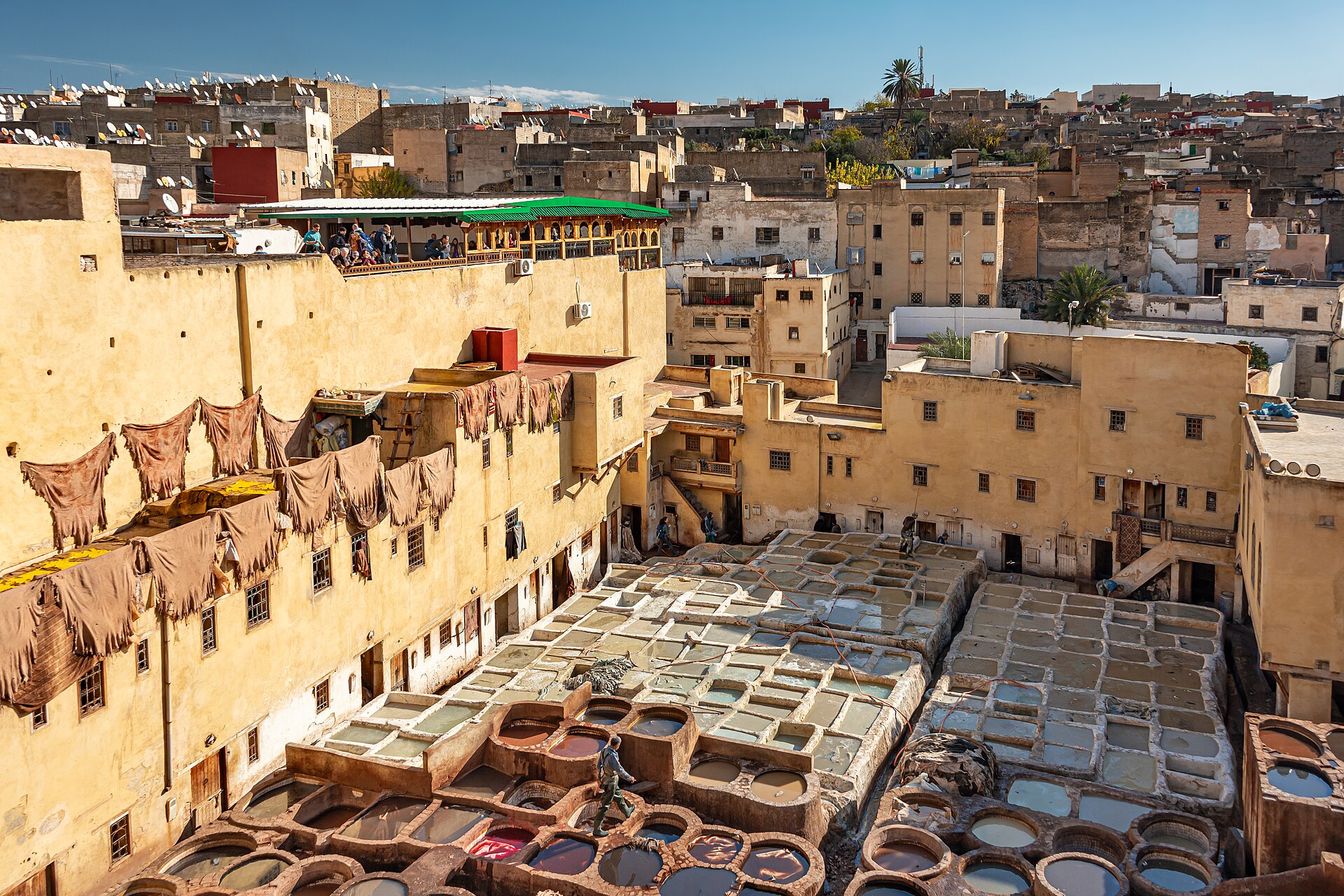
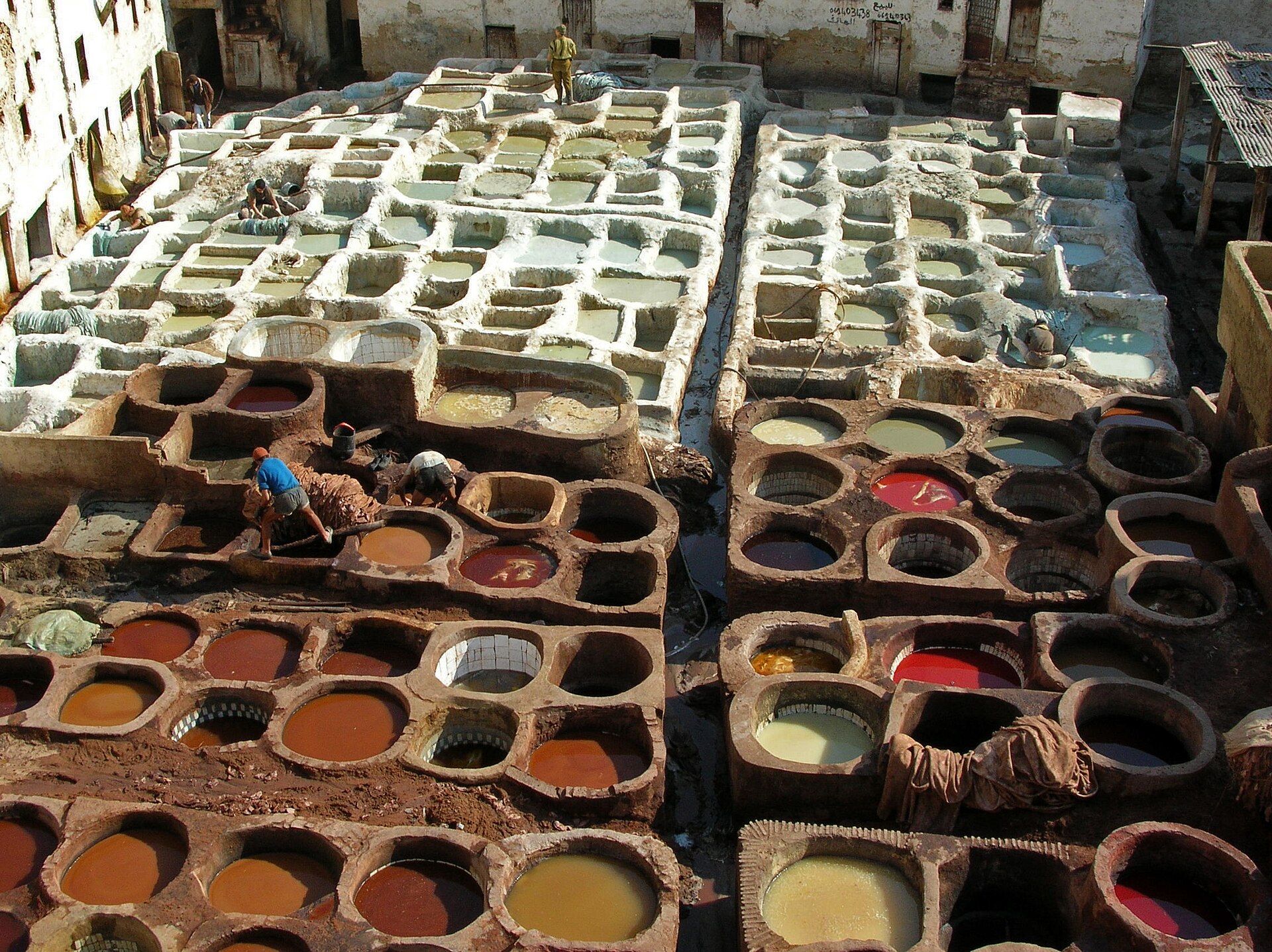
Mornings belong to the craftsmen. Go up to the terraces over the Chouara tanneries early in the morning, when the workers are busy, and accepting the sprig of mint handed out at the entrance: the smell of leather being tanned is strong.
Shops open from about 9 am to 6 pm local time. Early afternoon suits museums and madrasas, in the shade of their courtyards. Towards evening, Sabaro suggests getting up high: riad roof terraces, hotels set above the medina such as Palais Faraj or Hôtel Sahrai, or the hill of the Marinid Tombs, outside the walls.
On Fridays, the day of the main weekly prayer, many souks close in the morning and sometimes in the afternoon too. The medina is quieter: a good day for architecture and walking, a poor day for shopping. Better to place Friday in the middle of your stay, or use it for a day trip.
How many days, and how to spend them
One or two days are rarely enough to get to know the medina. Sabaro recommends three full days, so three or four nights:
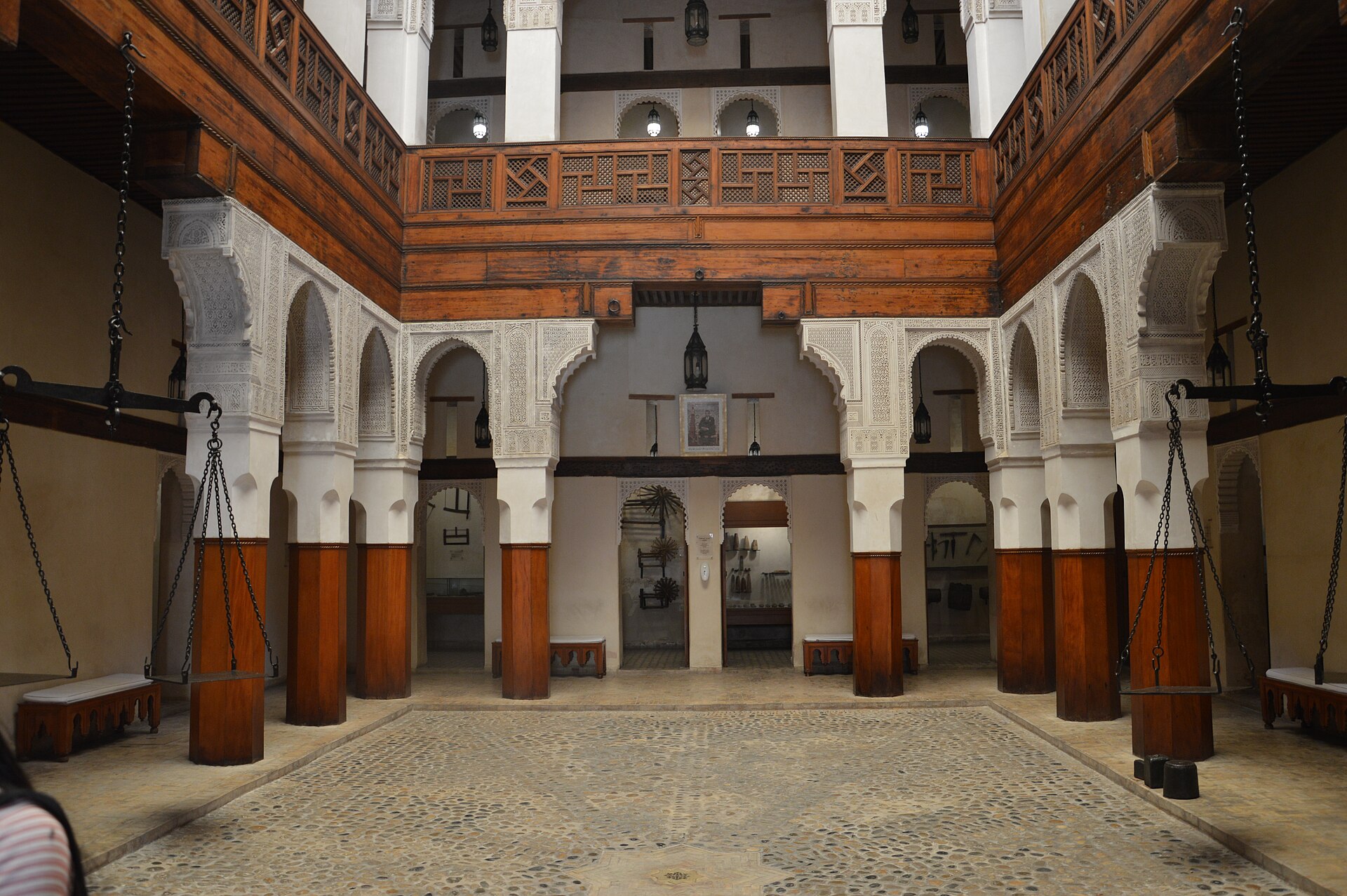
- Day one: Fes el-Bali with a guide, from Bab Boujloud to the Quaraouiyine, the Bou Inania madrasa, the Nejjarine Museum of wooden arts, housed in a former fondouk, and the tanneries.
- Day two: Fes el-Jdid, the Mellah and the royal palace gates in the morning, the Jnan Sbil garden, then the Marinid Tombs at sunset. In the evening, dinner with a local family or a cooking class.
- Day three: the medina with no plan, to go back to a workshop or shop you spotted, and a hammam; or a day trip to Meknes and Volubilis.
Seasons in detail
Spring and autumn are the best seasons for the imperial cities. The World Meteorological Organization (WMO) 1991-2020 normals for the Fes-Saiss station fill in the picture:
- Hot summers. In July and August, the high tops 35 °C on about 15 days a month on average. Medina visits then happen early in the morning and in the evening, with a siesta at the riad or by the pool in the middle of the day.
- Cool, damp winters. In January the average low is 3.7 °C, with about 7 days of rain (1 mm or more). Riad bedrooms open onto an open-air patio: Sabaro advises checking that your room is heated and packing a warm layer for the evenings.
- Shoulder seasons. April and October sit around 22 °C and 26 °C highs, with roughly 5 to 6 rainy days a month.
The Fes Festival of World Sacred Music held its last edition from 4 to 7 June 2026; the 2027 dates have not been published yet. Ramadan 2027 is expected to begin around 8 February according to astronomical calculations: the medina then lives to the rhythm of the fast, with quieter days and lively evenings.
What combines with Fez
- Meknes and Volubilis. Meknes is 63.8 km away and the Roman city of Volubilis about 30 minutes' drive from Meknes; a private day trip from Fez takes in Volubilis, Moulay Idriss and Meknes.
- The Middle Atlas. Ifrane is 71.6 km and 1 h 16 by road, with its cedar forests; Tazzeka National Park is the other nature outing.
- Chefchaouen and the north. 194 km and 3 h 24 by road: Fez is often the last stop on a tour that started in Tangier.
- The desert. Merzouga and the Erg Chebbi dunes are about 457 km and 7 hours by road; Sabaro suggests breaking the journey with a night on the way.
- Marrakech. The direct ONCF train (Morocco's national railway) takes about 6 h 30, and the flight about 1 hour.
What to see
- Fes el-Bali medina and Bab Boujloud — World Heritage since 1981 UNESCO
- Quaraouiyine Mosque — seen from outside by non-Muslims visitmorocco.com
- Chouara tanneries visitmorocco.com
- Bou Inania and Attarine madrasas visitmorocco.com
- Nejjarine Museum of wooden arts visitmorocco.com
- Merinid Tombs visitmorocco.com
- Jnan Sbil garden and Royal Palace gates visitmorocco.com
- Moulay Yacoub spa visitmorocco.com
When to go
Climate in Fez
| Jan | Feb | Mar | Apr | May | Jun | Jul | Aug | Sep | Oct | Nov | Dec | |
|---|---|---|---|---|---|---|---|---|---|---|---|---|
| Max. (°C) | 16.0 | 17.3 | 19.9 | 22.0 | 26.4 | 31.2 | 35.1 | 35.1 | 30.3 | 26.1 | 20.2 | 17.2 |
Source: NOAA, normales climatiques 1991-2020 de l'OMM — WMO 1991-2020 normals, archived by NOAA, accessed 14 October 2026
Getting there
- Fes-Saiss airport (FEZ) Wikipédia (aéroports du Maroc)
- Meknes 63.8 km; Rabat 207.1 km and 2 h 16; Chefchaouen 194 km and 3 h 24 visitmorocco.com
By air
| Airport | By road | Direct flights |
|---|---|---|
| Fez–Saïss (FEZ) | 14 km, 0h19 |
|
| Rabat–Salé (RBA) | 200 km, 2h23 |
|
| Al Hoceima–Cherif Al Idrissi (AHU) | 257 km, 3h59 |
|
Hotels chosen in the region
| Hotel | Category | Suits | Guest rating | Indicative price |
|---|---|---|---|---|
| Karawan Riad | 9-suite riad | Riads, Boutique and historic hotels, Spa and wellness, Museums and culture, Golf | 9,0/10 (Booking.com) | from 267 € per night |
| Palais Faraj Suites & Spa | Suite palace | Spa and wellness, Boutique and historic hotels, Family, Golf | 8,9/10 (Booking.com) | from 319 € per night |
| Riad Fès | Relais & Châteaux | Riads, Boutique and historic hotels, Spa and wellness, Honeymoon, Museums and culture, Golf, Shopping | 9,3/10 (Booking.com) | from 307 € per night |
| Riad Laaroussa | Riad | Riads, Family, Boutique and historic hotels, Spa and wellness, Museums and culture, Golf, Shopping | 9,7/10 (Booking.com) | from 142 € per night |
| Hotel Sahrai | Design hotel | Spa and wellness, Golf | 8,9/10 (Booking.com) | from 274 € per night |
Chosen activities
- Guided tour of the Fez medina — 3 hours · from 10 € per person
Public price collected on: Civitatis — accessed 14 October 2026
- Private tour of the Fez medina — 3 hours 30 minutes
Public price collected on: Civitatis — accessed 14 October 2026
- Bath and massage at the Royal Medina Spa hammam — 2 hours · from 25 € per person
Public price collected on: Civitatis — accessed 14 October 2026
- Moroccan cooking class — 4 hours · from 40 € per person
Public price collected on: Civitatis — accessed 14 October 2026
- Dinner with a local family in Fez — 3 hours · from 38 € per person
Public price collected on: Musement — accessed 14 October 2026
Read next
Frequently asked questions
How many days do I need in Fez?
Three full days, in Sabaro's view: a guided day in Fes el-Bali, a day for Fes el-Jdid and the Marinid Tombs, and a free day or a trip to Meknes and Volubilis. One or two days are rarely enough for the medina.
Can I visit the Quaraouiyine Mosque?
Non-Muslims see it from outside. At the Bou Inania madrasa, non-Muslim visitors see the prayer hall from the courtyard without entering.
Do I need a guide for the medina?
It is not essential, but it saves time on a first visit: the medina has around 9,000 alleys. A 3-hour guided tour can be booked from €9.13 per person on Civitatis, an activity booking platform (price checked on 14 October 2026). Turn down strangers who offer to show you the way.
Which day should I avoid for shopping?
Friday: many souks close in the morning, and sometimes in the afternoon. The medina is, however, quieter for walking.
Can I see the total solar eclipse of 2 August 2027 from Fez?
No: Fez lies south of the path of totality and will only see a partial eclipse. Totality is visible in Tangier, Tetouan and Chefchaouen, around 8:47 am local time.
A travel advisor replies by email. Free, no commitment.