Asilah, Larache and Lixus
On the Atlantic south of Tangier, Asilah is a small car-free medina enclosed by 15th-century Portuguese ramparts and covered in murals by the artists of its cultural moussem. Further south, Larache keeps a blue-and-white medina, facing the ancient ruins of Lixus. For a stop of one to three days between Tangier and Rabat, combining art, beaches and archaeology.
Asilah, a medina turned studio
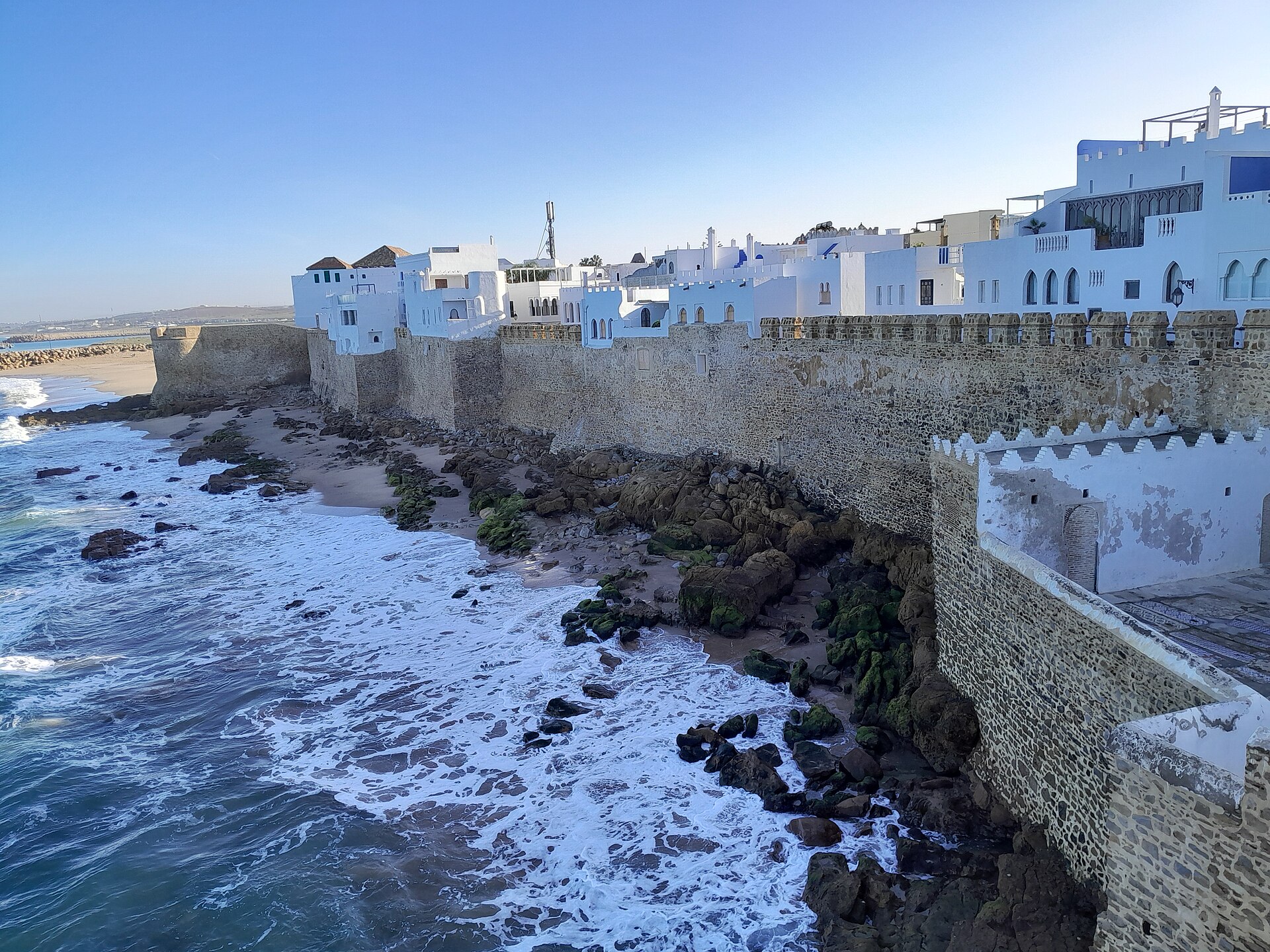
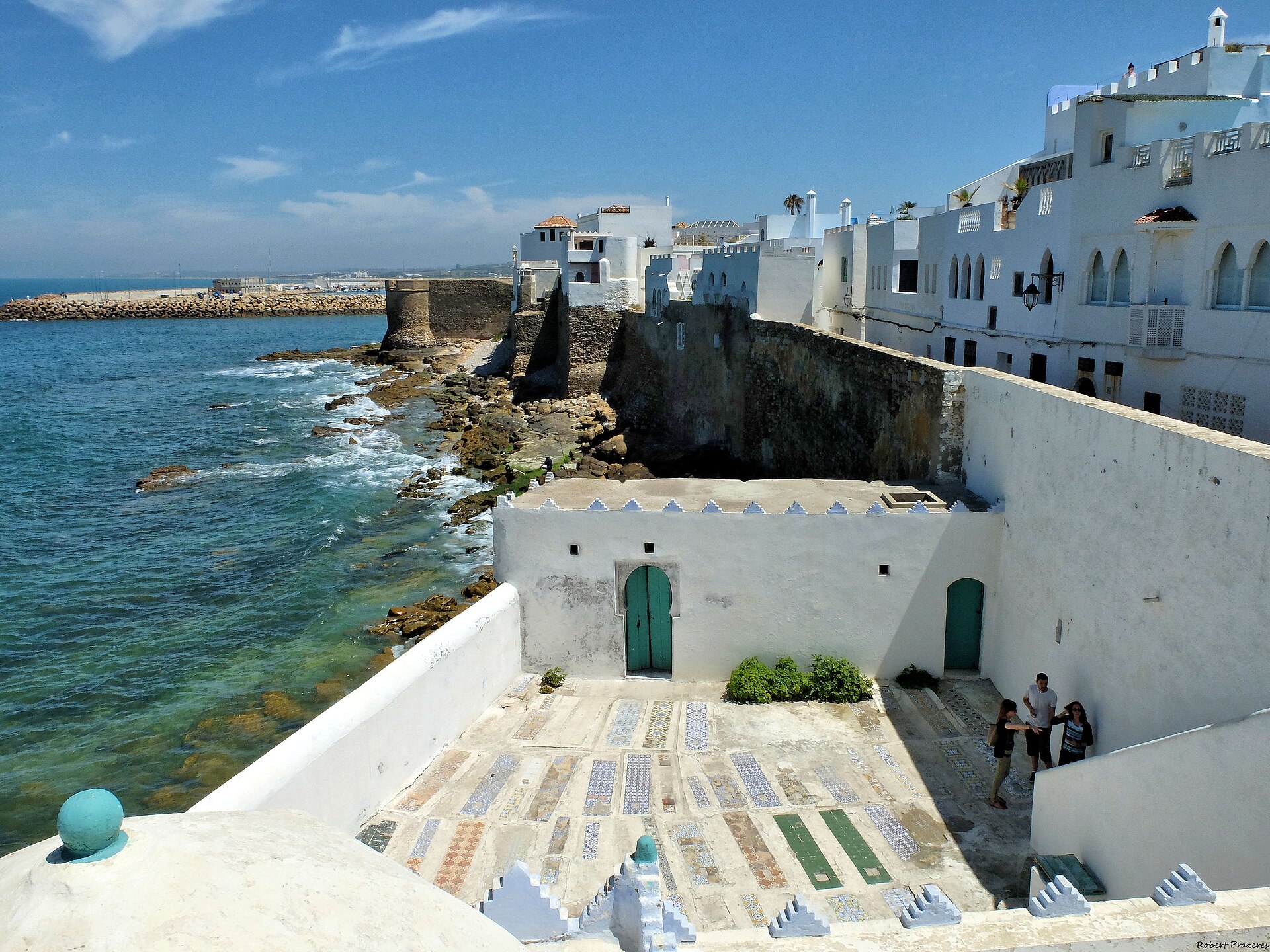
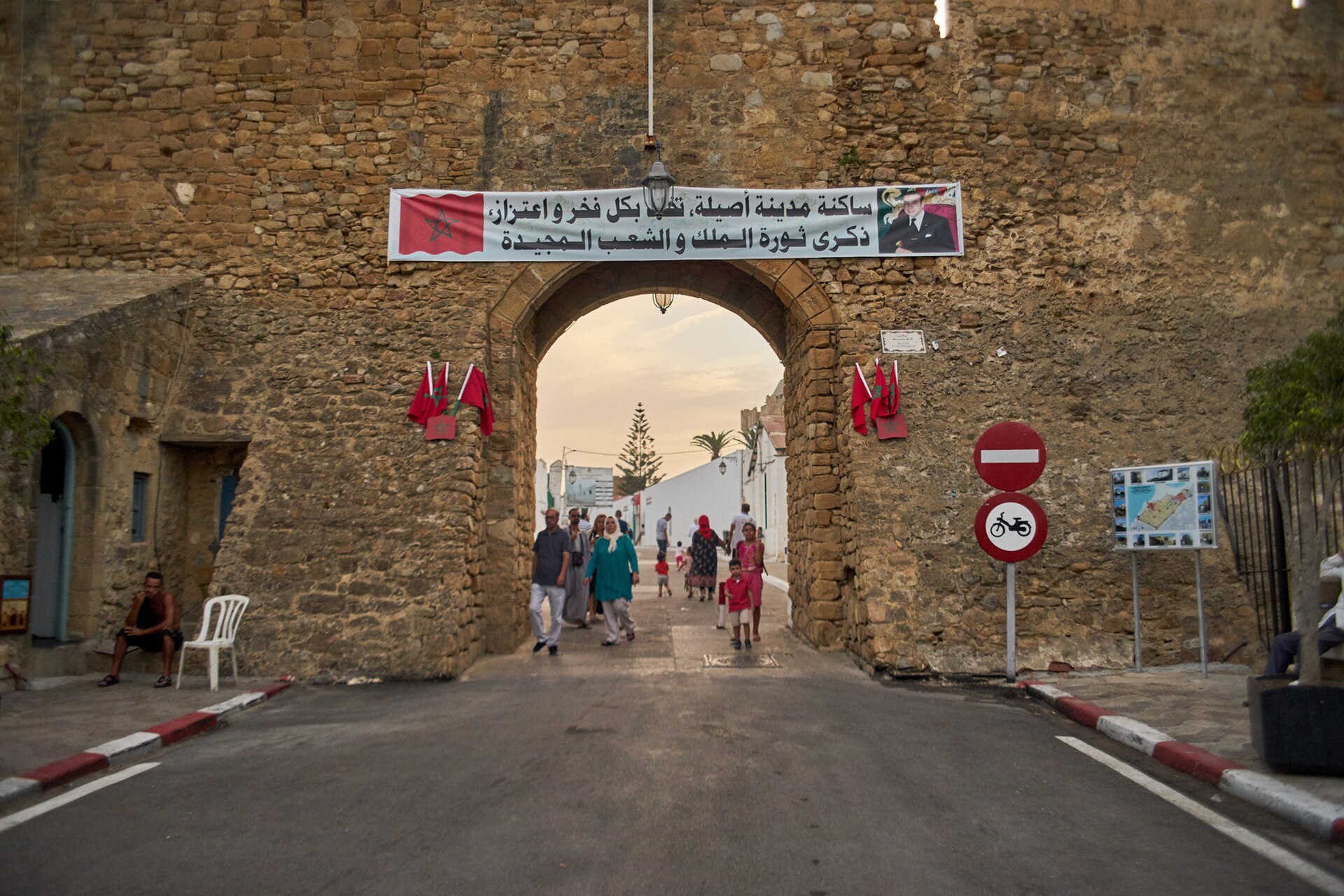
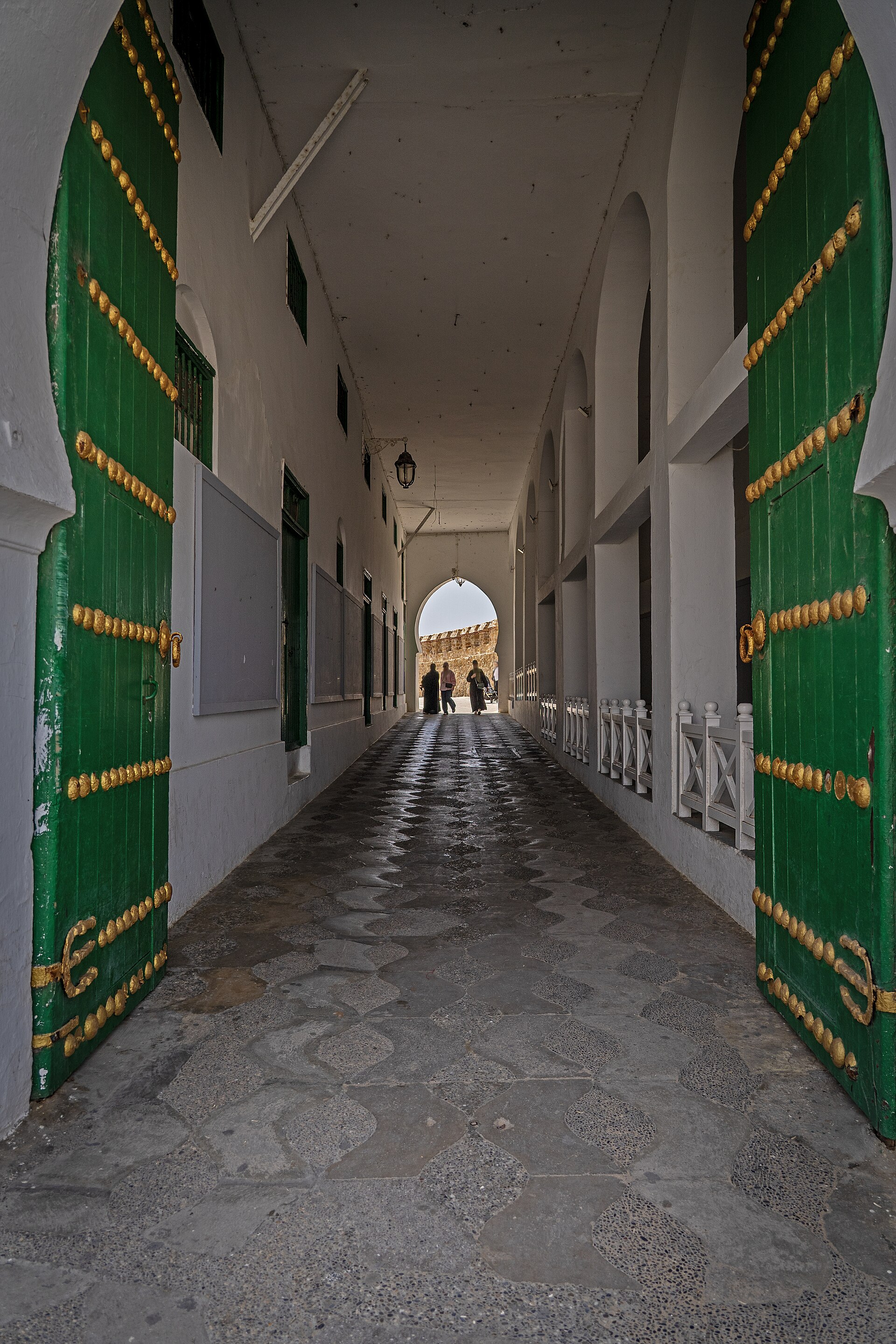
Asilah is an ancient Phoenician city, later shaped by other civilisations, above all the Portuguese, who built the ramparts around the medina in the 15th century. The town is explored on foot: cars do not enter the medina, whose whitewashed walls are picked out in blue, green or yellow. You enter through Bab al-Homer or Bab al-Bahr; the Borj Al Kamra tower is the landmark. The Raissouni Palace, from the early 20th century, is now a cultural centre.
What sets Asilah apart is its international cultural moussem, held every summer since 1978 by the Asilah Forum Foundation. Artists and intellectuals are invited, and the artists paint murals on the walls of the medina, renewed from one edition to the next; the Raissouni Palace hosts the exhibitions. In 2026 the 47th edition added an autumn session to its summer one, from 2 to 18 October, with symposiums, exhibitions of engraving and painting, children's workshops and the Buland Al-Haidari prize for young Arab poets.
Sabaro recommends summer to see the town at its liveliest, during the moussem, and the rest of the year for a quieter medina.
The rhythm of a stay
One day is enough for the medina; two or three days let you take your time, with the beaches and day trips.
- The ramparts at sunset, above the ocean: that is the time Le Routard, the French guidebook, recommends for walking them.
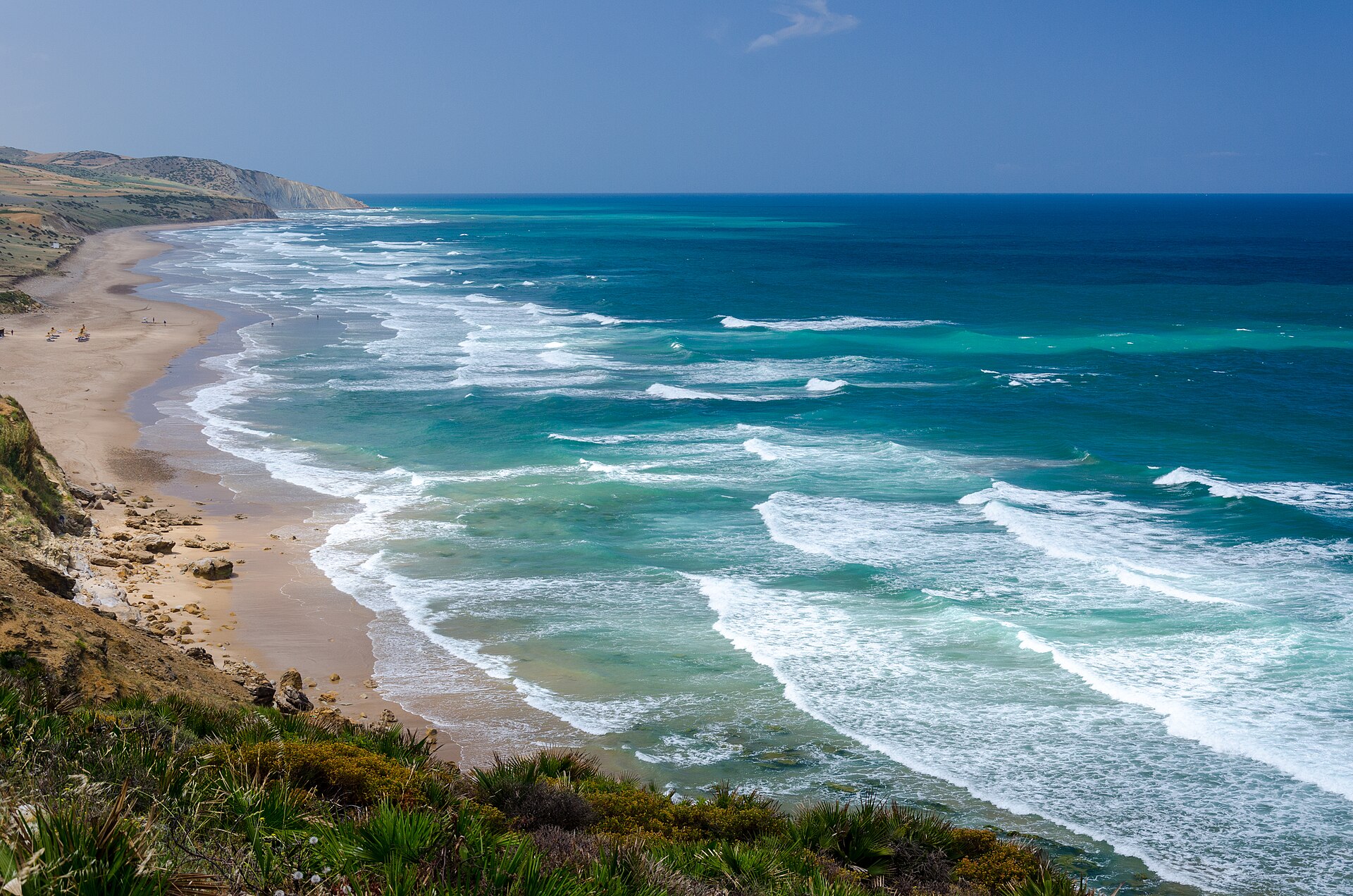
- The beaches. The main beach is within walking distance of the town. Further out, Rmilat, known as Paradise Beach, Briech and Sidi Mghayt are reached by car or grand taxi.
- The M'zora cromlech, inland near Sidi Yamani: a circle of more than 160 standing stones.
- The covered market, small and central, for fresh local produce.
The season. The World Meteorological Organization (WMO) 1991-2020 normals for the Larache station, some forty minutes to the south, show a summer tempered by the ocean: average maximums of 28 to 29 °C in July and August, and about a dozen days a year above 35 °C. Winter is mild, around 17 °C by day, but it is the rainy season: about 700 mm a year, including 120 to 130 mm in each of November and December. From June to August there is hardly any rain.
Larache and Lixus
Larache, about 40 minutes south of Asilah, was part of the Spanish Protectorate from 1911 to 1956. You enter its blue-and-white medina through the Bab al-Khemis gate, in Hispano-Moorish style; the central square, now Place de la Libération, used to be called Plaza de España. The writer Jean Genet is buried in the town's old Spanish cemetery.
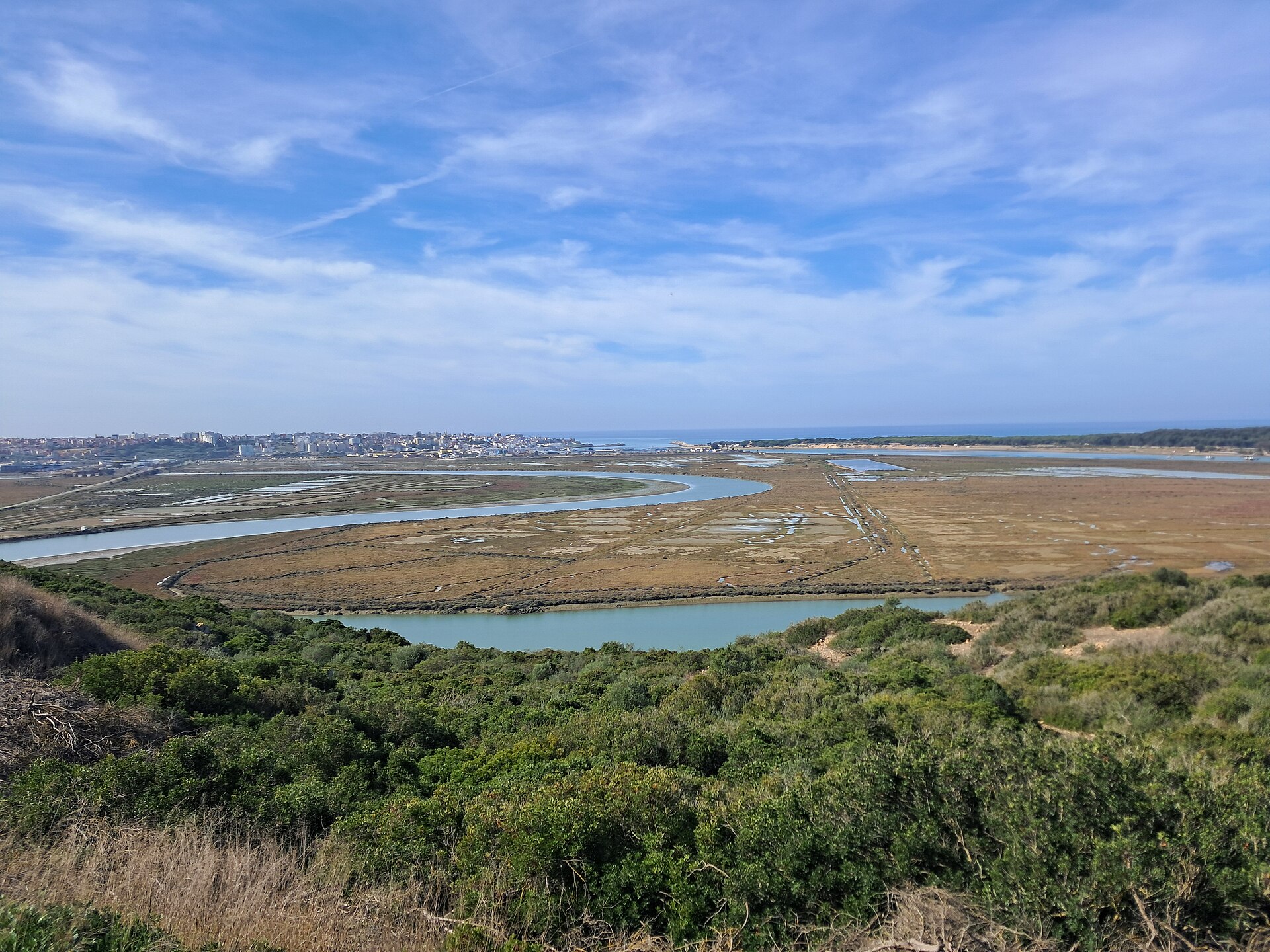
Lixus lies on the other bank of the Loukkos river, facing Larache, near its mouth. Morocco's Ministry of Culture, in its submission to UNESCO (the United Nations Educational, Scientific and Cultural Organization), describes it as one of the first cities of the western Mediterranean according to many ancient authors. Excavations show occupation from the 8th century BC to the 14th century AD, in five main phases: Phoenician, Punic, Mauretanian, Roman and post-Roman, then Islamic. The site has been on UNESCO's Tentative List since 1995, the list of properties Morocco intends to nominate for World Heritage.
What you see:
- at the entrance, the salting basins where garum, the fermented fish sauce of Antiquity, was prepared; Lixus's fish-salting complex ranks among the largest in the Mediterranean;
- the baths, with their changing rooms, pools and the ovens that heated the water;
- the amphitheatre;
- a religious quarter with many temples, uncovered by excavation.
According to the Moroccan National Tourist Office, only about 10% of the site is visible; a mosaic of Poseidon there is covered with soil to protect it. Some place the Garden of the Hesperides here, where Heracles, in Greek mythology, had to take the golden apples. Guides offer tours, usually in French or Spanish.
Getting there and around
The nearest airport is Tangier-Ibn Battouta. Asilah is about 45 km south of Tangier, less than an hour by road; a 6-hour trip from Tangier combines Cape Spartel, the Caves of Hercules and Asilah. For the beaches, Larache and Lixus, Sabaro recommends a car with driver; grand taxis are the alternative.
What to see
- Asilah medina and its murals — pedestrian medina of whitewashed houses; murals painted by artists invited to the moussem Le Routard
- Portuguese ramparts, Bab al-Homer, Bab al-Bahr, Borj Al Kamra tower — 15th-century ramparts, walk with views over the Atlantic Le Routard
- Raissouni Palace — early 20th-century building, now a cultural centre hosting exhibitions during the moussem Le Routard
- Lixus archaeological site — at the mouth of the Loukkos river, opposite Larache; occupied from the 8th century BC to the 14th century; on UNESCO's Tentative List since 1995 UNESCO (liste indicative)
- Lixus: salting pools, baths, amphitheatre — about 10% of the site is visible visitmorocco.com (ONMT)
- Larache medina, Bab al-Khemis gate — blue-and-white medina, entered through a Hispano-Moorish gate Lonely Planet
Getting there
- Tangier-Ibn Battouta airport (TNG), the nearest Wikipédia (aéroports du Maroc)
- Asilah about 45 km south of Tangier, under an hour's drive; Larache about 40 minutes south of Asilah Le Routard
By air
| Airport | By road | Direct flights |
|---|---|---|
| Tangier Ibn Battouta (TNG) | 41 km, 0h37 |
|
| Tetouan–Sania Ramel (TTU) | 103 km, 1h25 |
|
| Rabat–Salé (RBA) | 195 km, 2h18 |
|
Read next
Travel advice
| Country | Official advice | Source |
|---|---|---|
| France | Area not named on the vigilance map. General advice: be vigilant in public places, avoid isolated spots; in the neighbouring Rif, to the east, avoid secondary roads at night. | France Diplomatie (Site last updated 15 September 2026) |
| United Kingdom | No regional advice for this area (the FCDO gives regional advice only for Western Sahara and the Algerian border) | GOV.UK (FCDO) (Site last updated 19 August 2026) |
| Belgium | Not checked by Sabaro: see diplomatie.belgium.be | |
| Switzerland | Not checked by Sabaro: see DFAE (eda.admin.ch) | |
| Luxembourg | Not checked by Sabaro: see mae.gouvernement.lu | |
| Ireland | Not checked by Sabaro: see ireland.ie (DFA) | |
| Germany | Not checked by Sabaro: see Auswärtiges Amt | |
| Sweden | Not checked by Sabaro: see Regeringen (UD) | |
| Denmark | Not checked by Sabaro: see Udenrigsministeriet (um.dk) | |
| Norway | Not checked by Sabaro: see Regjeringen | |
| Poland | Not checked by Sabaro: see Odyseusz (MSZ) | |
| Czechia | Not checked by Sabaro: see MZV ČR | |
| Austria | Not checked by Sabaro: see BMEIA | |
| Netherlands | Not checked by Sabaro: see Nederland Wereldwijd | |
| Italy | Not checked by Sabaro: see Viaggiare Sicuri | |
| Spain | Not checked by Sabaro: see exteriores.gob.es | |
| Portugal | Not checked by Sabaro: see Portal das Comunidades | |
| Finland | Not checked by Sabaro: see Ulkoministeriö (um.fi) | |
Rules change: always check the official website before you travel.
Frequently asked questions
When is the Asilah cultural moussem held?
Every summer since 1978. In 2026 the 47th edition added an autumn session, from 2 to 18 October.
How long should you stay in Asilah?
One day is enough for the medina and the ramparts. Two or three days let you add the beaches, Larache and Lixus.
What is there to see at Lixus?
The fish-salting basins at the entrance, the baths, the amphitheatre and the temple quarter. About 10% of the site is visible.
How do you get there from Tangier?
By road: Asilah is about 45 km to the south, less than an hour away. Larache is some forty minutes further south.
A travel advisor replies by email. Free, no commitment.