Essaouira
Essaouira, formerly Mogador, is an eighteenth-century fortified medina on the Atlantic, a UNESCO World Heritage site since 2001, where a strong wind blows one day in two and Gnaoua music has its festival in June. For travellers who want a town to enjoy on foot, board sports and a cool counterpoint to Marrakesh, over two to four days.
A town designed by an architect
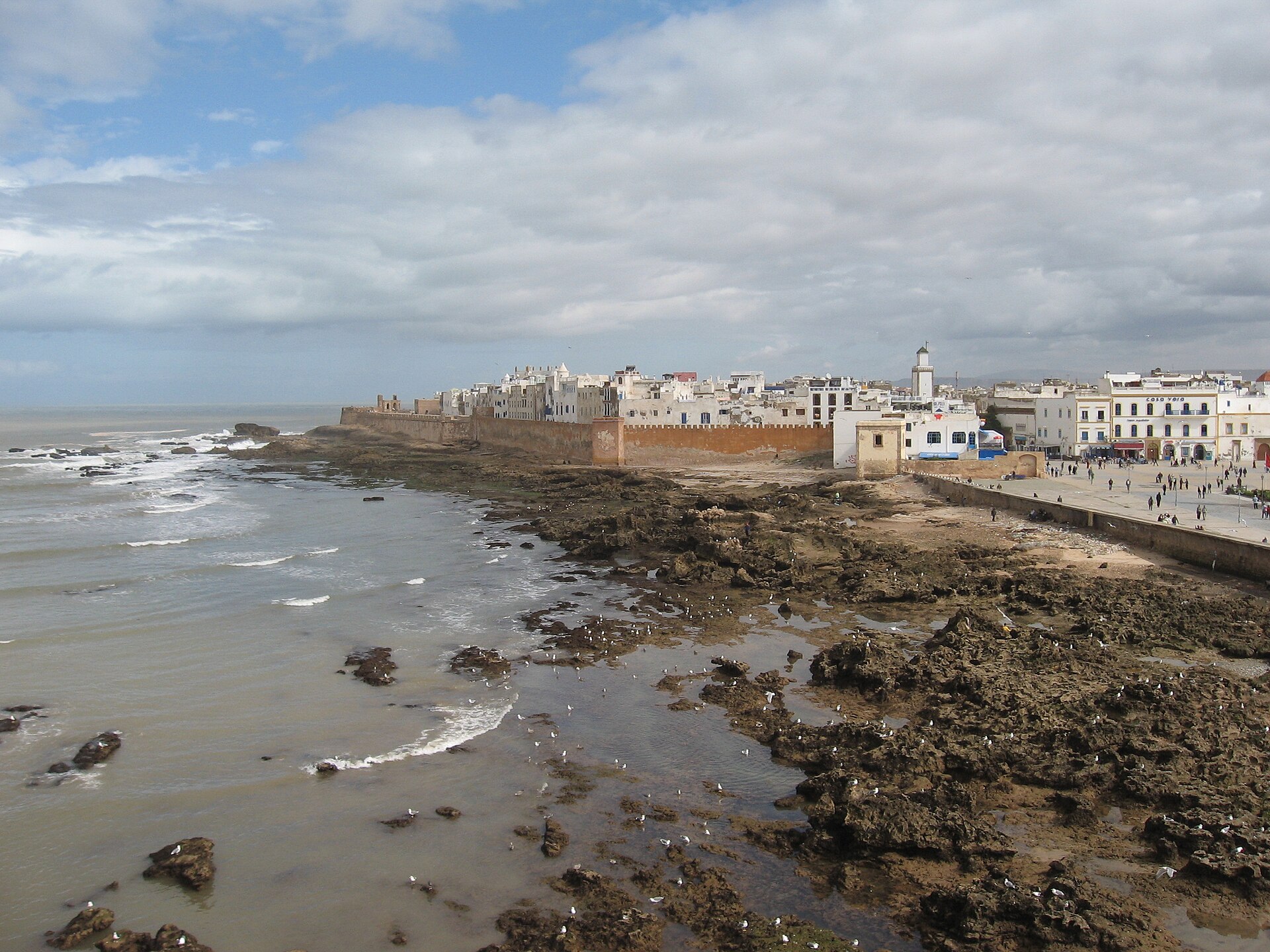
Essaouira has a layout of its own among Morocco's medinas, and that was the intention. It was founded on the orders of the Alaouite sultan Sidi Mohammed ben Abdallah, who reigned from 1757 to 1790 and wanted to turn this small Atlantic town into a royal port, the hub of Morocco's foreign trade. He entrusted the plan to a French architect influenced by the work of Vauban, Louis XIV's military engineer, at Saint-Malo. Hence its European look, largely preserved, and its Vauban-style walls, in local dressed stone known as manjour.
The old name, Mogador, is thought to come from the Phoenician migdol, "small fortress". The town was long nicknamed the "port of Timbuktu": in the nineteenth century it linked Morocco and sub-Saharan Africa with Europe. UNESCO (the United Nations Educational, Scientific and Cultural Organization) also stresses that from the start it was a town where Amazigh, Arab, African and European people, Muslims, Christians and Jews lived side by side.
This history can be read on foot:
- The Sqala of the Kasbah, a bastion facing the open sea; the rampart walk looks out over the ocean and the Mogador islands. These ramparts stood in for the city of Astapor in the series Game of Thrones.
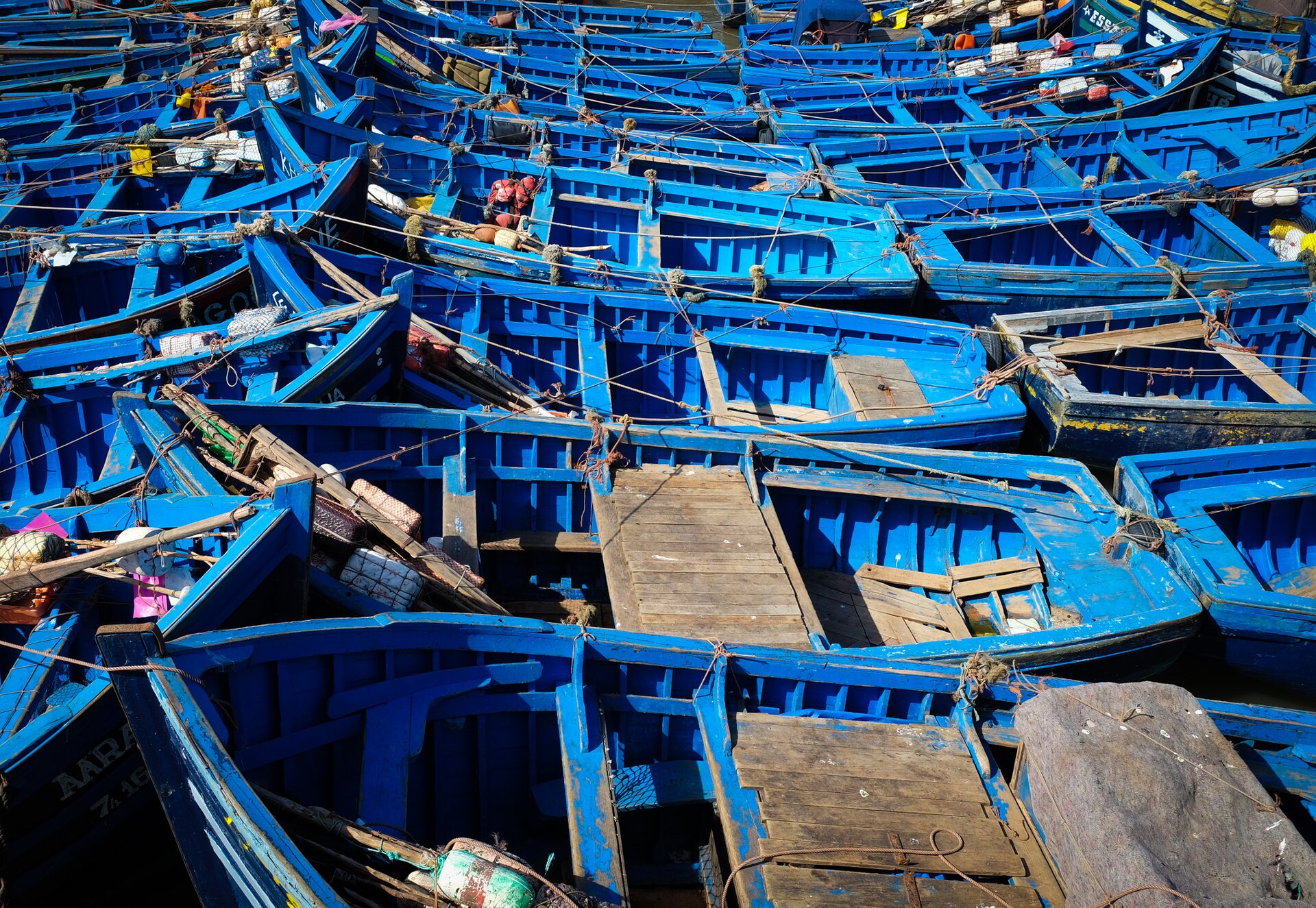
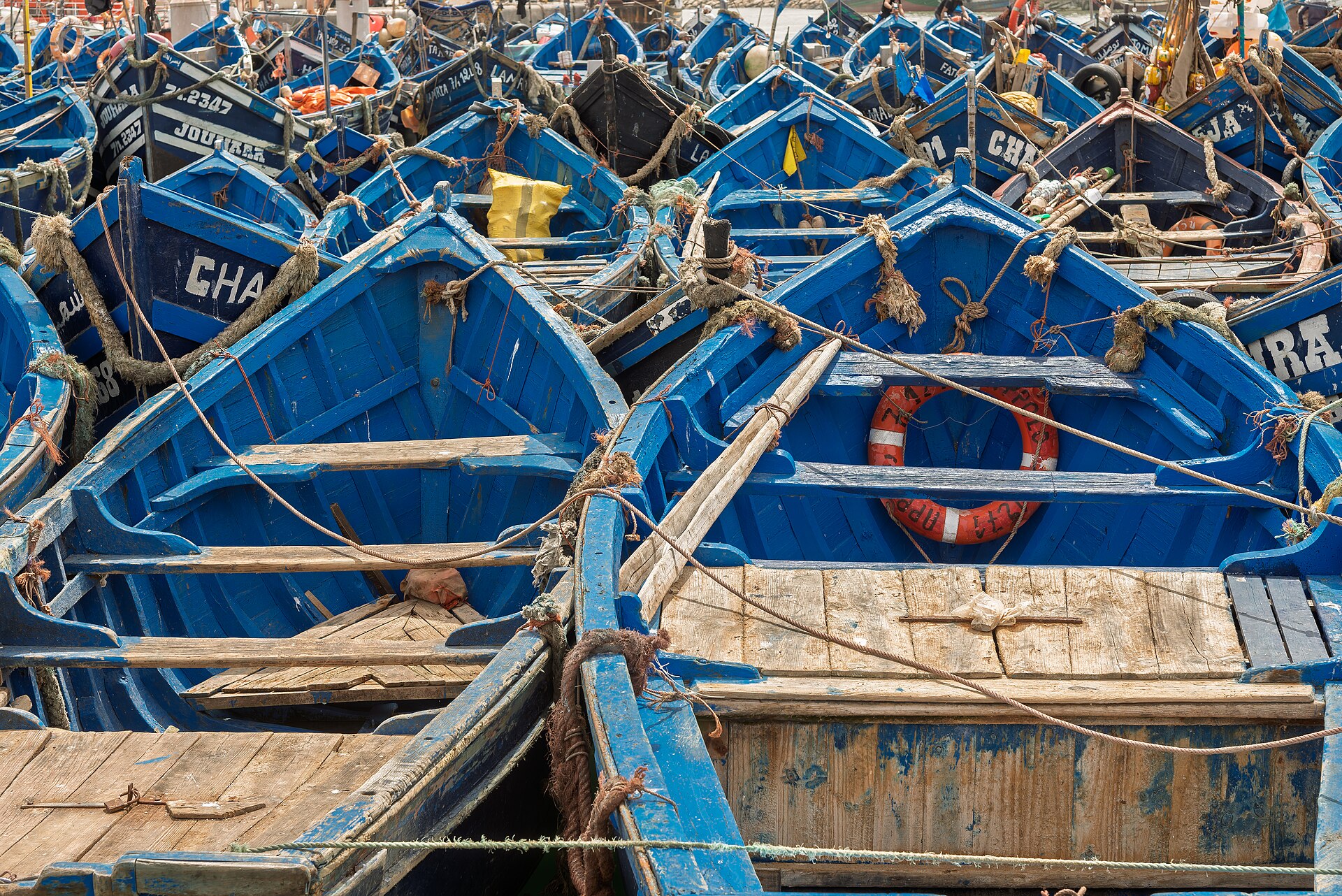
- The fishing harbour, still active, and the Sea Gate. At the fish market, you eat fish and seafood caught during the night.
- The Mellah, the former Jewish quarter. Bayt Dakira, "the house of memory", was opened there in January 2020 by King Mohammed VI: a restored house that brings together the Slat Attia synagogue, an exhibition space on Moroccan Judaism and a research centre.
Living with the wind
Wind is Essaouira's defining feature, and it is worth knowing before you book. The World Meteorological Organization (WMO) 1991-2020 normals for the Essaouira station count on average 186 days a year when the wind reaches at least 10 m/s, about 19 knots. July is the windiest month, with 21.5 days on average. These are the trade winds, blowing in from the ocean.
The wind has two consequences.
A cool town in summer. The average high stays between 18.4 °C in January and 22.6 °C in September; in July it is 21.9 °C, when Marrakesh's reaches 37.7 °C. It rarely rains: 31 rainy days a year on average, almost all from October to April. Essaouira is therefore a good refuge in high summer, provided you bring a jumper for the evening.
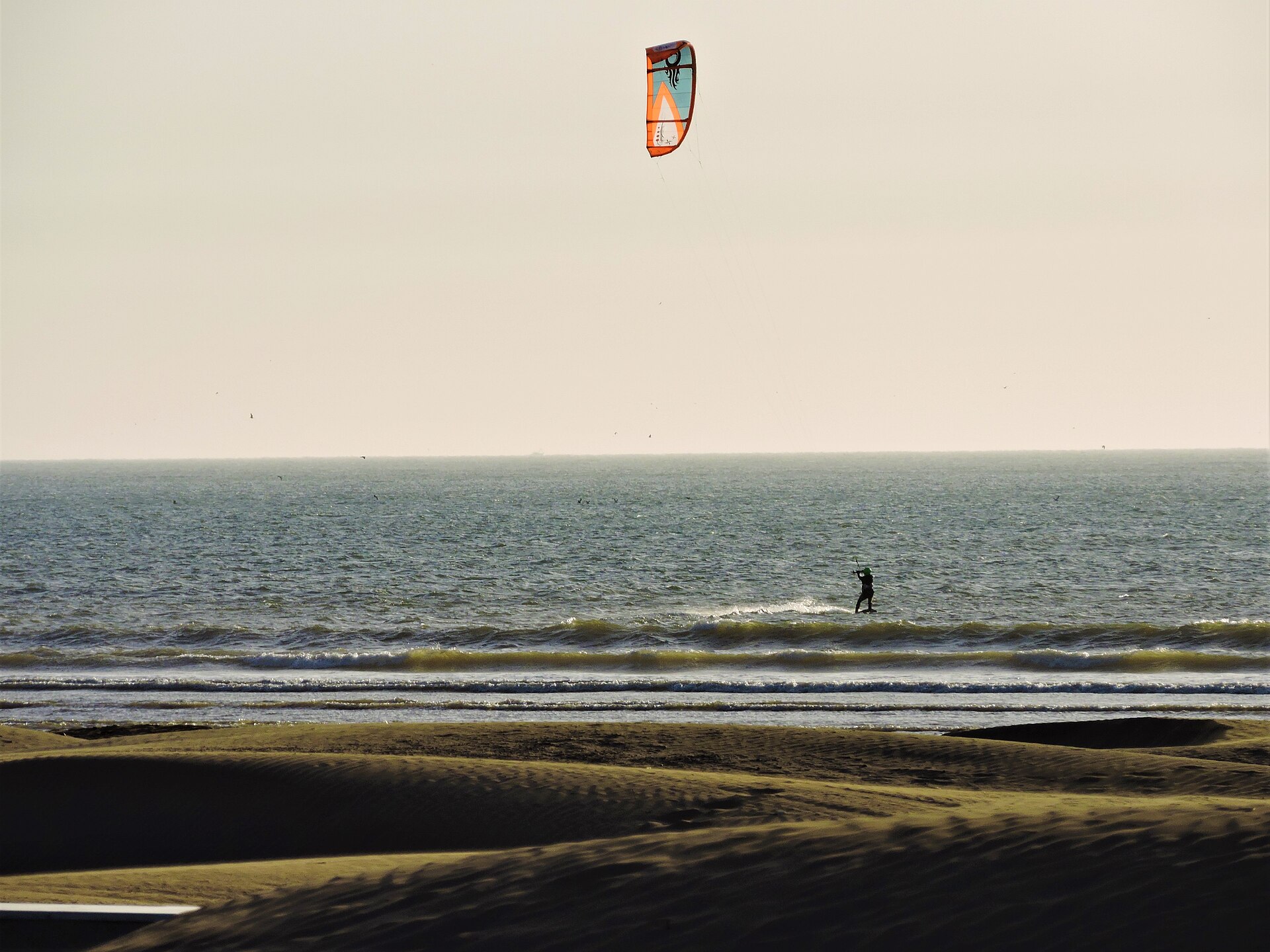
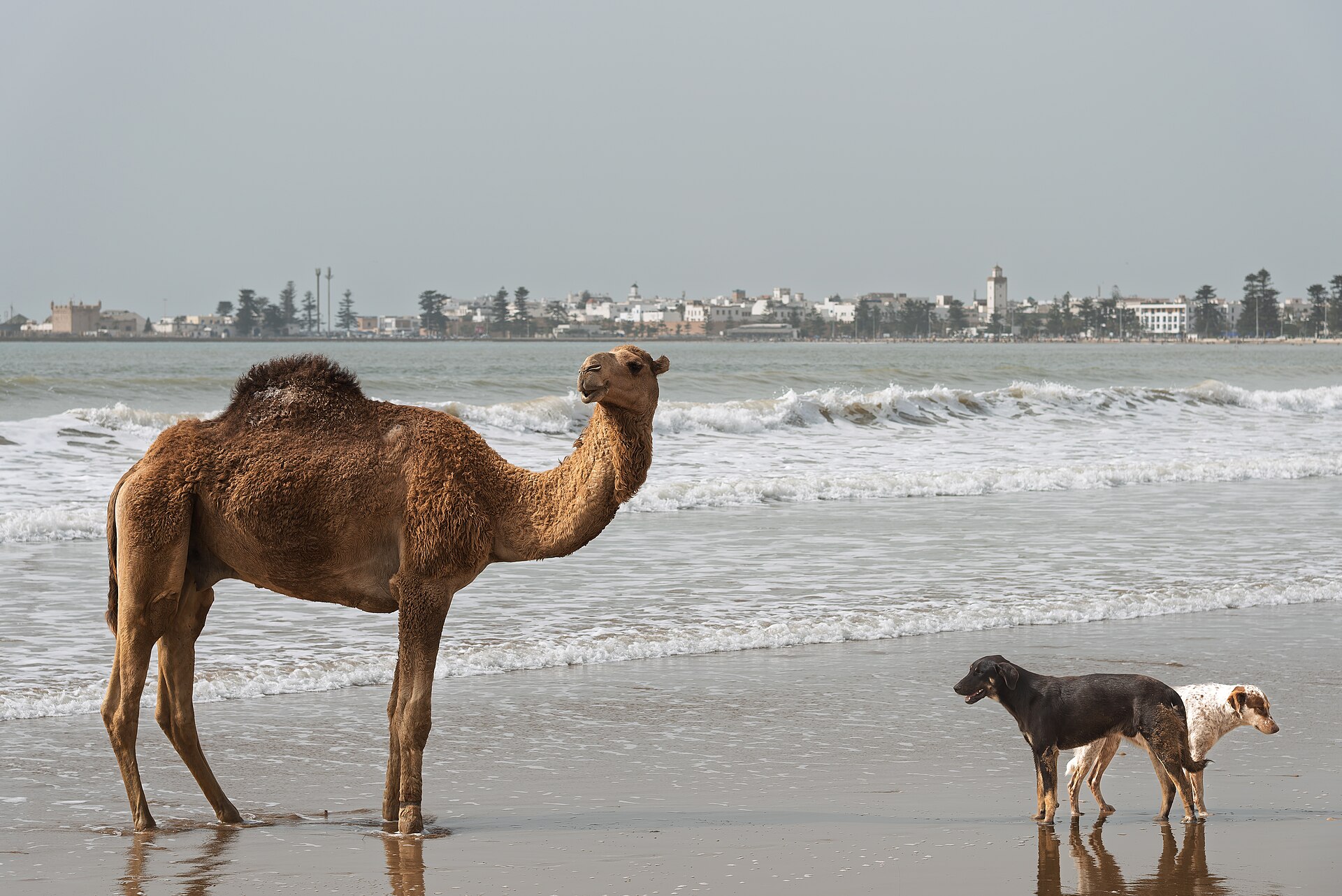
A beach made for board sports. The beaches around the town carry the Blue Flag, a label for bathing water quality. In strong wind the sand blows and lying on the beach is not much fun; kitesurfers, windsurfers and surfers, on the other hand, are well served, and schools rent out equipment. The water ranges from 16 to 19 °C depending on the month: a wetsuit is needed for board sports. Sabaro suggests keeping mornings for the beach, before the wind picks up, and afternoons for the medina, sheltered by the walls.
Gnaoua music
The Gnaoua are Sufi brotherhoods whose music invokes the ancestors and the spirits, to the sound of a lute, the guembri, metal castanets and drums. It was first practised by groups descended from slavery and the slave trade, going back at least to the sixteenth century; their night-long trance ceremony, the lila, blends African practices, Arab-Muslim influences and Berber culture. UNESCO inscribed Gnawa on the Representative List of the Intangible Cultural Heritage of Humanity in 2019.
Essaouira is its capital: the Gnaoua and World Music Festival, born in 1998, brings together every year maâlems, master Gnaoua musicians, and musicians from all over the world. The 28th edition will take place from 24 to 26 June 2027. The town is then full: Sabaro advises booking accommodation several months ahead. In autumn, the Atlantic Andalusias festival presents Arab-Andalusian music and the repertoire shared by Muslims and Jews of the Maghreb, usually in late October and early November.
The Mogador islands
Opposite the town, about 1.5 km offshore, the Mogador archipelago is a nature reserve. Around the turn of the Common Era, Juba II, king of Mauretania, set up a purple dye works there, using the shellfish dye that coloured the stripes on Roman senators' togas; hence their other name, the Purple Isles. Today the islands host a large colony of Eleonora's falcons, a migratory bird of prey. Landing requires official authorisation: you watch them from the ramparts or the beach.
Getting organised
- How many days. Two days are enough for the medina, the harbour and the beach; Sabaro suggests three or four to add board-sports sessions or a trip into the hinterland, where goats climb the argan trees.
- Access. Essaouira is about 2 h 30 by road from Marrakesh, which makes them the classic pairing: Sabaro's trip idea "Marrakesh and Essaouira in 7 days" combines four nights in Marrakesh with two nights facing the ocean. Essaouira-Mogador airport is 16 km south-east of town; Agadir is 174.9 km away, about 2 h 55, and Safi 122.5 km, 1 h 50.
- Where to stay. In the medina, everything is done on foot; ask your host to meet you at the nearest gate. The Heure Bleue Palais, near Bab Marrakech, has a heated rooftop pool; the Riad EspritBleu, for adults only, is 700 m from the beach. For peace and a garden, Le Jardin des Douars is in the hinterland.
- In spring, Essaouira hosts the finish of the Rallye Aïcha des Gazelles, a women's rally raid whose 2027 edition runs from 20 March to 3 April.
What to see
- Medina — World Heritage since 2001 UNESCO
- Ramparts, Sqala of the Kasbah, Castelo Real visitmorocco.com
- Harbour and fish market visitmorocco.com
- Purpurary Islands visitmorocco.com
- Sea Gate, Souk Jdid visitmorocco.com
- Blue Flag beaches visitmorocco.com
When to go
Climate in Essaouira
| Jan | Feb | Mar | Apr | May | Jun | Jul | Aug | Sep | Oct | Nov | Dec | |
|---|---|---|---|---|---|---|---|---|---|---|---|---|
| Max. (°C) | 18.4 | 18.7 | 19.4 | 19.5 | 20.6 | 21.4 | 21.9 | 22.4 | 22.6 | 22.2 | 20.5 | 19.4 |
| Sea (°C) | 16.6 | 16.4 | 16.5 | 17.0 | 17.5 | 18.1 | 18.1 | 18.4 | 19.0 | 18.9 | 17.8 | 17.1 |
Source: NOAA, station OMM 60220 — WMO 1991-2020 normals, archived by NOAA, accessed 11 October 2026
Sea (°C): seatemperature.info — 10-year average, accessed 11 October 2026
Getting there
- Essaouira-Mogador airport (ESU), 16 km south-east Wikipédia (aéroports du Maroc)
- Agadir 174.9 km and 2 h 55 visitmorocco.com
By air
| Airport | By road | Direct flights |
|---|---|---|
| Essaouira–Mogador (ESU) | 19 km, 0h25 |
|
| Marrakesh Menara (RAK) | 185 km, 2h42 |
|
| Agadir–Al Massira (AGA) | 209 km, 3h41 |
|
Hotels chosen in the region
| Hotel | Category | Suits | Guest rating | Indicative price |
|---|---|---|---|---|
| Heure Bleue Palais | Relais & Châteaux | Boutique and historic hotels, Spa and wellness, Family, Food and dining, Riads, Museums and culture, Golf, Kitesurfing, Shopping | 9,0/10 (Booking.com) | from 556 € per night |
| Le Jardin des Douars | Boutique estate | Boutique and historic hotels, Spa and wellness, Honeymoon | 4,8/5 (Tripadvisor) | Price on request |
| Riad EspritBleu | Riad, adults only | Adults only, Riads, Honeymoon, Boutique and historic hotels, Food and dining, Museums and culture, Golf, Kitesurfing, Shopping | 8,9/10 (Booking.com) | from 150 € per night |
Chosen activities
- Day trip from Marrakesh: beach, medina and ramparts — 12 hours · from 14 € per person
Public price collected on: GetYourGuide — accessed 11 October 2026
- Surf lesson — 2 hours 30 minutes · from 22 € per person
Public price collected on: Civitatis — accessed 14 October 2026
- Kitesurf lesson — 2 hours 30 minutes · from 51 € per person
Public price collected on: Civitatis — accessed 14 October 2026
- Street food tour of the medina — 4 hours · from 50 € per person
Public price collected on: Civitatis — accessed 14 October 2026
- Quad bike and camel ride — 2 hours 15 minutes · from 53 € per person
Public price collected on: Civitatis — accessed 14 October 2026
Upcoming events
- 20 March 2027 – 3 April 2027 Rallye Aïcha des Gazelles
- 24 June 2027 – 26 June 2027 Gnaoua and World Music Festival
- 25 October 2027 – 7 November 2027 Atlantic Andalusias Festival, Essaouira (estimated date)
Read next
Frequently asked questions
When is the Gnaoua festival?
From 24 to 26 June 2027, for the 28th edition. Demand is high on those days: book your accommodation early.
How long does it take to get from Marrakesh to Essaouira?
About 2 h 30 by road. Essaouira pairs well with Marrakesh, for two or three nights at the end of a stay.
Can I swim in Essaouira?
Yes, but the water stays cool, 16 to 19 °C depending on the month, and the wind is frequent. Sabaro suggests the beach in the morning and the medina in the afternoon.
Is Essaouira a good place to learn kitesurfing?
Yes, the wind blows often: on average 186 days a year at 10 m/s (about 19 knots) or more, according to World Meteorological Organization normals, and most in July. Schools rent equipment and teach on the beach in the bay.
Can I visit the Mogador islands?
Not freely: the archipelago is a nature reserve where you may only land with official authorisation. You can see it from the ramparts.
A travel advisor replies by email. Free, no commitment.