Casablanca, Rabat and Tangier by Al Boraq high-speed train, 6 days
6 days · Couples, architecture lovers, short breaks
Six days on Morocco's Atlantic coast, from Casablanca to Tangier, with no car between cities thanks to the Al Boraq high-speed train. Two nights at the Royal Mansour Casablanca for the Hassan II Mosque and the Art Deco centre, one night at the Sofitel Rabat Jardin des Roses for the Kasbah of the Udayas and the Chellah, two nights at the Fairmont Tazi Palace for Tangier and Cape Spartel.
from 1,150 € per person
Price collected on 14 October 2026. Based on 2 adults, listed hotels and activities; international flights, train tickets and the Hassan II Mosque tour (140 dirhams per adult) not included. Indicative price, taxes included, to be confirmed with your request.
Itinerary
- Days 1–3 Casablanca · 2 nights — Royal Mansour Casablanca
- Days 3–4 Rabat · 1 nights — Sofitel Rabat Jardin des Roses
- Days 4–6 Tangier · 2 nights — Fairmont Tazi Palace Tangier
Activities included in the indicative price
Three twentieth-century cities
This trip follows Morocco's Atlantic coast through three cities shaped by the twentieth century, each in its own way.
- Casablanca became the country's great port under the French protectorate, from the 1910s. Its centre blends Art Deco lines with Moroccan decoration: zellige (glazed terracotta tile mosaic), stucco, green tiles, ironwork. The Hassan II Mosque, completed in 1993, is the city's other face.
- Rabat has been on the World Heritage List of UNESCO (the United Nations Educational, Scientific and Cultural Organization) since 2012, both for its historic city and for the new town built between 1912 and the 1930s, which UNESCO considers one of the most ambitious urban projects of the twentieth century in Africa.
- Tangier was an international zone from 1923 to 1956, run by several European powers. It still has the Cervantes Theatre, built in 1913, the bullring and the American Legation.
The train does all the work between them: you only take the road to reach hotels and sights.
The Al Boraq high-speed train: how it works
Al Boraq, Africa's first high-speed train, has run between Tangier and Casablanca since November 2018, at up to 300 km/h. The trains are double-deckers, derived from France's TGV Duplex, with 1st and 2nd class and a café-bar.
- Stations. The train serves four stations: Casa Voyageurs in Casablanca, Rabat Agdal, Kenitra and Tangier Ville. In Rabat, Rabat Ville station only takes classic trains: check the station on your ticket.
- Journey times. Tangier to Casablanca in 2 h 17, Tangier to Rabat in 1 h 20; Casablanca to Rabat therefore takes about an hour.
- Frequency. From Tangier, one train an hour from 06:00 to 19:00 local time, then one at 21:00.
- Tickets. Book on oncf-voyages.ma, the website of ONCF (the national railway company), up to three months ahead, or at the station. Every ticket includes a reserved seat. In 2nd class, the fare depends on when you buy: 99 to 224 dirhams for Tangier–Casablanca, 129 to 292 dirhams in 1st class. Tickets are not included in this itinerary.
- Children. Free up to 3, half fare from 4 to 10.
- 1st class gives access to the Al Boraq lounges in all four stations. If a foreign card is refused on the ONCF site, online agencies such as 12go.com also sell tickets.
Casablanca: two days, the mosque and Art Deco
Day 1. Arrive at Mohammed V airport; the Royal Mansour Casablanca arranges the transfer. The palace hotel, opened in 1953 and reopened in 2024 after eight years of work, sits between the port, the old medina and the Art Deco centre: everything is on foot. A Corner room, at the angles of the building, looks onto the Hassan II Mosque. In the evening, the top-floor restaurants overlook the Atlantic.
Day 2. Start with the Hassan II Mosque, built partly over the ocean. Non-Muslims visit with a guide, under the rules of the mosque's foundation: tours at 09:00, 10:00, 11:00 and 14:00 local time, Saturday to Thursday, and at 09:00, 10:00 and 14:00 on Friday, with an extra tour at 15:00 from 15 March to 15 September. Entry costs 140 dirhams for a foreign adult. Shoulders and knees must be covered, and you carry your shoes in a bag provided at the entrance. Sabaro recommends the first morning tour.
At midday, the old medina and the Sqala, an 18th-century bastion turned café-restaurant. In the afternoon, the two-hour guided tour listed in this itinerary covers the centre: Boulevard Mohammed V and its arcade, Place Mohammed V, the buildings of Marius Boyer, an architect based in Casablanca from 1919 to 1947. Look up: the ornament is above the shop windows. If time allows, the Habous quarter and the Mahkama du Pacha, a former courthouse with decorated halls, round off the day; keep the Aïn Diab corniche for sunset.
Rabat: one night in the capital
Day 3. Take a morning train from Casa Voyageurs to Rabat Agdal. The Sofitel Rabat Jardin des Roses is in the Souissi district, in an eight-hectare Andalusian park, fifteen minutes by car from the monuments: drop your bags and head out by taxi.
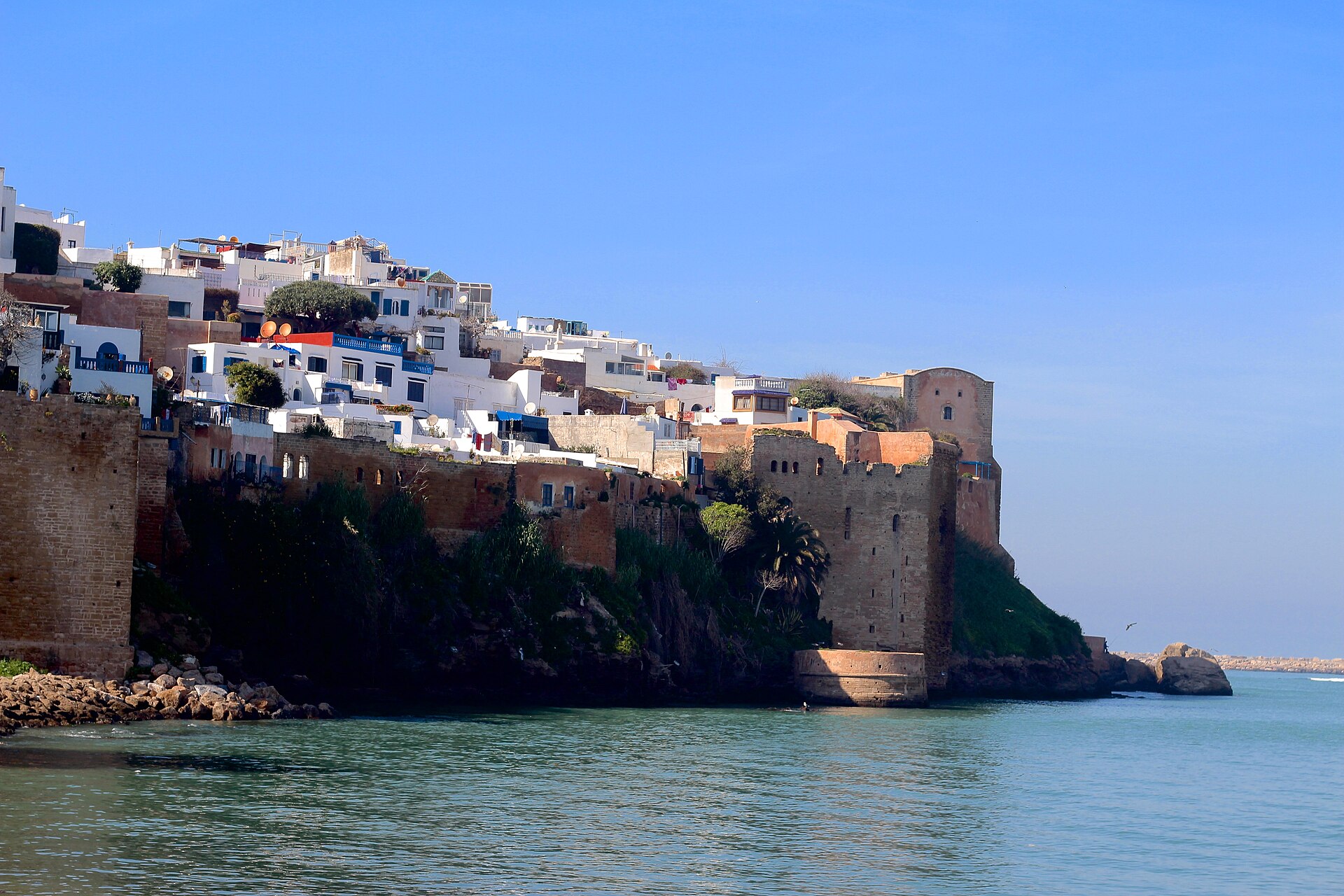
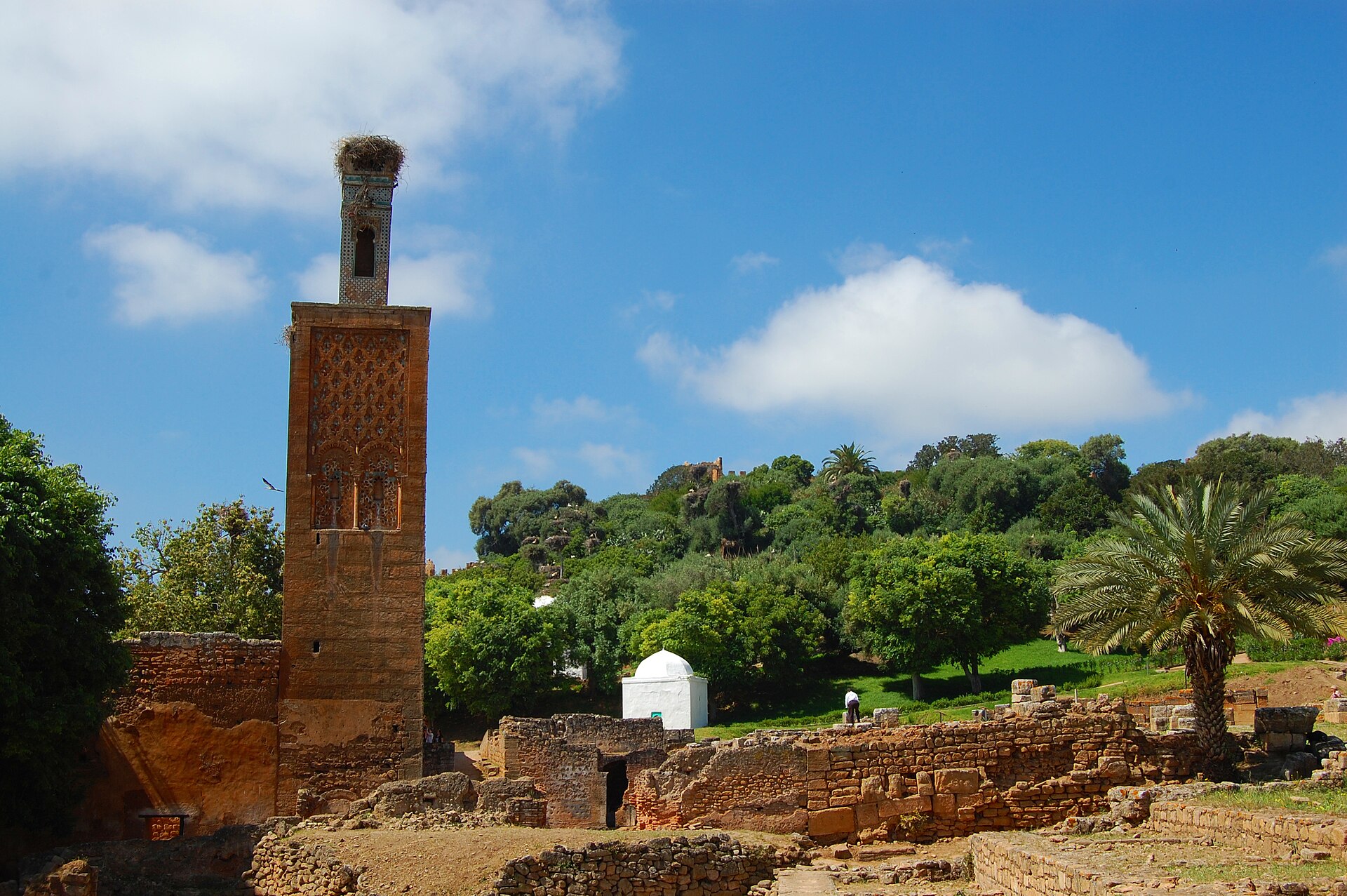
The day follows the city's eras. In the morning, the Kasbah of the Udayas, above the mouth of the Bouregreg, then the medina. In the afternoon, the Hassan Tower, the unfinished minaret of the mosque begun in 1184, and the Mohammed V Mausoleum next to it. Late in the day, the Chellah: the Roman ruins of Sala Colonia and the Marinid necropolis, reopened in May 2024 after restoration, with an audio-guided route. In the evening, dine at the Sofitel, whose restaurants also draw a local crowd.
One night means choosing. To add the Mohammed VI Museum of Modern and Contemporary Art or an evening at the Royal Theatre, designed by Zaha Hadid, you need a second night.
Tangier: two days on the Strait
Day 4. From Rabat Agdal, 1 h 20 by train to Tangier Ville. The station is a 30 to 35-minute walk from the medina; a petit taxi costs about 20 dirhams. The Fairmont Tazi Palace occupies a 1926 palace on Boubana hill, less than ten minutes from the centre by car. In the afternoon, the medina level by level: the Grand Socco and the Mendoubia gardens, the Petit Socco, then the kasbah, where the former sultan's palace houses a museum of Moroccan arts.
Day 5. The day trip listed in this itinerary goes to Cape Spartel, facing the Atlantic, the Caves of Hercules, then Asilah, a white medina inside 15th-century Portuguese walls. In the evening, the Fairmont has seven restaurants and bars, including Origin Bar for a last drink.
Day 6. Fly from Tangier-Ibn Battouta airport, about twenty minutes from the hotel, or return to Casablanca in 2 h 17 for a flight from Mohammed V airport.
Season
The ocean tempers the two southern cities on this trip. According to the 1991–2020 normals of the WMO (World Meteorological Organization), the August average maximum is 26.7 °C at Casablanca-Anfa and 27.8 °C at Rabat-Salé. This trip works in summer, when inland Morocco is scorching. Winter is mild but wetter: Casablanca gets 84 mm of rain in November, over about seven days. Spring and autumn remain the most pleasant seasons for walking in town.
Read next
Frequently asked questions
How long does the Al Boraq journey take?
Tangier to Casablanca in 2 h 17, Tangier to Rabat in 1 h 20, Casablanca to Rabat in about an hour. The train also stops at Kenitra.
Should I book tickets in advance?
It is advisable for the best price: in 2nd class, fares rise as departure approaches. Booking opens three months ahead on oncf-voyages.ma; every ticket includes a reserved seat.
Can I visit the Hassan II Mosque?
Yes, with a guide: 140 dirhams for a foreign adult, 30 dirhams from 4 to 12, free under 4. A private tour for up to ten people costs 2,200 dirhams and must be booked.
Can I add Fez?
Yes: from Tangier, Al Boraq to Kenitra then a classic train reach Fez in about 3 h 25. Sabaro then recommends three days there.
A travel advisor replies by email. Free, no commitment.