Nuweiba, Taba and Abu Galum
On the east coast of Sinai, between Dahab and the Israeli border, Nuweiba and Taba line the Gulf of Aqaba: Bedouin camps by the water, reefs reachable from the shore, Pharaoh's Island and its Saladin citadel. For travellers looking for quiet, independent divers and those who want to cross to Jordan by sea.
A coast of Bedouin camps
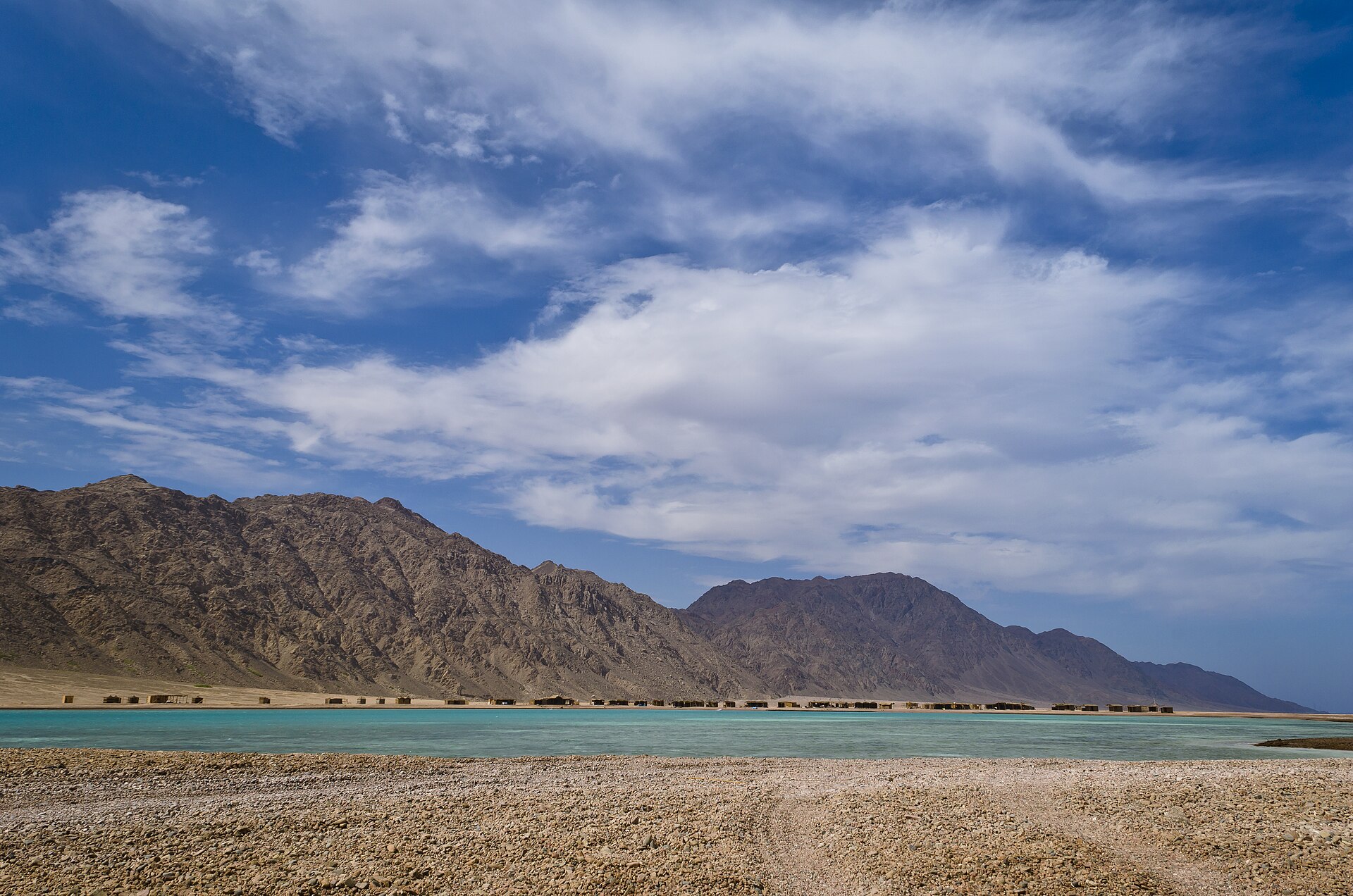
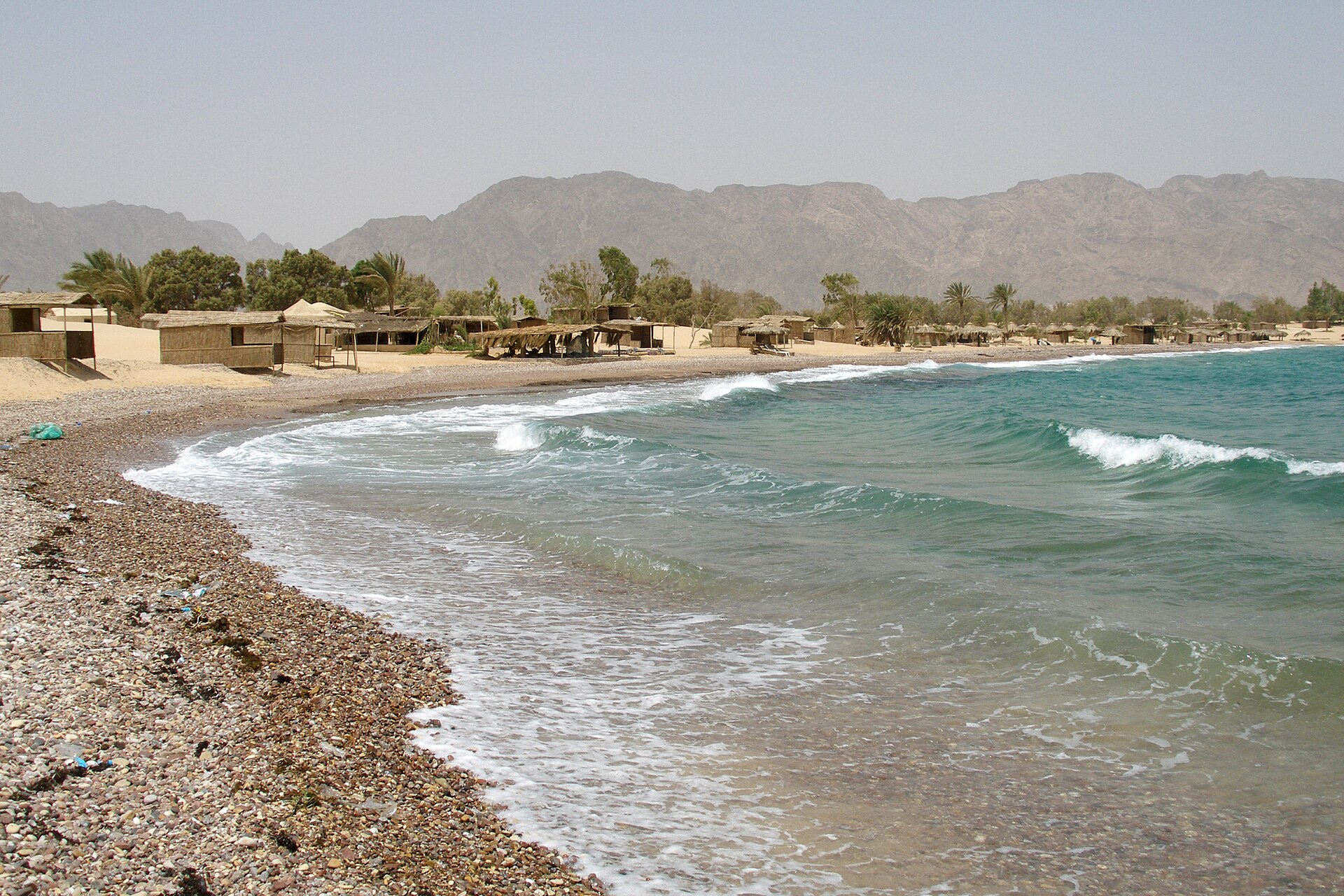
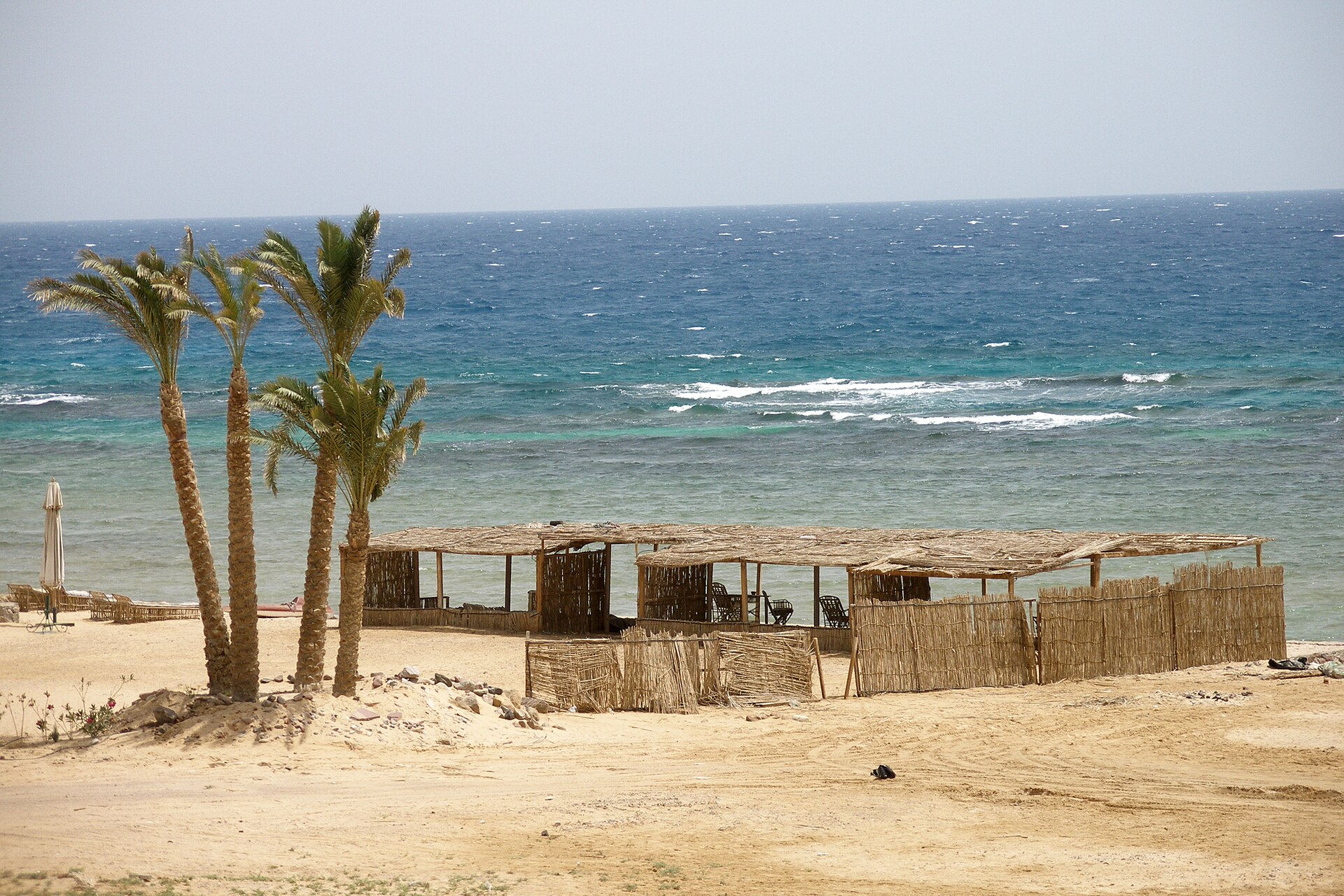
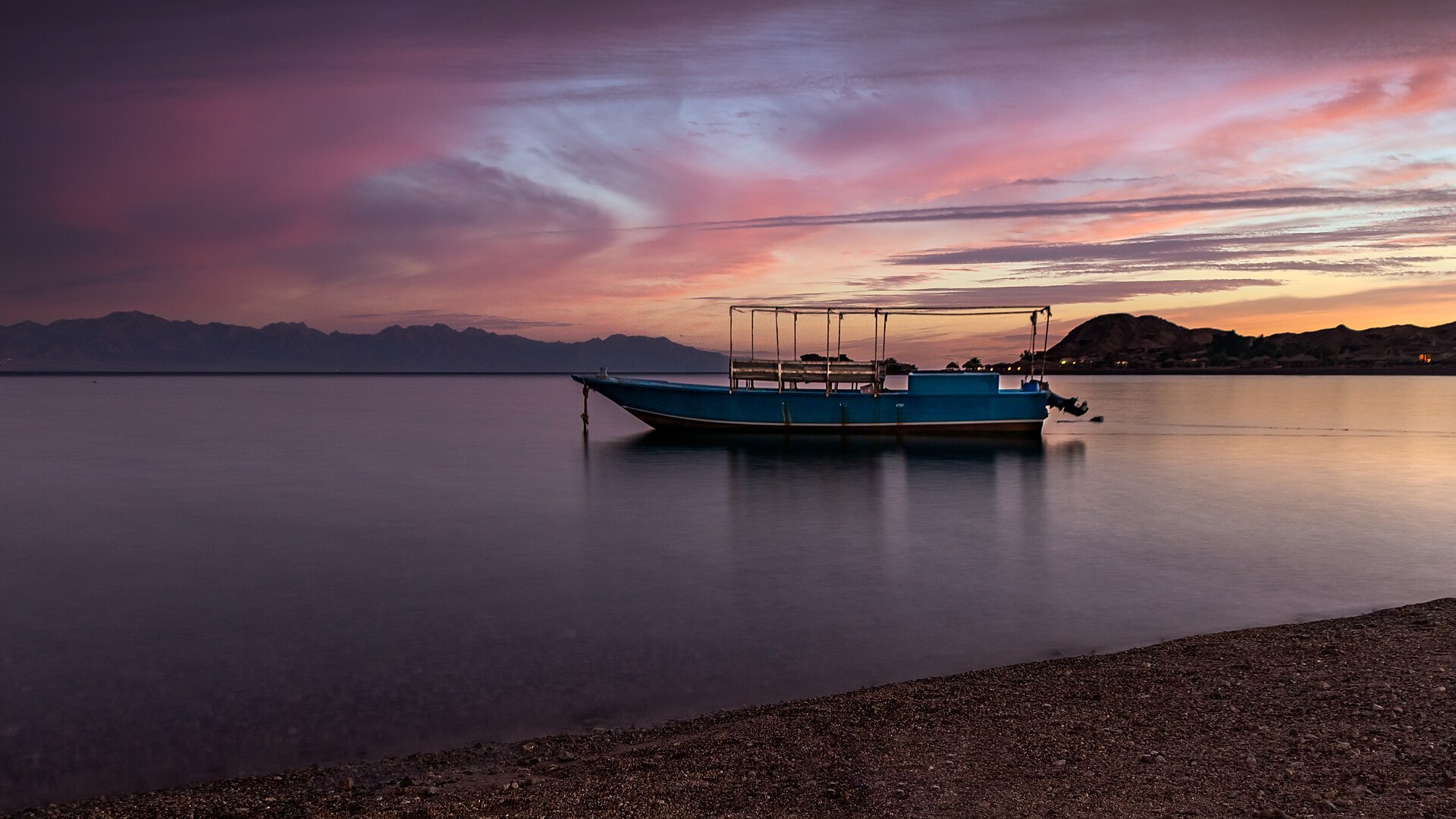
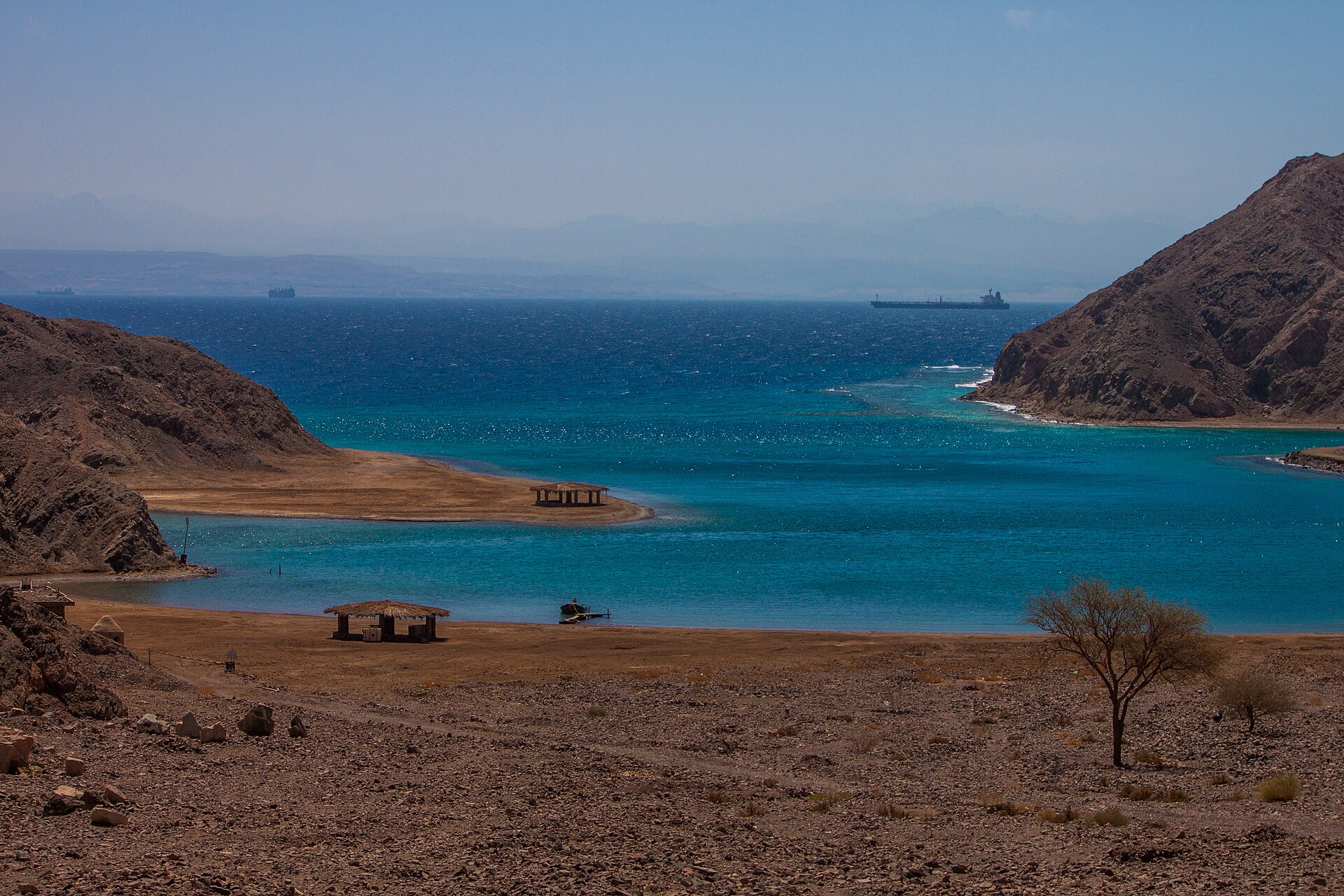
From Nuweiba to Taba, the road follows the Gulf of Aqaba for about 65 km, between the sea and a rust-coloured mountain range. Camps and small hotels are scattered along the shore, from the simplest to the more comfortable: palm or bamboo huts on the sand, a few steps from turquoise water. Many of these camps are owned or run by Bedouins. Basata, an eco-lodge opened in 1986 on the Taba road, is one example.
In the evening, people gather around the fire, with stories, poetry, music and sweet tea flavoured with marmareya, mountain sage, or habak, a mint-like herb. Bedouin women go from camp to camp selling their crafts.
Nuweiba is a small port town, once a resting place for pilgrims on the road to Mecca and home to the Tarabin and Muzeina Bedouin tribes. Occupied by Israel after the 1967 war, it grew after the withdrawal, when the port was built. It has three parts: the port, where ferries leave for Jordan, with several hotels between the town and the quays; Muzeina, the centre, with banks, a hospital and shops; and Tarabin, about 3 km away, with its beach restaurants.
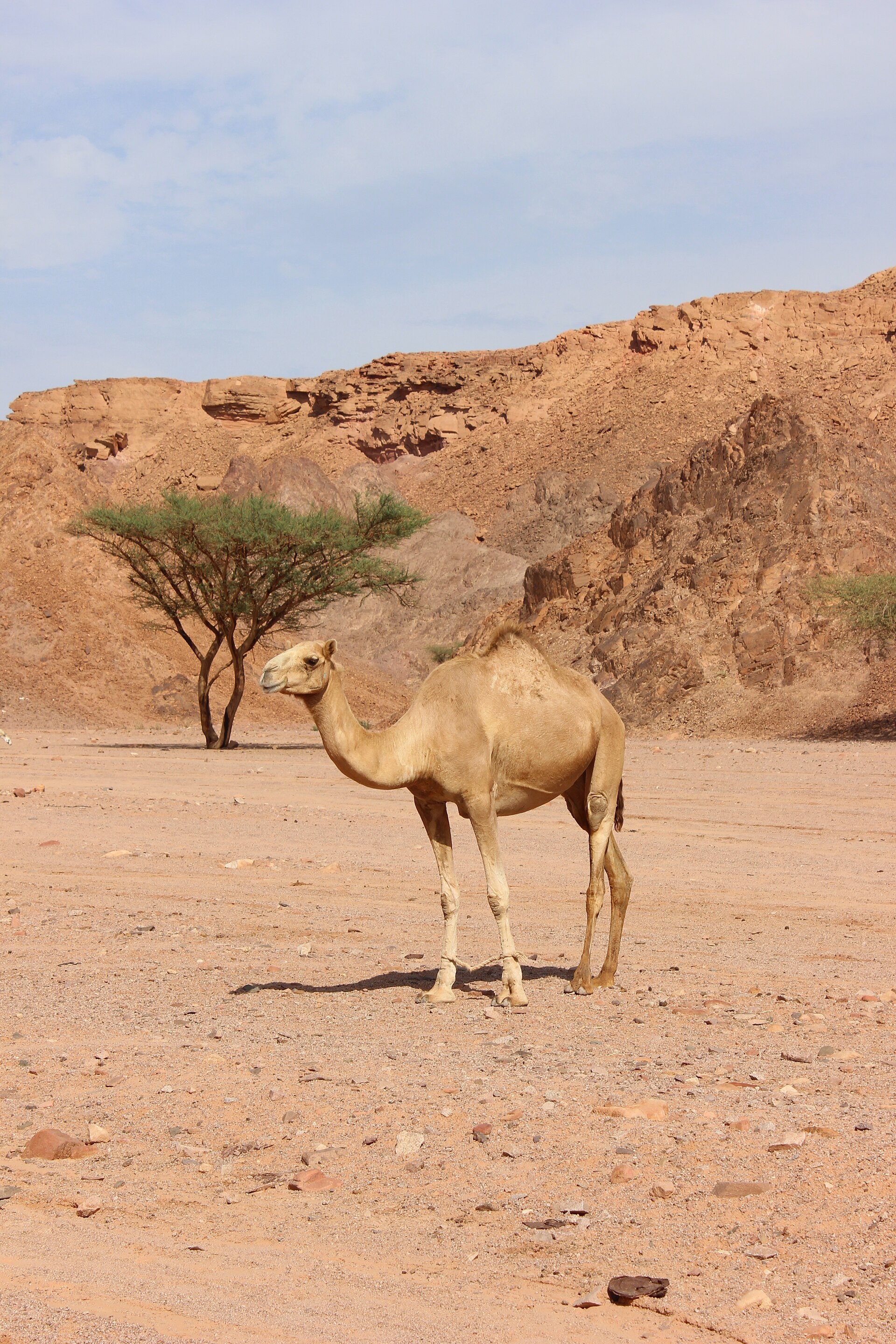
Abu Galum, south of Nuweiba on the road to Dahab, has been a protected area since 1992: 500 km² of mountains dropping into the sea, coral reefs and valleys where the Nubian ibex lives. It is most often reached from Dahab, by car and then boat.
Diving far from the chambers
In Nuweiba, almost all dive sites are reachable from the shore: a 4x4 drops the divers at the site, there is Bedouin tea or coffee between dives, and you are back at the hotel in the afternoon. The gardens of hard and soft coral shelter razorfish and stonefish and, for those who look closely, frogfish, seahorses and nudibranchs. The Abou Lou Lou House reef suits beginners and experienced divers alike and serves as a cleaning station for larger fish.
In Taba, sites are mostly reached by boat, some from the hotel beach. The sea is generally calm with no current, which makes it a good place to learn, and it is home to a rare frogfish species and several seahorse species. Sixteen mooring buoys equip the busiest sites; Pharaoh's Island and the Fjord are the best known.
The rule of caution. There is no decompression chamber in Nuweiba or Taba: in case of an accident, a foreign diver is evacuated to Eilat, in Israel. On the Egyptian side, the nearest is in Dahab. Sabaro therefore advises dives without mandatory decompression stops, and insurance that explicitly covers medical evacuation to a neighbouring country.
Taba, Pharaoh's Island and the border
Taba is the last Egyptian town at the head of the gulf, facing Eilat. Claimed by both Israel and Egypt after the 1979 peace treaty, it was awarded to Egypt by an international arbitration commission, and the Egyptian flag was raised there on 19 March 1989. Taba Heights, a resort about 20 km south, holds some of the hotels. The surrounding mountains have been a protected area since 1998.
Pharaoh's Island lies about 250 m offshore, a short boat ride away. Its citadel, 65 m by 32.5 m, controlled the passage between the three shores of the Gulf of Aqaba. The Crusaders had built a fortress there and held passing pilgrims to ransom; Saladin seized it in 1171 and had it rebuilt. Behind the ramparts, restored in 1986, you can visit the governor's residence, a three-room hammam, a mosque, cisterns cut into the rock, a pigeon loft for the post and an arrowhead workshop dated by an inscription of Saladin. The island has been on the UNESCO (United Nations Educational, Scientific and Cultural Organization) World Heritage Tentative List since 2003, the step before a possible inscription.
The border. Taba lies at the end of the Suez–Taba line: north of this line, travel is advised against; your ministry's advice appears in the "Travel advice" table on this page. The border crossing with Israel may close at short notice. For travellers entering at Taba and staying in Taba, the border tax is 20 US dollars; to go further within Sinai, it is 120 dollars, with a stamp for up to 15 days; these amounts have risen several times since March 2026.
Planning your stay
Getting there. Sabaro arranges arrival through Sharm el-Sheikh airport, about 170 km from Nuweiba, two hours by road, in daylight: travelling at night outside towns and tourist sites should be ruled out. The free stamp issued at Sharm el-Sheikh airport covers Nuweiba and Taba for up to 15 days. On the coast, secured hotels are recommended.
The interior. Palm groves, oases and springs are hidden in the mountains, and you need a guide to find them. Depending on your ministry, the northern part of South Sinai beyond the St Catherine–Nuweiba road, outside the coastal areas, may be advised against ("Travel advice" table on this page): before any trip to the canyons or oases, Sabaro has a local operator confirm the route.
Crossing to Jordan. The Nuweiba–Aqaba ferry crosses the gulf in about 1 h 30 by fast boat, plus an hour for boarding; arrive two to three hours early for formalities. It opens the way to Petra. On the way back, you need a standard Egyptian visa if your stay exceeds 15 days or extends beyond Sinai: 30 US dollars at Nuweiba, 35 dollars at Taba Heights, which is also served from Aqaba.
How many days. Three or four nights are enough for the rhythm of the camps, two or three mornings of diving and Pharaoh's Island. With Petra, add two days.
What to see
- Pharaoh's Island, Saladin's citadel — about 250 m off the Taba shore; taken from the Crusaders by Saladin; on the World Heritage Tentative List since 2003 UNESCO (liste indicative, réf. 1828)
- Taba protected area — designated in 1998; geological formations, rare wildlife, Bedouin culture experienceegypt.eg
- Abu Galum protected area — designated in 1992, 500 km²; coastal mountains, coral reefs, Nubian ibex PNUD (Programme des Nations unies pour le développement)
- Coloured Canyon — canyon with coloured walls, especially in late afternoon; access with a guide Wikivoyage (de)
- Abou Lou Lou House reef, Nuweiba — shore diving and snorkelling, for beginners and experienced divers experienceegypt.eg
Getting there
- Taba International Airport (TCP), about 80 km and 1 hour by taxi from Nuweiba Wikivoyage (de)
- Sharm el-Sheikh airport, about 170 km and 2 hours by taxi from Nuweiba; Taba–Nuweiba: 65 km, about 1 hour Wikivoyage (de)
- Nuweiba–Aqaba (Jordan) ferry: about 1 h 30 crossing by fast boat, 3 hours by slow boat, plus formalities Wikivoyage (de)
By air
| Airport | By road | Direct flights |
|---|---|---|
| Sharm el-Sheikh (SSH) | 153 km, 1h54 |
|
| Taba (TCP) | 86 km, 1h20 |
Read next
Travel advice
| Country | Official advice | Source |
|---|---|---|
| France | South Sinai coast (Taba, Nuweiba): prefer secured hotels. North of a Suez–Taba line and on the Israeli border: advised against. No decompression chamber in Nuweiba or Taba (evacuation to Eilat, Israel) | diplomatie.gouv.fr (Site last updated 21 September 2026) |
| United Kingdom | East and west coasts of South Sinai outside the advised-against area; all but essential travel advised against in the north of South Sinai, beyond the St Catherine–Nuweiba road; the Taba border crossing may close at short notice | GOV.UK (Site last updated 4 August 2026) |
| Netherlands | North Sinai, north of the Suez–Taba line, red (high risk of attack, border area with Israel and Gaza unsafe, travel banned by the Egyptian authorities); central Sinai north of the St Catherine–Nuweiba road orange (military activity, access only with permission from the local authorities) | Nederland Wereldwijd (Site last updated 19 June 2026) |
| Belgium | Not checked by Sabaro: see diplomatie.belgium.be | |
| Switzerland | Not checked by Sabaro: see DFAE (eda.admin.ch) | |
| Luxembourg | Not checked by Sabaro: see mae.gouvernement.lu | |
| Ireland | Not checked by Sabaro: see ireland.ie (DFA) | |
| Germany | Not checked by Sabaro: see Auswärtiges Amt | |
| Sweden | Not checked by Sabaro: see Regeringen (UD) | |
| Denmark | Not checked by Sabaro: see Udenrigsministeriet (um.dk) | |
| Norway | Not checked by Sabaro: see Regjeringen | |
| Poland | Not checked by Sabaro: see Odyseusz (MSZ) | |
| Czechia | Not checked by Sabaro: see MZV ČR | |
| Austria | Not checked by Sabaro: see BMEIA | |
| Italy | Not checked by Sabaro: see Viaggiare Sicuri | |
| Spain | Not checked by Sabaro: see exteriores.gob.es | |
| Portugal | Not checked by Sabaro: see Portal das Comunidades | |
| Finland | Not checked by Sabaro: see Ulkoministeriö (um.fi) | |
Rules change: always check the official website before you travel.
Frequently asked questions
Which airport should I choose?
Sharm el-Sheikh, about 170 km and two hours by road from Nuweiba: this is where the free stamp covering Nuweiba and Taba for 15 days is issued, and Sabaro arranges a daytime transfer from there.
Is it safe to dive?
Yes, with a centre registered with the Egyptian diving chamber and cautious dive plans. There is no decompression chamber in Nuweiba or Taba: in case of an accident, evacuation is to Eilat, in Israel, and the nearest Egyptian chambers are in Dahab.
Can I cross to Jordan?
Yes, by the Nuweiba–Aqaba ferry: about 1 h 30 by fast boat, plus an hour for boarding; arrive two to three hours early for formalities.
How do I visit Pharaoh's Island?
By boat from Taba: the island is about 250 m offshore. You can visit the citadel Saladin took from the Crusaders in 1171, and dive or snorkel around the island.
A travel advisor replies by email. Free, no commitment.