Siwa Oasis
Siwa, an Amazigh oasis in the Western Desert about 300 km south-west of Marsa Matrouh, brings together springs, salt lakes, ancient temples and the dunes of the Great Sand Sea. For travellers willing to take a long road in exchange for three or four days apart, ideally between November and March.
An oasis of its own
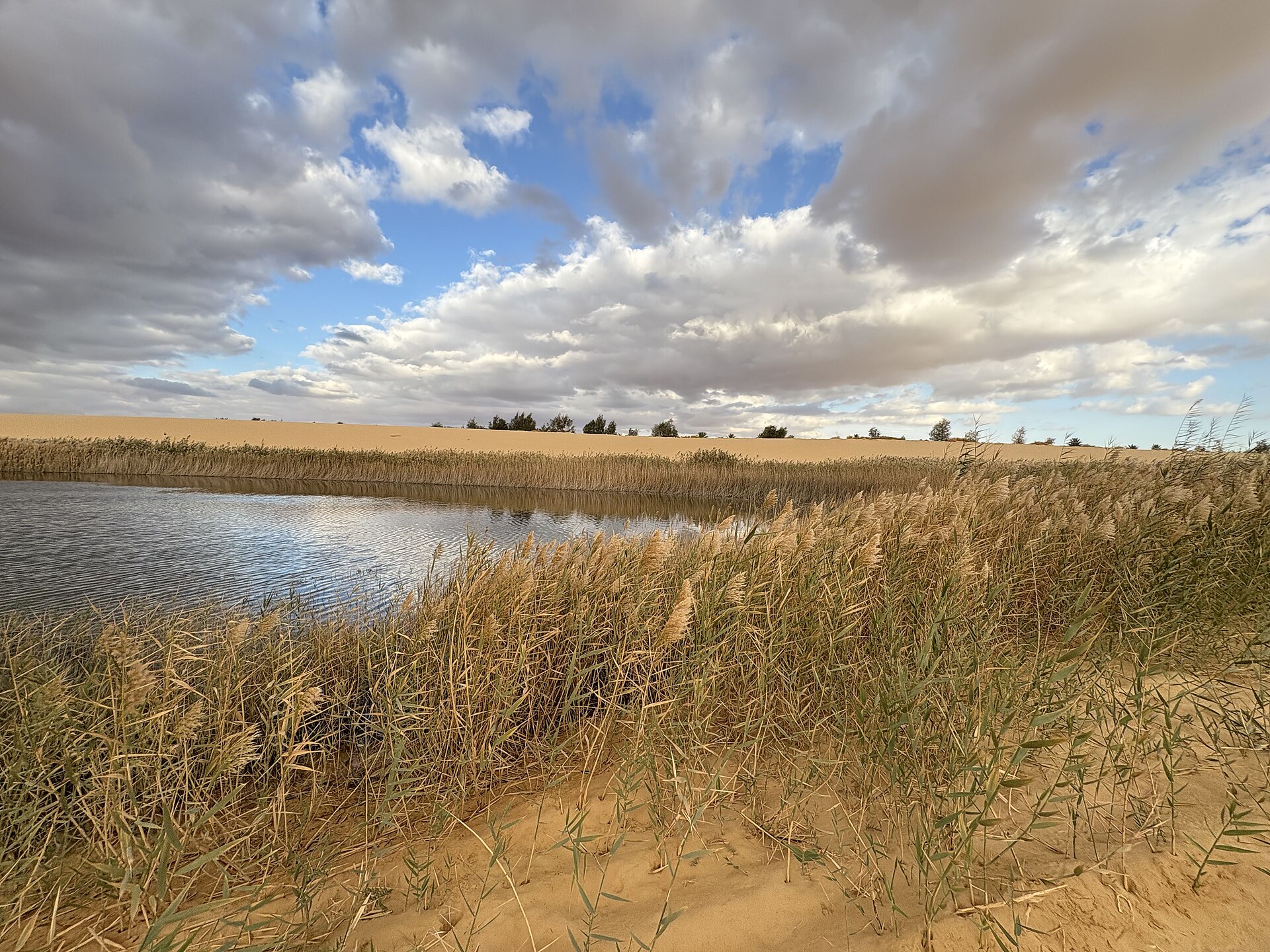
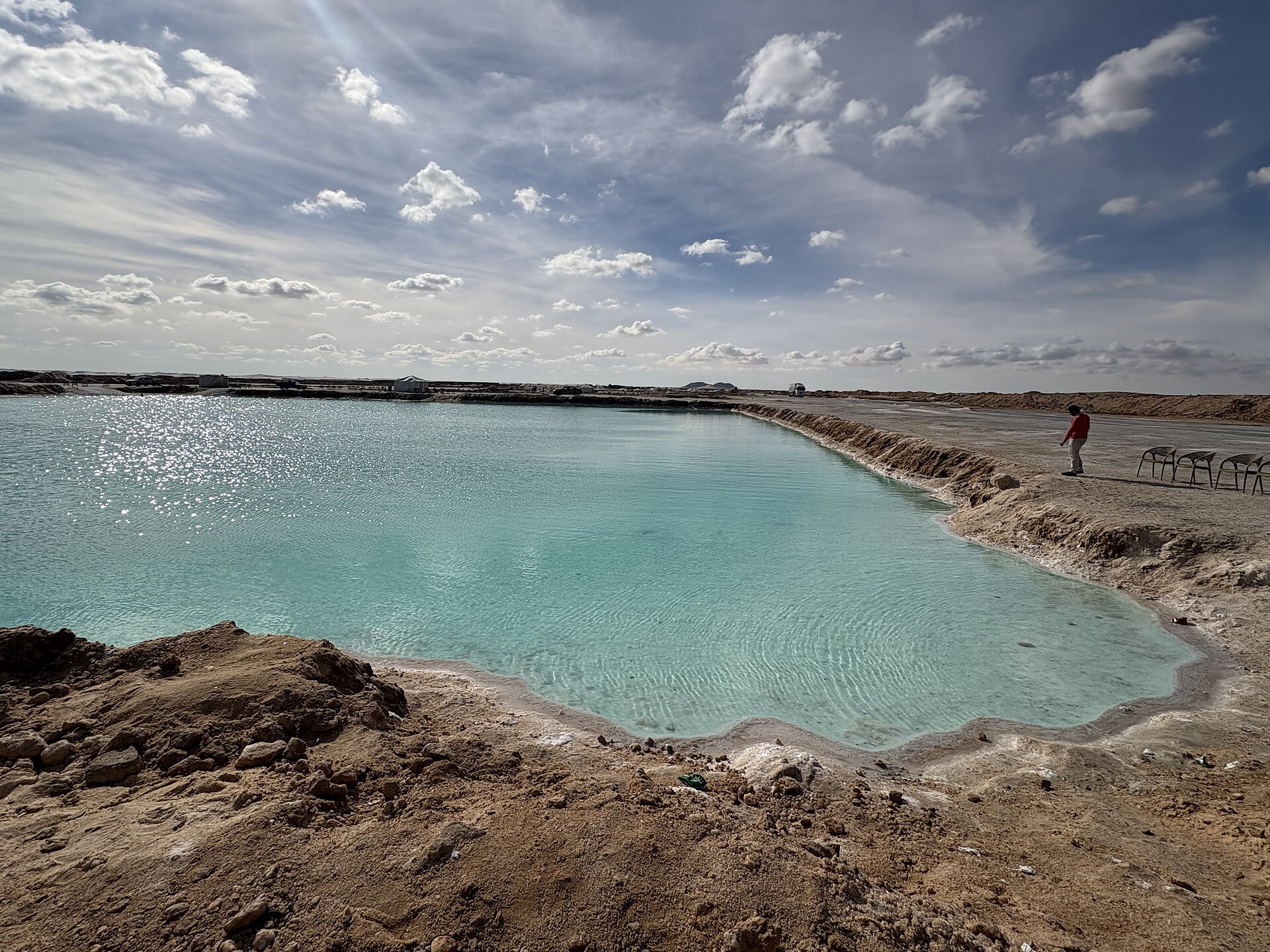
Siwa is the most remote of the five Western Desert oases. It lies in a depression about 80 km by 20, at sea level or a few metres below, some fifty kilometres from the Libyan border. All its water comes from a fossil aquifer, rain that fell tens of thousands of years ago and is not renewed. Most of it is salty: hence the large bitter lakes that surround the town and draw migrating birds.
Its people are Amazigh (Berber). Their mother tongue is Siwi, a Berber language; they also speak Egyptian Arabic. This culture, handed down through storytelling and festivals, sets Siwa apart from Egypt's other oases. The Egyptian tourist board describes it as an "urban" oasis: a single real town, surrounded by palm groves, olive groves and a few villages.
Getting there along the coast
Siwa is reached by road. The standard route follows the Mediterranean to Marsa Matrouh, then heads south-west for about 300 km of tarmac across a desert with no petrol station and one café halfway. Allow about 4 hours from Marsa Matrouh, and a long day from Cairo or Alexandria.
The road linking Siwa to Bahariya Oasis is closed by the military. A trip combining Siwa with the White Desert therefore detours via Cairo and the coast: that is the choice made by Sabaro's nine-day trip idea, which places Giza and Alexandria between the two. Your ministry's advice for the town and its roads appears in the "Travel advice" table on this page.
Sabaro advises leaving early and driving in daylight: driving at night outside towns and tourist sites should be ruled out. Expect police checkpoints on the road; keep your passport within reach.
Three nights at least
The road is long; three nights on site is the minimum to make it worthwhile. A possible outline:
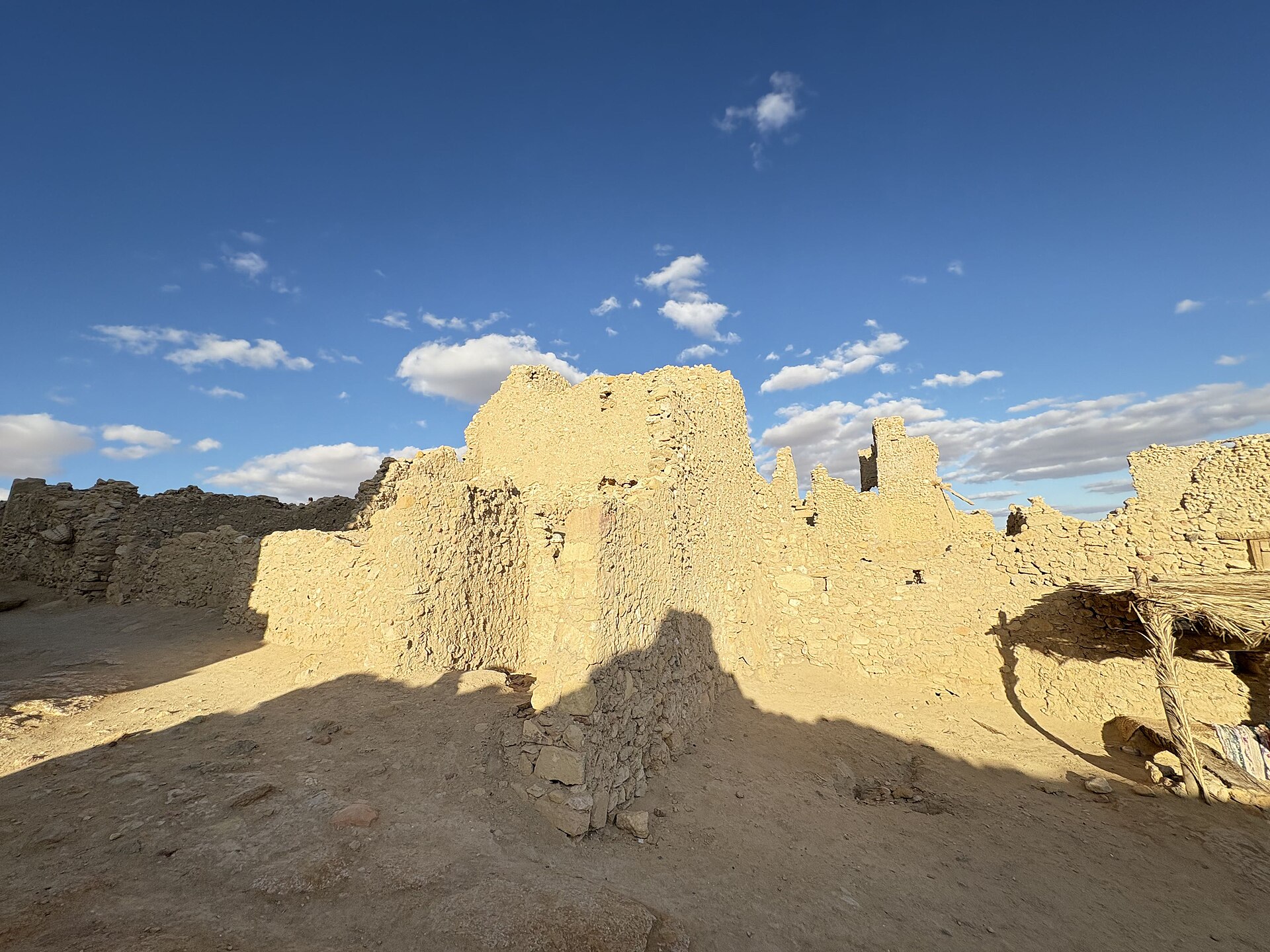
- The town and the Shali fortress. The old fortified town, some eight centuries old, is built of kershef, a mix of salty clay and stone that hardens as it dries and insulates against the heat. It remained the heart of Siwa until the 1920s. Its restoration, funded mainly by the European Union (about 600,000 euros), was inaugurated in late 2020 together with that of the Aghurmi Mosque, which the Ministry of Tourism and Antiquities presents as the oldest mud-built mosque in Africa.
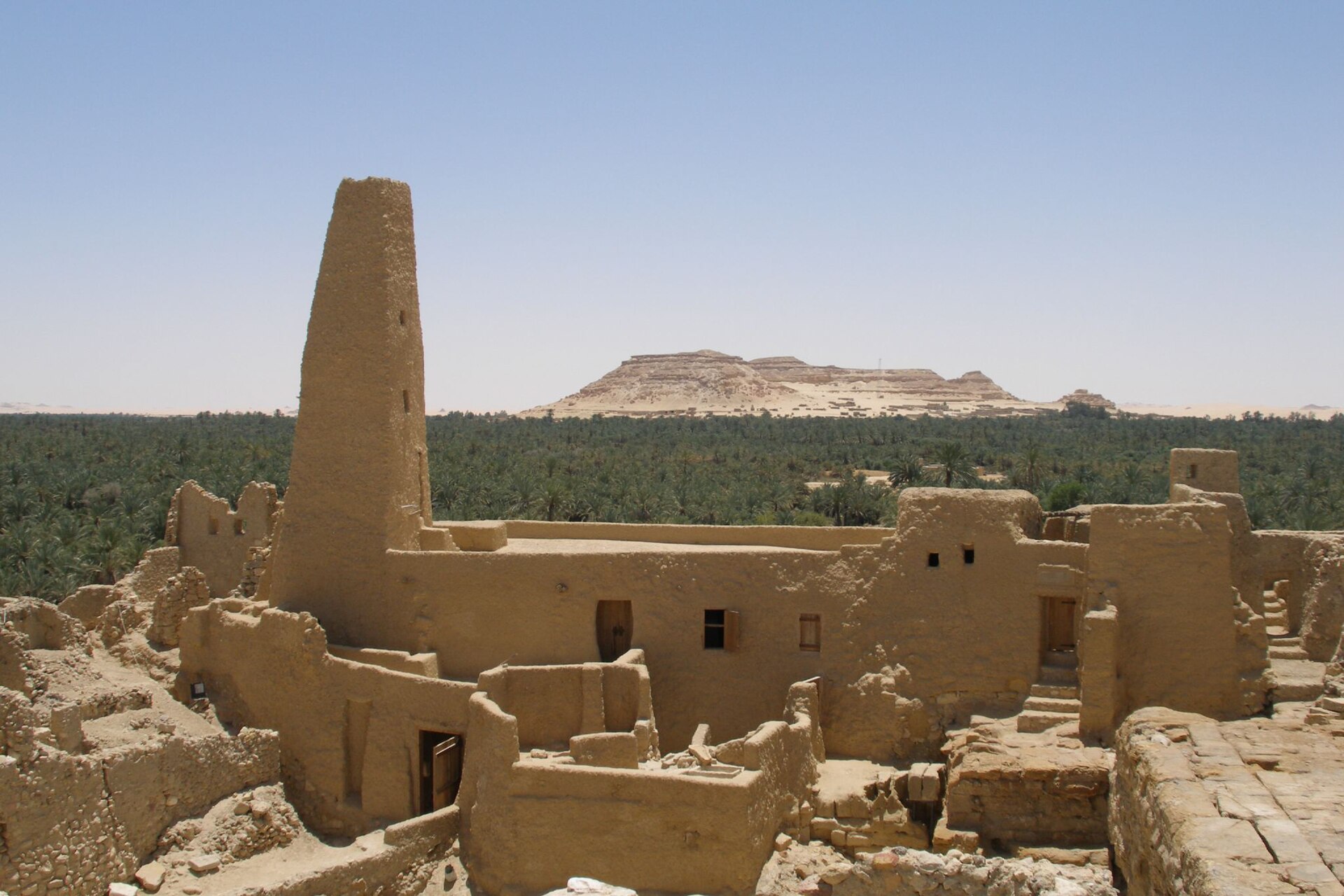
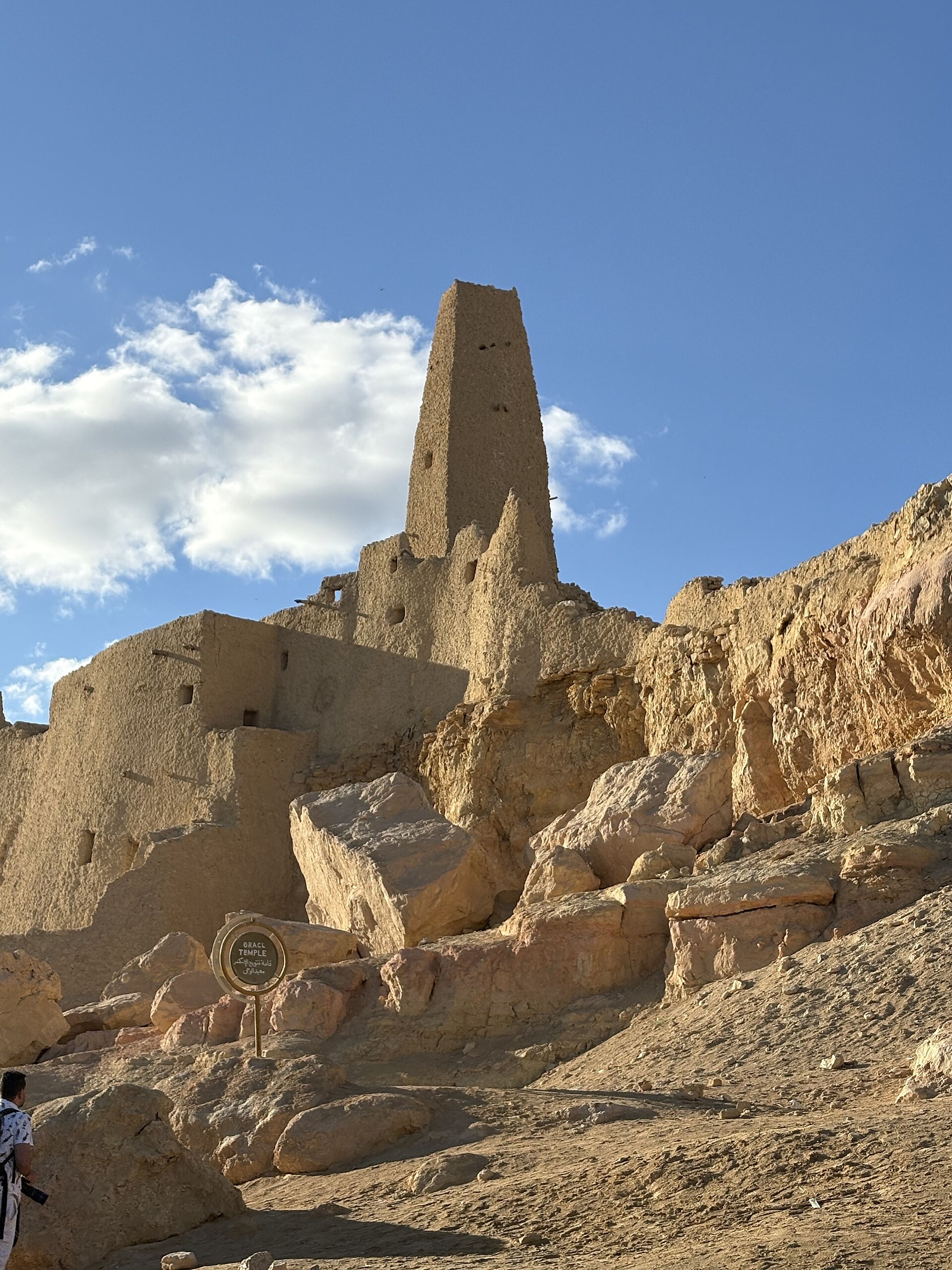
- The Temple of the Oracle of Amun, at Aghurmi. This is the oasis's great ancient site. In 331 BC Alexander the Great came to consult the oracle of Amun, and drew from it the legitimacy of his rule over Egypt. Nearby, only one wall of the Temple of Umm Ubayda still stands: an Ottoman governor blew it up in 1897 to reuse the stone.
- Gebel al-Mawta, the "Mountain of the Dead". A hill riddled with rock-cut tombs, mostly Ptolemaic and Roman; the Tomb of Si-Amun keeps painted reliefs. Photography is forbidden in the main tombs.
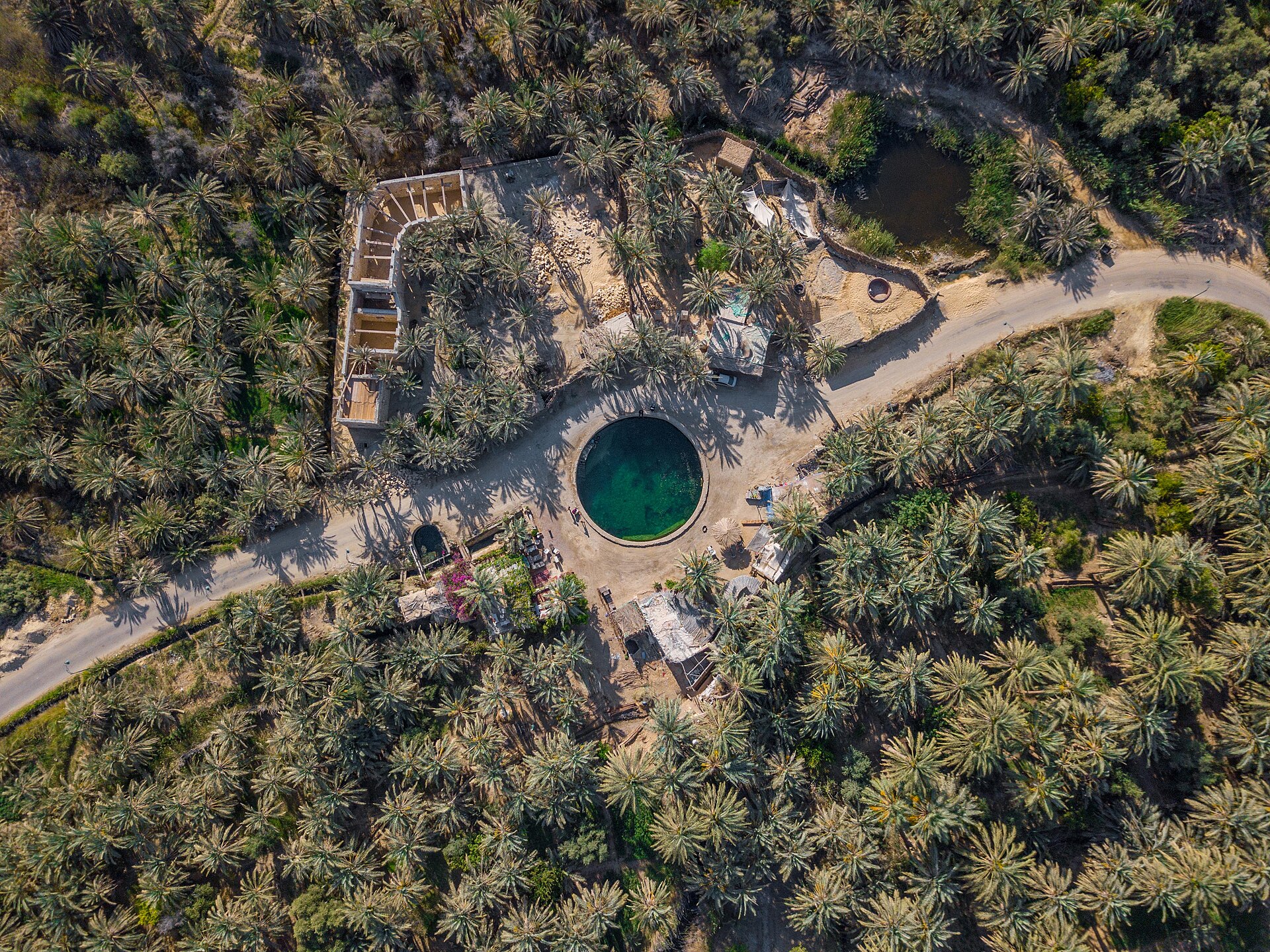
- Springs and lakes. Cleopatra's Bath, a natural pool fed by a warm spring, is the most popular place to swim. On the salt lakes you float effortlessly. At the end of the day, Fatnas Island, now joined to the shore, is the usual viewpoint for the sunset.
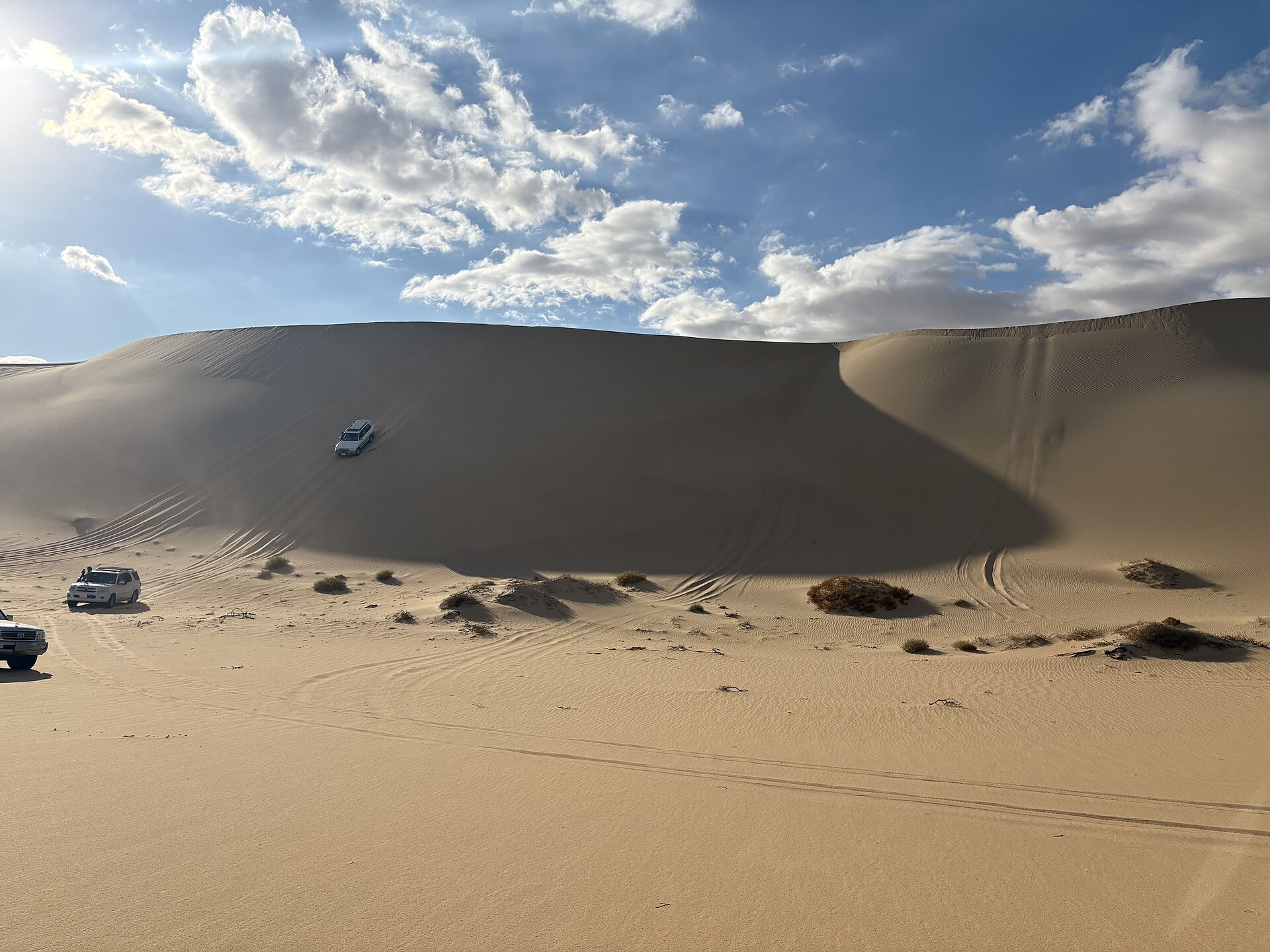
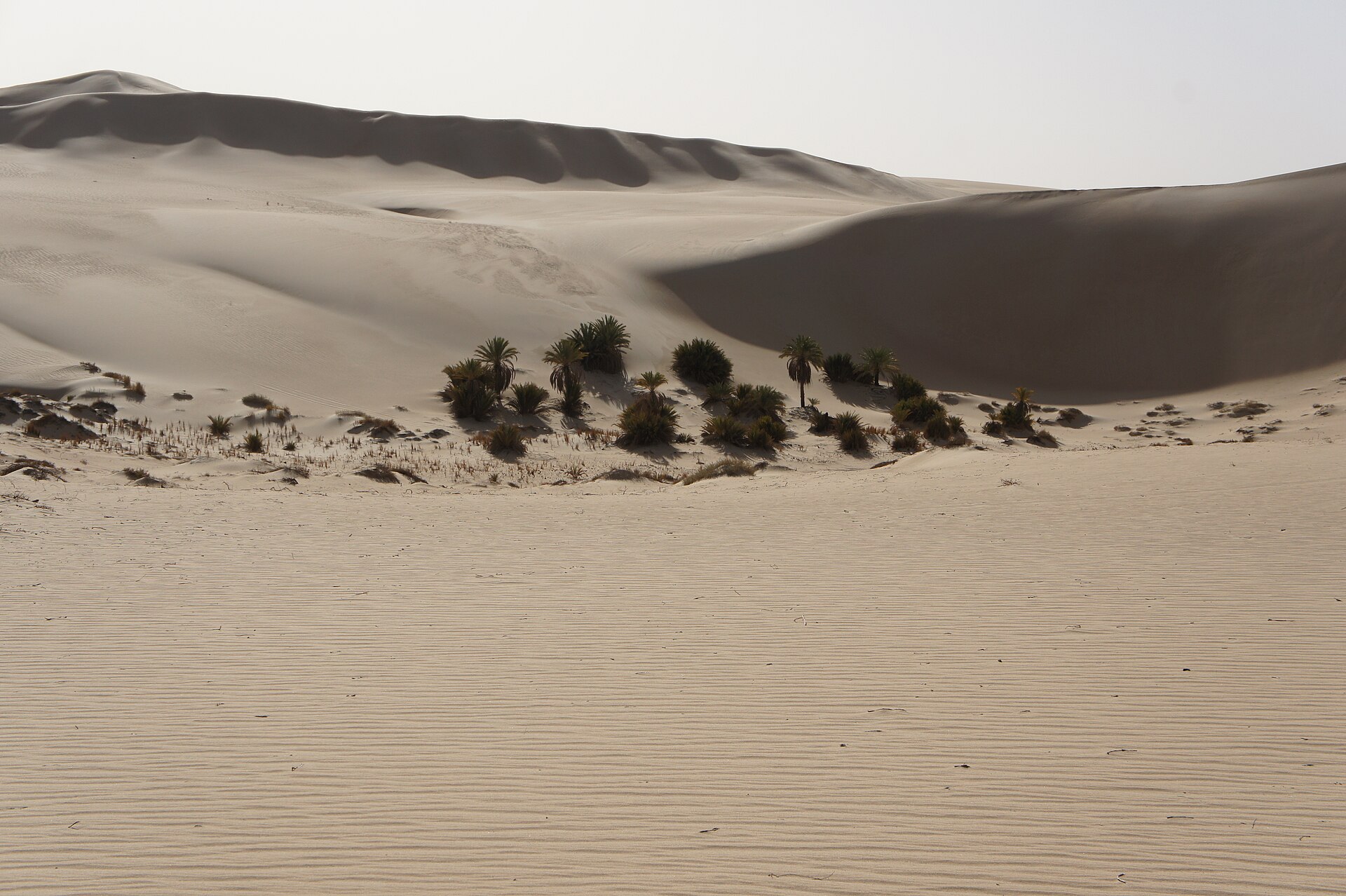
- The Great Sand Sea. Half a day or a night by 4x4 in the dunes, as far as Bir Wahed, a hot spring in the middle of the sand next to a cold-water lake. These trips require a permit, which the local guide obtains with a copy of your passport.
Where to stay
Where you stay depends on how close to town you want to be:
- Adrère Amellal, at the foot of the jebel of the same name, is the most singular address: a mud-brick ecolodge with no electricity, lit by candles, full board with drinks and two excursions a day included. It is the base of Sabaro's trip idea.
- Taziry Ecolodge, 16 km west of the centre at the foot of the Red Mountain, follows the same approach: natural materials, rooms without electricity, horse rides and 4x4 trips.
- In town, kershef guesthouses such as Shali Lodge let you walk to the market and the fortress.
In both ecolodges, rooms have neither air conditioning nor a socket to charge a phone: that is the price of silence and starry skies.
Local customs
Siwa is a conservative society. Alcohol is not drunk in public, nor is affection shown, and clothing covering shoulders and legs is expected. Male travellers avoid approaching the women of the oasis. People get around by bicycle, donkey cart or car with driver; agree the price of a cart ride before setting off.
To bring home: dates, reputed to be the best in Egypt, olive oil, palm-leaf baskets and Siwan embroidery in red, orange, green and black, set off with beads and shells.
Seasons and the Siyaha festival
The good season runs from November to March: mild days, cold nights that drop to around 5 °C in winter. From June to August the average maximum nears 39 °C; Adrère Amellal then limits occupancy to ten rooms.
In October, at the full moon, the people of the oasis gather for three days at the foot of Gebel Dakrour for the Siyaha, the festival of reconciliation and of the date harvest. It is a community festival with no ticketing; the exact days are decided locally, shortly before.
The limits of the desert
South of Siwa, a zone closed to civilians and vehicles has been in place since 2014; it must be strictly respected, on pain of arrest. The area near the Libyan border is also advised against. Trips to the west and south of the oasis are therefore made with a local guide who knows these limits.
What combines with Siwa
- Alexandria and El Alamein, on the coast road: Alexander's city, then the Second World War museum and cemetery.
- The White Desert and Bahariya, via Cairo: the Western Desert's other great landscape, with a night under canvas.
- Cairo and Giza, at the start or end of the trip.
What to see
- Cleopatra's Bath experienceegypt.eg
- Bir Wahed experienceegypt.eg
- Great Sand Sea experienceegypt.eg
- Amazigh culture experienceegypt.eg
- Temple of the Oracle and Temple of Amun (Umm Ubayda) — temples on Egypt's UNESCO tentative list (Siwa archaeological area) whc.unesco.org
When to go
Climate in Siwa
| Jan | Feb | Mar | Apr | May | Jun | Jul | Aug | Sep | Oct | Nov | Dec | |
|---|---|---|---|---|---|---|---|---|---|---|---|---|
| Max. (°C) | 20.2 | 21.8 | 25.6 | 30.2 | 34.4 | 37.8 | 39.1 | 38.7 | 36.2 | 31.3 | 25.6 | 21.3 |
Source: Meteostat, normales 1991-2020 de la station de Siwa — 1991-2020 normals computed by Meteostat from station observations, accessed 14 October 2026
Getting there
- About 309 km from Marsa Matrouh, about 4 hours by road; no commercial airport Rome2rio
By air
| Airport | By road | Direct flights |
|---|---|---|
| Marsa Matruh (MUH) | 308 km, 3h56 |
Hotels chosen in the region
| Hotel | Category | Suits | Guest rating | Indicative price |
|---|---|---|---|---|
| Adrère Amellal | Mud-brick eco-lodge | Desert, Character hotels, Family | 4,7/5 (Tripadvisor) | Price on request |
| Taziry Ecolodge (Taziry Ecovillages Siwa) | Off-grid ecolodge built from natural materials (30 rooms) | Desert, Boutique and historic hotels, Family | 4,7/5 (Tripadvisor) | Price on request |
Chosen activities
- Private 5-day tour of Alexandria and Siwa Oasis, from Cairo — 5 days · from 529 € per person
Public price collected on: Civitatis — accessed 14 October 2026
Upcoming events
- 14 October 2027 – 16 October 2027 Siyaha Festival in Siwa (estimated date)
Read next
Travel advice
| Country | Official advice | Source |
|---|---|---|
| France | Increased vigilance (yellow), police checkpoints, guide or agency strongly recommended; area south of Siwa closed to civilians | diplomatie.gouv.fr (Site last updated 21 September 2026) |
| United Kingdom | Matrouh–Siwa road and Siwa town excluded from advised-against areas; Bahariya–Siwa road advised against except essential travel; all travel advised against within 20 km of the Libyan border | GOV.UK (Site last updated 4 August 2026) |
| Netherlands | Town of Siwa excluded from the orange zone in the west of the country, to be reached by the secured Highway 19; Libyan border area red (arms smuggling, kidnappings) | Nederland Wereldwijd (Site last updated 19 June 2026) |
| Belgium | Not checked by Sabaro: see diplomatie.belgium.be | |
| Switzerland | Not checked by Sabaro: see DFAE (eda.admin.ch) | |
| Luxembourg | Not checked by Sabaro: see mae.gouvernement.lu | |
| Ireland | Not checked by Sabaro: see ireland.ie (DFA) | |
| Germany | Not checked by Sabaro: see Auswärtiges Amt | |
| Sweden | Not checked by Sabaro: see Regeringen (UD) | |
| Denmark | Not checked by Sabaro: see Udenrigsministeriet (um.dk) | |
| Norway | Not checked by Sabaro: see Regjeringen | |
| Poland | Not checked by Sabaro: see Odyseusz (MSZ) | |
| Czechia | Not checked by Sabaro: see MZV ČR | |
| Austria | Not checked by Sabaro: see BMEIA | |
| Italy | Not checked by Sabaro: see Viaggiare Sicuri | |
| Spain | Not checked by Sabaro: see exteriores.gob.es | |
| Portugal | Not checked by Sabaro: see Portal das Comunidades | |
| Finland | Not checked by Sabaro: see Ulkoministeriö (um.fi) | |
Rules change: always check the official website before you travel.
Frequently asked questions
How do I get to Siwa?
By road, via the coast: about 4 hours from Marsa Matrouh, a long day from Cairo or Alexandria. The direct road from Bahariya is closed.
How many nights should I plan?
Three nights at least: a day for the town, Shali and the Oracle, one for the springs and lakes, one for the Great Sand Sea.
Do I need a guide?
A recognised agency or guide is strongly recommended for the Western Desert oases, and trips into the Great Sand Sea require a permit that the guide obtains. In town you can move around freely.
Can I drink alcohol in Siwa?
Not in public. Adrère Amellal includes drinks, alcohol included, in its full board.
When is the Siyaha festival?
At the October full moon, over about three days; in 2027, around 15 October. The exact days are set locally.
A travel advisor replies by email. Free, no commitment.