Hammamet, Cap Bon and Carthage in 7 days
7 days · Adult couples and friends, travellers who want to mix beach time and sightseeing · May to October
Seven days and six nights of sea and history: four nights at La Badira, an adults-only all-suite hotel on the Bay of Hammamet, with the medina, Nabeul and a day on Cap Bon, then two nights at Villa Didon on Byrsa Hill for Carthage and Sidi Bou Said.
from 480 € per person
Price collected on 20 October 2026. Based on 2 adults, listed hotels and tour, breakfast included; flights, transfers, car with driver for Cap Bon, site entry fees and tourist tax (TND 12 per person per night in 4- and 5-star hotels) not included. Indicative price, taxes included, to be confirmed with your request.
Itinerary
- Days 1–5 Hammamet · 4 nights — La Badira
- Days 5–7 Carthage, Byrsa Hill · 2 nights — Villa Didon Carthage
Activities included in the indicative price
- Hammamet tour and Nabeul market (4.5 to 5 hours) · 25 € per person
Public price collected on: Civitatis — accessed 20 October 2026
The idea
Hammamet is the closest beach resort to Tunis: its medina is 75 km from Tunis-Carthage airport, about an hour on the A1 motorway. This trip spends four nights there, for the beach, the walled medina and the Cap Bon peninsula, then heads back north for two nights on Byrsa Hill in Carthage, 15 km from the airport, just before the flight home.
You fly in and out of the same airport, Tunis-Carthage, 2h25 from Paris and 2 hours from Lyon by direct flighta few hours' flight from Europe's main cities, direct or with one stop. Both hotels chosen by Sabaro have real character: one on a small peninsula in Hammamet, the other above the Punic harbours of Carthage.
Four nights in Hammamet
La Badira
La Badira is a 130-suite hotel for adults over 16, on a small peninsula north of town. Its infinity pool faces the Bay of Hammamet, and the Clarins spa has hammams, a heated, semi-covered indoor pool looking out to sea and a gym. The Beach Grill on the sand opens from June to September. Six suites, known as the Legend suites, are named after famous figures such as Claudia Cardinale, Jean Cocteau and Paul Klee. The hotel belongs to The Leading Hotels of the World, a network of independent luxury hotels. Rates start at about €115 a night with breakfast, for a stay in March 2027.
Day 2: the medina and the beach
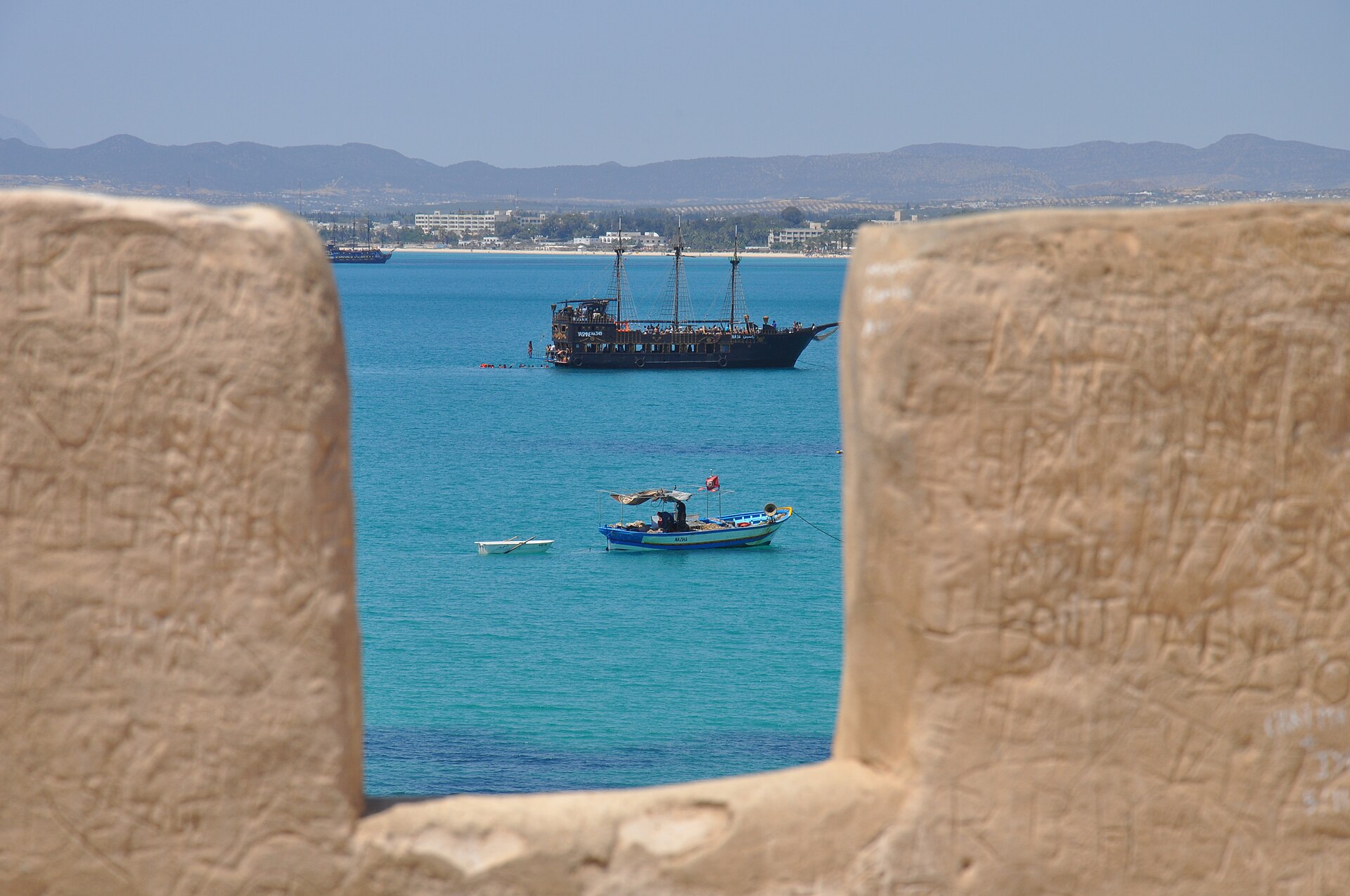
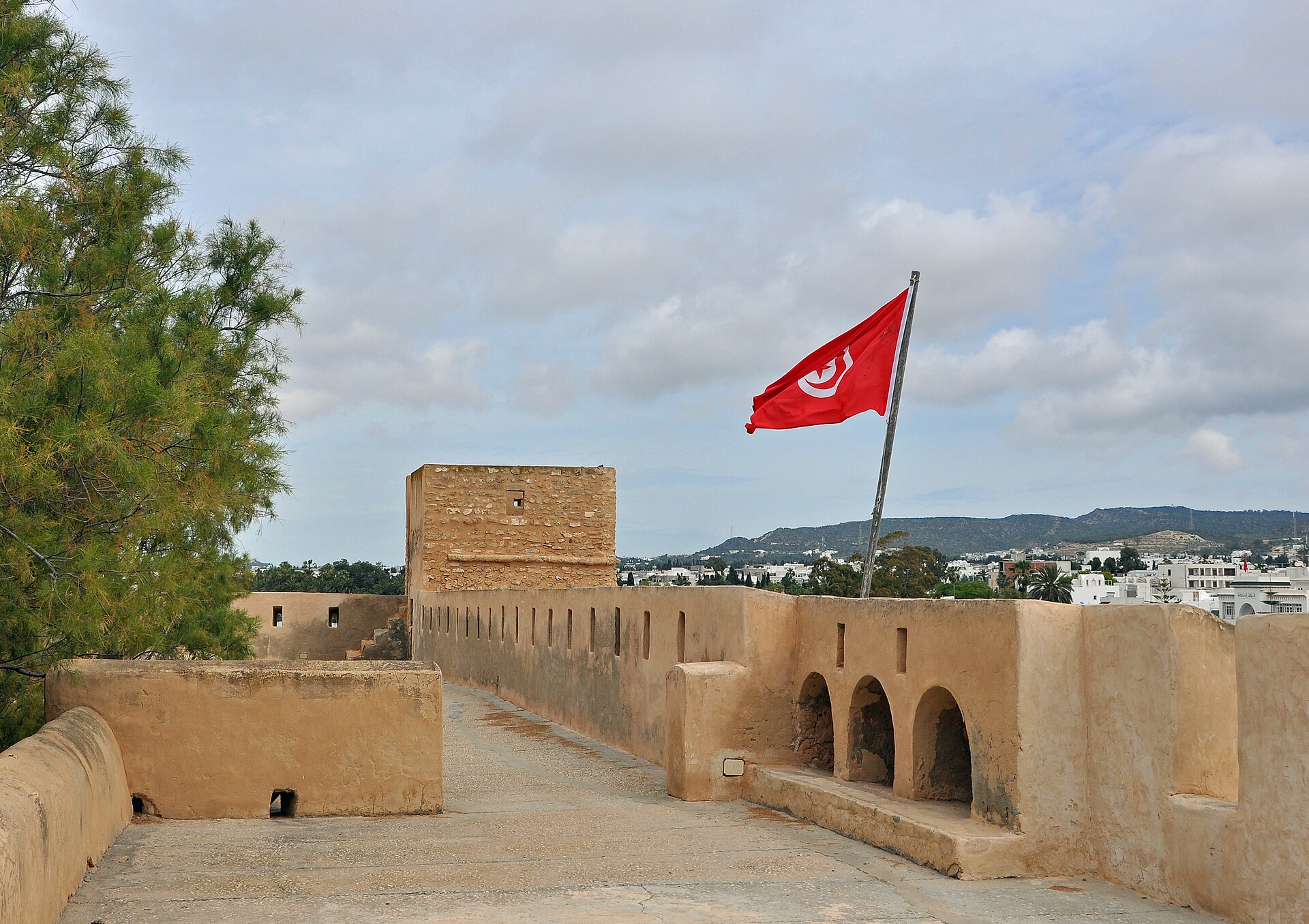
Hammamet's medina, free to wander, huddles against its kasbah: a square of about 50 m a side with 12 m walls, a Hafsid tower and 16th- and 17th-century bastions. Admission is TND 8, and in summer it opens from 8 am to 7 pm local time. South of town, Dar Sebastian, a white villa built in the 1920s by George Sebastian, houses the international cultural centre, whose amphitheatre hosts the Hammamet International Festival in July and August. In the hotel zone, the Roman site of Pupput costs TND 5.
Day 3: Nabeul
A four-and-a-half-hour tour combines Hammamet with the market in neighbouring Nabeul. The Nabeul archaeological museum displays 4th-century mosaics from the ancient city of Neapolis, including Philoctetes and Poseidon and Amymone; it is closed on Mondays and costs TND 8. The Neapolis site reveals an ancient quarter of fish-salting workshops, for TND 5.
Day 4: Cap Bon
A day by car with a driver takes you around the Cap Bon peninsula:
- Kerkouane, listed by UNESCO in 1986, is the only Punic city to survive. Inhabited from the 6th to the mid-3rd century BC, it keeps its double wall, grid of streets and courtyard houses with their own bathrooms. Admission TND 8; the museum is closed on Mondays.
- Kelibia is crowned by a fortress of about 1.5 ha, Byzantine then an 8th-century ribat, one of the largest Islamic fortresses in the country, for TND 8.
- El Haouaria has its ancient quarries, bottle-shaped caves from which stone was shipped to Carthage from the 7th century BC, for TND 8.
Some foreign ministries advise avoiding Cap Bon's minor roads and deserted spots at night, so plan to be back in Hammamet before dark.
Two nights in Carthage
Day 5: Villa Didon
The motorway takes you back towards Tunis. Villa Didon is a ten-suite hotel on Byrsa Hill, every suite facing the Bay of Carthage above the Punic harbours. It has a pool cantilevered over the view, a marble hammam, a terrace garden and more than twenty works by Tunisian and international artists, including calligraphic steles by Rachid Koraïchi. Rates start at about €220 a night with breakfast.
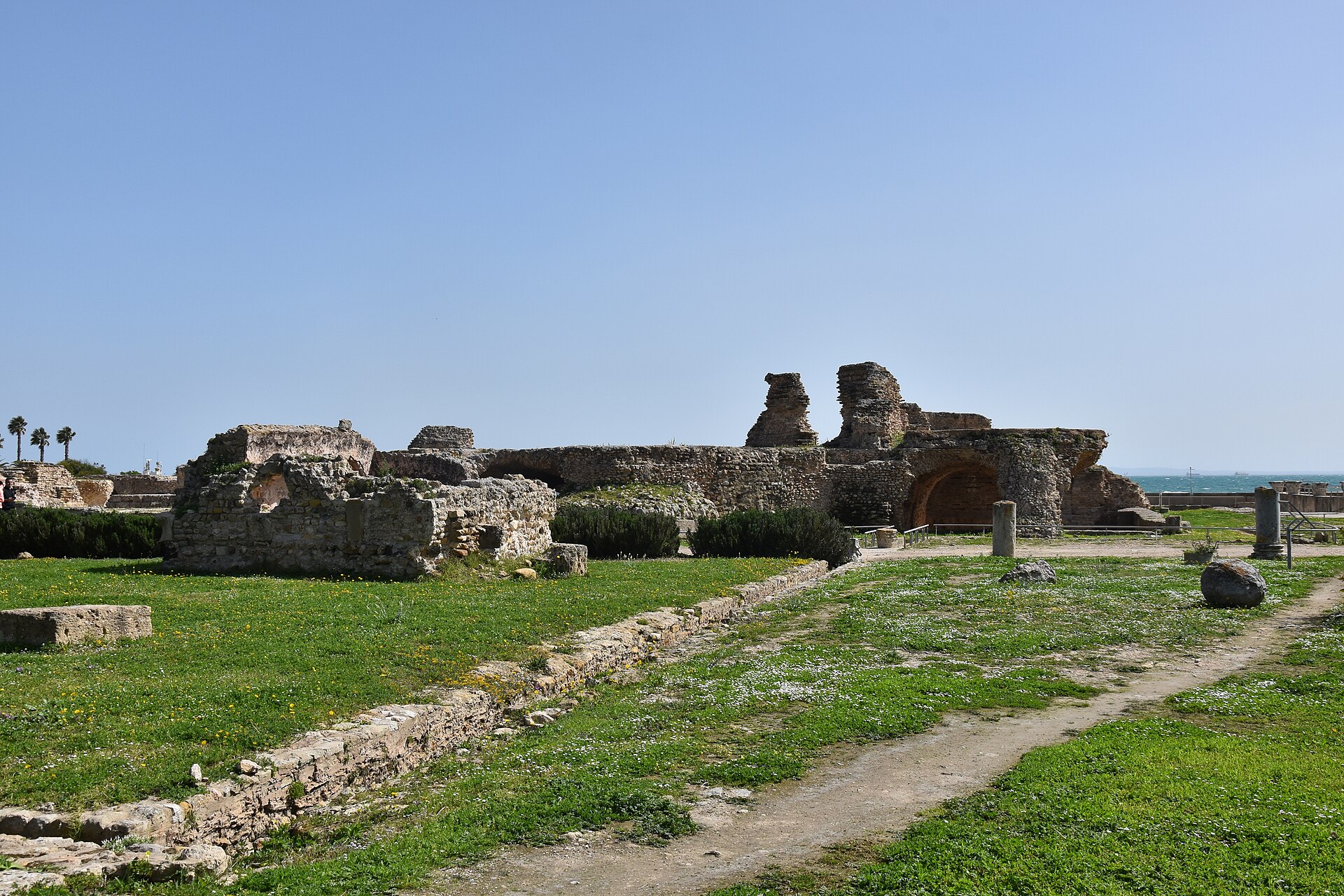
In the afternoon, explore Carthage, founded in the 9th century BC and destroyed by Rome in 146 BC. A combined ticket covers the Antonine Baths, the theatre, the Roman villas park, the amphitheatre, the Magon quarter and the Palaeo-Christian Museum; it costs TND 20, and TND 30 from 1 January 2027. The National Museum next to the hotel has been closed since 2018.
Day 6: Sidi Bou Said and La Marsa
The TGM suburban train runs from Carthage to Sidi Bou Said and La Marsa. In Sidi Bou Said, the Ennejma Ezzahra palace, built from 1911 to 1922 by Baron Rodolphe d'Erlanger, houses the Centre for Arab and Mediterranean Music; it is closed on Mondays and admission is TND 10. La Marsa, at the end of the line, has cafés and a seafront promenade. In July and August, Carthage's Roman amphitheatre hosts the Carthage International Festival, with seats from TND 100.
Day 7: departure
The airport is 15 km from Carthage, about a quarter of an hour.
Sea and season
In Hammamet, the sea warms from 19 °C in May to 23 °C in June, 27 °C in August and 24 °C in October. Average highs stay moderate, from 25 °C in May to 32 °C in August. The Hammamet and Carthage festivals take place in summer; May, June, September and October are quieter.
Good to know
- Entry requirements. Tunisia has required a passport from all travellers since 1 January 2025; the visa and entry requirements guide covers the length of stay and the validity required. The rule for your country:
Entry requirements
| Nationality | Visa | Travel document | Source |
|---|---|---|---|
| French | No visa for stays of up to three months; beyond that, visa and residence card from the Ministry of the Interior; overstaying requires exit authorisation and a fine proportional to the overstay | Passport compulsory for all stays, valid for at least 3 months on the date of entry (rule in force since 1 January 2025). The ID card, formerly accepted on package tours, no longer is | France Diplomatie, Conseils aux voyageurs, Entrée / séjour (Site last updated 15 September 2026) |
| Details: French child travelling with one parent: no authorisation required on leaving Tunisia; family record book useful if surnames differ. Child who is also a Tunisian national: Tunisian passport and exit authorisation signed by the Tunisian parent before a Tunisian authority. French-Tunisian dual nationals: treated as Tunisian and asked for a Tunisian passport. Always carry ID or a copy of the passport photo page | |||
| Belgian | See the official page | Valid passport | Travel documents (Site last updated 17 January 2025) |
| Swiss | See the official page | The FDFA advises always carrying a photocopy of the passport or ID card, including the entry-stamp page — See the official page | DFAE (Département fédéral des affaires étrangères, Suisse), Conseils pour les voyages – Tunisie, « Adresses utiles » et « Criminalité » (Site last updated 3 November 2025) |
| British | Up to 90 days without a visa (except Crown Dependency passports, which may need a visa on arrival); get the passport stamped; overstay fine payable on departure; contact details, return or onward ticket and accommodation booking may be requested | Passport valid for the whole stay and in good condition (a damaged passport may cause problems on exit) | GOV.UK (FCDO), Tunisia, Entry requirements (Site last updated 24 July 2026) |
| Details: Always carry ID or a copy of the passport photo page. Driving: a 1968 international driving permit, obtained in the UK before you travel, in addition to your UK licence; a green card (international certificate of insurance) for the vehicle | |||
| German | No visa for tourist, private or business stays of up to 120 days; keep the 'non-resident visitor card' issued at some airports; beyond 120 days, TND 20 per five-day period, payable on departure | Passport or child passport valid for at least 6 months on entry; ID card not accepted; temporary passport accepted with a return ticket and sufficient funds. Without a package-tour booking, border police may ask for proof of funds | Auswärtiges Amt, Tunesien: Reise- und Sicherheitshinweise, « Einreise und Zoll » (Site last updated 6 October 2026) |
| Details: Child passport accepted. The parental authorisation formerly required for Tunisian or dual-national minors not accompanied by the Tunisian parent is officially no longer needed, but is sometimes still requested on exit. German-Tunisian dual nationals: treated as Tunisian and asked for a Tunisian passport. No vaccination required for travellers arriving from Germany. Driving: a German national licence is recognised for a tourist stay | |||
| Dutch | No visa for stays of up to 90 days with a Dutch passport; beyond that, visa from the Tunisian embassy in The Hague. On arrival, proof of a hotel booking is required, possibly also a return ticket and proof of sufficient funds; otherwise entry may be refused | Passport valid for the whole stay | Nederland Wereldwijd (ministère néerlandais des Affaires étrangères), Reisadvies Tunesië (Site last updated 17 September 2026) |
| Details: Each child needs their own passport; an adult travelling alone with one or more children under 18 should carry the documents required for travelling with a minor. Dutch driving licences are valid in Tunisia. Always carry your passport or a copy | |||
| Luxembourgish | Not checked by Sabaro: see mae.gouvernement.lu | ||
| Irish | Not checked by Sabaro: see ireland.ie (DFA) | ||
| Swedish | Not checked by Sabaro: see Regeringen (UD) | ||
| Danish | Not checked by Sabaro: see Udenrigsministeriet (um.dk) | ||
| Norwegian | Not checked by Sabaro: see Regjeringen | ||
| Polish | Not checked by Sabaro: see Odyseusz (MSZ) | ||
| Czech | Not checked by Sabaro: see MZV ČR | ||
| Austrian | Not checked by Sabaro: see BMEIA | ||
| Italian | Not checked by Sabaro: see Viaggiare Sicuri | ||
| Spanish | Not checked by Sabaro: see exteriores.gob.es | ||
| Portuguese | Not checked by Sabaro: see Portal das Comunidades | ||
| Finnish | Not checked by Sabaro: see Ulkoministeriö (um.fi) | ||
Rules change: always check the official website before you travel.
- Prices include taxes; the tourist tax of TND 12 per person per night in 4- and 5-star hotels is paid at the hotel. On 19 October 2026, €1 was worth TND 3.36.
- Safety. None of the stops lies in an area advised against by the European foreign ministries Sabaro follows. The country has been under a state of emergency since November 2015; several ministries ask for heightened vigilance, and some recommend hotels and restaurants with security arrangements. The safety in Tunisia guide has the details; foreign ministries do not all give the same advice. Yours:
| Country | Official advice | Source |
|---|---|---|
| France | The country is under heightened vigilance and a state of emergency in force since 24 November 2015. Keep away from demonstrations and from places where security forces are posted, avoid night travel off the main roads, and fly or use the motorway to reach the south-west. A passport has been compulsory since 1 January 2025. Advised against (red): the far-south Saharan area near Libya and Algeria (military zone created in August 2013, entry by prior permit), the town of Ben Guerdane, and Mounts Orbata, Selloum, Semmama, Chaambi and Mghila. Advised against unless essential (orange): the desert south and east of the Bir Rjim Maatoug – Borj Bourguiba – Ben Guerdane line; the areas between Mounts Chaambi, Semmama and Mghila, south of Mount Selloum and around Mount Orbata; in Jendouba and Le Kef governorates, a 5 km strip along the Algerian border except roads to official crossings. Check with the authorities before visiting rural areas between Kasserine, Sbeitla, Sidi Bouzid and Gafsa off the Gafsa-Kasserine and Gafsa-Sidi Bouzid roads. Table de Jugurtha (Le Kef): on organised tours with a guide. Its map, dated 4 February 2026, also shows an orange strip along the whole Algerian border. | Ministère de l'Europe et des Affaires étrangères (France Diplomatie), Conseils aux voyageurs, Sécurité (Site last updated 15 September 2026) |
| Belgium | With due vigilance, travellers may visit Tunisia except the border areas with Algeria and Libya. Outside the coastal zone, use certified tour operators and agencies in close contact with the Tunisian security services. Heat (over 40 °C) and forest fires in summer. Strongly advised against: the Algerian border area west of the Jendouba – Le Kef – Kasserine – Feriana – Tameghza (Tamerza) axis, and the mountain areas of Kasserine and Le Kef governorates; the Libyan border area south of the Rjim Maatoug – Bir Ellouza – Bir Aouine – Borj Bourguiba – Remada – Ben Guerdane axis (military zone). Travel in the far south requires a permit from Tataouine governorate. | SPF Affaires étrangères, Commerce extérieur et Coopération au Développement (Belgique), Conseils aux voyageurs (Site last updated 2 October 2026) |
| Switzerland | Travel to Tunisia is considered generally safe. The political, social and economic situation is tense (demonstrations, strikes, possible curfews); the 2015 state of emergency remains in force and the risk of terrorist attacks persists nationwide. Reach your destination before nightfall. Advised against: the Algerian border area west of the Tabarka – Tozeur road, including the whole of Kasserine governorate (kidnapping risk in the Chaambi, Selloum and Mghila mountains); the Libyan border region. Tourist and non-urgent travel advised against south of the line Algerian border – Tozeur – Douz – Tataouine – Zarzis. The towns of Tabarka, Tozeur, Douz, Tataouine and Zarzis may be visited with the stated precautions; desert trips only in a group with a reliable local guide. | Département fédéral des affaires étrangères (DFAE, Suisse), Conseils pour les voyages (Site last updated 3 November 2025) |
| United Kingdom | Terrorists are likely to try to carry out attacks in Tunisia; higher risk around religious and tourist sites, festivals, government buildings and places where foreigners gather. State of emergency since 2015, frequent checkpoints. Demonstrations mostly at weekends and on national dates (14 January, 17 December). Possible power cuts in summer. Against all travel: Chaambi Mountains National Park; military operations zones of Mounts Salloum, Sammamma and Mghila; the militarised zone south of El Borma and Dhehiba; within 20 km of the Libyan border north of Dhehiba; Ben Guerdane and its surroundings. Against all but essential travel: north and west of Ghardimaou (Jendouba governorate), including El Feidja National Park; within 20 km of the Algerian border in El Kef and Jendouba governorates south of Jendouba town, including Chemtou; the whole of Kasserine governorate, including Sbeitla; within 10 km of the rest of the Algerian border south of Kasserine governorate; within 10 km of Mount Mghila; Mount Orbata; within 75 km of the Libyan border, including Remada and El Borma, excluding Zarzis, the C118 road and Medenine governorate north of it. Travelling against FCDO advice can invalidate travel insurance. | Foreign, Commonwealth & Development Office (FCDO, ministère britannique des affaires étrangères), Foreign travel advice (Site last updated 24 July 2026) |
| Germany | The security situation has broadly stabilised, but the terrorist risk remains high, including at busy tourist spots; stronger police presence in summer. State of emergency nationwide. Decree-Law 54 provides up to ten years in prison for spreading 'false information' online. Desert trips only in organised groups with a guide. Travel advised against: south and south-east of the line Algerian border – Tozeur/Nefta – Douz – Ksar Ghilane – Tataouine – Zarzis; the immediate Algerian border area, especially the mountains from Ain Draham to Kasserine governorate inclusive; Mounts Chaambi, Selloum and Mghila; individual, unorganised desert tours. Ben Guerdane and surroundings: particularly tense. A strip of about 20 km along the Libyan border and part of the southern Algerian border are military zones closed without a governorate permit. | Auswärtiges Amt (ministère fédéral des affaires étrangères, Allemagne), Reise- und Sicherheitshinweise (Site last updated 6 October 2026) |
| Luxembourg | Luxembourg's foreign ministry publishes no Tunisia-specific advice: it refers travellers to the travel advice of Belgium, France and Germany. | Ministère des Affaires étrangères et européennes, de la Défense, de la Coopération et du Commerce extérieur (Luxembourg), Avis de voyage (accessed 20 October 2026) |
| Ireland | High degree of caution and strong security awareness; state of emergency since 24 November 2015. Avoid unnecessary travel, especially at night outside urban areas, and demonstrations (frequent on Friday afternoons in city centres). Do not travel: Chaambi Mountain National Park; within 30 km of the borders with Algeria and Libya; Ben Guerdane and surroundings; the militarised zone of Tataouine governorate south of (but not including) El Borma. National Guard permission needed for some desert areas near the Algerian border. | Department of Foreign Affairs (DFA, ministère irlandais des affaires étrangères), Travel advice (Site last updated 16 July 2025) |
| Sweden | Since 30 March 2023, following an improved security situation, the Swedish ministry only advises against specific border and mountain areas. Against all travel: within 30 km of the Libyan border and Ben Guerdane; the militarised Chaambi, Samamma, Mghila, Selloum and Orbata mountains; the area south of El Borma and Dhehiba. Against non-essential travel: within 30 km of the Algerian border south of Jendouba town, except the Table de Jugurtha plateau; within 5 km of the Algerian border from Gafsa region southwards, except the town of Tamaghza (Tamerza). | Utrikesdepartementet (UD, ministère suédois des affaires étrangères), UD avråder (Site last updated 30 March 2023) |
| Denmark | The whole country except the orange and red zones: stay alert and follow the authorities, media and your travel agency. High terrorist risk; state of emergency, checks at tourist sites, photo ID compulsory. Do not go alone into the mountains or desert: use recognised agencies and guides. Red (very high risk): Mounts Chaambi, Salloum, Sammamma, Mghila and Orbata; the area south of a line passing south of El Borma and Remada and north of Ben Guerdane. Orange (non-essential travel advised against): the Algerian border area from south of Jendouba and Ghardimaou (P6 road) to El Borma, except Jendouba, Le Kef and Dahmani towns (yellow); Kasserine governorate except Kasserine town (yellow); the area south of a line from El Borma to south of Zarzis, including Remada but not Tataouine (yellow). | Udenrigsministeriet (ministère danois des affaires étrangères), Rejsevejledninger (Site last updated 18 May 2026) |
| Poland | State of emergency in force; photographing military and government sites or security forces is forbidden (arrest of at least 5 days possible). After the summer 2026 heatwave, electricity, running water and fuel supplies are back to normal and bottled water is gradually returning to shops. Level 3: region 1, the Sahara and desert areas near the Algerian and Libyan borders, excluding tourist routes; region 2, the central-western mountains (Mounts Orbata, Selloum, Semmama, Chaambi and Mghila). | Ministerstwo Spraw Zagranicznych (ministère polonais des affaires étrangères), service Odyseusz (Site last updated 3 September 2026) |
| Czechia | Increased caution during the stay, especially outside hotel resorts; avoid crowded places off the usual routes, isolated areas and going out at night; restrict photos to resorts and monuments, no public buildings or strangers. State of emergency since 24/11/2015. Warning against travel: areas near the Algerian and Libyan borders; mountains of Kasserine and Le Kef governorates; towns around Siliana and Kasserine; the desert south of the Bir Rjim Maatoug – Borj Bourguiba – Ben Guerdane line; the north-western mountains. The country sheet adds: high risk west of the Ain Draham – Jendouba – Le Kef – Kasserine – Sidi Bouzid – Gafsa – Tozeur line and south of the Tozeur – Kebili – Medenine – Zarzis line; south of Tataouine, military zone, governorate permit to request 4 to 6 weeks ahead outside organised tours. | Ministerstvo zahraničních věcí (ministère tchèque des affaires étrangères), Upozornění na cesty (Site last updated 10 April 2025) |
| Netherlands | Yellow for most of the country: specific security risks. Red, do not travel: the border area with Libya, largely a military zone, especially south of Ben Gardane; the desert areas south of the Al Borma – Remada – Ben Gardane line (criminals and terrorist groups, increased kidnapping risk); the Algerian border from west of the town of El Kef southwards, keeping at least 2 km from the border; the Chaambi massif and the Mghila, Semmama and Salloum mountains (armed clashes, explosives and landmines). Orange, essential travel only: the area between the south of the town of Tataouine and the Al Borma – Remada – Ben Gardane line; the town of Kasserine and its surroundings. Limited terrorist threat, state of emergency since 2015, road checks; outside the coastal area, travel with tour operators and agencies certified by the Tunisian Ministry of Tourism. Regular demonstrations, especially in Tunis. | Nederland Wereldwijd (ministère néerlandais des Affaires étrangères), Reisadvies Tunesië (Site last updated 17 September 2026) |
| Norway | Not checked by Sabaro: see Regjeringen | |
| Austria | Not checked by Sabaro: see BMEIA | |
| Italy | Not checked by Sabaro: see Viaggiare Sicuri | |
| Spain | Not checked by Sabaro: see exteriores.gob.es | |
| Portugal | Not checked by Sabaro: see Portal das Comunidades | |
| Finland | Not checked by Sabaro: see Ulkoministeriö (um.fi) | |
Read next
- Summer festivals in Tunisia: Carthage, Hammamet, Dougga, El Jem and more
- Medinas and guesthouses in 8 days
- Ramadan and public holidays 2027 in Tunisia: dates and what they mean for travellers
- A night at the edge of the Tunisian Sahara: Douz, Tozeur and the ksour
- Star Wars filming locations in Tunisia: Tozeur, Matmata, Djerba and the ksour
- Tunisia's sites and museums: tickets, 2026 and 2027 prices, opening hours
Frequently asked questions
Why start with the beach?
To finish close to the airport: Villa Didon is a quarter of an hour from Tunis-Carthage, while Hammamet is an hour away.
Can we bring children?
La Badira does not accept guests under 16. Families can choose the Hasdrubal Thalassa & Spa Yasmine Hammamet, an all-suite hotel with a private beach in Yasmine Hammamet.
Can we bathe in the Korbous hot springs?
Yes: on the west coast of Cap Bon, 68 km from the airport, the springs flow at 40 to 60 °C, and the Aïn El Atrous spring runs into the sea, where you bathe in rock pools.
Do we need a car?
Only for Cap Bon and the airport transfers, ideally with a driver. In Carthage, the TGM is enough. Our getting around Tunisia guide sets out the options.
A travel advisor replies by email. Free, no commitment.