Old Dubai: Deira, Al Fahidi and the Creek
Old Dubai is best explored on foot in half a day: Al Shindagha Museum, the wind-tower lanes of Al Fahidi, an abra across the Creek for 1 dirham, then the Spice and Gold Souks in Deira. Go between November and March, early in the morning or late in the afternoon.
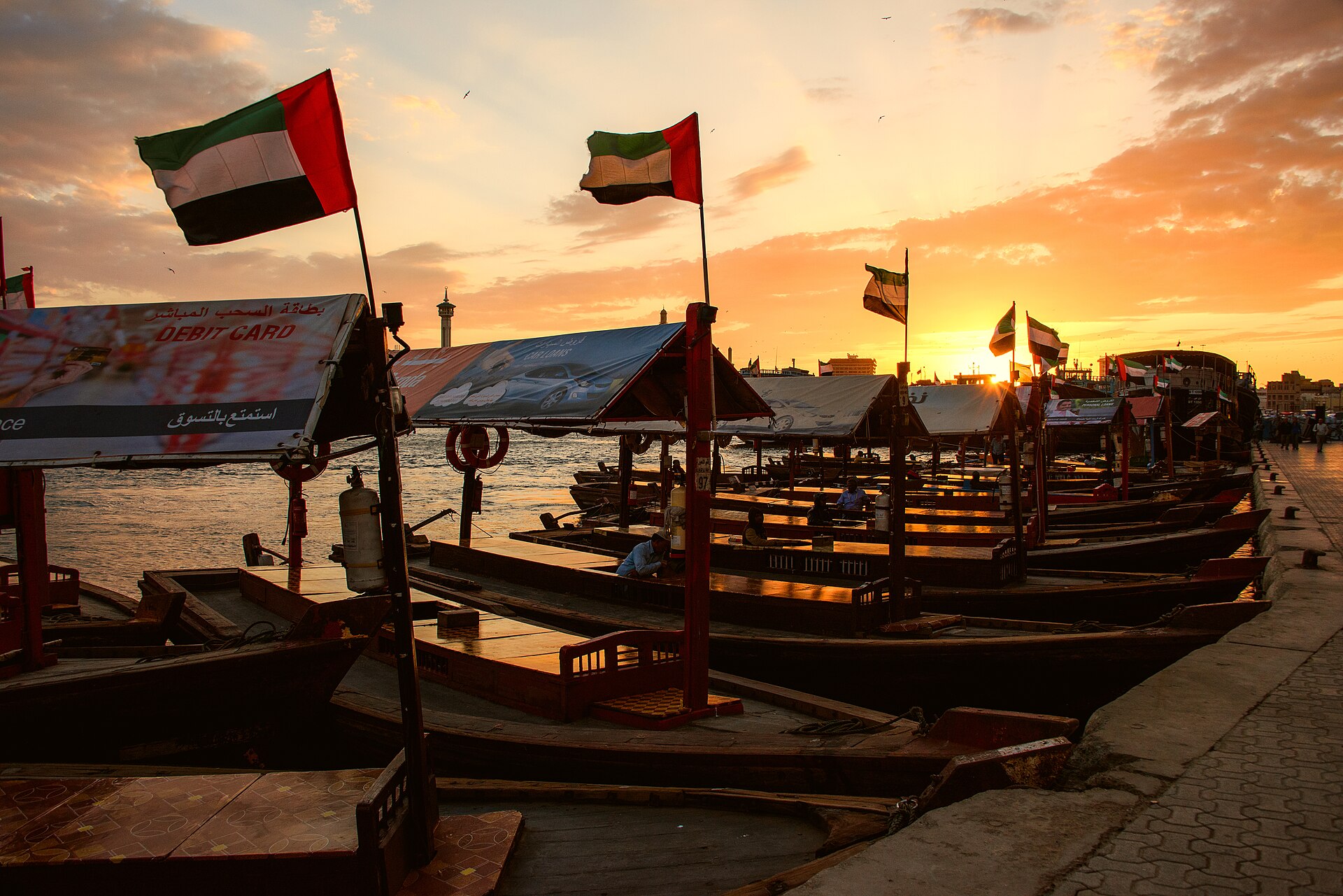
Old Dubai is the city before the towers: an inlet of the sea, the Creek, and its two banks, Bur Dubai on one side and Deira on the other. Everything lies within a few kilometres, and the way to see it is on foot, crossing the water by abra, the small wooden boat that shuttles between the banks.
The Creek, where the city began
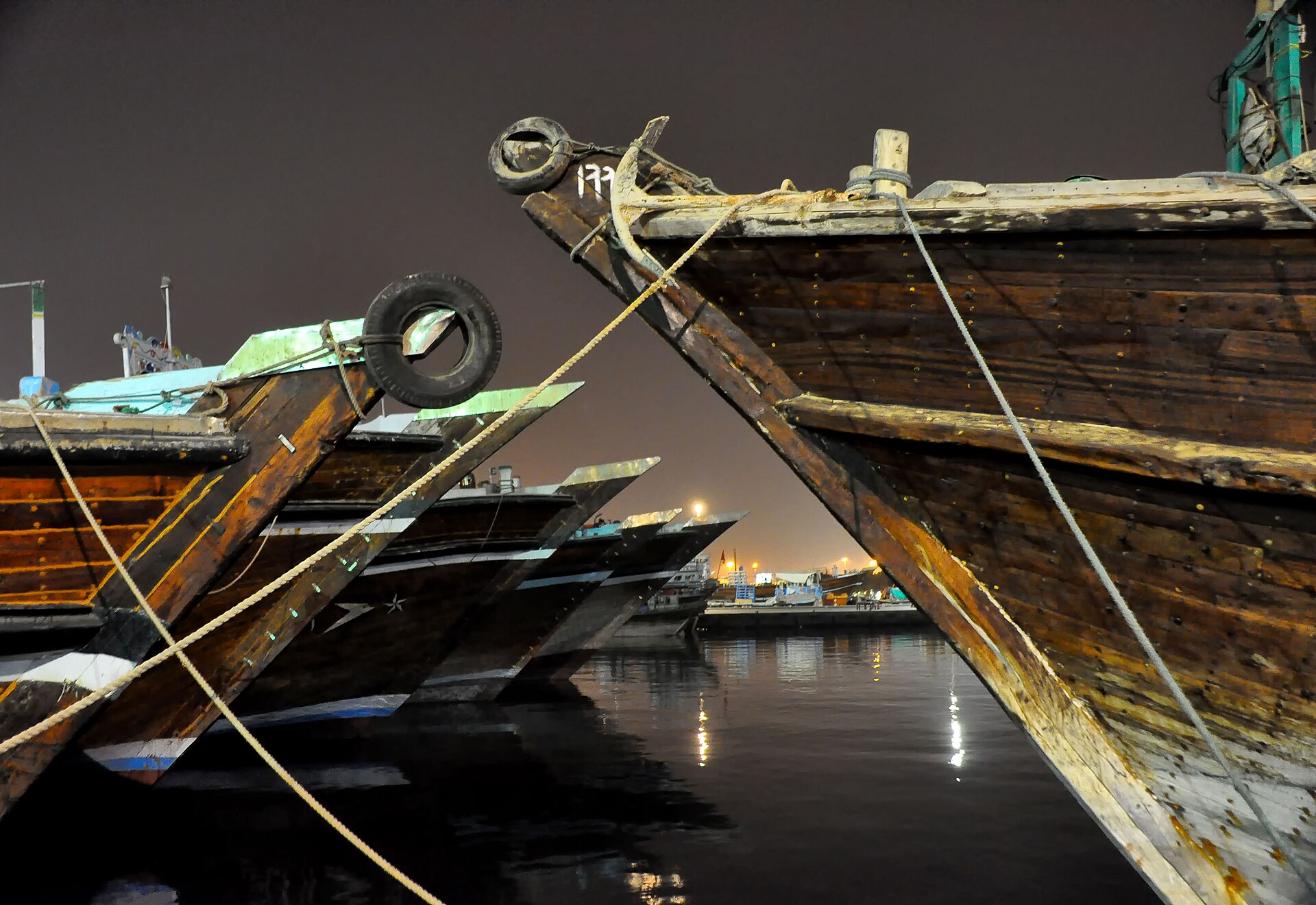
Dubai Creek is a natural saltwater inlet of the Persian Gulf, about 14 km long. In the 19th century, families of the Bani Yas tribe settled on the Bur Dubai bank; the Al Maktoum dynasty, which still rules the emirate, descends from them. Pearling kept the town alive until the 1930s, when cultured pearls ruined the trade. In the early 20th century the Creek was a small port for dhows, the wooden sailing boats of the Gulf, arriving from India and East Africa.
The Creek was first dredged in 1961 to take larger vessels, and the first bridge between Bur Dubai and Deira, Al Maktoum Bridge, opened in 1963. Four bridges and a tunnel now link the two banks; the abra is still the most direct way from one souk to the other.
The walk: the Bur Dubai bank
Al Shindagha, at the mouth
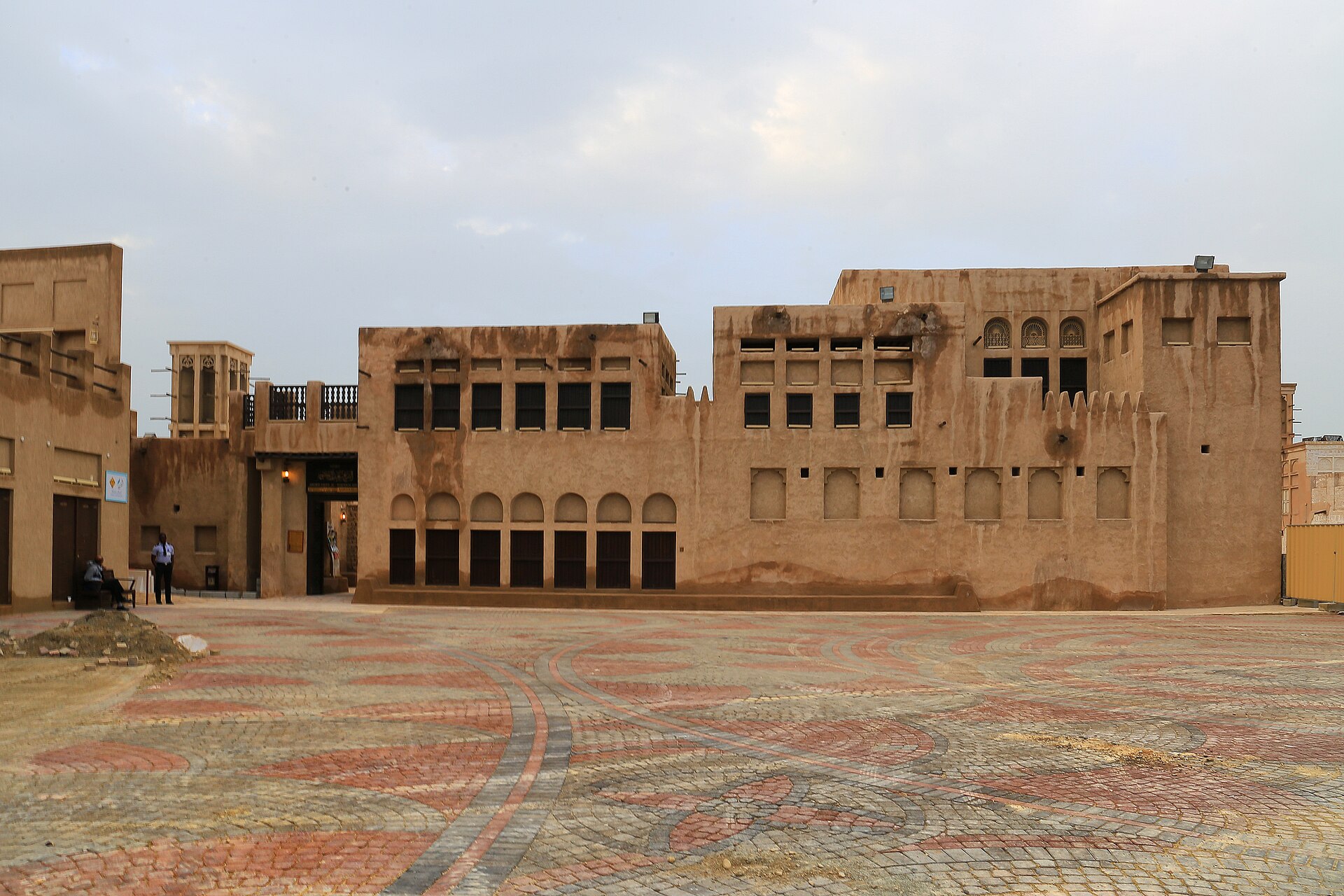
Start at the mouth of the Creek, in Al Shindagha, a district settled in the 1830s. Sheikh Saeed bin Maktoum, ruler of Dubai, lived here from 1912 to 1958. Al Shindagha Museum now fills these restored waterfront houses: it tells the story of life around the Creek, from the sea to trade and society, and gives a whole house to perfume. It is open daily from 10 am to 8 pm, last entry 7 pm (local Dubai time, like every opening time on this page). Admission is AED 50 (UAE dirhams, roughly €12) for adults; children go free.
Al Seef and Al Fahidi Souk
Heading inland along the Creek, you pass Al Seef, a promenade opened in 2017: one section recreates the old architecture, the other is contemporary, with cafés and shops. Just behind it is Al Fahidi Souk, a market in the oldest part of the city.
Al Fahidi Historical Neighbourhood
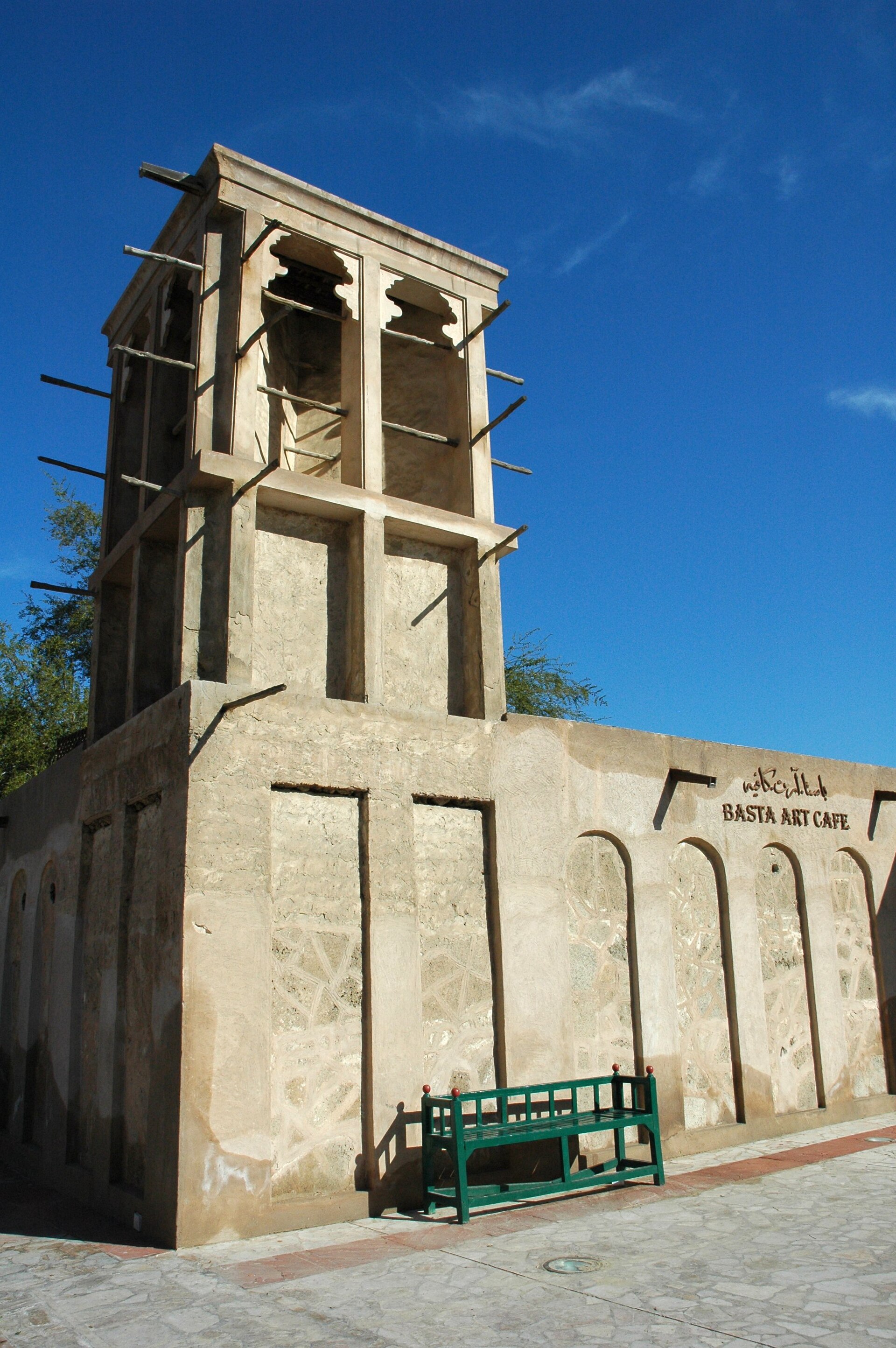
Al Fahidi Historical Neighbourhood, long known as Al Bastakiya, is the heart of the walk. Wealthy merchants from Persia began building it in the 1890s; the old name comes from Bastak, a town in southern Iran. At its peak it had around sixty houses, separated by narrow lanes. Their wind towers, called barjeel, catch the breeze and send it down into the rooms; tests have shown they cool the houses efficiently on hot summer afternoons.
The neighbourhood nearly vanished. In the 1980s half of it was demolished for an office development, and in 1989 the municipality ordered the rest pulled down. British architect Rayner Otter campaigned to save it, with the support of Prince Charles, and the demolition was cancelled. Restoration of the houses and lanes began in 2005.
Today you wander between galleries, cafés and small museums, including a two-floor coffee museum. The Sheikh Mohammed Centre for Cultural Understanding (SMCCU, a non-profit that introduces visitors and residents to Emirati culture) is based here. You can also stay in the neighbourhood, at the XVA Art Hotel.
Al Fahidi Fort, under restoration
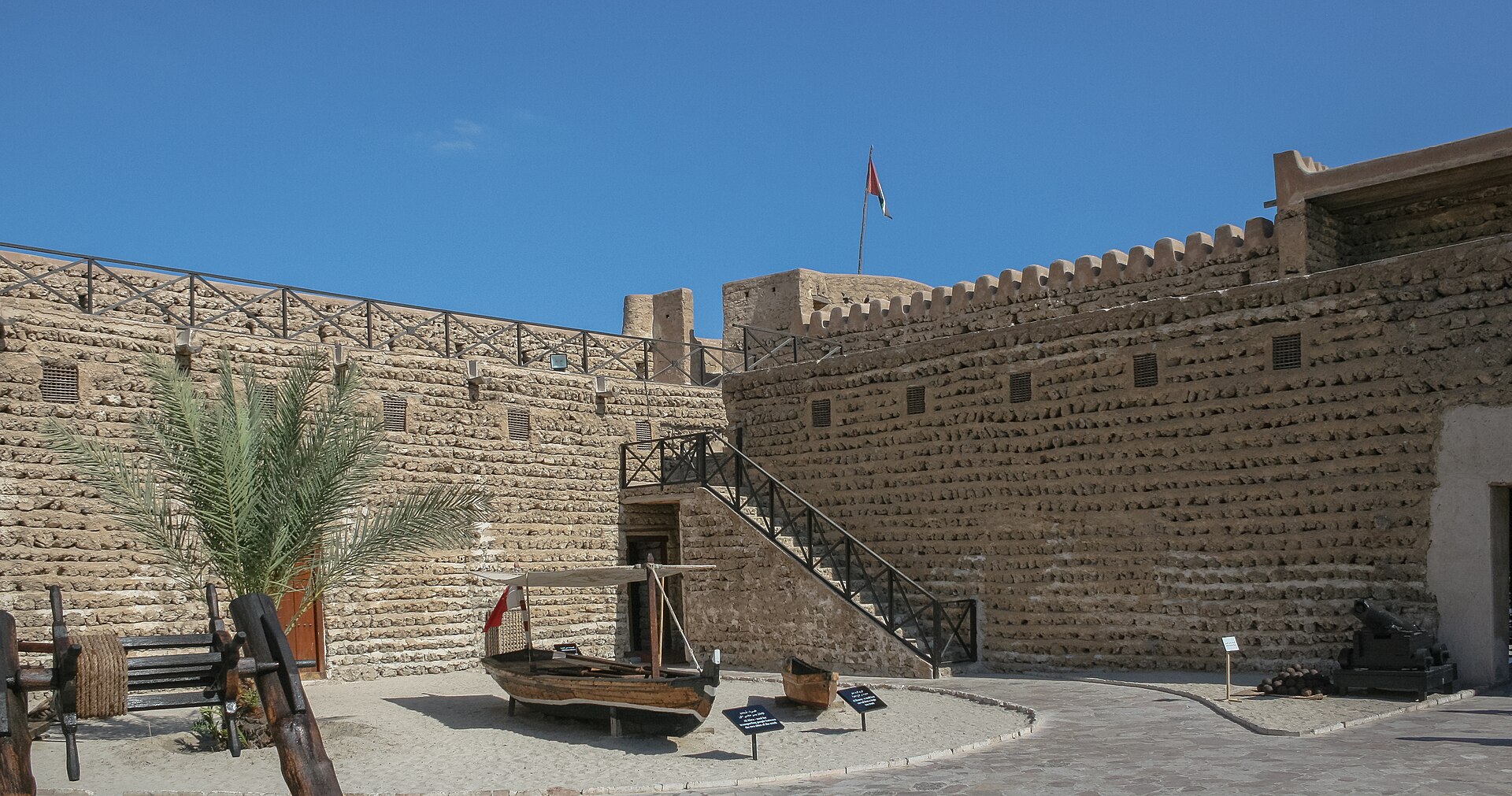
On the edge of the neighbourhood, Al Fahidi Fort is the oldest building still standing in Dubai: its oldest tower dates from around 1787. In 1971, the year the United Arab Emirates was founded, it became the city's first museum. It has been closed since 2021 for a full restoration. In September 2026 its director said it would reopen "in the coming weeks or months", with new underground galleries; no date had been set.
Crossing the Creek by abra
From the Bur Dubai station, abras cross to Deira Old Souq in a few minutes, for AED 1 per person. They leave every few minutes from 6 am. This is the part of the walk people remember most: at water level, among the dhows, with a bank on either side.
The Deira bank: the souks
The Spice Souk
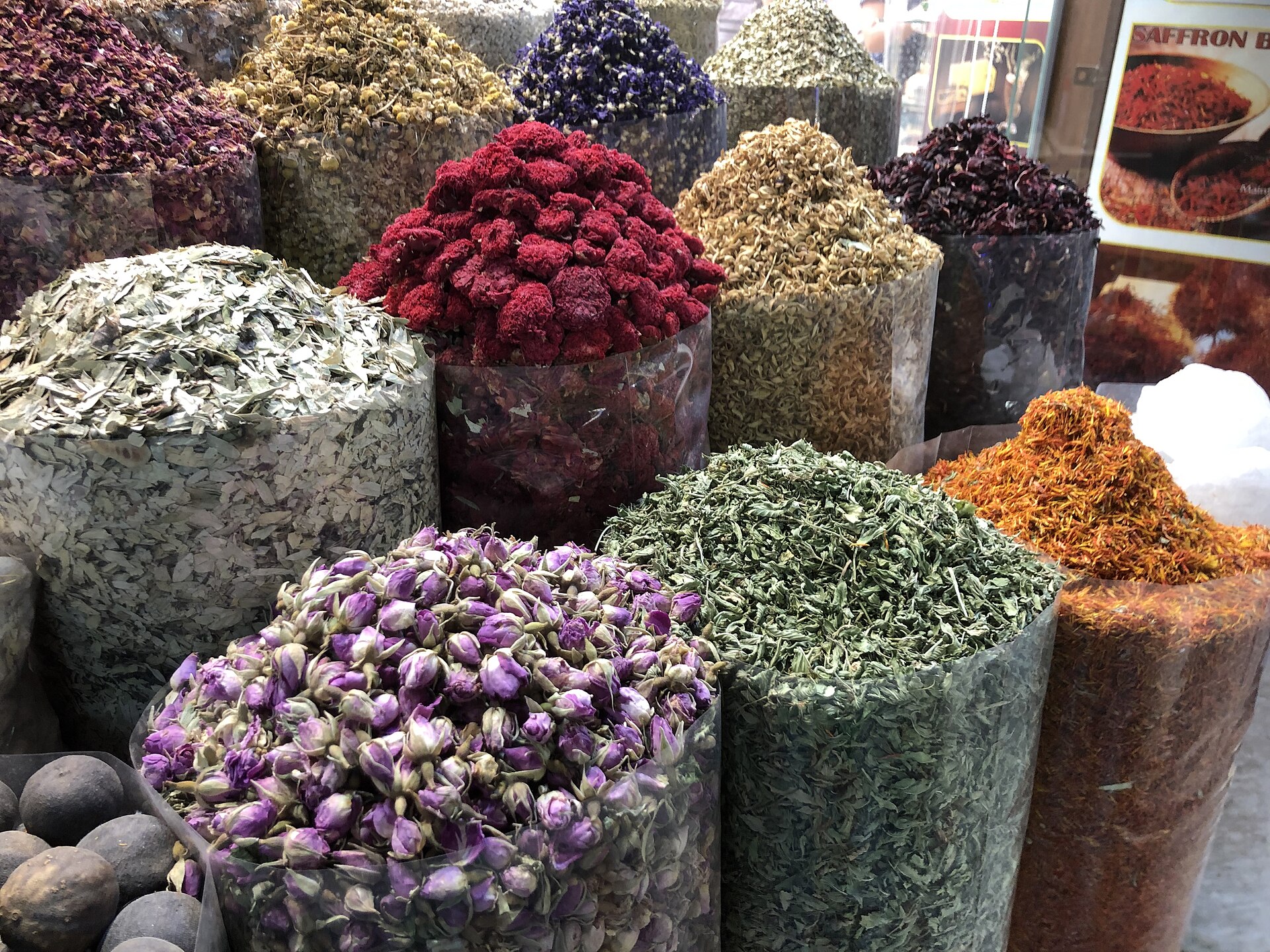
Step off the boat in Deira and you are almost straight into the Spice Souk, with its spices, teas and saffron.
The Gold Souk
A few lanes further on, the Gold Souk, in the Al Ras district, is home to more than 300 jewellers. Prices follow the day's gold rate: most shops charge by the gram, some by the carat, and haggling is expected. Shops generally open from 10 am to 10 pm, though some close between 1 pm and 4 pm; late morning, around 11 am, is a good time to go. Al Ras metro station, on the Green Line, is about five minutes' walk away. For more shopping, see the Shopping theme and the Dubai Shopping Festival, held from 4 December 2026 to 17 January 2027.
When to walk
Walking season runs from November to March: average highs range from 24.4 °C in January to 30.7 °C in November, according to the 1991-2020 normals of the World Meteorological Organization (WMO) for Dubai airport. From June to September they exceed 39 °C and walking is limited to early morning or evening; the Dubai in summer guide covers the precautions.
Over a day, Sabaro suggests starting at Al Shindagha when it opens, or setting off late in the afternoon to reach the Deira souks at dusk. During Ramadan, expected from 8 February to 8 or 9 March 2027, opening hours change: see the Ramadan in Dubai guide.
With a guide, or at the table
The walk is easy to do alone. A guide helps you understand what you are looking at, and lets you taste the food of the souks:
- Guided tour of the Creek, Al Fahidi and the souks, abra crossing included: 3 hours, from about €15 per person.
- Food walk through the souks and along the Creek with local operator Frying Pan Adventures: 3.5 hours, AED 425 per person, about €100.
- Dhow dinner cruise on the Creek: 2 hours, 8:30 to 10:30 pm, from about €45 per person, past both banks lit up at night.
See also the Food and dining and Museums and culture themes.
On the edge: Dubai Frame
South of Bur Dubai, in Zabeel Park, the Dubai Frame, a giant 150 m frame, stands between the old city and the new: a natural link to a visit to Downtown. Adult tickets cost AED 50 on the official website.
Staying in old Dubai
Staying here puts the walk on your doorstep at the coolest hours. Three hotels in the Sabaro selection are in old Dubai:
- XVA Art Hotel, in the heart of Al Fahidi: fifteen individually designed rooms in the former Seddiqi family home, with three wind towers, which became a hotel in 2003. Every room shows work by XVA gallery artists, and the café is vegetarian. Rooms are small, 12 to 17 m². From about €180 a night for two in March 2027.
- Al Seef Heritage Hotel, on the Al Seef promenade: 190 rooms in low-rise buildings in traditional Emirati style, some with Creek views or a balcony over the souk; the pool, spa and gym are those of the group's neighbouring hotel, with a shuttle. From about €140 a night for two in March 2027.
- Park Hyatt Dubai, on the Deira side, on the Creek next to Dubai Creek Golf & Yacht Club: 223 rooms, all with a balcony or terrace, and two lagoons, one for guests aged 16 and over. It is closed for renovation; the hotel announces reopening in the first quarter of 2027.
Prices were recorded on 19 October 2026, taxes included, plus any nightly tourism fee. For the beach, many travellers pair two nights here with a stay in Jumeirah or on Palm Jumeirah.
Getting there and around
Old Dubai is close to Dubai International Airport (DXB): the Park Hyatt, on the Deira side, is about ten minutes' drive according to the hotel, and Al Seef about 7 km. The metro serves it on the Red Line (Union and BurJuman stations) and the Green Line (Al Fahidi and Al Ras stations, among others). Travel cards and fares: see the Getting around Dubai guide.
Safety and photography
The souks are crowded places. Stay alert there, as in all public places in the Emirates; the "Travel advice" table on this page gives your country's advice for the area. In the regional context of 2026, taking or sharing images of strikes, debris or the security situation is a criminal offence; and always ask before photographing someone. Each country's advice is in the Dubai and the regional situation guide.
For an overview of the destination, see Dubai.
What to see
- Al Fahidi Historical Neighbourhood — lanes and wind-tower houses, galleries and museums Visit Dubai
- Al Fahidi Fort — Dubai's oldest building, from around 1787; the city's first museum in 1971; closed for restoration since 2021, reopening announced without a date Euronews, réouverture du fort d'Al Fahidi
- Al Shindagha Museum — history of Dubai and the Creek, Perfume House; daily 10 am-8 pm (local time), AED 50 adult Musée Al Shindagha (Dubai Culture, site officiel)
- Abra ride across Dubai Creek — public boat, AED 1, every few minutes from 6 am (local time) Visit Dubai
- Spice Souk (Deira) — spices, teas, saffron Visit Dubai
- Gold Souk (Deira) — over 300 jewellers in Al Ras; priced by the gram at the day's rate; usually 10 am-10 pm (local time) Gulf News, guide du souk de l'or
- Al Seef — Creek promenade opened in 2017, heritage and contemporary sections Visit Dubai
- Al Fahidi Souk (Bur Dubai) — market in the oldest part of the city Visit Dubai
- Dubai Frame (Zabeel Park) — 150 m frame between old and new Dubai; AED 50 adult, 8 am-9 pm (local time) dubaiframe.ae (site officiel)
When to go
Climate in Dubai
| Jan | Feb | Mar | Apr | May | Jun | Jul | Aug | Sep | Oct | Nov | Dec | |
|---|---|---|---|---|---|---|---|---|---|---|---|---|
| Max. (°C) | 24.4 | 26.1 | 28.9 | 33.7 | 38.2 | 40.3 | 41.5 | 41.9 | 39.5 | 35.9 | 30.7 | 26.5 |
| Sea (°C) | 22.4 | 21.8 | 23.0 | 25.5 | 29.0 | 32.0 | 33.3 | 33.5 | 32.9 | 31.4 | 28.3 | 25.0 |
Source: NOAA, station OMM 41194 (Dubai International Airport) — WMO 1991-2020 normals, archived by NOAA, accessed 19 October 2026
Sea (°C): seatemperature.info (agrégateur, moyenne des 10 dernières années) — accessed 19 October 2026
Getting there
- DXB airport about ten minutes' drive (Deira bank); metro Red Line (Union, BurJuman stations) and Green Line (Al Fahidi, Al Ras); abras and water taxis on the Creek Trip.com, guide du métro de Dubaï
By air
| Airport | By road | Direct flights |
|---|---|---|
| Dubai International (DXB) | 20 km, 0h32 |
|
| Sharjah (SHJ) | 33 km, 0h30 | |
| Dubai Al Maktoum (DWC) | 57 km, 0h57 |
Hotels chosen in the region
| Hotel | Category | Suits | Guest rating | Indicative price |
|---|---|---|---|---|
| Al Seef Heritage Hotel Dubai | heritage-style hotel in a recreated historic quarter on Dubai Creek | Museums and culture, Golf, Diving, Shopping | 8,8/10 (Booking.com) | from 143 € per night |
| Park Hyatt Dubai | 5 stars, creekside resort with golf and lagoons | Golf, Spa and wellness, Family | 9,2/10 (Booking.com) | from 704 € per night |
| XVA Art Hotel | art boutique hotel in a traditional wind-tower house | Boutique and historic hotels, Museums and culture, Golf, Shopping | 9,1/10 (Booking.com) | from 183 € per night |
Chosen activities
- Guided tour of Dubai Creek, Al Fahidi and the gold and spice souks (abra crossing included) — 3 hours · from 15 € per person
Public price collected on: Civitatis — accessed 19 October 2026
- Dhow dinner cruise on Dubai Creek — 2 hours (8:30-10:30 pm) · from 45 € per person
Public price collected on: Civitatis — accessed 19 October 2026
- Dubai Souks and Creekside Food Walk (Frying Pan Adventures) — 3.5 hours · from 104 € per person
Public price collected on: Frying Pan Adventures (site officiel) — accessed 2 November 2026
- Dubai Frame ticket (Zabeel) — self-guided · from 13 € per person
Public price collected on: Civitatis — accessed 19 October 2026
- Traditional abra crossing of Dubai Creek (RTA public line) — a few minutes · from 1 € per person
Public price collected on: RTA, transport maritime (site officiel) — accessed 2 November 2026
- Etihad Museum — 2-3 hours suggested · from 7 € per person
Public price collected on: Etihad Museum, Dubai Culture (site officiel) — accessed 2 November 2026
Read next
Travel advice
| Country | Official advice | Source |
|---|---|---|
| United Kingdom | Terrorism: stay highly alert in public places and at events; Israeli and Jewish-linked sites could be targets. | GOV.UK (Site last updated 24 July 2026) |
| France | Not checked by Sabaro: see France Diplomatie | |
| Belgium | Not checked by Sabaro: see diplomatie.belgium.be | |
| Switzerland | Not checked by Sabaro: see DFAE (eda.admin.ch) | |
| Luxembourg | Not checked by Sabaro: see mae.gouvernement.lu | |
| Ireland | Not checked by Sabaro: see ireland.ie (DFA) | |
| Germany | Not checked by Sabaro: see Auswärtiges Amt | |
| Sweden | Not checked by Sabaro: see Regeringen (UD) | |
| Denmark | Not checked by Sabaro: see Udenrigsministeriet (um.dk) | |
| Norway | Not checked by Sabaro: see Regjeringen | |
| Poland | Not checked by Sabaro: see Odyseusz (MSZ) | |
| Czechia | Not checked by Sabaro: see MZV ČR | |
| Austria | Not checked by Sabaro: see BMEIA | |
| Netherlands | Not checked by Sabaro: see Nederland Wereldwijd | |
| Italy | Not checked by Sabaro: see Viaggiare Sicuri | |
| Spain | Not checked by Sabaro: see exteriores.gob.es | |
| Portugal | Not checked by Sabaro: see Portal das Comunidades | |
| Finland | Not checked by Sabaro: see Ulkoministeriö (um.fi) | |
Rules change: always check the official website before you travel.
Frequently asked questions
How long do you need to visit old Dubai?
Half a day covers the walk from Al Shindagha to Al Fahidi, the abra crossing and the Deira souks. Allow a full day with Al Shindagha Museum, a guided tour and dinner on the Creek.
How much does the abra across the Creek cost?
AED 1 per person per crossing, about 25 euro cents. Abras leave every few minutes from 6 am, local time.
Is the Dubai Museum in Al Fahidi Fort open?
The fort has been closed for restoration since 2021. In September 2026 it was expected to reopen within weeks or months, with no fixed date. In the meantime, Al Shindagha Museum, open every day, tells the city's story.
Can you haggle in the Gold Souk?
Yes, haggling is expected. Prices follow the day's gold rate, usually by the gram.
A travel advisor replies by email. Free, no commitment.