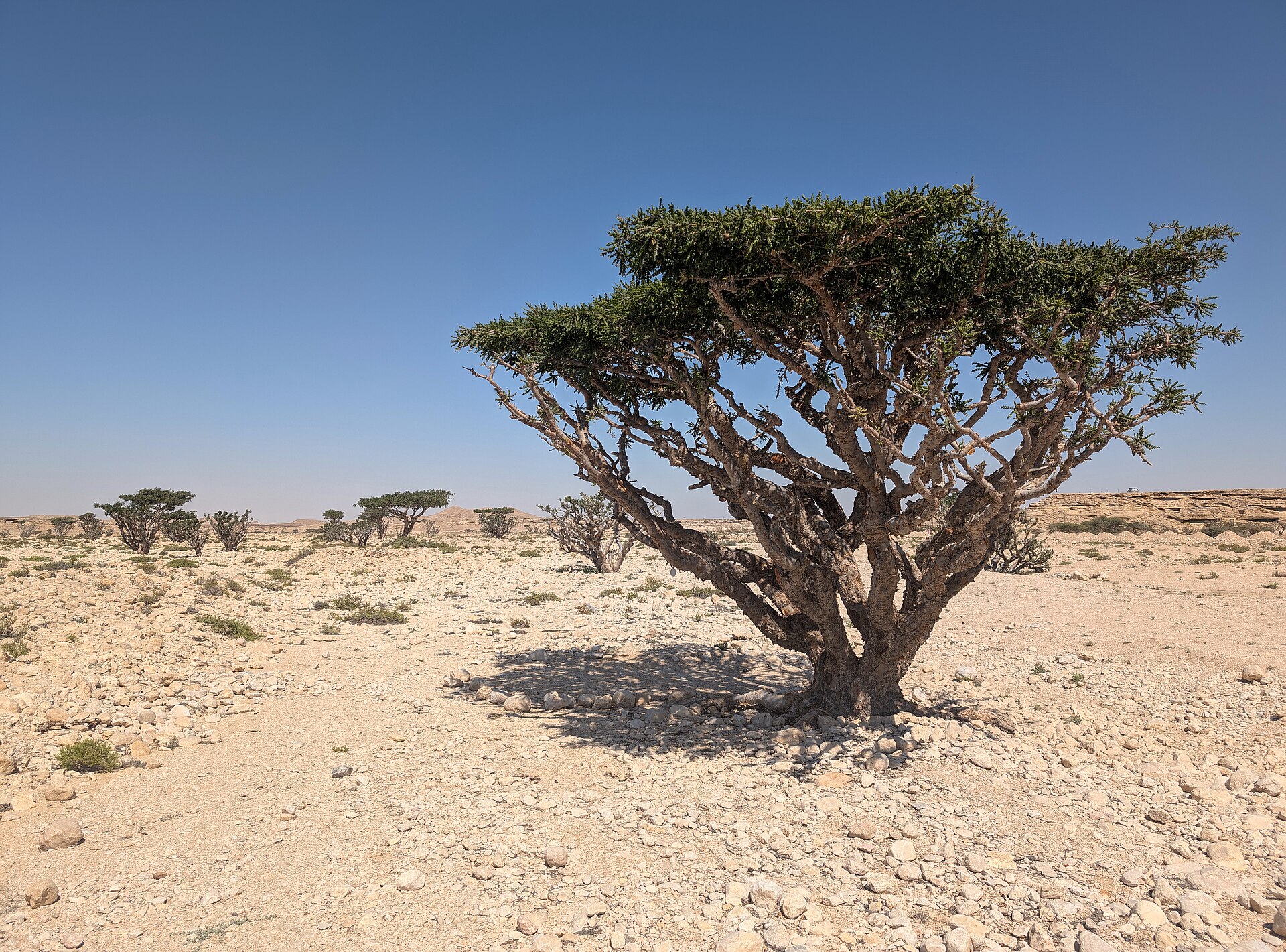
Rub al-Khali and the Frankincense Route
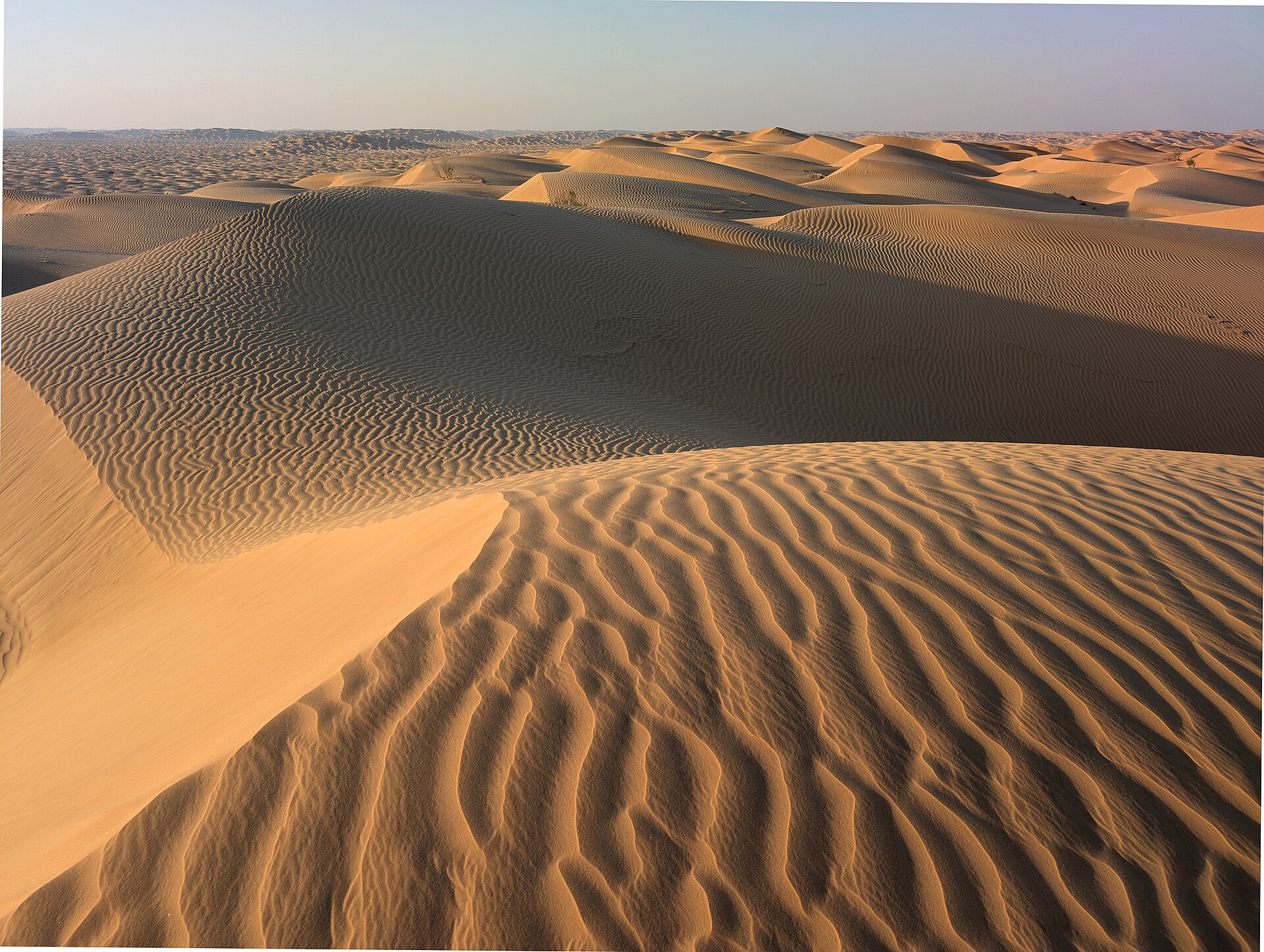
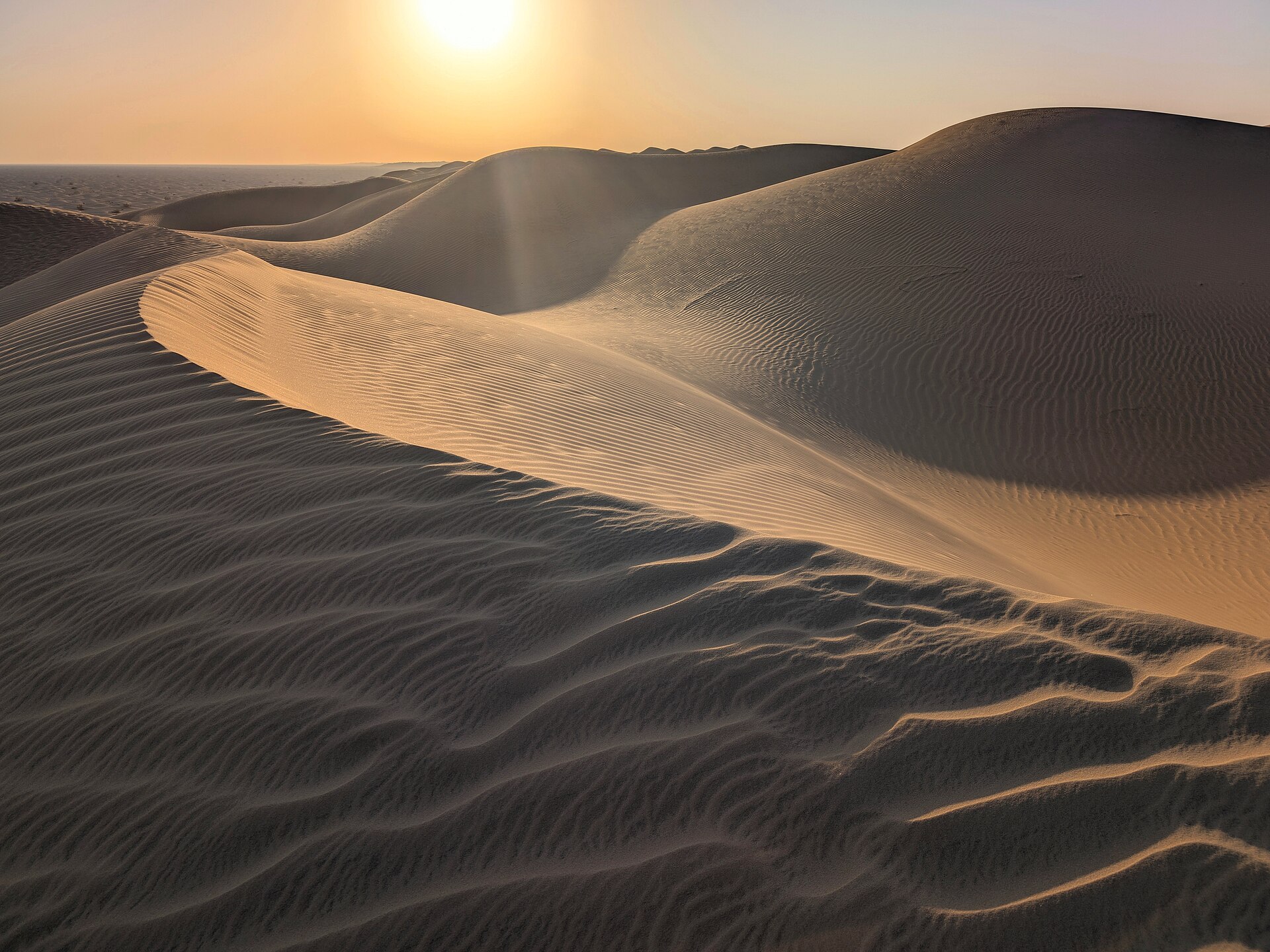
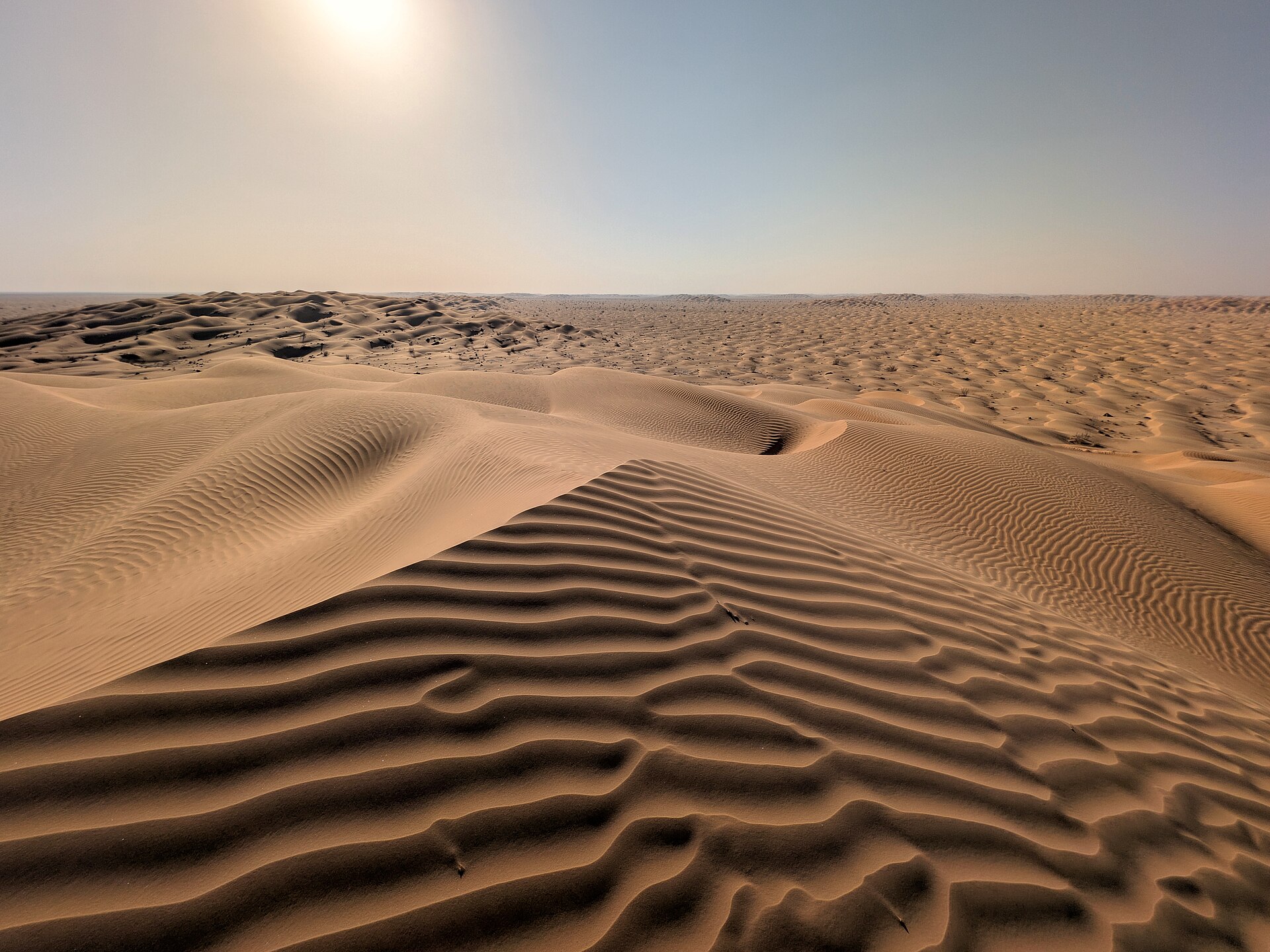
Oman's share of the Rub al-Khali, the world's largest continuous sand desert, begins about 170 km north of Salalah; the road passes Wadi Dawkah and Shisr (Ubar), two sites of the UNESCO-listed Land of Frankincense. Access is from Salalah, which some European foreign ministries advise against.
The Rub al-Khali, or Empty Quarter, is the largest continuous sand desert in the world. Oman's part of it lies in the far north-west of Dhofar, about 170 km north of Salalah. The road from the coast follows the old frankincense route, past the frankincense trees of Wadi Dawkah and the caravan oasis of Shisr, also known as Ubar, before reaching the dunes. Trips start from Salalah, which some European foreign ministries advise against, so this page gives information only, with no trip ideas while that advice stands.
Three layers of travel advice
Foreign ministries do not all give the same advice for this region: depending on the country, it covers Salalah, the starting point, Dhofar away from the coastal strip or the Yemen border zone. Yours is in the "Travel advice" table on this page.
In the desert. Travel in a convoy of at least two vehicles, in a well-equipped 4x4 with full gear, and do not camp alone.
The Yemen border. Dhofar borders Yemen. The border zone has road checkpoints and minefields: stay on busy roads.
Our guide to the situation in Oman tracks changes to this advice.
From the coast to the sand
Wadi Dawkah. On the Thumrait road north of Salalah, Wadi Dawkah holds a stand of frankincense trees, Boswellia sacra, whose resin is still harvested. It is one of the four components of the Land of Frankincense, inscribed on the UNESCO World Heritage List in 2000 under the name Frankincense Trail and renamed in 2005. The others are the oasis of Shisr, the ancient port of Sumhuram east of Salalah (see Taqah, Mirbat and Wadi Darbat) and the medieval port of Al Baleed in Salalah.
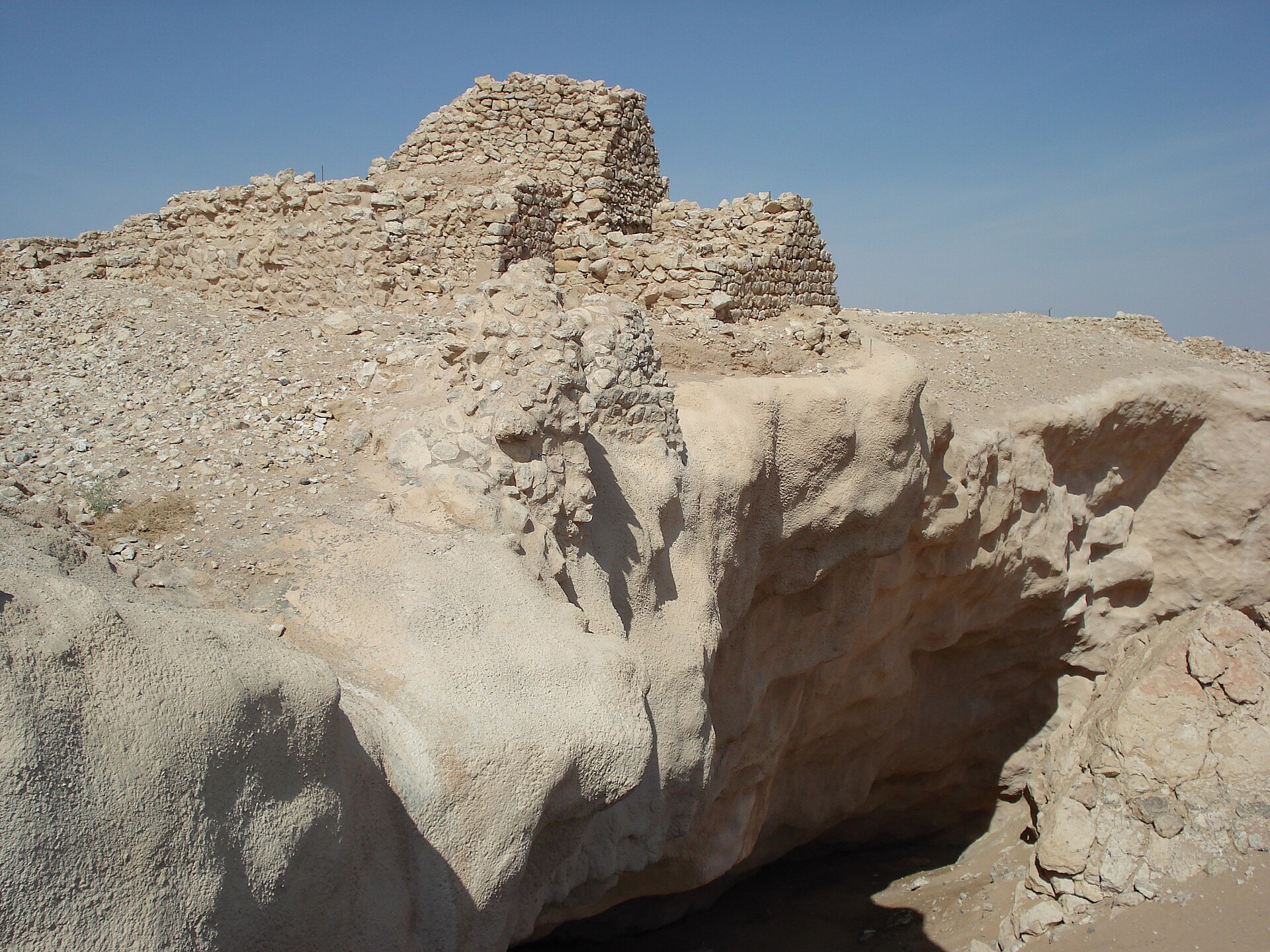
Shisr (Ubar). Some 170 km inland, on the edge of the Rub al-Khali, Shisr preserves the remains of a fortified caravan outpost, the second desert component of the Land of Frankincense. Some tours from Salalah include the Ubar site.
Al Hashman and Al Khadhf. Beyond lies the sand. Oman's Ministry of Heritage and Tourism, on its official portal experienceoman.om, describes Al Hashman as the heart of the desert and the gateway for camping, and Al Khadhf as the hub for winter events. It lists dune driving, camel rides, desert camps, sandboarding and stargazing.
How visits work
Oman's tourism ministry advises going with a specialist operator and carrying water and equipment, and European advice calls for at least two vehicles. Salalah agencies sell chauffeured 4x4 trips: the most common one picks you up at your hotel in the early afternoon, stops at Wadi Dawkah, Thumrait and Ubar, and ends with sunset on the dunes, about seven hours in all; it was listed at around €104 per person in October 2026. Private tours link all four frankincense sites, from Al Baleed's museum in Salalah to Ubar, in six to eight hours. In both cases the trip is a day out from the coast, with a return to Salalah the same evening.
Weather: no table for the desert
No weather station in inland Dhofar provides reliable climate normals, so this page has no climate table. The tourism ministry gives September to April as the desert season. The Salalah figures on the city's page describe the coast, which the khareef monsoon wraps in mist from June to September along with the plain and the mountains.
Where to stay
The Sabaro selection has no hotel or camp in Oman's Empty Quarter. Trips leave from Salalah, home to the region's hotels, from Al Baleed Resort Salalah by Anantara to the three hotels of the Hawana complex, such as Salalah Rotana Resort. For a night in the sand elsewhere in Oman, our guide to a night in the desert covers the camps of the Wahiba Sands in the north-east.
What to see
- Rub al-Khali (Empty Quarter) — largest continuous sand desert in the world; about 170 km north of Salalah; season September to April experienceoman.om (MHT), Rub al-Khali
- Al Hashman — heart of the desert, gateway for camping experienceoman.om (MHT), Rub al-Khali
- Al Khadhf — winter events hub experienceoman.om (MHT), Rub al-Khali
- Shisr (Ubar) — fortified caravan outpost on the edge of the Rub al-Khali; UNESCO component UNESCO, Terre de l'encens
- Wadi Dawkah — stand of frankincense trees (Boswellia sacra) still tapped, on the Thumrait road; UNESCO component of the Land of Frankincense UNESCO, Terre de l'encens
Getting there
- Salalah-Thumrait-Shisr road, about 170 km; go with a specialist operator, carry water and equipment; convoy of at least two vehicles, solo camping not advised France Diplomatie, sécurité ; experienceoman.om
By air
| Airport | By road | Direct flights |
|---|---|---|
| Salalah (SLL) | 172 km, 2h47 |
Chosen activities
- 4x4 Empty Quarter trip: Wadi Dawkah, Thumrait, Ubar and dune sunset (Polish-speaking guide) — 7 hours · from 104 € per person
Public price collected on: Musement — accessed 20 October 2026
- Land of Frankincense UNESCO sites private tour: Al Baleed and museum, Sumhuram, Wadi Dawkah, Ubar — 6 to 8 hours
Public price collected on: Musement — accessed 20 October 2026
Read next
Travel advice
| Country | Official advice | Source |
|---|---|---|
| France | Following Iranian strikes on Omani territory, travel to the Salalah, Duqm and Musandam regions and to the Yemen border is advised against unless essential; heightened vigilance in the rest of the country. | France Diplomatie, Oman, dernières minutes et alertes (Site last updated 10 September 2026) |
| France | Outside the Dhofar coastal strip, take appropriate security measures and stay highly vigilant; risk of armed groups infiltrating from Yemen. | France Diplomatie, Oman, sécurité (Site last updated 15 September 2026) |
| France | Wadis: sudden floods after rain, never enter them when rain is possible; desert trips in a convoy of at least two vehicles; life jackets for everyone on boats. | France Diplomatie, Oman, sécurité (Site last updated 15 September 2026) |
| United Kingdom | No area advised against; Iranian strikes and retaliatory attacks across the region, including Oman, since 8 July: expect flight cancellations and airspace closures, stay away from military facilities. | GOV.UK (FCDO), Oman travel advice (Site last updated 22 July 2026) |
| United Kingdom | Flash floods in wadis from October to March; tropical cyclones sometimes in July and August; tourist boats may not meet UK standards, make sure life jackets are available. | GOV.UK (FCDO), Oman, safety and security (Site last updated 22 July 2026) |
| Belgium | All travel to the area immediately bordering Yemen is strongly advised against. | SPF Affaires étrangères (Belgique), Oman, dernière mise à jour (Site last updated 12 August 2026) |
| Belgium | All non-essential sea travel advised against (piracy in the Arabian Sea). | SPF Affaires étrangères (Belgique), Oman, sécurité générale (Site last updated 2 July 2026) |
| Switzerland | Yemen border area tense: road checkpoints, minefields; stay on frequently used roads. | DFAE (Suisse), conseils pour les voyages, Oman (Site last updated 17 July 2026) |
| Switzerland | Ferries and old pleasure boats not always safe; border crossings may close at short notice. | DFAE (Suisse), conseils pour les voyages, Oman (Site last updated 17 July 2026) |
| Germany | Travel to the Musandam exclave on the Strait of Hormuz and to the area immediately bordering Yemen is advised against. | Auswärtiges Amt (Allemagne), Oman, Reise- und Sicherheitshinweise (Site last updated 4 September 2026) |
| Germany | Muscat-Salalah road (1,000 km) often underestimated; avoid driving outside Muscat after dark (camels); police and army road checks. | Auswärtiges Amt (Allemagne), Oman, Reise- und Sicherheitshinweise (Site last updated 4 September 2026) |
| Ireland | Level 2 of 4, High Degree of Caution. Travel alert on the Middle East and Gulf: EU Aviation Safety Agency advisory covering parts of the airspace over the Gulf of Oman until 16/11/2026; risk of attacks on military or strategic sites and debris from intercepts. Do not travel to the Yemen border area. Yacht and leisure-craft travel on the high seas advised against except when essential in the Gulf of Aden, Arabian Sea and part of the Indian Ocean (piracy). | Department of Foreign Affairs and Trade (DFA, Irlande), Travel advice (Site last updated 30 September 2026) |
| Netherlands | Colour code orange for the border area with Yemen: essential travel only, not safe for holidays (civil war in Yemen, which is coded red). | Nederland Wereldwijd (ministerie van Buitenlandse Zaken, Pays-Bas), Reisadvies Oman (Site last updated 8 September 2026) |
| Netherlands | Colour code yellow. For trips into the desert, go with a reliable guide. | Nederland Wereldwijd (ministerie van Buitenlandse Zaken, Pays-Bas), Reisadvies Oman (Site last updated 8 September 2026) |
| Luxembourg | Not checked by Sabaro: see mae.gouvernement.lu | |
| Sweden | Not checked by Sabaro: see Regeringen (UD) | |
| Denmark | Not checked by Sabaro: see Udenrigsministeriet (um.dk) | |
| Norway | Not checked by Sabaro: see Regjeringen | |
| Poland | Not checked by Sabaro: see Odyseusz (MSZ) | |
| Czechia | Not checked by Sabaro: see MZV ČR | |
| Austria | Not checked by Sabaro: see BMEIA | |
| Italy | Not checked by Sabaro: see Viaggiare Sicuri | |
| Spain | Not checked by Sabaro: see exteriores.gob.es | |
| Portugal | Not checked by Sabaro: see Portal das Comunidades | |
| Finland | Not checked by Sabaro: see Ulkoministeriö (um.fi) | |
Rules change: always check the official website before you travel.
Frequently asked questions
How far is the Empty Quarter from Salalah?
About 170 km north, via Thumrait. Shisr (Ubar), on the edge of the desert, is a similar distance inland.
What is Ubar?
The name given to the oasis of Shisr, a fortified caravan outpost on the edge of the Rub al-Khali. It is part of the Land of Frankincense, UNESCO-listed in 2000.
Can I drive into the desert on my own?
No: travel in a convoy of at least two vehicles and do not camp alone; Oman's tourism ministry recommends a specialist operator. Dhofar borders Yemen, and several foreign ministries advise against the border zone: the "Travel advice" table on this page gives your country's advice.
When is the best time to visit?
From September to April, according to Oman's tourism ministry.
Where can I see frankincense trees?
At Wadi Dawkah, on the Thumrait road north of Salalah, where the resin of Boswellia sacra is still harvested.
A travel advisor replies by email. Free, no commitment.