Lake Nasser cruise to Abu Simbel, 5 days
5 days · Couples, archaeology lovers, travellers who already know the Nile Valley · October to April
One night at the Old Cataract in Aswan, then a 3-night Lake Nasser cruise from Abu Simbel to Aswan, with the Nubian temples of Amada, Derr, Wadi es-Sebua, Dakka, Maharraqa and Kalabsha. A short trip, Thursday to Monday, for the temples the Nile Valley does not show.
from 1,260 € per person
Price collected on 11 October 2026. Based on 2 adults, listed hotel, cruise in a double cabin (full board, visits, transfers and tips included) and activities; flights and drinks on board not included. Indicative price, taxes included, to be confirmed with your request.
Itinerary
- Days 1–2 Aswan · 1 nights — Old Cataract, Aswan
- Days 2–5 Lake Nasser cruise, Abu Simbel to Aswan · 3 nights
Activities included in the indicative price
- 3-night full-board Lake Nasser cruise (Nubian Sea or similar boat) · 916 € per person
Public price collected on: Civitatis — accessed 14 October 2026
- Philae Temple, High Dam and Unfinished Obelisk, in Aswan · 62 € per person
Public price collected on: Civitatis — accessed 14 October 2026
- Boat trip to the Nubian village of Gharb Soheil · 45 € per person
Public price collected on: Civitatis — accessed 14 October 2026
Temples saved from the water
Lake Nasser was created by the Aswan High Dam, completed in 1970, which flooded the Nile Valley for nearly 480 km upstream. Egyptian Nubia, a land of riverside villages, disappeared under the water. From 1960 to 1980, an international campaign led by UNESCO (United Nations Educational, Scientific and Cultural Organization) dismantled the threatened temples and rebuilt them higher up, grouped on a few sites along the new lake. Together, from Abu Simbel to Philae, they have been a World Heritage Site since 1979.
Most of these temples are isolated: with no road or town around them, the boat is the simplest way to see them. That is what makes this cruise a second trip to Egypt, after a first discovery of Luxor and the Nile.
A Friday departure
The cruise listed in this idea leaves only on Fridays. Pick-up starts at 10:00 local time at hotels in central Aswan. You therefore need to sleep in Aswan on Thursday night: arriving on Friday morning leaves no time to be ready for the transfer. The trip runs like this:
- Thursday, arrival in Aswan, night at the Old Cataract;
- Friday, drive to Abu Simbel and embarkation;
- Saturday and Sunday, sailing north, from temple to temple;
- Monday, Kalabsha, disembarkation in Aswan and departure.
This direction, from Abu Simbel to Aswan, is the shorter one: 3 nights, against 4 the other way.
Thursday: Aswan
The Old Cataract is Aswan's grand hotel, built by Thomas Cook in 1899 on a granite cliff facing Elephantine Island. Until July 2027 the Nile Wing is closed for renovation; only the Palace, the historic building, is open, with 35 rooms and suites. To see the river from your room, aim for a "Nile View" suite, and book early.
With a morning flight, the afternoon is enough for the outing listed in this idea: Philae Temple, the High Dam and the Unfinished Obelisk, in 5 hours with a guide. Philae, the Temple of Isis rebuilt on Agilkia Island, is reached by boat. In the evening, the hotel terrace looks out as the sun goes down over the West Bank.
Friday: Abu Simbel in the afternoon
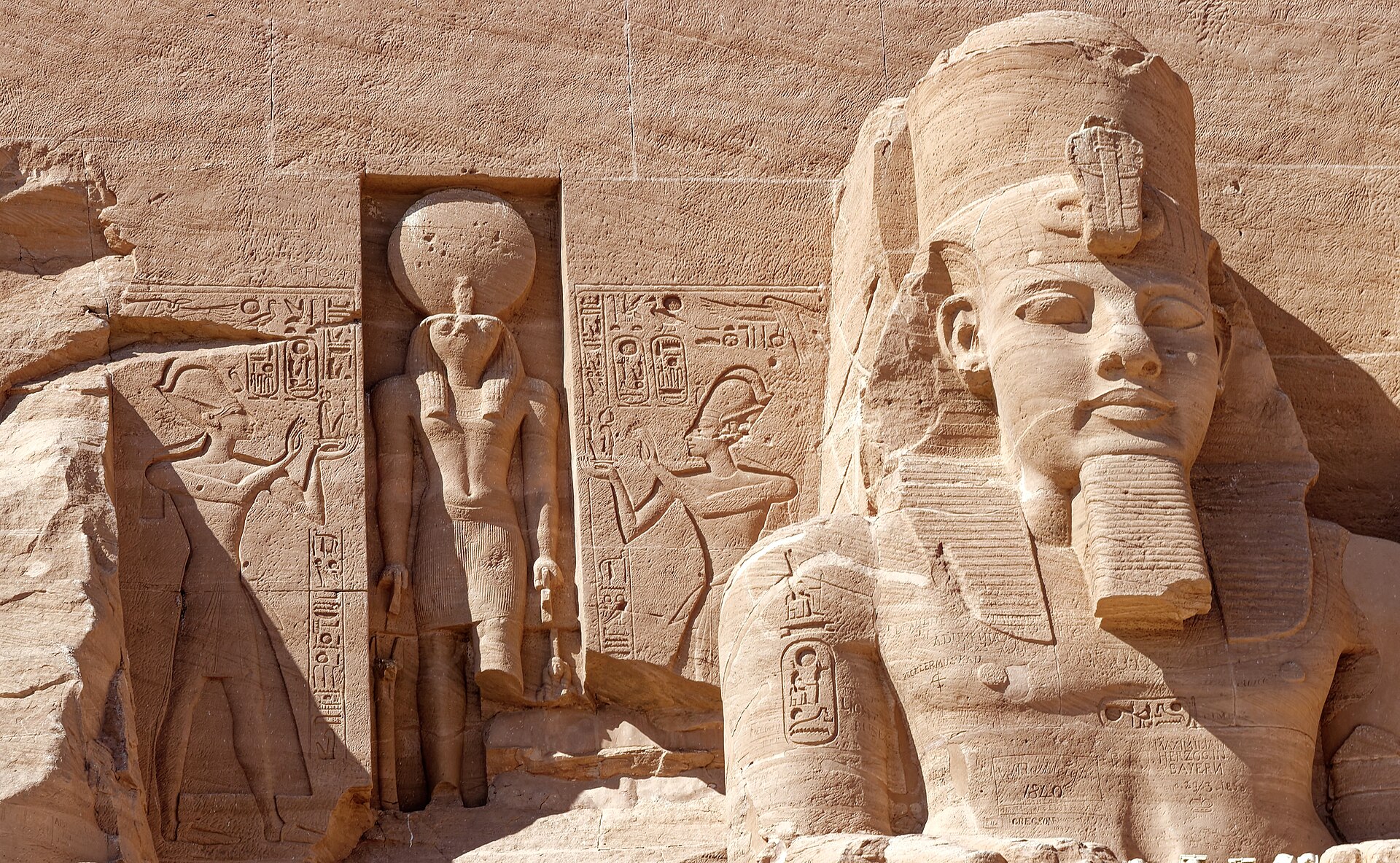
About 280 km and 3 hours by road to the south, in daylight. On arrival, lunch on board, then the guided visit of the two temples: that of Ramses II, cut into the rock around 1264 BC, and that of Queen Nefertari. They were rebuilt in 1968, higher up, out of reach of the lake.
This is the great advantage of the cruise. Day trips from Aswan arrive around 08:00 local time and leave during the morning; the boat takes you round the temples in the afternoon, as they empty. Free time follows until the end of the day. In the evening an optional sound and light show is offered, and you sleep on board.
Abu Simbel is the end of the line. The Sudan border area, including the road south of Abu Simbel, and the area west of the site are among the areas advised against; the cruise stays between Abu Simbel and Aswan. Before you leave, check France Diplomatiediplomatie.belgium.beDFAE (eda.admin.ch)mae.gouvernement.luGOV.UK (FCDO)ireland.ie (DFA)Auswärtiges AmtRegeringen (UD)Udenrigsministeriet (um.dk)RegjeringenOdyseusz (MSZ)MZV ČRBMEIANederland WereldwijdViaggiare Sicuriexteriores.gob.esPortal das ComunidadesUlkoministeriö (um.fi).
Saturday and Sunday: from temple to temple
Saturday. The boat heads north. The citadel of Qasr Ibrim, a former hilltop stronghold now turned into an island, is viewed from the deck, without landing. Then a stop at Amada: its 18th-Dynasty temple kept its reliefs thanks to the plaster applied when it was turned into a church. Next to it are the rock-cut temple of Derr, rebuilt in 1964, and the rock-cut tomb of Pennut. Lunch on board, then sailing on.
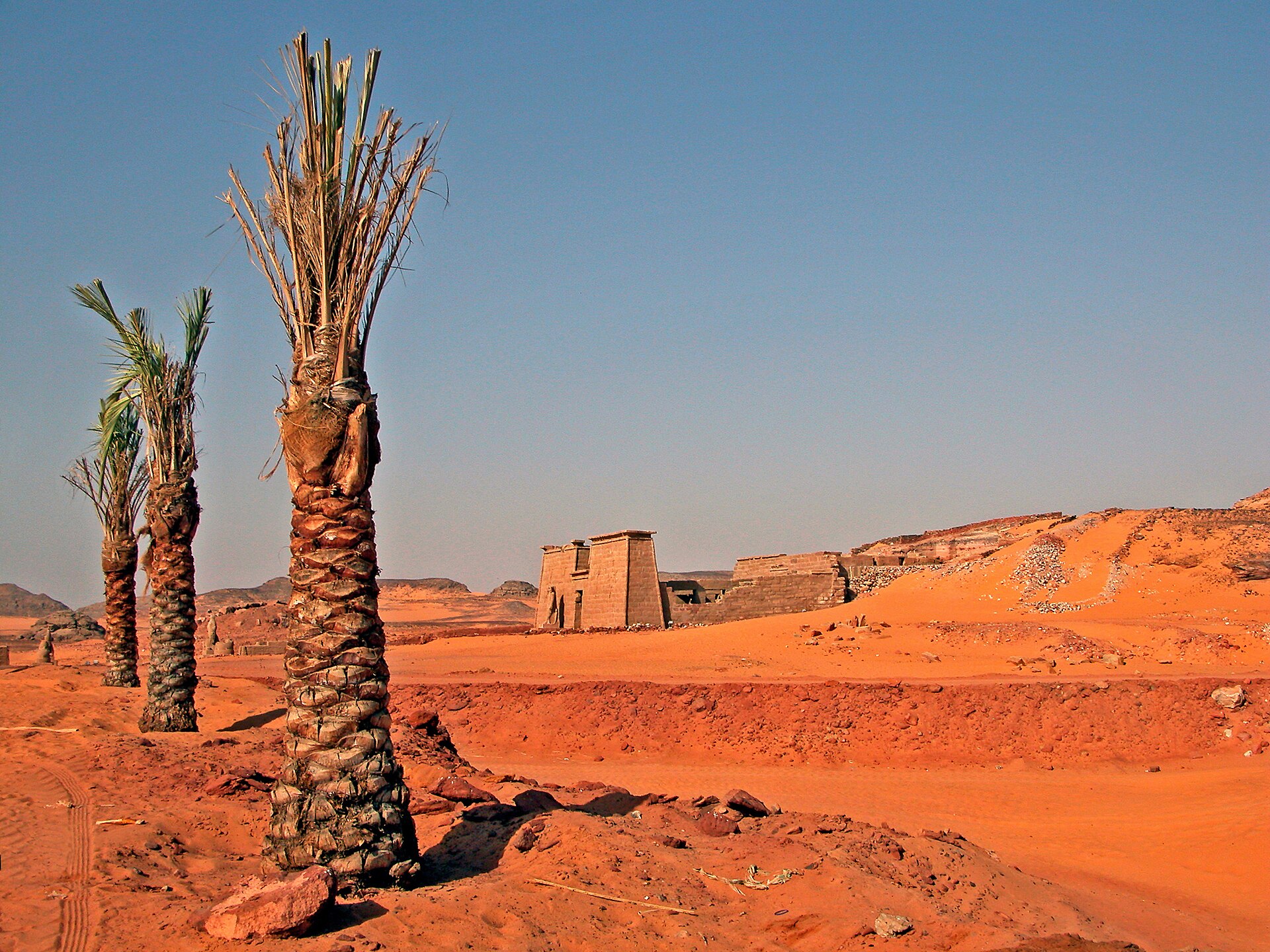
Sunday. Wadi es-Sebua early in the morning: an avenue of sphinxes leads to the temple of Ramses II and its rock-cut sanctuary. The Graeco-Roman temples of Dakka and Maharraqa have been rebuilt nearby. In the afternoon the boat sails towards Aswan, and you stay out on deck.
Monday: Kalabsha and the return
After breakfast, Kalabsha Temple, built under the emperor Augustus and dedicated to the Nubian god Mandulis, and the Kiosk of Kertassi. Then a transfer to your hotel or to Aswan airport, three hours before your flight.
An evening flight leaves the afternoon for the second outing listed: the boat to the Nubian village of Gharb Soheil, in 4 hours. After three days of Nubian temples, this is the Nubia of today.
What the cruise includes
The recorded price includes full board, all the visits described, the guide, transfers, port taxes and tips. Drinks on board and Thursday night in Aswan are extra. The boat is the Nubian Sea or a similar vessel. Children pay the adult rate from age 12. From 20 December to 2 January and at Easter, cancellations are not refunded.
When to go
Abu Simbel has the driest climate in tourist Egypt, with less than 1 mm of rain a year. According to the World Meteorological Organization (WMO) 1991–2020 normals, the average maximum is 23 °C in January, 24 °C in December and 25 °C in February, with nights of 10 to 12 °C: December to February is the most comfortable season. In October and April it reaches 35 to 36 °C, and from May to September 39 to 41 °C.
On 22 February and 22 October, at sunrise, light passes through the great temple to the sanctuary. In 2027 these dates fall on a Monday and a Friday: the cruise, which reaches Abu Simbel on Friday afternoon, does not coincide with them. To see the phenomenon you need a night in Abu Simbel the evening before, outside the cruise.
Read next
- Cairo, Aswan and a Nile cruise in 8 days
- Nile cruise and Red Sea in 10 days
- Cairo, the Grand Egyptian Museum and Alexandria, 5 days
- Getting around Egypt: driver, domestic flights, train, restricted zones
- Choosing your cruise: Nile cruiser, dahabiya or Lake Nasser
- Egyptian site tickets: Cairo Pass, Luxor Pass, extra-fee tombs
- Watching the 2 August 2027 eclipse: where, when and safely
Frequently asked questions
How long is a Lake Nasser cruise?
3 nights from Abu Simbel to Aswan, or 4 nights the other way, from Aswan to Abu Simbel.
Do you need to stay in Aswan before the cruise?
Yes. Pick-up is on Friday from 10:00 local time at your Aswan hotel; Thursday night is not included in the cruise price.
Why visit Abu Simbel on a cruise?
The boat takes you round the temples in the afternoon, after the day trips have left, then spends the night at the foot of the site.
Can you see the sun light up the sanctuary during the cruise?
In 2027 the two dates of the phenomenon, 22 February and 22 October, do not fall on a day when the boat is at Abu Simbel at sunrise. You need a night there the evening before.
What is the best season?
December to February for the heat, with maximums of 23 to 25 °C at Abu Simbel. October and April are still possible, but afternoons reach 35 to 36 °C.
A travel advisor replies by email. Free, no commitment.