Gulet cruise and the Lycian coast in 8 days
8 days · Couples, friends, lovers of swimming and the sea, travellers happy on a shared boat · May, June and September
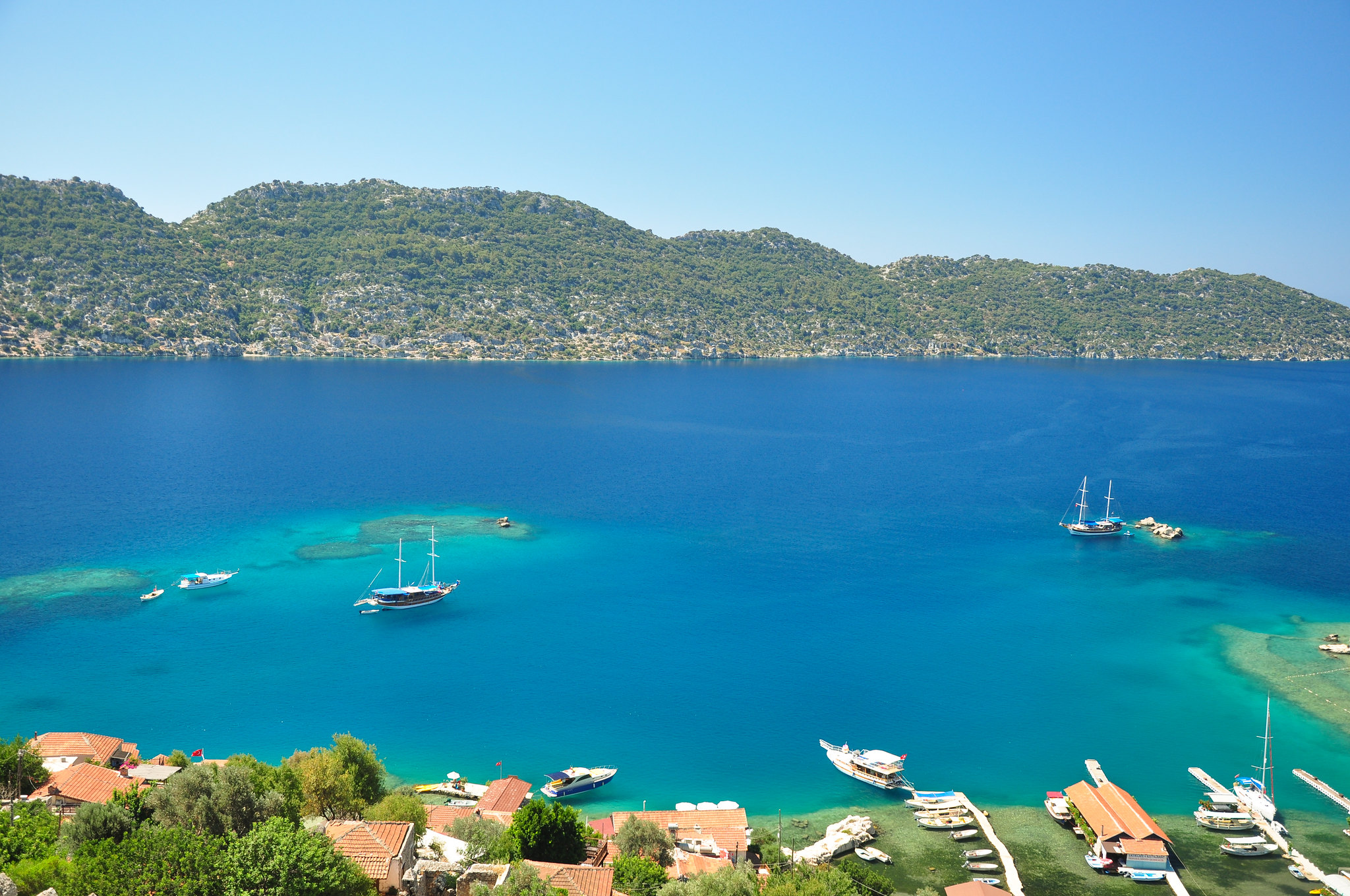
Eight days and seven nights on the Lycian coast, three of them in a cabin aboard a gulet: two nights near Fethiye, the cruise from Fethiye to Kekova via Ölüdeniz, Butterfly Valley, St Nicholas Island, Kalkan and Kaş, then two nights in Çıralı, below the Olympos ruins, before flying home from Antalya.
from 1,050 € per person
Price collected on 22 October 2026. Based on 2 adults, listed hotels, cruise in a cabin with meals on board, excursion and entry fee, breakfast included at the hotels; flights, transfers from Dalaman and to Antalya, drinks on board, other entry fees and meals ashore not included. Indicative price, taxes included, to be confirmed with your request.
Itinerary
- Days 1–3 Fethiye, Yanıklar bay · 2 nights — Yonca Lodge
- Days 3–6 By gulet, Fethiye to Kekova · 3 nights
- Days 6–8 Çıralı, below Mount Olympos · 2 nights — Olympos Lodge
Activities included in the indicative price
- Saklıkent Gorge day trip (8 hours) · 29 € per person
Public price collected on: Civitatis, excursion aux gorges de Saklıkent — accessed 22 October 2026
- 4-day, 3-night gulet cruise from Fethiye to Kekova, cabin berth, meals on board included (May 2026 fare) · 450 € per person
Public price collected on: TourRadar, Alaturka Turkey, Fethiye to Olympos 4 day/3 night cruise — accessed 22 October 2026
- Olympos ancient site and beach entry · 11 € per person
Public price collected on: KTB, barème des musées et sites pour les visiteurs étrangers à partir du 1er avril 2027 (reproduit par alomaliye.com) — accessed 22 October 2026
How it works
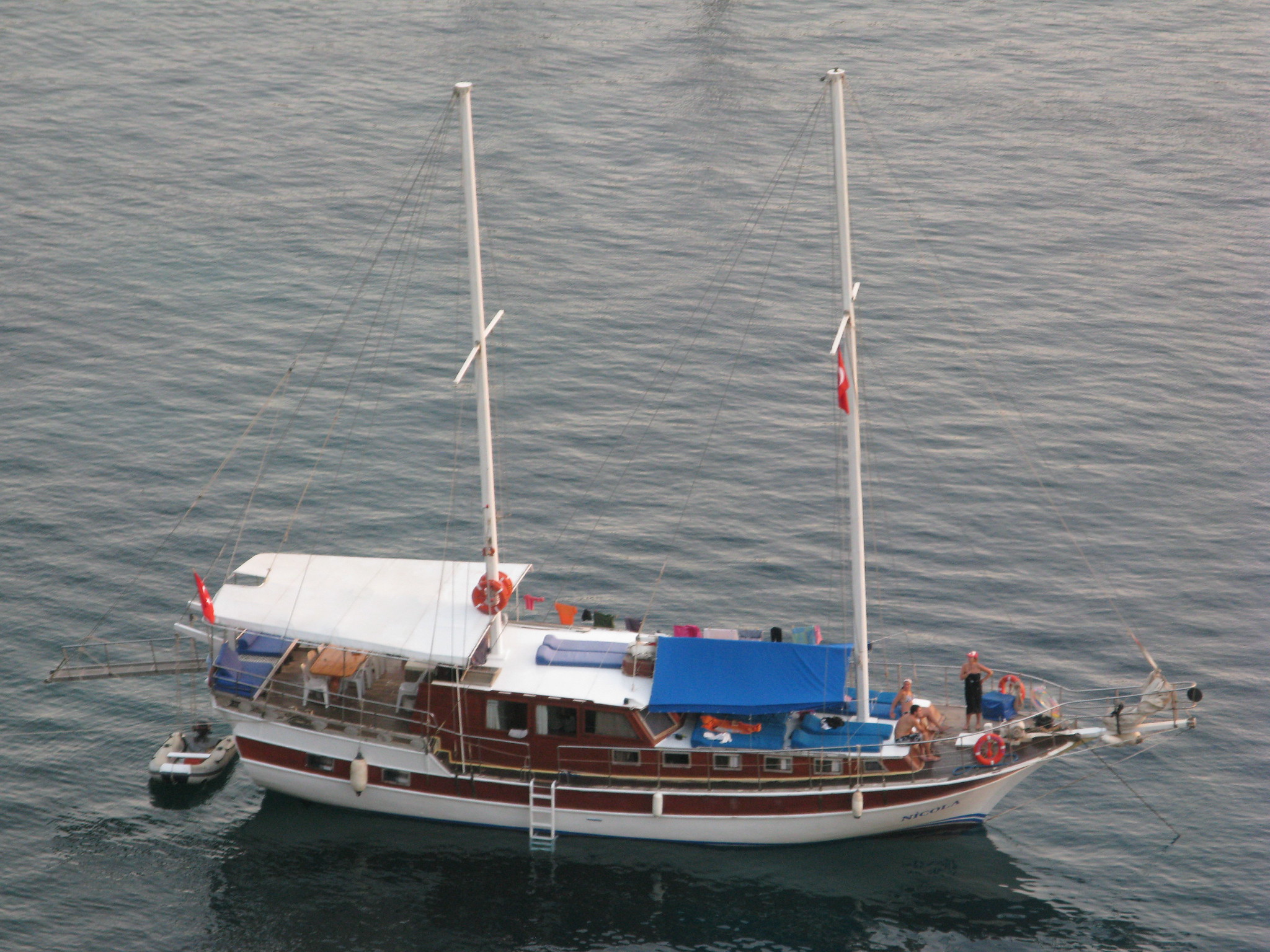
On the Lycian coast, a gulet lets you spend several days following the coves, with a crew and a cook on board. The cruise chosen here is a four-day, three-night cabin cruise from Fethiye to Üçağız, facing the island of Kekova. The boat takes up to 16 passengers, and meals are cooked on board.
Two stays on land frame the cruise: two nights near Fethiye to arrive rested, two nights in Çıralı to finish on a beach. You fly into Dalaman and out of Antalya.
At a glance
| Day | Plan | Night |
|---|---|---|
| 1 | Arrive in Dalaman, drive to Fethiye | Yonca Lodge |
| 2 | Saklıkent Gorge | Yonca Lodge |
| 3 | Board at Fethiye, Butterfly Valley, St Nicholas Island | On board |
| 4 | Kalkan, Aquarium Bay, Kaş | On board |
| 5 | Kekova, the sunken city and Simena Castle | On board |
| 6 | Disembark at Üçağız, drive to Çıralı | Olympos Lodge |
| 7 | The Olympos site, the Chimaera in the evening | Olympos Lodge |
| 8 | Fly home from Antalya |
Days 1 and 2: Fethiye
Yonca Lodge is in Yanıklar, between Fethiye and Göcek, 40 km from Dalaman airport: 20 rooms in an orchard running down to the sea, a private beach and a waterside pool. The hotel opens from May to the end of October and does not take children under 12. It was priced at about €180 a night in June, breakfast included.
On day two, an eight-hour excursion goes to Saklıkent Gorge, a canyon 300 m deep and 18 km long, 50 km from Fethiye, of which about 4 km can be walked after April. In the evening, walk up to the Lycian tombs of Telmessos, cut into the cliff above Fethiye.
Days 3 to 5: the cruise
From Fethiye to St Nicholas Island
You meet in the morning at the organiser's office in Fethiye. The gulet heads south to Butterfly Valley, closed off by cliffs and reached by sea: it is a protected nature area, home to more than 80 species of butterfly. You swim and have lunch there, then sail past the Ölüdeniz lagoon. The evening is spent at Gemiler Island, St Nicholas Island, where you visit the ruins of five Byzantine churches from the 4th to the 7th centuries.
Kalkan and Kaş
The second day on board starts with breakfast in Aquarium Bay, near Kalkan, with swimming and snorkelling. The boat then reaches Kaş, a small harbour town on the Teke peninsula, for a walk through its streets and along the harbour. The Kalkan, Kaş and Kekova page describes this part of the coast.
Kekova
On the third day, the gulet sails along the island of Kekova, 7.4 km long, whose north shore keeps the remains of a town partly submerged by earthquakes: stairways, houses and quays down to 4 or 5 m deep. Opposite, you land at Kaleköy, ancient Simena, and climb to the castle above the bay; entry is €5 from 1 April 2027.
Days 6 and 7: Çıralı
On the last morning, you disembark at Üçağız after breakfast. The organiser provides a transfer to the Olympos or Demre bus station; from there, continue to Çıralı. At Demre, the site of Myra and the Church of St Nicholas, built over the tomb of the bishop of Myra, are worth a stop.
Olympos Lodge has 14 white rooms in a large garden on Çıralı beach, below Mount Olympos and next to the ancient site. It was priced at about €375 a night in June, breakfast included.
On day seven, visit the site of Olympos, a Lycian port founded in the 3rd century BC, whose beach lies within the site; entry, €11, is included in the price. Çıralı beach, backed by dunes, is a nesting site for loggerhead turtles. In the evening, walk up to see the Chimaera of Yanartaş, natural flames rising from the rock above the village.
Day 8: departure
Antalya airport is 95 km from Çıralı, about 1 h 30 by road.
Good to know
- Life on board. The gulet takes up to 16 passengers; a cook prepares the meals, which are included in the price. Solo travellers share a cabin.
- The fare. The cruise price is the May 2026 fare given by the organiser; the 2027 fare is to be confirmed when booking.
- When to go. In Fethiye, the sea averages 20.7 °C in May, 24.1 °C in June and 24.7 °C in October; average highs exceed 35 °C in July and August.
- Not included. Flights, the transfer from Dalaman, the drive from Çıralı to Antalya airport and drinks on board.
- Ramadan and holidays. Opening hours change at some places: see Ramadan and holidays 2027 in Turkey.
- Entry requirements. The visa and entry requirements guide covers the document required and the length of stay. The rule for your country:
Entry requirements
| Nationality | Visa | Travel document | Source |
|---|---|---|---|
| French | No visa for tourist stays of up to 90 days in any 180-day period, continuous or split | National ID card or passport, valid for at least 150 days after the date of entry and in good condition; an expired passport is not accepted. An ID card extended by five years is officially accepted, but a valid passport is strongly recommended | France Diplomatie, Conseils aux voyageurs, Entrée / séjour (Site last updated 15 September 2026) |
| Details: Minor travelling without one of their parents: ID card or passport valid 150 days after entry and a return travel authorisation signed by the parent(s) (service-public.fr form). French-Turkish dual nationals: carry a valid French document for the return; the Turkish authorities do not always inform the consulate of an arrest. Always carry ID. Registration on Fil d'Ariane recommended. According to the Turkish Ministry of Foreign Affairs, French citizens entering with their ID card are exempt from the 150-day validity rule, and a French passport expired for less than five years is accepted; France Diplomatie nevertheless requires 150 days' validity and states that an expired passport is not accepted. Travelling with a document valid for at least 150 days avoids any refusal, at boarding or on arrival | |||
| Belgian | No visa for tourist stays of up to 90 days | See the official page | SPF Affaires étrangères (Belgique), Voyager en Turquie, Informations pratiques (Site last updated 2 July 2026) |
| Details: Belgian (European) driving licences are valid. Travel insurance with assistance, repatriation and legal cover is considered absolutely necessary. Belgian-Turkish dual nationals: no Belgian consular assistance in Turkey; exit bans have been reported. Registration on Travellers Online recommended. According to the Turkish Ministry of Foreign Affairs, entry is possible with an ID card, with no 150-day validity requirement; a Belgian passport expired for less than five years is accepted; otherwise, the passport must remain valid for 60 days after the end of the stay, i.e. 150 days for a 90-day stay | |||
| Swiss | See the official page | The FDFA asks travellers to always carry their passport or ID card for checks — See the official page | DFAE (Département fédéral des affaires étrangères, Suisse), Conseils pour les voyages – Turquie (Site last updated 30 September 2026) |
| Details: Swiss-Turkish dual nationals: treated exclusively as Turkish, in principle without Swiss consular protection; those liable for military service should check with the Turkish representation before travelling, as they could be called up. Major medical procedures and hospital stays must be paid in advance. According to the Turkish Ministry of Foreign Affairs, entry is possible with an ID card, with no 150-day validity requirement; a Swiss passport expired for less than five years is accepted; otherwise, the passport must remain valid for 60 days after the end of the stay, i.e. 150 days for a 90-day stay | |||
| British | No visa for up to 90 days in any 180-day period, for tourism or business, on a full 'British citizen' passport; other British passport types should check with the Turkish Embassy | Passport with an expiry date at least 150 days after the date you arrive and at least 1 blank page | GOV.UK (FCDO), Turkey, Entry requirements (Site last updated 19 October 2026) |
| Details: Carrying photo ID is a legal requirement. When leaving Turkey with a dual British-Turkish child aged 18 or under, you may need permission from the Turkish parent; some hotels refuse under-17s without a parent unless written consent is provided. Driving: a 1968 international driving permit, obtained in the UK, or a UK licence notarised in Turkish; the 1949 permit is no longer accepted; a green card for third-party insurance is required | |||
| German | No visa for up to 90 days in any 180-day period; leaving for a day no longer starts a new 90-day stay. The exemption does not give an absolute right of entry | Passport, temporary passport, ID card or child passport, accepted even if expired for up to one year; temporary ID card accepted but not recommended. A passport needs one blank page | Auswärtiges Amt, Türkei: Reise- und Sicherheitshinweise, « Einreise und Zoll » (Site last updated 20 October 2026) |
| Details: No special rules for minors travelling alone or with one parent if they left Germany legally; a German-Turkish child needs a German document to return to Germany. German-Turkish dual nationals: treated only as Turkish, consular help limited or impossible; leave on the passport used to enter. Germans, especially those with ties to Turkey, have been refused entry or arrested over social media posts or activities in Germany. German driving licences are recognised for tourist stays. Travel health insurance with repatriation strongly recommended | |||
| Dutch | No visa for stays of up to 90 days with a Dutch passport or ID card; for longer stays, check with the Turkish embassy in the Netherlands | Passport or ID card valid for at least 150 days on arrival; a passport needs at least 1 blank page | Nederland Wereldwijd (ministère néerlandais des Affaires étrangères), Reisadvies Turkije (Site last updated 16 October 2026) |
| Details: Each child needs their own passport or ID card; an adult travelling alone with children under 18 should carry the documents required for travelling with a minor. Dutch driving licences are valid. Dutch-Turkish dual nationals: treated as Turkish; questioning, phone searches, arrest or exit bans are possible. Always carry your passport or ID card. According to the Turkish Ministry of Foreign Affairs, Dutch citizens entering with their ID card are exempt from the 150-day validity rule; the Dutch ministry requires 150 days for both passport and ID card | |||
| Luxembourgish | Not checked by Sabaro: see mae.gouvernement.lu | ||
| Irish | Not checked by Sabaro: see ireland.ie (DFA) | ||
| Swedish | Not checked by Sabaro: see Regeringen (UD) | ||
| Danish | Not checked by Sabaro: see Udenrigsministeriet (um.dk) | ||
| Norwegian | Not checked by Sabaro: see Regjeringen | ||
| Polish | Not checked by Sabaro: see Odyseusz (MSZ) | ||
| Czech | Not checked by Sabaro: see MZV ČR | ||
| Austrian | Not checked by Sabaro: see BMEIA | ||
| Italian | Not checked by Sabaro: see Viaggiare Sicuri | ||
| Spanish | Not checked by Sabaro: see exteriores.gob.es | ||
| Portuguese | Not checked by Sabaro: see Portal das Comunidades | ||
| Finnish | Not checked by Sabaro: see Ulkoministeriö (um.fi) | ||
Rules change: always check the official website before you travel.
- Safety. None of the stops is in an area advised against by the foreign ministries Sabaro follows. The safety in Turkey guide goes through the country area by area. The advice from your country:
| Country | Official advice | Source |
|---|---|---|
| France | The country is under heightened vigilance and the terrorist risk remains high nationwide. Keep away from gatherings and demonstrations, which can lead to arrest; political statements, including sharing posts on social media from abroad, can lead to an entry or exit ban. Advised against (red): the immediate vicinity of the Syrian and Iraqi borders; movement may be restricted in Reyhanlı, Kırıkhan, Siirt, Şırnak and Hakkari districts. Advised against unless essential (orange): Hatay, Kilis, Gaziantep, Şanlıurfa, Mardin, Diyarbakır and Batman provinces, where an escort arranged with the local authorities is recommended. Iran is advised against; the land border has been closed in the direction of Iran since 2 March 2026. Earthquakes are frequent (those of 6 February 2023 devastated the south-east): install the AFAD Acil app. Balloon flights in Cappadocia: check the operator's safety measures. From 9 to 20 November 2026, COP31 in Antalya may disrupt travel and limit hotel availability. | Ministère de l'Europe et des Affaires étrangères (France Diplomatie), Conseils aux voyageurs, Sécurité (Site last updated 15 September 2026) |
| Belgium | The risk of terrorist attacks persists nationwide: stay alert and avoid crowds, political gatherings and the vicinity of official buildings. All travel near the Turkish-Syrian and Turkish-Iraqi borders is strongly advised against; as a precaution, the Iranian border areas are advised against. When travelling to Adana, Hatay, Gaziantep, Kilis, Şanlıurfa, Mardin, Şırnak, Muş, Bingöl, Bitlis, Batman, Kars, Iğdır, Ağrı, Van, Diyarbakır, Hakkari, Siirt or Tunceli provinces, also inform the Belgian embassy in Ankara. The earthquakes of 6 February 2023 severely hit eleven south-eastern provinces, including Gaziantep, Hatay, Şanlıurfa and Adıyaman. Forest fires in summer in the south and south-west; illicit alcohol causes dozens of deaths every month: buy only from official shops and bars. | SPF Affaires étrangères, Commerce extérieur et Coopération au Développement (Belgique), Conseils aux voyageurs (Site last updated 2 July 2026) |
| Switzerland | Travel to certain parts of the country is advised against. The risk of terrorist attacks persists at all times nationwide; most attacks have taken place in the south-east, Istanbul and Ankara. Regular protests and demonstrations, especially in Istanbul, with possible local curfews. Advised against: travel to the border areas with Syria and Iraq (landmines along the eastern border). Advised against for tourism and any non-urgent travel: Şırnak and Hakkari provinces. In the other provinces bordering Syria and Iraq, the greatest caution: travel by day, avoid rural roads, be accompanied by a trusted local person. Much of the country lies in an earthquake zone; forest fires in summer. | Département fédéral des affaires étrangères (DFAE, Suisse), Conseils pour les voyages (Site last updated 30 September 2026) |
| United Kingdom | Terrorists are likely to try to carry out attacks in Turkey, mostly in the south-east, Ankara and Istanbul; targets include public buildings, places of worship, airports and large gatherings. Regular demonstrations in Istanbul and other cities, which may turn violent: avoid them. Against all travel: within 10 km of the Syrian border. Hakkari province: permission from the Governor's Office is needed for areas near the Iraqi and Iranian borders. Mount Ararat (Ağrı province): special military zone, paid permit from the Doğubayazıt government office. Earthquakes are frequent (magnitude 6.2 in the Sea of Marmara in April 2025); wildfires in summer. Travelling against FCDO advice can invalidate travel insurance. | Foreign, Commonwealth & Development Office (FCDO, ministère britannique des affaires étrangères), Foreign travel advice (Site last updated 19 October 2026) |
| Germany | Terrorist threat in all parts of the country, especially the large cities; frequent demonstrations in big cities, to be avoided. In the immediate border area with Syria (Şanlıurfa and Mardin provinces) and with Iraq, avoid all travel that is not strictly necessary; landmines near the Syrian border, where all photography is forbidden. German citizens have been arbitrarily arrested, banned from leaving or refused entry, often over social media posts, shares or likes, a petition or membership of a Kurdish association in Germany; phones may be checked on arrival. People with family ties in Turkey and dual nationals are most affected. The 2023 earthquakes caused tens of thousands of casualties in eleven south-eastern provinces. Any road accident can lead to an exit ban. | Auswärtiges Amt (ministère fédéral des affaires étrangères, Allemagne), Reise- und Sicherheitshinweise (Site last updated 20 October 2026) |
| Luxembourg | Luxembourg's foreign ministry publishes no Turkey-specific advice: it refers travellers to the travel advice of Belgium, France and Germany. | Ministère des Affaires étrangères et européennes, de la Défense, de la Coopération et du Commerce extérieur (Luxembourg), Avis de voyage (accessed 22 October 2026) |
| Ireland | High degree of caution nationwide (level 2 of 4). High terrorist threat, with attacks in Istanbul and Ankara; the situation in the south-east is particularly serious. All travel strongly advised against within 10 km of the Syrian border; all but essential travel advised against to Hatay, Kilis and Şırnak provinces. A ban on demonstrations is in force in Istanbul: avoid all gatherings. The earthquakes of 6 February 2023 hit ten south-eastern provinces, including Gaziantep, Şanlıurfa, Adıyaman and Hatay. Hot-air balloon accidents in Cappadocia and paragliding accidents at Ölüdeniz and Fethiye: use reputable operators and check your insurance. | Department of Foreign Affairs (DFA, ministère irlandais des affaires étrangères), Travel advice (Site last updated 30 September 2026) |
| Sweden | The Swedish ministry advises against all travel to the area near Syria and Iraq, up to 10 km from the Syrian and Iraqi borders, and against non-essential travel to the whole of the border provinces of Hatay, Kilis, Şırnak and Hakkari (decision of 28 March 2022, in force until further notice). The embassy in Ankara asks for particular caution near the Iranian border and reports temporary security zones, closed or restricted, in several border provinces. Stay alert to the risk of attacks in crowded places; avoid demonstrations. | Utrikesdepartementet (UD, ministère suédois des affaires étrangères), UD avråder (Site last updated 28 March 2022) |
| Denmark | The whole country except the orange and red zones: take extra care because of the risk of unrest and terrorism. Orange (non-essential travel advised against): the south-eastern provinces of Hatay, Kilis, Şırnak and Hakkari; if you go, use main roads only, travel outside towns by day only and never alone. Red (all travel advised against): within 10 km of the borders with Syria and Iraq. Security zones may be closed at short notice, especially in the east; do not trek alone in the south-eastern mountains. Risk of severe earthquakes and of forest fires in summer. | Udenrigsministeriet (ministère danois des affaires étrangères), Rejsevejledninger (Site last updated 17 June 2026) |
| Poland | Level 1, normal caution, for the country. Level 4 (do not travel): the 30 km border strip with Syria, Iraq and Iran in Hatay, Kilis, Gaziantep, Şanlıurfa, Mardin, Şırnak, Hakkari, Van, Ağrı and Iğdır provinces. Level 3 (avoid travel): Gaziantep, Şanlıurfa, Mardin and Van provinces outside the cities of the same name, and Adana, Osmaniye, Hatay, Kilis, Şırnak, Hakkari, Ağrı, Iğdır, Diyarbakır, Siirt and Batman provinces. Level 2 (increased caution): the cities of Gaziantep, Şanlıurfa, Mardin and Van. Terrorist and earthquake risk; do not photograph military sites or fly drones near them. | Ministerstwo Spraw Zagranicznych (ministère polonais des affaires étrangères), service Odyseusz (Site last updated 15 October 2026) |
| Czechia | Increased caution. Weigh carefully any travel to the big cities (Istanbul, Ankara, Izmir) and to the regions bordering Syria, Iraq and Iran, where Turkish armed forces are heavily present. The main tourist areas, such as the Mediterranean riviera from Antalya to Alanya and the Aegean region, are considered safe. Strictly avoid crowds and demonstrations; transport may be disrupted. | Ministerstvo zahraničních věcí (ministère tchèque des affaires étrangères), Upozornění na cesty (Site last updated 12 March 2026) |
| Netherlands | Yellow for most of the country: specific security risks. Red, do not travel: the Turkey-Syria border area and the Turkey-Iraq border area. Orange, essential travel only: Şırnak and Hakkari provinces, where violence occurs regularly, especially at night in remote rural areas, and the Habur border crossing (Iraq), keeping to the main road. Higher risk of terrorist attacks nationwide (PKK, Islamic State); regular demonstrations, especially in Istanbul. Turkey's disinformation law provides up to 3 years in prison for sharing messages deemed false. Earthquake-prone country; forest fires in summer. | Nederland Wereldwijd (ministère néerlandais des Affaires étrangères), Reisadvies Turkije (Site last updated 16 October 2026) |
| Norway | Not checked by Sabaro: see Regjeringen | |
| Austria | Not checked by Sabaro: see BMEIA | |
| Italy | Not checked by Sabaro: see Viaggiare Sicuri | |
| Spain | Not checked by Sabaro: see exteriores.gob.es | |
| Portugal | Not checked by Sabaro: see Portal das Comunidades | |
| Finland | Not checked by Sabaro: see Ulkoministeriö (um.fi) | |
Read next
Frequently asked questions
Can we charter a private gulet?
Yes. From Göcek marina, a 27-metre gulet with 7 cabins, a captain, a cook and a deckhand can be chartered by the week, Saturday to Saturday, from about €1,890 a day for the boat, food and fuel extra. The Göcek and Dalyan page presents Göcek bay.
Can we finish in Antalya?
Yes, by adding one or two nights in the old town of Kaleiçi, 79 km from Çıralı, for example at Casa Sur Antalya. The Lycian coast in 9 days idea covers this route by road.
Do we need to be able to swim?
No, but swimming from the boat is at the heart of the cruise.
Can we do this trip as a family?
Yonca Lodge does not take children under 12. Families should choose another hotel in Fethiye or a private gulet.
A travel advisor replies by email. Free, no commitment.